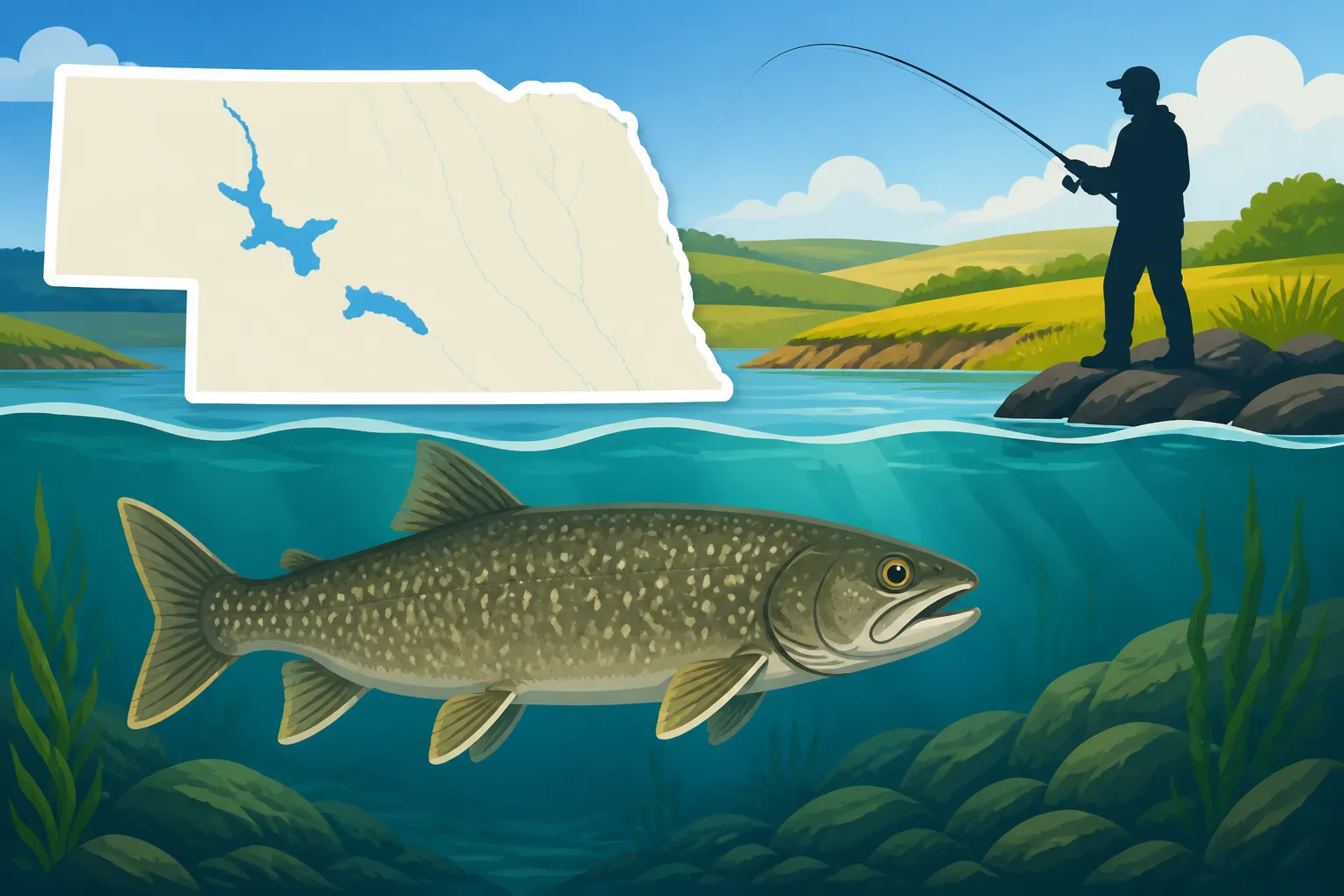
Where Lake Trout Live in Nebraska
It's a common question among anglers dreaming of big, cold-water fish: "Where can I find lake trout in Nebraska?" Many of us picture vast, pristine northern lakes when we think of lake trout, and while Nebraska is a fantastic fishing state, it's true that these elusive fish are incredibly rare here. This guide will dive deep into the specific, almost singular, location where you might encounter a lake trout in the Cornhusker State, and why finding one is such a special event.
The Enigma of Lake Trout in Nebraska: A Rare Find
Let's be honest, when you think of Nebraska, sprawling plains, cornfields, and maybe a few hearty catfish or walleye usually come to mind before anything as exotic as a lake trout. And for good reason! Nebraska's natural environment, with its warmer waters and shallower lakes, simply isn't conducive to sustaining a thriving population of lake trout. These fish are creatures of the deep, preferring intensely cold, oxygen-rich waters that remain stable throughout the year.
Nebraska's Limited Lake Trout Habitats: Why They're Scarce
The vast majority of Nebraska's lakes and reservoirs just don't fit the bill for lake trout. Most of our fantastic fishing spots, while excellent for species like walleye, bass, and crappie, experience significant temperature fluctuations throughout the seasons. The summer heat warms surface waters considerably, and even deeper sections can struggle to maintain the perpetually cold temperatures that lake trout require to thrive and reproduce naturally. They need those deep, thermally stratified environments where cold water sinks to the bottom and stays there, even when the sun is beating down above. Without that consistent, frigid sanctuary, lake trout simply can't survive long-term.
Furthermore, Nebraska's rivers, while offering excellent trout fishing in certain cold-water sections for rainbow and brown trout, also lack the expansive, deep pools that lake trout call home. Our river systems are generally shallower and warmer than what these northern giants need. This isn't a criticism of Nebraska's diverse fisheries; it's just a reality of the specific ecological niche that lake trout occupy. It takes a truly unique body of water to host them, and such places are few and far between in our state.
Understanding Lake Trout Needs: Cold, Deep, and Oxygen-Rich Waters
To truly understand why lake trout are so rare here, it helps to know what makes them tick. Lake trout, often called "lakers," are a freshwater char species, related to brook trout and Arctic char. They are native to colder waters across North America, from Canada down into the northern United States. Their ideal habitat is characterized by large, deep, oligotrophic (nutrient-poor, clear water) lakes that exhibit strong thermal stratification, meaning layers of water with different temperatures.
These fish are literally built for cold, dark environments. Their metabolism is adapted to lower temperatures, and prolonged exposure to warmer waters can stress them, inhibit growth, and even be fatal. They need consistently high oxygen levels, which are typically found in colder water. Many of Nebraska's lakes experience periods where deep water becomes anoxic (lacking oxygen) during hot summer months, especially in shallower impoundments. This combination of temperature and oxygen requirements creates a very narrow window of suitable habitat, making any natural, self-sustaining population almost impossible in Nebraska. This is why when you do find trout in Nebraska, they are typically Rainbow Trout Fishing or Brown Trout Fishing in specific, stocked locations.
Merritt Reservoir: Nebraska's Prime (and Only) Lake Trout Destination
When it comes to lake trout in Nebraska, there's one name that always comes up: Merritt Reservoir. Located in the heart of the Sandhills, Merritt isn't just a beloved spot for walleye and panfish; it holds the distinction of being the only body of water in Nebraska known to have a catchable population of lake trout. And when I say catchable, I mean it's still quite a challenge, making any laker caught there a true trophy.
The Unique Conditions That Support Lake Trout at Merritt
So, what makes Merritt Reservoir so special? It's a combination of factors that, together, create a microclimate suitable for these cold-water giants. First and foremost, Merritt is one of Nebraska's deepest reservoirs. While not as deep as some of the massive Great Lakes, its maximum depths, combined with its location in the relatively cooler Sandhills, allow for the crucial thermal stratification needed. During the scorching Nebraska summers, the deeper sections of Merritt remain cold and oxygenated enough for lake trout to survive.
Secondly, Merritt Reservoir is known for its exceptionally clear water. This clarity is a hallmark of many natural lake trout habitats, allowing light to penetrate deep but also keeping the water clean and oxygenated. The clear water also contributes to the growth of healthy forage fish, such as gizzard shad and various minnows, providing a robust food source for these predatory fish. The combination of depth, sustained cold water, high oxygen levels, and ample food makes Merritt a truly unique gem in Nebraska's fishing landscape. It’s important to remember that these fish are usually a result of stocking efforts, as natural reproduction is still an uphill battle even in Merritt’s ideal conditions.
Strategies for Targeting Lake Trout at Merritt Reservoir
Catching a lake trout at Merritt Reservoir is a bucket-list item for many Nebraska anglers, and it requires specialized techniques and a lot of patience. These fish are deep-water dwellers, so you're not going to catch them casting a bobber from shore.
Deep Water, Deep Tactics:
The primary method for catching lake trout at Merritt is deep-water trolling or vertical jigging. You'll need a boat equipped with a reliable fish finder to locate schools of baitfish and the tell-tale arches of lakers lurking near the bottom or suspended over deep structure. Downriggers are often employed to get lures down to the precise depths where lake trout are holding, which can often be 40 to 100 feet or more, especially in warmer months. On sites like Amazon, you can find a variety of Best Fish Finders for Nebraska Lakes that can greatly aid in identifying these deep-water targets.
Lure Selection:
For trolling, large spoons, stickbaits, and even crankbaits designed for deep diving are effective. Colors can vary, but silver, blue, green, and chartreuse are popular choices, often mimicking the shad and other baitfish that lake trout prey on. When vertical jigging, heavy jigs tipped with a piece of cut bait or a soft plastic swimbait can entice strikes from lakers holding tight to the bottom. Remember, presentation is key – these fish can be finicky. Many anglers also rely on strong monofilament or braided lines that can handle the stress of deep-water battles and the substantial weight of these powerful fish. You can find robust lines and specific deep-diving lures on Amazon that are perfect for this kind of angling.
Seasonal Considerations:
While lake trout are present year-round, certain seasons offer better opportunities. In the spring and fall, when surface temperatures are cooler, lake trout might move into shallower depths, making them a bit more accessible. However, summer typically means a deep-water hunt. Ice fishing can also be productive for lake trout at Merritt, as the entire water column cools down, and they might be found at various depths. If you're considering How to Ice Fish in Nebraska, remember that safety is paramount, and specialized gear is essential for battling these strong fish through the ice.
Distinguishing Lake Trout and Responsible Angling
Anglers visiting Merritt Reservoir or any other trout-stocked waters in Nebraska need to be able to correctly identify their catch. Not only is it important for adhering to specific bag and length limits, but it also helps in understanding which species are truly rare and require special conservation efforts. Lake trout have a distinct appearance, but they can sometimes be confused with other trout species found in Nebraska.
Identifying Lake Trout from Other Nebraska Trout Species
Here's a quick guide to help you tell the difference:
-
Lake Trout (Salvelinus namaycush):
- Coloration: Typically dark green or grayish, often with light spots that are oval or worm-like, especially on the head and back. The tail fin is deeply forked.
- Mouth: Large mouth extending past the eye, with teeth on the roof of the mouth.
- Habitat: Primarily deep, cold, oxygenated lakes.
- Size: Can grow very large; Nebraska's state record lake trout was caught in Merritt Reservoir.
-
Rainbow Trout (Oncorhynchus mykiss):
- Coloration: Blue-green or yellowish-green back, silvery sides with a prominent red or pink stripe along the lateral line. Small black spots usually cover the body and tail fin.
- Mouth: Mouth extends to the back of the eye, not typically beyond.
- Habitat: Often stocked in cool streams, rivers, and lakes.
- Size: Generally smaller than lake trout in Nebraska.
-
Brown Trout (Salmo trutta):
- Coloration: Brownish or olive-green back, yellowish-silver sides. Distinctive dark spots, often with pale halos, and some red or orange spots. Fewer spots on the tail, which is usually square or slightly forked.
- Mouth: Mouth extends to the back of the eye.
- Habitat: Common in colder streams and rivers, but also stocked in some lakes.
- Size: Can grow quite large, especially in river systems.
Understanding these key differences is crucial for any angler. If you're ever unsure, a quick consult with a Nebraska Fish Species Identification Guide can clear things up.
Conservation Efforts and Ethical Fishing for Lake Trout
Given the rarity of lake trout in Nebraska, conservation is absolutely vital. The population in Merritt Reservoir is sustained through stocking programs, and every fish caught represents a significant investment and a rare opportunity. Therefore, practicing responsible angling is paramount.
Catch and Release: Many anglers choose to practice catch and release for lake trout at Merritt, especially for larger, older fish. If you do plan to release a lake trout, handle it with extreme care. Keep the fish in the water as much as possible, use wet hands, and support its body fully. A quality landing net, easily found on Amazon, can minimize handling stress. Quickly remove the hook, and allow the fish to recover before releasing it gently.
Know the Regulations: Always be aware of the current Nebraska Fishing Regulations Explained for Merritt Reservoir and any other specific waters you're fishing. Regulations on bag limits, length limits, and season dates are put in place to protect these valuable fisheries. For specific details on trout fishing, including potential seasonal changes, you can refer to the Nebraska Trout Season Dates. By following these guidelines, we ensure that future generations of anglers have the chance to experience the thrill of catching these magnificent, rare fish.
Essential Gear and Techniques for Deepwater Trout
Tackling deep-water species like lake trout isn't just about finding the right spot; it's also about having the right tools and knowing how to use them. Standard bass or panfish gear simply won't cut it when you're trying to present a lure 80 feet down or haul up a powerful fish from those depths.
Specialized Equipment for Lake Trout Success
Investing in the right gear can make a world of difference in your success rate and overall enjoyment of a lake trout fishing trip.
- Rods and Reels: For trolling deep with downriggers or heavy weights, you'll want a medium-heavy to heavy action rod, typically 7-9 feet long, with a strong backbone. These rods need to absorb the shock of a hard strike and handle the weight of the fish and the pressure of deep water. Pair this with a robust baitcasting reel or a large spinning reel capable of holding a substantial amount of heavy line. Look for reels with smooth, powerful drags that can handle sustained runs from a strong lake trout.
- Line: Braided line is a popular choice for deep-water fishing due to its minimal stretch, which allows for better sensitivity and more direct hooksets at extreme depths. A 20-30 lb test braided line is a good starting point. Many anglers will then add a fluorocarbon leader (10-20 lb test) for abrasion resistance and invisibility in the clear waters that lake trout inhabit.
- Electronics: A good quality fish finder or sonar unit is indispensable. Look for models with strong transducers that can penetrate deep water and provide clear images of bottom structure, thermoclines, and, most importantly, fish and bait schools. Side imaging and down imaging can be particularly helpful for scouting vast areas. You can find excellent options for Best Fish Finders for Nebraska Lakes on Amazon, offering various features to suit different budgets.
- Downriggers or Lead Core Line: To effectively fish at depths over 30-40 feet, you'll need a system to get your lures down there. Downriggers allow you to run lures at precise depths using heavy cannonballs, releasing the line when a fish strikes. Alternatively, lead core line, which is designed to sink at a consistent rate, can be used with longer rods and specific trolling speeds to achieve various depths.
- Cold Weather Gear: Even in summer, early mornings or evenings on the open water can be chilly, and if you're venturing out in colder seasons, What to Wear Ice Fishing in Nebraska or other cold-weather fishing apparel is non-negotiable. Layers, waterproof outer shells, and insulated boots are essential for comfort and safety. You can easily stock up on durable, warm fishing apparel through online retailers like Amazon.
Techniques for Reaching the Depths Where Lake Trout Live
Successfully hooking a lake trout is a nuanced endeavor, blending technical skill with an understanding of their behavior.
- Trolling Patterns: Don't just motor in a straight line. Lake trout often relate to underwater features like points, humps, drop-offs, and old creek channels. Experiment with S-turns, varying your speed, and making sharp turns to change the action of your lure. Observe your sonar for structure and baitfish, and concentrate your efforts in these areas. Pay attention to the depth at which baitfish are suspended, as lake trout will often be found just below them.
- Vertical Jigging: When you mark fish or promising structure directly below the boat, vertical jigging can be incredibly effective. Use heavy jigs (1/2 oz to 2 oz or more, depending on depth and current) and work them with a series of lifts and drops, mimicking a wounded baitfish. Many anglers add a strip of cut bait or a soft plastic trailer to the jig for added scent and appeal. This method requires a good feel for the bottom and for subtle bites, which can sometimes just feel like added weight.
- Reading the Water: Beyond your electronics, pay attention to environmental cues. Wind direction, current, and even cloud cover can influence where lake trout will be holding and how aggressively they feed. Learn to interpret your fish finder's readings to distinguish between baitfish schools, individual large fish, and bottom features. Patience is truly a virtue when targeting lake trout, as they can be elusive, but the reward of landing one of Nebraska's rarest game fish is absolutely worth the effort.
| Trout Species | Typical Habitat in Nebraska | Preferred Water Temperature | Key Identification Feature | Average Size in Nebraska | Rarity in Nebraska |
|---|---|---|---|---|---|
| Lake Trout | Deep, cold, oxygenated reservoirs (Merritt Reservoir) | 45-55°F (7-13°C) | Deeply forked tail, light spots on dark body | 5-15 lbs (can be larger) | Extremely Rare |
| Rainbow Trout | Stocked lakes, streams, tailwaters (e.g., Lake Ogallala) | 50-65°F (10-18°C) | Pink/red lateral stripe, small black spots | 1-5 lbs | Common (stocked) |
| Brown Trout | Cold, clear streams and rivers, some stocked lakes | 55-68°F (13-20°C) | Dark spots with halos, some red/orange spots | 1-8 lbs | Rare (stocked/wild) |
| Brook Trout | Very cold, clear, high-gradient streams (native) | 40-60°F (4-16°C) | Worm-like markings, red spots with blue halos | 0.5-1.5 lbs | Very Rare (wild) |
In the vast expanse of Nebraska's fishing opportunities, the pursuit of lake trout remains a truly niche, yet incredibly rewarding, endeavor. While you won't find them in most of our lakes and rivers, the unique conditions of Merritt Reservoir offer the dedicated angler a genuine chance to tangle with these deep-water giants. It’s a challenge that requires specialized gear and tactics, but the thrill of catching one of the Cornhusker State's rarest and most elusive fish makes every effort worthwhile. So gear up, study your sonar, and head to Merritt—you might just land the Nebraska laker of a lifetime!
Disclaimer
This article is for general informational purposes only and does not constitute professional advice. Laws, prices and regulations vary by location and change over time. Consult a qualified professional for guidance on your specific situation.