Best Time of Year for a Nebraska Fishing Trip
Oh, the age-old question that gets every angler's blood pumping: "When's the best time to hit the water in Nebraska?" It's a question loaded with anticipation, hope, and sometimes, a little frustration when you show up on what you thought was the perfect day only to find the fish have other plans. This guide is all about helping you cut through the guesswork, giving you a realistic breakdown of what each season in Nebraska truly offers, so you can plan your next fishing adventure with confidence and a much better chance of success.
Understanding Nebraska's Seasons for Fishing
Nebraska is a state of four distinct seasons, and each one brings its own unique set of challenges and opportunities for anglers. You can't just pick a random weekend and expect the same results year-round. The fish, their behavior, their diet, and their location all change dramatically with water temperature, daylight hours, and even barometric pressure. Understanding these seasonal shifts is the key to becoming a more successful angler, no matter what species you're after.
It's not just about the weather, either. Seasonal changes affect everything from water levels in rivers and reservoirs to the availability of baitfish. For example, a crisp autumn day might mean active predatory fish, but a sudden cold snap could shut them down. Similarly, a warm spring rain can get the fish moving, but heavy runoff can turn rivers into chocolate milk, making fishing tough. Being flexible and knowing what to expect in each season will greatly improve your odds. And remember, before you even think about casting a line, always double-check the Nebraska Fishing Regulations Explained to make sure you're compliant with all the current rules.
Spring: The Awakening for Anglers
Spring in Nebraska is a period of incredible transition, a true awakening for both nature and the fishing scene. After the long, cold winter, the water temperatures slowly begin to rise, signaling to fish that it's time to become more active, feed heavily, and eventually, spawn. This is a prime time for many species, but it requires patience and an understanding of their pre-spawn and spawning behaviors.
Early Spring: Pre-Spawn Preparations
As the ice finally recedes from Nebraska lakes and reservoirs, often in March and early April, many species start moving from their deep winter haunts to shallower waters. This pre-spawn period is characterized by aggressive feeding as fish bulk up for the energy-intensive act of spawning. Walleye, for instance, will often be found near traditional spawning areas like rocky points and riprap. This can be an excellent time to target them, especially with slow-moving baits. Crappie also become very active, congregating in brush piles and shallow coves, making them a fantastic target for panfish enthusiasts. You can learn more about specific tactics in our guide on How to Catch Crappie in Spring.
The weather can be fickle in early spring, with warm, sunny days often followed by sudden cold fronts. These fronts can send fish back to deeper water temporarily, so paying attention to the forecast is crucial. Don't be afraid to fish slowly and thoroughly, as the fish might not be as willing to chase baits aggressively yet. A good depth finder, perhaps one you picked up from Amazon, can be a huge asset during this time to locate those staging fish.
Late Spring: Spawning Season and Beyond
By late April and May, many popular species like walleye, crappie, and bass are actively spawning or have just finished. While it's generally best to leave fish alone while they are actively spawning, the post-spawn period can also be incredibly productive. Fish, recovering from spawning, will often feed aggressively again to regain their strength. This is when you can find them in shallower areas, often around newly emerged vegetation or submerged structures.
Catfish also become more active as water temperatures consistently rise into the 60s and 70s. For those looking for a thrill, the spring white bass run in many rivers and reservoirs can be an absolute blast, offering fast action and plenty of fish. Spring Fishing in Nebraska truly comes alive during this period, offering a diverse range of opportunities for nearly all anglers. Remember, the key is to match your tactics to the fish's behavior, which is heavily dictated by the water temperature.
Summer: Sun-Drenched Opportunities (and Challenges)
Summer in Nebraska brings longer days, warmer water, and plenty of opportunities to be out on the lake. While the fishing can be fantastic, the heat also presents challenges, forcing fish to adapt their habits. Anglers often need to adjust their techniques, targeting fish during cooler parts of the day or in deeper, more oxygenated waters.
Early Summer: Post-Spawn Feeding Frenzy
As early summer settles in, typically June, many fish species are fully recovered from spawning and are in a full-blown feeding frenzy. This is a fantastic time for species like largemouth bass, which will be found patrolling weed lines and submerged structures. Walleye can be found in a variety of depths, often moving to deeper points and humps as the water warms. Catfish are extremely active throughout the summer, particularly in the evenings and overnight, making How to Catch Catfish in Nebraska a popular pursuit during these warmer months.
This period is often marked by stable weather, which can lead to consistent bites. Using a variety of baits and lures, from crankbaits to soft plastics, can be effective. If you're looking to upgrade your tackle box, there are countless options available on Amazon, from specific walleye jigs to bass-catching crankbaits. Just remember that as the sun gets higher and the temperatures really climb, fish will start seeking refuge.
Mid-to-Late Summer: Deep Water and Low Light
By July and August, Nebraska's waters can get quite warm, especially in shallower areas. This often drives many game fish, like walleye and bass, into deeper, cooler, and more oxygenated water. Targeting deep structure, such as ledges, humps, and submerged timber, becomes essential. A good fish finder is almost a necessity for effective summer fishing in these conditions, helping you locate those elusive schools in deeper water. We have a great resource on How to Read a Fish Finder for Walleye that can help you master this tool.
Night fishing also becomes a highly productive strategy for many species, particularly catfish and walleye, as they move into shallower feeding areas under the cover of darkness. Early mornings and late evenings, often referred to as "prime time," are also excellent for catching active fish before the heat of the day sets in. While it's certainly enjoyable to be out on the water at midday, focusing your efforts on these lower-light periods can significantly increase your summer catch. Don't forget sunscreen and plenty of water when you're out there enjoying Summer Fishing in Nebraska!
Fall: The Feeding Frenzy Before Winter
Autumn in Nebraska is often hailed by many anglers as the absolute best time to fish. The scorching heat of summer gives way to crisp, cool days, and perhaps most importantly, the fish know winter is coming. This triggers an instinctual feeding frenzy as they pack on calories to survive the lean months ahead. The decreasing water temperatures also mean fish often become more active throughout the day, not just during low-light periods.
Early Fall: Cooling Waters and Aggressive Bites
As September rolls around and water temperatures start to drop from their summer highs, fish begin to spread out from their deep summer haunts and become incredibly aggressive. Walleye, bass, and crappie will often be found shallower, chasing baitfish that are also schooling up in preparation for winter. Trolling crankbaits, casting jigs, or throwing spinnerbaits can be highly effective during this period. The fall colors reflecting on the water only add to the beauty of the experience.
This is a fantastic time for targeting trophy-sized fish, as they are actively feeding and at their heaviest of the year. Pay attention to areas where baitfish are abundant, as the predators won't be far behind. You might find some excellent deals on new fishing lines or specific fall lures on Amazon during this time, preparing you for the bite.
Late Fall: Last Hurrah Before the Freeze
By October and November, as water temperatures continue to plummet, the fishing becomes a bit more specialized but can still be incredibly rewarding. Fish are still feeding, but their metabolism is slowing down. They'll often school up in deeper main lake basins or along steep breaks, making them easier to locate once you find a school. Vertical jigging or slow-trolling can be particularly effective.
This "last hurrah" before ice forms is a favorite for many die-hard anglers. Trout fishing, especially in stocked waters, can also be excellent in late fall as the cooler water invigorates them. Fall Fishing in Nebraska can offer some of the most memorable days on the water, often with fewer crowds and stunning scenery. Just make sure to dress in layers, as those autumn mornings can be chilly!
Winter: Ice, Solitude, and Unique Bites
When winter fully grips Nebraska, many anglers pack away their open-water gear. But for those who embrace the cold, ice fishing offers a unique and often highly productive way to target fish. It's a season of solitude, camaraderie in ice shacks, and the thrill of pulling fish through a hole in the ice.
Early Ice: First Safe Opportunities
The period of "first ice," typically late December or early January, is often considered the most exciting for ice anglers. As soon as the ice is safe enough to walk on (always verify local conditions and thickness!), fish are still relatively active and haven't experienced much fishing pressure. Shallow bays and weed lines can hold active panfish like bluegill and crappie, while walleye might be found on points and humps. Safety is paramount during early ice; never venture out alone, and always carry safety equipment.
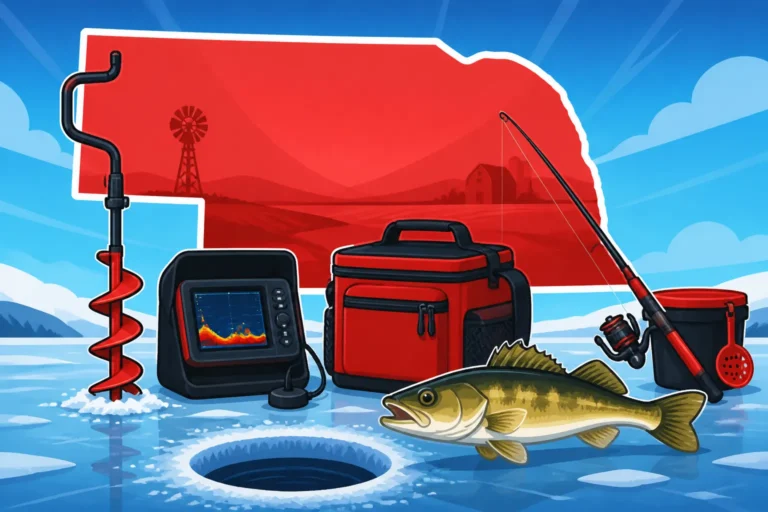
A good ice auger and a portable fish finder are essential tools for this time of year. Consider checking out various ice fishing gear on Amazon to make sure you're well-equipped. The clear ice often allows you to see fish approaching your bait, adding to the excitement.
Mid-Winter: Deep and Slow
As mid-winter sets in, with colder temperatures and thicker ice, fish activity tends to slow down. They often retreat to deeper basin areas or suspend over structure. This is when patience and finesse become key. Smaller baits, lighter lines, and a keen eye on your fish finder for subtle bites are crucial for success. Species like perch and crappie are common targets, often found schooled together. Walleye can still be caught, but often require more dedication and understanding of their deep-water patterns.
This is a great time to enjoy the quiet serenity of a frozen lake, often with a warm beverage in hand. Dressing warmly is not just recommended, it's essential. Our Nebraska Ice Fishing Gear Guide can help you prepare for the colder conditions.
Late Winter: The Last Ice Bite
Just before the ice begins to melt and break up, often in late February and March, there can be a resurgence in fish activity known as "late ice." As more sunlight penetrates the ice and small trickles of meltwater bring oxygen into the system, fish can become quite active again. This can be a fantastic time for a final ice fishing hurrah before the open water returns.
Be extremely cautious during late ice, as conditions can change rapidly and unpredictably. Always check ice conditions diligently. While the general pace of Winter Fishing in Nebraska is slower, these bookend periods of early and late ice can offer some of the best fishing of the season.
Choosing Your Perfect Fishing Window
So, what is the best time of year for a Nebraska fishing trip? Honestly, it depends entirely on what you're hoping to catch and what kind of experience you're looking for!
| Season | Key Fish Species | General Strategy | Pros | Cons |
|---|---|---|---|---|
| Spring | Walleye, Crappie, Bass, Catfish, White Bass | Target pre-spawn/post-spawn staging areas, rivers | Aggressive feeding, spawning runs, rising activity | Unpredictable weather, potential high water from runoff |
| Summer | Catfish, Bass, Walleye, Wiper, Panfish | Early/late day fishing, deep water, night fishing | Long days on the water, abundant species, good for family trips | Midday heat, fish can be deeper, crowds on popular lakes |
| Fall | Walleye, Bass, Crappie, Northern Pike, Trout | Focus on feeding frenzy, schooling baitfish, structure | Active feeding, trophy potential, fewer crowds, comfortable weather | Rapidly changing weather, fish moving to winter patterns |
| Winter | Perch, Bluegill, Crappie, Walleye, Trout (stocked) | Ice fishing, vertical jigging, slow presentations | Solitude, unique experience, often predictable fish locations under ice | Requires specialized gear, extreme cold, ice safety concerns |
If you're after a trophy walleye, late spring (post-spawn) or fall (pre-winter feeding) are often prime. For abundant catfish action, the warmth of summer nights is unbeatable. Crappie lovers will find spring and fall particularly rewarding. And if you crave the unique challenge and camaraderie of ice fishing, winter holds its own special charm. Each season truly offers something different.
Ultimately, the "best" time is when you can get out there and enjoy the natural beauty and the thrill of the catch. Just remember to always check the specific regulations, understand the seasonal patterns of your target species, and come prepared for whatever Mother Nature throws your way. Happy fishing!
Disclaimer
This article is for general informational purposes only and does not constitute professional advice. Laws, prices and regulations vary by location and change over time. Consult a qualified professional for guidance on your specific situation.