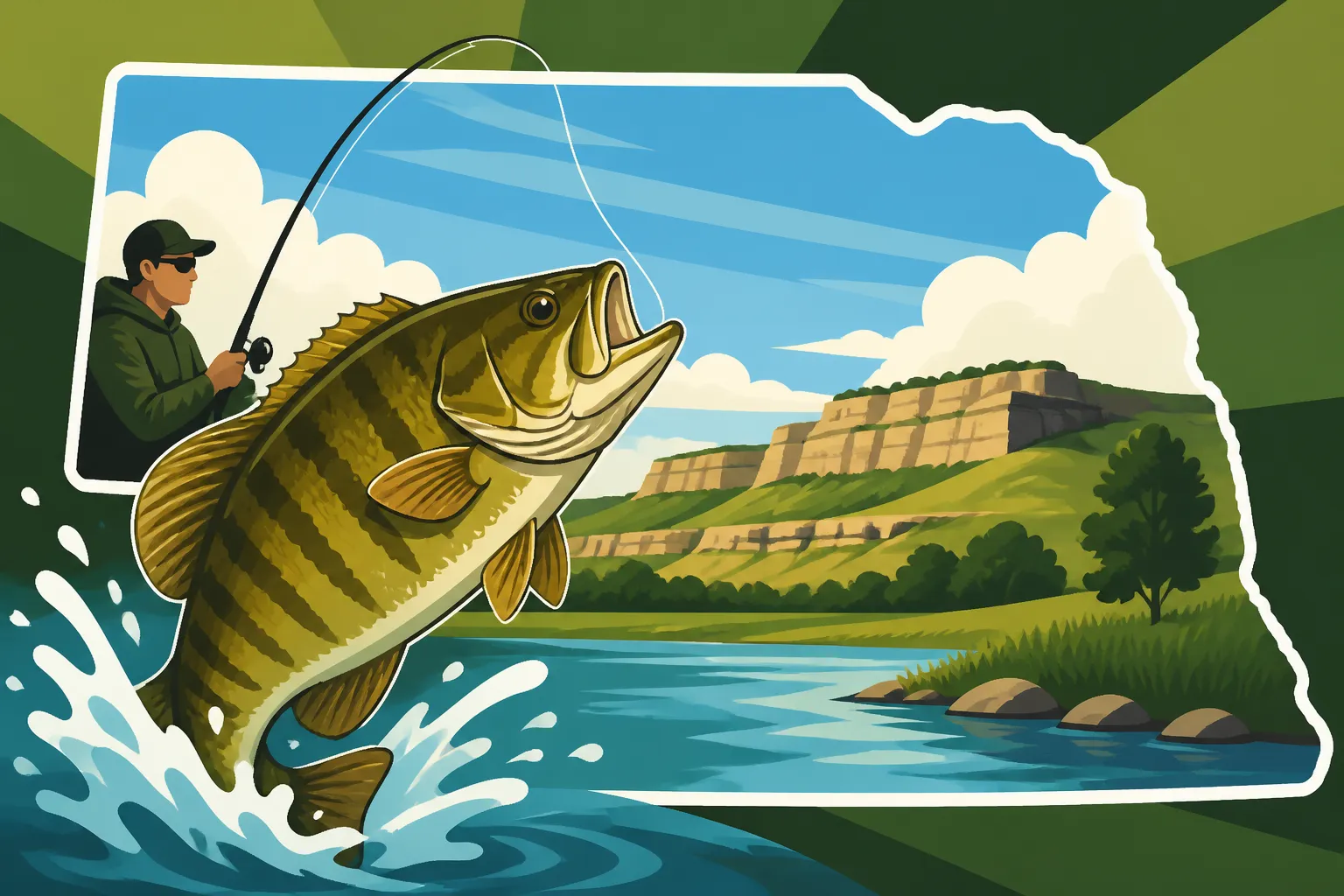
Smallmouth Bass Fishing in Nebraska
For many anglers in Nebraska, smallmouth bass often feel like the elusive, wilder cousins to our more common largemouth. You might hear tales of them lurking in certain rivers or reservoirs, but actually finding and catching them can be a real puzzle, leaving you wondering if you're even fishing the right spots or using the right gear. It's easy to get discouraged when the largemouth are biting, but the smallmouth remain a mystery. This comprehensive guide is here to unravel that mystery, providing you with everything you need to know to successfully target and enjoy smallmouth bass fishing across the Cornhusker State.
The Allure of Smallmouth Bass in Nebraska
There’s just something undeniably captivating about smallmouth bass, especially when you encounter them in a state where they might not be as widespread as other popular game fish. They're often seen as a challenging, yet incredibly rewarding, species to pursue, offering a unique angling experience that sets them apart. When you finally connect with one, the fight is unforgettable—a spirited, acrobatic battle that often leaves you breathless and eager for the next one. This pursuit is less about filling a cooler and more about the thrill of the chase and the satisfaction of outsmarting a truly magnificent fish.
Why Smallmouth Are Different and Exciting
Unlike their largemouth brethren, smallmouth bass are known for their preference for cooler, clearer water, typically gravitating towards rocky structures, current breaks, and gravelly bottoms. This habitat preference alone makes fishing for them a distinct adventure. You're not just casting into lily pads; you're often navigating rivers, probing deep rock piles, or carefully working current seams. Their fight is another major differentiator. Smallmouth are renowned for their aggressive strikes and powerful, acrobatic leaps out of the water, often making multiple jumps during a single retrieve. It’s this tenacious spirit and willingness to fight hard that truly hooks many anglers, myself included.
It's a different kind of challenge, requiring more finesse and often more precise lure presentation than you might use for largemouth. You're often working in conditions that demand a keen eye for subtle changes in current or structure, and adapting your approach on the fly. The sheer joy of feeling that sharp thump on your line in a pristine Nebraska river or reservoir, knowing it's likely a hard-fighting smallmouth, is an experience that keeps you coming back, even if it means enduring a few slower days. They demand respect and reward perseverance like few other fish.
Common Misconceptions About Nebraska Smallmouth
One of the biggest misconceptions about smallmouth bass in Nebraska is that they don't really exist in significant numbers, or that they're only found in a couple of obscure locations. While it's true they aren't as ubiquitous as largemouth, their populations are robust in specific areas, and they've actually expanded their range over the years thanks to stocking efforts and natural reproduction. Another myth is that you need specialized, expensive gear to catch them. While having the right tools certainly helps, many effective smallmouth techniques can be employed with standard spinning gear you likely already own. It's more about understanding their behavior and habitat than it is about having the latest, most expensive rod.
Furthermore, some anglers believe smallmouth are exclusively a river fish, overlooking their presence and potential in some of our larger, rockier reservoirs. While rivers like the Niobrara are indeed prime smallmouth territory, lakes with ample rock and gravel, especially those with good water clarity and current influence, can hold surprisingly good populations of bronze backs. Dismissing these waters means missing out on some incredible opportunities. You just need to know where to look and how to adapt your tactics for these larger bodies of water, which often mimic their preferred riverine environments.
Identifying Smallmouth Bass
Correctly identifying a smallmouth bass is crucial, not just for bragging rights, but also for adhering to specific regulations that might differ from largemouth. Smallmouth bass typically have a more streamlined, "torpedo" shaped body compared to the chunkier build of a largemouth. Their coloration usually ranges from bronze to dark brown on the back, fading to a lighter, often yellowish-white belly, with distinct vertical bars or blotches along their sides, which can vary in prominence. The most reliable distinguishing feature, however, is their mouth.
When a smallmouth's mouth is closed, the corner of its jaw does not extend past the center of its eye. In contrast, a largemouth's jaw extends well past the eye. Smallmouth also have a more continuous dorsal fin, while the largemouth's dorsal fin appears to be almost completely separated into two distinct sections. If you're ever in doubt, observing these characteristics will help you make a positive identification. Knowing your fish is a fundamental part of responsible angling, ensuring you follow local rules and contribute to the health of our fisheries. You can also refer to a Nebraska Fish Species Identification Guide for a visual comparison.
Prime Smallmouth Bass Habitats in Nebraska
Smallmouth bass are particular about where they live. They aren't going to be hanging out in muddy, slow-moving creeks or shallow, weed-choked ponds like their largemouth cousins. Instead, they seek out environments that offer cooler, clearer water, consistent current, and an abundance of hard, rocky structure. Understanding these preferences is the key to unlocking consistent smallmouth success in Nebraska. Once you grasp what they're looking for, you can start to narrow down your search and focus your efforts on the most promising waters.
River Systems: The Niobrara and Beyond
When most people think of smallmouth bass in Nebraska, their minds immediately go to the Niobrara River, and for good reason! This river is arguably the state's premier smallmouth fishery, renowned for its crystal-clear water, abundant rock structure, and consistent flow. The Niobrara offers incredible opportunities for wade fishing, float trips, and kayak fishing, allowing anglers to target smallmouth in their natural riverine environment. The key here is the current breaks, eddies behind boulders, undercut banks, and gravel beds that provide both ambush points and spawning grounds for these aggressive fish. You'll find smallmouth nestled behind larger rocks, in pockets of calmer water adjacent to fast current, and around submerged wood.
While the Niobrara is famous, it's not the only game in town. Other river systems and larger creeks with similar characteristics—good flow, rocky bottoms, and clear water—can also hold populations of smallmouth. Exploring the upper reaches of some of Nebraska's lesser-known rivers or even certain stretches of the Platte River, particularly where it runs clearer over gravel and rock, might surprise you. These areas might not boast the sheer numbers of the Niobrara, but they can offer exciting, less-pressured opportunities for adventurous anglers. When planning your trip, consider checking out specific advice for Niobrara River Smallmouth Bass Fishing.
Reservoir Hotspots: Where to Find Rocky Structure
While rivers are classic smallmouth territory, don't overlook Nebraska's reservoirs, especially those with significant rock and gravel features. Lakes like Lewis and Clark Lake, Merritt Reservoir, and even parts of Lake McConaughy can hold impressive smallmouth populations. In these larger bodies of water, smallmouth will relate heavily to riprap banks, rocky points, submerged humps, deep rock piles, and old creek channels that still feature hard bottom. They use these areas for cover, to ambush baitfish, and for thermal regulation, seeking cooler water in the depths during summer.
The key to finding them in reservoirs is to think like a smallmouth. Look for areas with a steep drop-off adjacent to a rocky flat, or points that extend out into deeper water. Wind-blown rocky shorelines can be particularly productive, as the wave action often pushes baitfish against these structures, creating a feeding opportunity for hungry bass. Focus your efforts on the cleanest, clearest parts of these lakes, and don't be afraid to fish deeper than you might for largemouth. Modern electronics can be a huge asset here, helping you locate those crucial submerged rock formations and schools of baitfish that smallmouth are likely to be chasing. For a broader view, check out Best Places to Fish in Nebraska.
Unexpected Smallmouth Waters
Beyond the well-known smallmouth havens, Nebraska holds a few lesser-known gems that can surprise you with a solid bronze back bite. These often include specific sandpits or gravel pits that have been allowed to develop mature rock structure and clear water, or even certain private ponds that have been intentionally stocked. While not widespread, these smaller, more localized bodies of water can sometimes offer incredible, unpressured fishing, especially for anglers willing to do a little research and legwork. It often involves tapping into local knowledge or doing some serious map scouting to identify areas that might fit the smallmouth's preferred habitat profile.
These unexpected waters might also include tailwaters below certain dams, where the constant flow creates river-like conditions and scours out rocky bottoms. While typically colder and sometimes more challenging to access, these areas can concentrate fish, including smallmouth, that are drawn to the consistent current and abundant forage. Always remember to check Nebraska Fishing Regulations Explained for any specific rules pertaining to these areas, as some tailwaters or private lands might have unique requirements or restrictions. The thrill of discovering a new, productive smallmouth spot is one of the greatest joys of being a Nebraska angler!
Essential Gear for Nebraska Smallmouth Fishing
Having the right gear won't guarantee a trophy smallmouth, but it will certainly increase your chances and make the experience a whole lot more enjoyable. Smallmouth bass fishing, particularly in rivers with current, demands specific setups that offer sensitivity, casting accuracy, and the backbone to handle their aggressive fighting style. Don't worry, you don't need to break the bank, but investing in a few key pieces will make a significant difference. You can find a wide selection of quality gear for various budgets on Amazon.
Rods, Reels, and Line Preferences
For smallmouth, sensitivity is paramount. I generally recommend a spinning setup for most techniques, especially when fishing lighter lures and finesse presentations. A medium-light to medium power rod, typically 6'6" to 7'2" in length, with a fast action tip, is ideal. This combination allows for precise casting of lighter baits, excellent feel for subtle bites, and enough backbone to manage a fighting bass in current or around structure. For example, a 6'8" medium-fast spinning rod is a versatile choice that handles everything from jigs to crankbaits. You can often find fantastic options on Amazon that offer great performance without costing a fortune.
Pair your rod with a quality spinning reel in the 2000 or 2500 size range. Look for a smooth drag system and a good retrieve ratio. As for line, I usually spool up with 6-8 pound test fluorocarbon or a braided line with a fluorocarbon leader. Fluorocarbon is nearly invisible underwater, offers excellent sensitivity, and has good abrasion resistance for fishing around rocks. If you prefer braid, a 10-15 pound test main line with a 6-8 pound fluorocarbon leader is a fantastic, sensitive, and strong setup, especially if you're worried about line twist or need to make long casts. This kind of setup allows you to feel everything, from the lightest tap to your lure bumping bottom.
Top Lures and Baits for Smallmouth
Smallmouth bass are opportunistic predators, but they do have their favorites. When it comes to artificial lures, think about baits that mimic crayfish, minnows, or small baitfish. Crankbaits are highly effective, especially those with a tight wiggle that dive to the depth of the rocky structure you're targeting. Smallmouth also can't resist a well-presented jig, whether it's a hair jig, a tube jig, or a finesse jig tipped with a soft plastic trailer. Soft plastics like grub tails, Ned rigs, creature baits, and small worms rigged on a drop shot or shaky head are also deadly, especially when the bite is tough.
Topwater lures like poppers, walking baits, and prop baits can provide explosive strikes, particularly during low light conditions or when fishing calmer areas in rivers or reservoirs. Finally, don't underestimate the power of spinnerbaits and inline spinners, especially in rivers with current. These baits offer flash and vibration that can trigger aggressive reaction strikes. I always make sure to stock up on a variety of these baits from reputable brands, often checking out what's available for quick shipping on Amazon so I'm never short on options. For specific recommendations, check out Best Lures for Nebraska Bass.
Kayaks and Wading Gear for River Anglers
For accessing many of Nebraska's prime smallmouth river habitats, a kayak, canoe, or reliable wading gear is essential. A fishing kayak designed for rivers offers stability, maneuverability in current, and the ability to cover significant stretches of water that are inaccessible from shore. Look for kayaks with good tracking, comfortable seating, and enough storage for your tackle and safety gear. A good river kayak often has a slightly shorter, wider hull for stability and ease of turning in moving water. If you're serious about river fishing, investing in a quality Best Kayak for Fishing Moving River Water will pay dividends.
For those who prefer to stay on foot, a good pair of waders and wading boots is an absolute must. Breathable waders are comfortable for longer treks and warmer weather, while neoprene waders offer insulation for colder water. Your wading boots should provide excellent grip on slippery rocks and support for uneven river bottoms. Always carry a wading staff for stability, especially when navigating unknown currents or depths. Safety is paramount when wading in rivers, so never go alone if possible, and always be aware of changing water conditions. Remember to check out Best Waders for River Fishing in Nebraska before your next trip. Having a Best Fishing Backpacks and Tackle Bags is also super helpful for carrying your gear while wading.
Mastering Smallmouth Bass Techniques by Season
Smallmouth bass behavior changes significantly throughout the year, driven by water temperature, spawning cycles, and forage availability. To consistently catch them in Nebraska, you need to adapt your techniques to the season. What works in the spring might be completely ineffective in the dead of summer, and vice-versa. Understanding these seasonal shifts is the mark of a truly successful angler.
Spring Strategies: Pre-Spawn and Spawn
Spring is an exciting time for smallmouth anglers, as these fish begin to shake off their winter sluggishness and move into shallower waters in preparation for spawning. As water temperatures climb into the 45-55°F range, smallmouth will be in their pre-spawn phase, actively feeding to build energy for the spawn. During this time, look for them around points, channel swings, and warmer, shallower rocky flats near deeper water. They'll often stage on the edges of these areas, waiting for the right moment to move up. Slow-rolling spinnerbaits, jerkbaits, hair jigs, and tube jigs can be incredibly effective during pre-spawn. They're still a bit lethargic, so slower presentations are key.
Once water temperatures reach the upper 50s to low 60s°F, smallmouth will move onto their spawning beds. In rivers, these are typically gravelly flats or sand pockets in calmer current. In reservoirs, they’ll seek out hard-bottomed areas like rocky points or sheltered coves. During the spawn, they become very protective of their nests. While you can catch them by sight fishing with finesse baits like Ned rigs or small plastic worms, it's often best to let them do their thing and avoid stressing them too much, especially if you intend to release them. Focusing on the pre-spawn bite is usually more productive and sustainable.
Summer Tactics: Deep Water and Current
As summer temperatures rise and water warms into the mid-60s to 70s°F and beyond, smallmouth will often move to deeper, cooler water, especially in reservoirs. They'll relate to deep rock piles, submerged humps, offshore points, and the edges of old creek channels. In rivers, they'll seek out strong current breaks, deeper pools, and areas with overhead cover like undercut banks or log jams that provide shade and cooler water. Their metabolism is high, so they're often very active feeders, chasing baitfish relentlessly.
Techniques for summer include deep-diving crankbaits, Carolina rigs, drop shot rigs with small plastic worms or minnow imitations, and heavy jigs tipped with creature baits. On rivers, fan-casting spinnerbaits, small crankbaits, and tube jigs into current seams and eddies can be incredibly effective. Early mornings and late evenings can also bring smallmouth into shallower rocky areas to feed, offering opportunities for topwater action. How to Catch Smallmouth Bass in Rivers provides more in-depth strategies for those hotter months. Remember, smallmouth love current and oxygen, so finding these features, even in the dog days of summer, is crucial.
Fall Fishing: Feeding Frenzies and Transition Zones
Fall can be an absolutely fantastic time for smallmouth fishing in Nebraska, as water temperatures begin to cool, signaling the fish to start their fall feeding frenzy. They know winter is coming, and they need to pack on the pounds. Smallmouth will often move from their deep summer haunts into shallower to mid-depth areas, actively chasing baitfish. This is when you can encounter some of the most aggressive bites of the year. Look for them concentrated around rocky points, secondary humps, and the mouths of creeks that feed into larger bodies of water.
During this time, a wide variety of lures can be effective. Crankbaits that mimic shad or other forage, jerkbaits, bladed jigs, and even larger spinnerbaits can elicit powerful strikes. On rivers, they’ll often be found in slightly deeper runs and pools, or staging at the mouths of tributaries, ambushing migrating baitfish. As the water continues to cool into late fall, they'll gradually move back to deeper wintering areas, often in large schools. The key is to follow the bait and understand that their feeding windows can be intense but sometimes short-lived. This is also a great time to hit the water, as recreational boat traffic generally slows down, giving you more peace and quiet.
Reading the Water and Locating Smallmouth
Catching smallmouth bass isn't just about throwing a lure; it's about understanding their environment and how they interact with it. Smallmouth are creatures of habit and structure, and once you learn to "read" the water, you'll dramatically improve your ability to locate and catch them. This skill takes time and practice, but it’s one of the most rewarding aspects of becoming a proficient angler.
Understanding Current and Structure
In river systems, current is everything for smallmouth. They use current to their advantage, positioning themselves in ambush points where they can dart out to grab passing food while expending minimal energy. Look for current breaks: eddies behind large boulders, fallen trees, bridge pilings, or sharp bends in the river. The "seams" where fast water meets slow water are prime smallmouth territory. These areas concentrate baitfish and provide a resting spot for bass. Understanding the nuances of water flow and how it creates these micro-habitats is crucial. Don't just cast blindly; observe the water, identify potential current breaks, and work your lure through these high-percentage zones.
In reservoirs, structure is the equivalent of current breaks. Smallmouth will relate to any hard structure that offers cover, ambush points, and proximity to deeper water. This includes riprap, rocky points, submerged humps, gravel bars, and even subtle changes in bottom composition from mud to rock. The most productive structures often have a steep drop-off nearby, allowing smallmouth to quickly move between different depths. Think about how baitfish would move through the area and where a predator would hide to intercept them. Even a small cluster of rocks can hold a trophy smallmouth.
The Importance of Water Clarity and Temperature
Smallmouth bass generally prefer clear, cool water. This isn't to say you won't catch them in slightly stained conditions, but excessively muddy or warm water usually sends them deeper or pushes them out of an area entirely. In clear water, they rely heavily on their eyesight to hunt, which means your lure choice and presentation become even more critical. Natural colors and subtle actions often work best in very clear conditions. If the water is a bit stained, you might opt for brighter colors or lures with more vibration to help them locate your bait.
Water temperature dictates their activity levels and location. In spring, they seek warming waters to spawn. In summer, they retreat to cooler depths or heavily shaded, current-rich areas. In fall, they actively feed in cooling waters. Keeping a close eye on water temperature, either with a thermometer or by paying attention to local reports, will give you valuable clues about where the fish are likely to be and how active they might be. Slight temperature differences can concentrate fish in surprisingly small areas, so don't overlook a few degrees here or there.
Using Electronics and Observation
While traditional observation skills are invaluable, modern electronics can significantly boost your smallmouth success, especially in larger reservoirs. A good fish finder with side imaging or down imaging can help you pinpoint submerged rock piles, humps, and channel edges that you might otherwise miss. It allows you to quickly scan large areas and identify promising structure, saving you valuable fishing time. When you see baitfish congregated near structure, you can be confident smallmouth are likely nearby. Learning How to Read a Fish Finder for Walleye can also apply to smallmouth, as the principles of identifying structure and fish arches are similar.
However, don't rely solely on electronics. Your eyes are powerful tools. Look for subtle signs on the surface: baitfish flickering, diving birds, or even the telltale splash of a feeding bass. Pay attention to how your boat or kayak drifts over a piece of structure, or how the current moves your lure in a river. Observe the shoreline for clues about what might be under the water. Are there large boulders on the bank? Chances are there are similar rock formations underwater. Combining thoughtful observation with technology will make you a much more efficient and successful smallmouth angler in Nebraska.
Conservation and Responsible Smallmouth Fishing
As passionate anglers, we have a responsibility to protect the resources that provide us with so much joy. Smallmouth bass, while resilient, benefit greatly from responsible angling practices. Ensuring the health and sustainability of Nebraska's smallmouth fisheries guarantees that future generations can enjoy the same thrilling experiences we do today. This means understanding and adhering to regulations, practicing careful catch and release, and generally being good stewards of our natural environment.
Catch and Release Best Practices
Many smallmouth bass anglers practice catch and release, especially for larger, trophy-sized fish. If you plan to release a fish, handling it properly is paramount to its survival. Minimize the time the fish is out of the water; a quick photo is fine, but don't keep it out for extended periods. Use wet hands when handling the fish to protect its protective slime coat. Avoid squeezing its belly or gills. If the fish has swallowed the hook deeply, cut the line as close to the hook as possible rather than trying to rip it out, which can cause irreparable damage. Circle hooks are excellent for minimizing deep hooking.
When releasing the fish, gently hold it in the water, supporting its belly, and allow it to recover its strength before letting it go. It should be able to swim away on its own. Sometimes, gently moving it back and forth to force water over its gills can aid recovery, but generally, holding it still in the current is better. If the water is particularly warm, the fish will be under more stress, so expedite the release process even more. Following Catch and Release Best Practices in Nebraska helps ensure these feisty fish continue to thrive.
Understanding Regulations and Limits
Every state has specific fishing regulations designed to manage fish populations and ensure healthy ecosystems. Nebraska is no exception. Before heading out, always consult the current Nebraska Game and Parks Commission fishing guide to familiarize yourself with the specific rules for smallmouth bass. These regulations typically cover daily bag limits (how many fish you can keep), possession limits (how many fish you can have in your possession at any given time), and length limits (minimum or maximum sizes you can keep). These limits can vary by water body, so always double-check for the specific lake or river you plan to fish.
For instance, some waters might have a protected slot limit, meaning you can't keep fish within a certain size range, but you can keep smaller or larger ones. This is often designed to protect a specific age class of breeding fish. Understanding these nuances is critical for legal and ethical angling. Ignorance of the law is not an excuse, and violating regulations can result in fines or loss of fishing privileges. Don't take chances; be informed. You can find comprehensive details in the Nebraska Fishing Regulations Explained booklet.
Protecting Nebraska's Smallmouth Fisheries
Beyond catch and release and following regulations, responsible smallmouth fishing involves a broader commitment to conservation. This includes preventing the spread of aquatic invasive species (AIS) by cleaning, draining, and drying your boat and gear after every outing. Smallmouth habitats are particularly vulnerable to invaders like zebra mussels and invasive carp, which can drastically alter ecosystems and impact native fish populations. Always inspect your boat, trailer, waders, and fishing gear for any plant fragments or hitchhiking organisms before moving to a new water body.
Also, pack out everything you pack in. Leave no trash, fishing line, or discarded bait behind. Consider participating in local conservation efforts or supporting organizations dedicated to protecting Nebraska's water resources. Healthy water bodies mean healthy fish populations, and that benefits all of us who love to fish. Our actions on the water have a direct impact on the future of smallmouth bass fishing in Nebraska, and it's up to each of us to do our part.
Common Challenges and Troubleshooting
Fishing for smallmouth bass in Nebraska, while incredibly rewarding, isn't always easy. Like any pursuit in the great outdoors, you'll encounter challenges that can test your patience and skill. From a stubborn bite to tricky river navigation, being prepared to troubleshoot common issues will make your trips more successful and less frustrating.
Dealing with Tough Bites
We've all been there: you're on a promising smallmouth spot, the conditions seem right, but the fish just aren't biting. A tough bite can be incredibly frustrating, but it's an opportunity to adapt and learn. When smallmouth are finicky, the first thing to consider is downsizing your lure. Go to smaller jigs, lighter line, and more subtle presentations like a Ned rig or a tiny tube jig. Sometimes, a slight change in color or even the retrieve speed can make a huge difference. If you're using fast retrieves, slow down. If you're going slow, try a sudden twitch.
Another strategy is to change locations slightly. The fish might be there, but perhaps they've moved deeper, into heavier cover, or away from the main current. Fan cast the area thoroughly, covering different depths and angles. Consider the weather: a sudden cold front or a dramatic barometric pressure change can often shut down the bite. In these conditions, fish tend to be less aggressive and hold tighter to cover, requiring a very precise, slow presentation right on their nose. Don't be afraid to experiment, and remember that even experienced anglers have slow days.
Navigating Rivers and Reservoirs
Nebraska's rivers and reservoirs present their own unique navigational challenges. In rivers, especially smaller, clearer ones, knowing the water depth, current strength, and potential hazards like submerged logs or rock gardens is critical, whether you're wading or in a kayak. Always wear a PFD (personal flotation device) when kayaking or canoeing, and consider a wading staff for stability on foot. Understanding What Fish Live in the Niobrara River often means understanding how its currents and depths shape the fish habitat, too.
In larger reservoirs, wind can be a major factor. Strong winds can make boat control difficult, create rough water, and make casting accurately a nightmare. If the wind picks up, consider fishing the leeward side of islands or points, which will be more sheltered. Alternatively, use your trolling motor or anchors to maintain position over key structures. Always check weather forecasts before heading out on large lakes, and be prepared for changing conditions. If you're using a boat, ensure all your safety equipment is onboard and in good working order.
Weather Impacts on Smallmouth Behavior
Weather plays an enormous role in smallmouth bass behavior. As mentioned, cold fronts can cause fish to become sluggish and retreat to deeper water or denser cover. Overcast days can often be excellent for smallmouth, as the reduced light encourages them to feed more actively in shallower areas. Sunny, high-pressure days often push them deeper or into shaded cover. Rain can stir up baitfish and increase current, which can trigger a good bite, especially if it's a warm, gentle rain.
Wind, beyond its navigational challenges, also affects smallmouth. A moderate chop on the water can actually be beneficial, breaking up the surface and making fish less wary of your presence, while also concentrating baitfish. However, extreme winds make fishing nearly impossible. Always keep an eye on the sky and be prepared to adjust your plans. Sometimes, the best strategy is to embrace the conditions you're given. If it's windy, fish wind-blown points with crankbaits. If it's calm and sunny, focus on deep structure with finesse presentations. Being flexible and observing how the fish react to the elements is key.
Nebraska Smallmouth Lure & Bait Guide
Here's a quick guide to some of the most effective lures and baits for targeting smallmouth bass in Nebraska, considering different conditions and seasons. Remember, versatility is your friend!
| Lure Type | Best Conditions / Season | Key Features | Recommended Colors | Notes |
|---|---|---|---|---|
| Crankbaits | Spring, Fall, Summer (deep) | Mimics baitfish, dives to various depths, tight wiggle | Shad, Crawfish, Perch | Vary dive depth for target structure. |
| Jigs (Tube, Hair, Finesse) | All Seasons, especially tough bites | Mimics crawfish/baitfish, subtle action, versatile | Green Pumpkin, Black/Blue, White, Brown | Tip with small plastic for added appeal. |
| Soft Plastics (Ned Rig, Drop Shot) | All Seasons, clear water, finesse bite | Natural presentation, subtle movement, light tackle | Green Pumpkin, Watermelon, Smoke | Slow retrieve is often key. |
| Spinnerbaits | Spring, Fall, stained water | Flash and vibration, covers water quickly | White, Chartreuse, Perch | Great for current breaks in rivers. |
| Jerkbaits | Spring, Fall, cool water | Erratic darting action, suspends in water | Shad, Silver, Gold | Pause-and-go retrieve triggers strikes. |
| Topwater (Poppers, Walkers) | Summer (early/late), calm water | Surface action, exciting blow-ups | Frog, Shad, Bone | Best during low light or overcast conditions. |
| Inline Spinners | Rivers, clear water | Flash and vibration, small profile | Silver, Gold, Copper | Excellent for small stream and river bass. |
Disclaimer
This article is for general informational purposes only and does not constitute professional advice. Laws, prices and regulations vary by location and change over time. Consult a qualified professional for guidance on your specific situation.