What Crappie Eat in the Spring
Spring in Nebraska is a magical time for anglers, but it can also be incredibly frustrating when you're targeting crappie. One day they're biting everything you throw at them, the next they've vanished, leaving you wondering what changed and, more importantly, what they're actually eating. This guide is here to demystify spring crappie diets in Nebraska, helping you understand their hunger patterns and choose the perfect bait to fill your livewell.
Understanding Crappie Behavior and Metabolism in Spring
As the ice retreats and the waters of Nebraska lakes and rivers begin to warm, crappie undergo significant physiological changes that directly influence what and how they eat. It's not just a switch that flips; it's a gradual process driven by water temperature and their internal clock ticking towards spawning. Understanding these phases is crucial for successful spring crappie fishing.
Pre-Spawn Crappie Movements and Feeding Habits
When the water temperatures are still on the cooler side, typically in the low to mid-40s Fahrenheit, crappie are in their pre-spawn phase. They're starting to move out of their deep wintering holes and congregating in transition areas. Think about the first few days where you can finally get a boat out or comfortably fish from shore without bundling up like an Eskimo. During this time, their metabolism is kicking into gear, and they need to bulk up for the energy-intensive spawning ritual ahead.
These pre-spawn crappie are often found in deeper edges near spawning flats, submerged timber, or along creek channels. They’re still a bit lethargic compared to their post-spawn counterparts, but they're actively looking for food. Their diet during this period might be a mix of larger, more substantial meals to build up reserves, but they're not quite in the frenzied eating mode yet. This is a great time to target them, as they're often concentrated. If you want to dive deeper into their annual movements, check out Nebraska Fishing Seasons Explained.
Spawning Phase: Focus Shifts from Food to Reproduction
Once water temperatures climb into the mid-50s to low-60s Fahrenheit, the crappie spawn is in full swing. This is often when anglers get really excited because crappie move into very shallow water, making them accessible even without a boat. They'll be found around brush piles, submerged logs, weed beds, and even rocky banks in just a few feet of water. However, while they are shallow and abundant, their primary focus isn't eating.
During the actual spawning period, crappie's appetites can be finicky. The males are busy fanning nests and guarding eggs, and the females are depositing them. Eating takes a backseat to reproduction. You might catch them out of aggression or instinct, but they're not actively hunting for a meal in the same way. It can feel like they're ignoring your bait even when you know they're there. This is a common frustration for many anglers, but understanding it helps manage expectations. If you’re looking for where they might be hanging out, learning How to Catch Crappie Around Brush Piles can be a game-changer.
Post-Spawn Recovery and Renewed Appetite
After the spawn, as water temperatures continue to rise, crappie enter a recovery phase. The females are exhausted from egg-laying, and the males are tired from nest-guarding. Initially, they might retreat to slightly deeper water to rest and recuperate. However, it doesn't take long for their metabolism to kick back into high gear with a vengeance. This is when they develop a serious case of the munchies.
Once they've had a brief rest, usually when water temperatures are firmly in the mid-60s and climbing, crappie become incredibly aggressive feeders. They need to replenish their energy stores and will actively chase down a meal. This post-spawn period can offer some of the most consistent and exciting crappie fishing of the year. They'll still be relating to cover, but they'll be more willing to roam a bit further from it in search of food. Their renewed appetite means they'll be less selective, often hitting a wider variety of baits and lures.
Natural Forage: What Nebraska Crappie Really Eat in Spring
Understanding what crappie naturally prey on in Nebraska waters during the spring is the cornerstone of effective bait selection. They're opportunistic feeders, meaning they'll eat what's available and easy to catch. As the water warms, the underwater ecosystem comes alive, providing a smorgasbord of options for hungry crappie.
The Importance of Zooplankton and Invertebrates
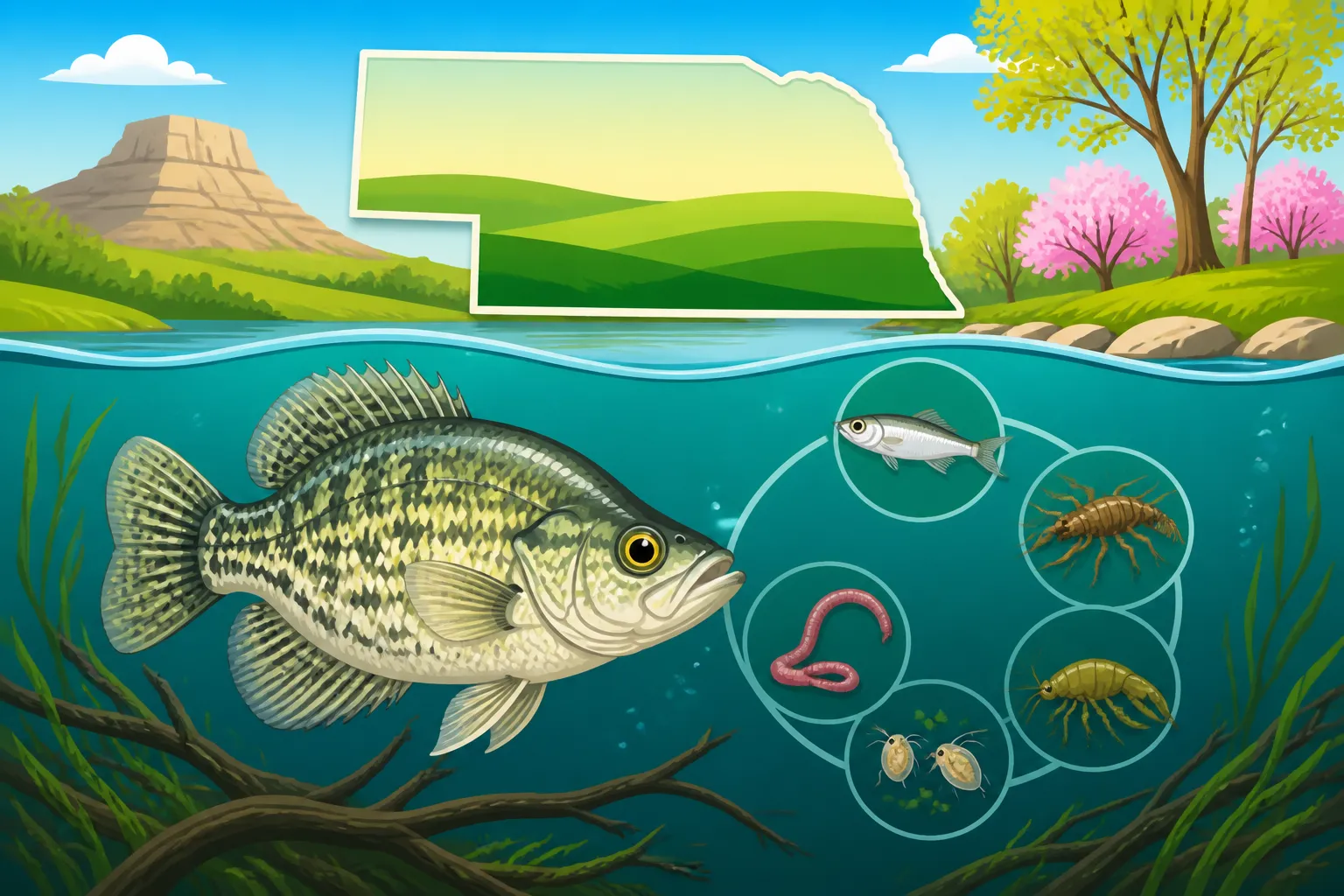
In the early spring, especially when water temperatures are still quite cool, zooplankton and small invertebrates form a crucial part of a crappie's diet. These microscopic creatures become more active as the water warms, and crappie will suspend in the water column, filtering them. While you can't realistically "match" zooplankton with an artificial bait, it tells us something vital: early spring crappie are often feeding on very small, subtle presentations.
As spring progresses, larger invertebrates like insect larvae (chironomids, mayfly nymphs, dragonfly nymphs), small leeches, and tiny crustaceans (like scuds or daphnia) become more prevalent. Crappie will patrol weed lines, submerged logs, and muddy bottoms, picking off these protein-rich snacks. Think about how many times you've cleaned a crappie and found a belly full of what looks like mud or tiny, unrecognizable bits – it's often these invertebrates. Their presence also indicates where crappie might be holding, as these food sources tend to congregate in specific habitats.
Small Baitfish and Their Role in the Crappie Diet
As spring transitions to warmer temperatures, small baitfish become increasingly important in a crappie's diet. Minnows, shad, juvenile sunfish, and even small perch are prime targets. These baitfish often move into shallower water during the spring for their own spawning rituals or to find warmer water and food, which puts them directly in the path of hungry crappie.
Crappie are ambush predators, and they'll hide in cover – be it a brush pile, a dock, or emergent vegetation – waiting for an unsuspecting school of minnows to swim by. This is particularly true in the pre-spawn and post-spawn periods when they are actively hunting to build energy or recover. The movement and flash of a small baitfish are irresistible to a crappie. This is why live minnows are such a universally effective bait for crappie, especially in Nebraska. The availability of these baitfish heavily influences where crappie choose to feed and what they're looking for.
Aquatic Insects and Larvae
Beyond zooplankton, a variety of aquatic insects and their larvae play a significant role. Think about the hatches you see on the surface of the water on a warm spring evening – mayflies, caddisflies, even mosquitoes. While adult insects on the surface might attract some topwater action, it's their larval and nymph stages, living in the mud and vegetation, that are a consistent food source for crappie underwater.
Crappie will actively root around in the substrate or pick these larvae off submerged plants. This type of feeding behavior suggests that a slowly presented bait, mimicking a struggling larva or nymph, can be incredibly effective. Small jigs, particularly those with soft plastic bodies designed to imitate insect profiles, can fool even the most finicky crappie when they're keying in on these invertebrate meals.
Matching the Hatch: Best Baits and Lures for Spring Crappie
Knowing what crappie eat naturally helps us choose the best artificial or live baits to present to them. "Matching the hatch" isn't just for fly fishermen; it's a fundamental principle for all successful angling. In spring, this means offering presentations that mimic the size, shape, and movement of their primary food sources.
Live Bait: The Undisputed King for Finicky Crappie
When crappie are being particularly stubborn, or if you're fishing in colder spring waters, live bait is almost always your best bet. Nothing beats the natural scent, movement, and taste of a real meal.
- Minnows: Hands down, small minnows (like fatheads or shiners) are probably the most consistently effective live bait for spring crappie in Nebraska. They perfectly mimic the small baitfish that crappie are already targeting. You can rig them under a bobber, tight-line them, or even slow-troll them. The key is to use a small, sharp hook (like a #4 or #6 light-wire hook) that won't impede the minnow's natural swimming action. For more specific advice on size, check out Best Minnow Size for Crappie Fishing.
- Worms: While not as popular as minnows for crappie, small pieces of nightcrawlers or red worms can be surprisingly effective, especially in stained water or when crappie are feeding heavily on bottom-dwelling invertebrates. They offer a strong scent trail that can attract crappie from a distance.
When using live bait, patience is often key. Let the minnow do its work, and watch your bobber closely for even the slightest twitch. Sometimes, a subtle crappie bite feels like nothing more than your minnow swimming against the line.
Artificial Lures: Versatility and Active Fishing
For those who prefer active fishing or want to cover more water, artificial lures are incredibly effective, particularly as the water warms and crappie become more aggressive. The market is flooded with options, but a few stand out for spring crappie. You can often find a fantastic selection of these on sites like Amazon, making it easy to stock up before your next trip.
Jigs and Soft Plastics
This combination is probably the most versatile for spring crappie.
- Small Jig Heads: The weight of your jig head is crucial. In early spring, when crappie are deeper or more lethargic, a 1/32 or 1/16 ounce jig head might be ideal for a slow fall. As crappie become more active, you can move up to a 1/8 ounce or even a 1/4 ounce if you're fishing deeper water or in current.
- Soft Plastic Bodies: The variety here is endless, but a few profiles consistently produce:
- Tubes: Small 1.5 to 2-inch tubes with tentacles are fantastic for mimicking minnows or even larger invertebrates. They have a natural spiral fall that crappie love.
- Grubs: Single-tail or double-tail grubs in 1 to 2-inch sizes offer a subtle vibration and tail action. Chartreuse, white, and various greens are always good starting points.
- Paddle Tails/Swimbaits: For a more pronounced baitfish imitation, tiny paddle-tail swimbaits (1 to 2 inches) can be deadly, especially when retrieved steadily or vertically jigged. These are excellent when you are looking for Best Jig Color for Nebraska Crappie.
The presentation of jigs is everything. In cooler water, a slow, steady retrieve or vertical jigging with minimal action is often best. As the water warms, you can impart more aggressive snaps or twitches.
Small Crankbaits and Spinnerbaits
While jigs dominate, don't overlook these options, especially during the post-spawn phase when crappie are actively chasing.
- Crankbaits: Tiny crankbaits (1 to 2 inches) that dive to shallow depths can be incredibly effective when crappie are holding near cover in 3-6 feet of water. They mimic frantic baitfish and their erratic action can trigger aggressive strikes. Look for neutral buoyancy models that suspend when paused.
- Spinnerbaits (Micro Sizes): Specialty micro-spinnerbaits designed for panfish can also catch crappie, especially if you're in water with heavier cover where you want a more weedless presentation. The flash and vibration can be a powerful attractor.
When crappie are hitting these more aggressive lures, it's often a sign that their metabolism is soaring, and they're truly on the hunt.
Location, Location, Location: Where Crappie Find Their Meals
Even if you have the perfect bait, it won't do you any good if you're not presenting it where the crappie are feeding. Their spring locations are directly tied to where their food sources are abundant and accessible, often influenced by water temperature and available cover.
Shallow Cover: The Springtime Buffet
As water temperatures creep into the 50s and 60s Fahrenheit, crappie will absolutely flock to shallow cover. This is where the majority of their spring forage—small baitfish, insect larvae, and invertebrates—congregates. This cover also provides warmth and protection, making it an ideal ambush point.
Look for:
- Brush Piles and Submerged Timber: These are classic crappie magnets. The branches provide shelter for crappie and a haven for baitfish and insects. Often, the bigger crappie will hold deeper within the brush, while smaller ones might be on the edges.
- Weed Lines and Aquatic Vegetation: Newly emerging weeds or established weed beds offer excellent cover and food. Crappie will patrol the edges or hold within the thicker patches, especially if they have access to open water for hunting.
- Docks and Boat Houses: These man-made structures provide shade, cover, and often accumulate debris that attracts baitfish. The pilings themselves can hold algae and invertebrates. Don't be afraid to skip your jig under a dock.
When you find one crappie in these areas, there are almost certainly more. They are schooling fish, and where there's food and cover, they'll congregate.
Feeder Creeks and Inflows: A Moving Feast
Anywhere there's an inflow of warmer water into a lake or reservoir, you'll likely find crappie and their food sources. Feeder creeks, culverts, or even smaller streams dumping into the main body of water can be hotspots. These inflows often bring in nutrients, attracting plankton and baitfish, and the water coming in is usually slightly warmer than the main lake, which is a huge draw in early spring.
The current created by these inflows also disorients baitfish, making them easier targets for crappie. Focus on the seams where the current meets still water, or on any structure in the path of the flow. A slow-drifting live minnow or a subtle jig can be incredibly effective in these areas. For more general advice on where to find them, consider Best Fishing Spots in Nebraska.
Points and Humps: Transition Zones
In the pre-spawn and early post-spawn periods, crappie will often utilize underwater points and humps as staging areas. These structures provide easy access to both deeper water (for safety and cooler temperatures) and shallower feeding flats (for meals). Baitfish also relate to these structures.
Focus on the deeper edges of these points, especially those that have submerged brush or rock piles. Crappie might suspend over the deeper water of a hump, waiting for schools of baitfish to pass by, or they might move onto the shallower tops to feed during low-light conditions. These transition zones are key because they offer both refuge and a convenient hunting ground.
Seasonal Nuances and Adapting Your Crappie Strategy
Spring fishing in Nebraska isn't a static event; it's a dynamic period with constant changes in water temperature, weather, and fish behavior. Being able to adapt your strategy based on these nuances is what separates a consistently successful crappie angler from one who only finds them occasionally.
Early Spring: Slow and Deep
In the very early stages of spring, when water temperatures are still cold (low 40s to low 50s Fahrenheit), crappie are often slower and less willing to chase. Their metabolism hasn't fully fired up, and they're conserving energy. This is when patience and subtle presentations pay off.
Think small, think slow, and think deep(er). Focus on presenting very small jigs (1/32 or 1/16 ounce) with tiny soft plastics or even just a live minnow under a slip bobber. Let it sit for a while, imparting only the slightest twitches. Crappie might be suspended over deeper structure or along the first breaks leading to spawning flats. Fishing in these conditions can be challenging, but also incredibly rewarding when you dial into what they want. If you're struggling to locate them, How to Find Crappie in Cold Water could offer some fantastic insights.
Mid-Spring: Shallow and Aggressive
As water temperatures climb into the mid-50s and low-60s, crappie become more active and move aggressively into shallow spawning areas. This is often the peak of spring crappie fishing. They're still focused on reproduction but are more prone to hitting baits out of aggression or to defend their nests.
Your tactics can become more aggressive too. Use slightly heavier jigs (1/16 or 1/8 ounce) and consider brighter colors in stained water. Fan-cast around visible cover like brush piles, laydowns, and dock pilings. Small crankbaits or spinnerbaits can also be effective. This is often the time when you'll catch more numbers of crappie, as they're concentrated and more willing to bite. The best time of day will often be later in the morning or early afternoon after the sun has had a chance to warm the shallows.
Late Spring: Post-Spawn Feast
After the spawn is complete and water temperatures settle into the mid-60s and beyond, crappie are in full recovery mode and actively gorging themselves. They'll still be relating to cover, but they might spread out a bit more, and their feeding windows can extend throughout the day.
This is a fantastic time for a variety of techniques. Jigs and soft plastics are still incredibly effective, but don't hesitate to try trolling small crankbaits or even live minnows to cover larger areas. Focus on the edges of extensive weed beds, submerged creek channels, and offshore humps. They're often feeding on small baitfish at this point, so presentations that imitate minnows with good action will be key. This phase often blends into early summer fishing, offering some truly exceptional angling opportunities.
Here's a quick overview of spring crappie diet and bait recommendations:
| Spring Phase | Typical Water Temperature (F) | Primary Natural Forage | Recommended Baits/Lures | Key Presentation Notes |
|---|---|---|---|---|
| Pre-Spawn | 40s – Low 50s | Zooplankton, Small Invertebrates, Tiny Minnows | Live Minnows (small), 1/32-1/16 oz Jigs w/ Small Soft Plastics (tubes, grubs) | Very slow retrieve, vertical jigging, subtle twitches, often deeper |
| Spawning | Mid 50s – Low 60s | Less active feeding, defending nests | Live Minnows, 1/16-1/8 oz Jigs w/ Small Soft Plastics (brighter colors in stained water) | Target cover directly, aggressive triggers (aggression bites), shallow |
| Post-Spawn | Mid 60s and up | Small Baitfish, Larger Invertebrates | Live Minnows, 1/8 oz Jigs w/ Paddle-tail Plastics, Small Crankbaits, Micro Spinnerbaits | More active retrieve, fan-casting, covering water, shallow to mid-depth cover |
Always remember to check the current Nebraska Fishing Regulations Explained before you head out, especially for bag limits and length restrictions on crappie. Happy fishing, and may your spring crappie adventures in Nebraska be fruitful!
Disclaimer
This article is for general informational purposes only and does not constitute professional advice. Laws, prices and regulations vary by location and change over time. Consult a qualified professional for guidance on your specific situation.