How to Identify an Invasive Carp Species in Nebraska
It's an unfortunate truth that when you're out fishing on Nebraska's beautiful waters, you might encounter a fish you don't recognize. Sometimes, that unfamiliar catch could be an invasive carp, and knowing what to do – and more importantly, what not to do – is absolutely crucial for protecting our precious ecosystems. This comprehensive guide will walk you through the key identification markers for the most common invasive carp species found in Nebraska, helping you confidently distinguish them from native fish and the more common carp, so you're prepared if one ends up on your line.
Understanding the Threat: Why Invasive Carp Matter in Nebraska
For many Nebraska anglers, a day on the water is about relaxation, enjoying nature, and maybe bringing home some tasty fillets. However, the presence of invasive carp species introduces a significant challenge to this peaceful pursuit and to the health of our aquatic environments. These aren't just "another kind of fish"; they represent a real threat to the balance of our lakes and rivers.
Why Are Invasive Carp a Problem?
The issue with invasive carp isn't just that they're here; it's what they do. These fish are essentially biological bulldozers, disrupting the natural food web and habitat for native species. Imagine a school of hundreds, sometimes thousands, of these fish competing for food that our native walleye, catfish, bass, and panfish rely on. They're incredibly efficient filter feeders, gobbling up the plankton that forms the base of the aquatic food chain. This means less food for larval fish, small baitfish, and even mussels, which in turn impacts the larger game fish we love to catch.
Beyond food competition, some invasive carp can physically alter their environment. Silver Carp, for instance, are known for their spectacular (and dangerous) jumping behavior when startled by boat noise, which can injure boaters and anglers. They stir up bottom sediments, increasing water turbidity, which can reduce light penetration, harm aquatic vegetation, and make it harder for sight-feeding fish to find prey. Their sheer biomass can overwhelm local ecosystems, leading to a decline in biodiversity and overall water quality. It’s a cascading effect that touches everything from the tiniest plankton to the biggest trophy fish in Nebraska waters.
The Different Types of Invasive Carp We're Talking About
When we talk about "invasive carp" in Nebraska, we're primarily focusing on four species that pose significant threats: Silver Carp, Bighead Carp, Grass Carp, and Black Carp. While they all fall under the "carp" umbrella, each has distinct characteristics and specific ecological impacts. You might already be familiar with the common carp, which has been in our waters for over a century and, while non-native, is generally managed differently than these newer, more aggressively invasive species. Understanding the subtle (and sometimes not-so-subtle) differences is key. Many anglers might think a "carp is a carp," but that couldn't be further from the truth when it comes to these invasive species. Each one presents its own set of challenges, and recognizing them is the first step in helping to manage their spread.
Key Characteristics: How to Identify Each Invasive Carp Species
Identifying invasive carp can feel a bit like a detective game, especially when you're trying to distinguish them from native species or even the common carp that's been around for ages. But with a keen eye for a few specific details, you can quickly become proficient at telling them apart. Let's break down the individual traits of the main culprits.
Silver Carp Identification
The Silver Carp is probably the most notorious of the invasive carp, primarily due to its acrobatic tendencies. If you've ever seen videos of fish jumping completely out of the water when a boat passes by, you've witnessed Silver Carp in action.
- Body Shape and Color: Silver Carp have a distinctly streamlined, almost torpedo-like body, and as their name suggests, they are silvery in color. They typically don't have many markings, giving them a very clean, uniform appearance. Their sides might be a bit darker towards the back, fading to a lighter belly.
- Eyes and Mouth: This is a major giveaway. Silver Carp have eyes that are set very low on their head, well below the midline of their body. It looks like their eyes are almost pointing downwards, giving them a rather unique profile. Their mouth is upturned, lacking barbels (the whisker-like feelers you see on a catfish or common carp). They are filter feeders, so their mouth is designed for siphoning plankton.
- Keel Description: Look along the belly. Silver Carp have a sharp, pronounced keel (a ridge) that extends from their anal fin all the way forward to their pectoral fins, ending before the gills. You can easily feel this sharp edge.
- Unique Jumping Behavior: While not a physical identification mark on a fish in hand, if you see fish leaping several feet out of the water in unison when a boat approaches, it's almost certainly Silver Carp. This behavior is dangerous and unique to them among carp species. Imagine cruising on the Missouri River and having one of these missile-like fish slam into your boat or even yourself – it's a very real concern for anglers and boaters.
Bighead Carp Identification
Bighead Carp are often found alongside Silver Carp, and they share some similarities, but they also have distinct features that set them apart. Their name gives a strong hint about their most obvious characteristic.
- Head Size and Eye Placement: True to their name, Bighead Carp possess a disproportionately large head relative to their body size. The eyes, like the Silver Carp, are also set low on the head, below the midline. This low-set eye placement is a common trait among filter-feeding invasive carp.
- Mouth and Gill Rakers: Their mouth is large and upturned, without barbels. Inside, they have very fine, comb-like gill rakers which are perfect for filtering plankton. You won't typically see these unless you inspect the mouth, but it's part of their filter-feeding specialization.
- Body Color and Scales: Bighead Carp have a blotchy, mottled coloration on their sides, often appearing gray or dark silver with irregular splotches of darker pigmentation. Their scales are small and numerous, giving them a smoother appearance than, say, a common carp.
- Distinguishing from Native Fish: Their low-set eyes and large head are primary identifiers that distinguish them from most native Nebraska fish like buffalo or suckers, which typically have smaller heads and eyes set higher on their head. Comparing a Bighead Carp to a local species like a Bigmouth Buffalo would quickly reveal the difference, especially in head shape and eye position.
Grass Carp Identification
Grass Carp are a bit different from their filter-feeding cousins, as their diet and mouth structure reflect their herbivorous nature. They can be particularly damaging to aquatic plant life, including important native vegetation that provides cover and food for other fish.
- Body Shape and Color: Grass Carp have a more elongated, cylindrical body shape compared to the Bighead or Silver Carp. They are generally olive-brown to silvery-gold on their backs, fading to a lighter, yellowish belly. Their coloration can sometimes be confused with common carp.
- Mouth and Teeth (Pharyngeal Teeth): This is a critical identifier. Grass Carp have a short, rounded snout and a terminal mouth (meaning it's at the very front of the head, not upturned or downturned significantly). Crucially, they lack barbels. Internally, they possess large, comb-like pharyngeal teeth located in their throat, designed for shredding vegetation. You won't see these without opening the fish's gills, but it explains their dietary habits.
- Scale Size: Unlike the common carp with its often massive, distinct scales, Grass Carp have relatively large, but not enormous, scales. They are noticeably larger than those of Silver or Bighead Carp.
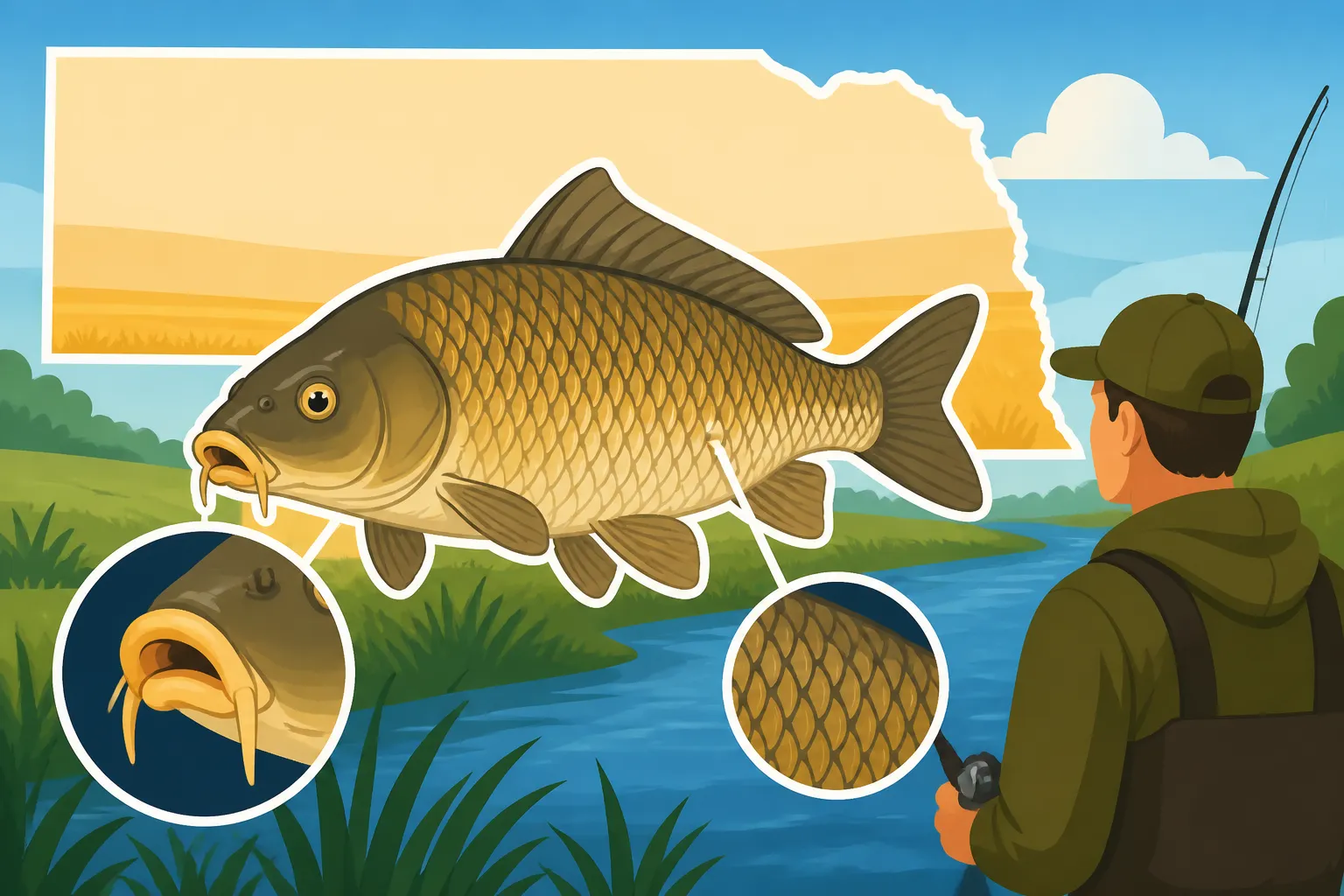
- Similarities to Common Carp: This is where identification can get tricky. A Grass Carp might resemble a common carp in overall shape and color, especially from a distance. However, the key differences are the mouth (common carp have two pairs of barbels, Grass Carp have none) and the scale pattern. Common carp also have a spiny dorsal fin ray, which Grass Carp lack. Look closely at the mouth area. You can find some excellent comparison photos online, or even on a site like Amazon, where you can sometimes find field guides with detailed illustrations.
Black Carp Identification
Black Carp are perhaps the rarest of the invasive carp in Nebraska but pose a unique and severe threat due to their specific diet. They are considered a molluscivore, meaning they primarily eat snails and mussels.
- Coloration and Scales: As their name implies, Black Carp are generally darker than the other carp species, with a dark gray to blackish coloration on their backs and sides, fading to a lighter gray or white on their belly. Their scales are large, dark-edged, and prominent, giving them a somewhat mosaic appearance.
- Mouth and Pharyngeal Teeth (Snail Crushers): Like Grass Carp, Black Carp lack barbels. They have a terminal mouth. The most distinctive feature, again, is their pharyngeal teeth. Black Carp have massive, pavement-like pharyngeal teeth specifically adapted for crushing the shells of snails and mussels. These are incredibly robust teeth, quite different from the comb-like structures of Grass or Bighead Carp.
- Distinguishing from Other Carp: Their dark coloration and large, dark-edged scales immediately set them apart from Silver and Bighead Carp. While they share a similar body shape to Grass Carp, the definitive difference lies in the color and, if you were to inspect it, the pharyngeal teeth.
- Rarity and Specific Threats: Because of their diet, Black Carp are a grave concern for native mussel populations, many of which are already endangered. If you suspect you've caught a Black Carp, it's a serious matter and immediate reporting is paramount. Their presence can have irreversible consequences for our native aquatic biodiversity. For more on the regulatory aspects, check out Nebraska Fishing Regulations Explained.
Comparing Invasive Carp to Native Fish and Common Carp
The key to proper identification isn't just knowing what the invasive carp look like, but also understanding how they differ from the fish we want in our waters. Misidentification can lead to incorrect actions, so let's clarify those important distinctions.
Common Carp vs. Invasive Carp
Many people automatically think of the "common carp" when they hear the word "carp." It's true that common carp are non-native to North America, but they've been here for over a century, and while they can be prolific, their ecological impact is generally different from the more recently introduced invasive species.
| Feature | Common Carp | Silver Carp | Bighead Carp | Grass Carp | Black Carp |
|---|---|---|---|---|---|
| Barbels (Whiskers) | Present (2 pairs around mouth) | Absent | Absent | Absent | Absent |
| Eye Placement | Higher, near midline | Very low, below midline | Very low, below midline | Midline | Midline |
| Head Size | Normal proportion | Normal proportion | Disproportionately large | Normal proportion | Normal proportion |
| Belly Keel | Absent or very slight | Sharp, extends from anal fin to pectoral fins | None | None | None |
| Coloration | Golden-brown to olive, often brassy | Silvery, uniform | Mottled gray/dark silver | Olive-brown to silvery-gold | Dark gray to blackish |
| Scales | Large, distinct, often with dark spots at base | Small, uniform | Very small, numerous | Large, uniform, not as distinct as common carp | Large, dark-edged, prominent |
| Mouth | Downward-pointing, protrusible | Upturned, large filter-feeder | Upturned, large filter-feeder | Terminal, no barbels | Terminal, no barbels |
| Behavior | Bottom feeder, schooling | Jumps when startled, filter feeder | Schooling, filter feeder | Herbivorous, eats aquatic vegetation | Molluscivore, eats snails and mussels |
The presence or absence of barbels is your absolute quickest indicator. If it has whiskers, it's a common carp (or a catfish, but you'll know the difference there!). If it doesn't have barbels, but looks like a carp, then you need to dig deeper into the other characteristics we've discussed. Understanding these differences is part of being a responsible angler in Nebraska, as highlighted in the Nebraska Fish Species Identification Guide.
Native Fish vs. Invasive Carp
Beyond the common carp, it’s important to differentiate invasive carp from some of Nebraska's native species that can sometimes be mistaken for them, particularly certain rough fish or suckers. These include species like Bigmouth Buffalo, Smallmouth Buffalo, River Carpsucker, or even Goldeye.
- Buffalo Species (Bigmouth, Smallmouth): Buffalo fish have much smaller, downward-pointing mouths (especially Bigmouth Buffalo) compared to the upturned, large mouths of Silver or Bighead Carp. Their eyes are also set much higher on their head. Their overall body shape can be robust, but lacks the low-set eyes or pronounced keel of invasive carp.
- Suckers (e.g., River Carpsucker): Like buffalo, suckers have downturned, fleshy mouths that are designed for bottom feeding. They do not have the large, low-set eyes characteristic of Bighead or Silver Carp. Their body shape and coloration are also generally distinct.
- Goldeye: While silvery and somewhat streamlined, Goldeye have much larger eyes set more centrally on their head, a different mouth structure, and lack the pronounced keel of a Silver Carp. They are also much smaller in stature than adult invasive carp.
Always remember: if you catch something unfamiliar, take a moment to observe its full characteristics. Don't rush to judgment. Knowing your Nebraska Fishing Daily Bag and Possession Limits for native species also helps reinforce what you expect to catch.
What to Do If You Catch an Invasive Carp in Nebraska
Okay, so you've done your homework, you're out on the lake or river, and you reel in a fish. You carefully examine it: no barbels, low-set eyes, perhaps a sharp keel. "Aha!" you think, "This is an invasive carp!" Now what? This next part is critical for mitigating their impact on Nebraska's waters.
Do Not Release
This is the golden rule, and it's absolutely paramount for any confirmed invasive carp species (Silver, Bighead, Grass, Black Carp). Do not return it to the water. Releasing an invasive carp, even accidentally, contributes directly to its spread and the damage it inflicts on native ecosystems. It’s also often illegal to knowingly release an invasive species.
The importance of this can't be overstated. Every single invasive carp removed from our waterways is a win. Think of it as a small but significant act of conservation that directly benefits our native fish populations and the health of the entire aquatic environment. If you're ever in doubt about whether it's an invasive carp, it's better to err on the side of caution and hold onto the fish while you confirm its identity.
Reporting Your Catch
Once you've positively identified an invasive carp, the next crucial step is to report it. The Nebraska Game and Parks Commission (NGPC) relies on citizen reports to track the spread of these species and to implement management strategies.
- Who to Contact: The Nebraska Game and Parks Commission is your primary contact. You can usually find their Aquatic Invasive Species (AIS) division contact information on their official website. Knowing how to reach out, potentially even contacting Nebraska Game Warden Contact Information, is vital.
- Information to Provide: When you report, be ready with as much detail as possible:
- Species: Which type of invasive carp you believe it is (Silver, Bighead, Grass, or Black).
- Location: The precise body of water and as specific a location as possible (e.g., "south end of Branched Oak Lake near the public boat ramp," or "Missouri River mile marker 450"). GPS coordinates are excellent if you have them.
- Date and Time: When you caught the fish.
- Photos: This is incredibly helpful! Take clear photos of the entire fish, focusing on key identification features like the mouth, eyes, scales, and any keel. Pictures from different angles are best. You can upload these photos to online reporting tools or email them directly.
- Size/Weight: An estimate of the fish's size and weight can also be useful.
- Handling and Disposal: After documentation, dispose of the fish properly. Do not leave it on the bank where it could potentially be washed back into the water, or attract scavengers that might spread disease. The best practice is to either consume it (if you plan to, see below) or dispose of it in the trash. Some areas might have specific disposal bins for invasive species, so check with local authorities. Ensure you clean any gear, boats, or clothing that came into contact with the invasive carp to prevent inadvertently spreading eggs or larvae. This is similar to the "Clean, Drain, Dry" message for boats to prevent the spread of zebra mussels, which is often covered when discussing the Nebraska Aquatic Invasive Species Stamp Explained.
Utilizing the Catch
While the primary goal is removal, some invasive carp species are perfectly edible! This offers a way to not only remove a problem but also put some protein on your plate.
- Consumption (Safety and Preparation): Silver Carp and Bighead Carp, in particular, are considered good table fare by many. They have white, flaky meat with a mild flavor. The main challenge often lies in their bony structure, which can make filleting tricky for the uninitiated. However, many tutorials exist online (and even specialized tools you can find on Amazon) that demonstrate how to fillet these fish to minimize bones. Grass Carp can also be eaten. For more on the edibility of carp, you might want to read Are Common Carp Good to Eat From Nebraska Waters?, as the general principles often apply. Always ensure you cook fish thoroughly.
- Other Uses: If consumption isn't your preference, invasive carp can also be used as fertilizer for gardens. Grinding them up or burying them deep can enrich your soil. Again, the key is to ensure they are completely removed from the aquatic ecosystem.
Remember, every angler plays a vital role in protecting Nebraska's fisheries. By being vigilant, accurately identifying invasive carp, and taking the correct actions, you’re helping preserve our natural resources for future generations. For a broader overview of all the different fish you might encounter, our Nebraska Fish Species Identification Guide can be a helpful resource.
Disclaimer
This article is for general informational purposes only and does not constitute professional advice. Laws, prices and regulations vary by location and change over time. Consult a qualified professional for guidance on your specific situation.