How to Identify Nebraska Game Fish
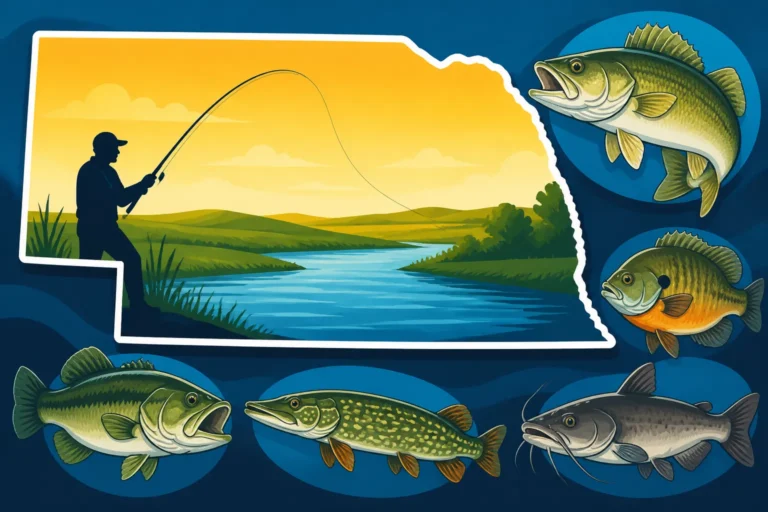
Have you ever reeled in a beautiful fish, your heart pounding with excitement, only to find yourself scratching your head, wondering "What in the world did I just catch?" It's a common scenario out on the water in Nebraska, especially with similar-looking species or when you're targeting one fish but hook another. Getting a positive ID on your catch isn't just about bragging rights; it's crucial for understanding regulations, practicing responsible catch-and-release, and ensuring you're keeping a legal fish. This comprehensive guide is here to unravel the mysteries of Nebraska's game fish, giving you the confidence to identify your next catch accurately.
Why Accurate Identification Matters for Every Angler
Mistaking one fish for another isn't just an innocent mistake; it can actually have some pretty significant repercussions. I've seen it happen countless times, even to experienced anglers who get a little too excited or aren't paying close enough attention. Understanding what's on the end of your line is the first step in being a responsible and successful angler here in Nebraska.
Adhering to Nebraska Fishing Regulations
The number one reason to accurately identify your catch is to ensure you're following the law. Nebraska has specific length limits, daily bag limits, and even possession limits that vary wildly from one species to another, and sometimes even by specific body of water. For example, the rules for keeping a walleye are very different from those for a channel catfish, and you certainly don't want to accidentally keep a sauger when you thought it was a legal walleye, only to find out later it was undersized. Nebraska Fishing Regulations Explained delves into these details, but identification is the critical first step. Without a proper ID, you could inadvertently break regulations, which can lead to hefty fines or even loss of your fishing privileges. It's a real buzzkill after a great day on the water to face legal trouble because of an honest mistake.
Promoting Responsible Conservation Practices
Beyond just avoiding trouble, accurate identification plays a vital role in the conservation of Nebraska's aquatic resources. Some species might be undergoing specific management plans, perhaps due to declining populations or targeted stocking efforts. Knowing which fish you've caught allows you to make informed decisions, like whether to release a fish that might be a vital part of the breeding stock, or to keep a species that is abundant and managed for harvest. When you can accurately identify different species, you contribute directly to the health of our fisheries by understanding and respecting the efforts made to sustain them for future generations of anglers. It’s all about doing your part to keep those fish populations thriving.
Key Features to Look For: General Fish Anatomy & Terminology
Before we dive into specific species, let's get a handle on some basic fish anatomy. Understanding these terms will make it much easier to pinpoint the identifying characteristics we'll discuss. Think of it like learning the parts of a car before you try to fix the engine – you need the vocabulary.
Fins, Scales, and Lateral Lines: Your First Clues
Every fish has a set of fins, and their shape, size, and even the number of spines or soft rays can be incredibly telling. For instance, the dorsal fin (on the fish's back) often has two distinct parts: a spiny front section and a softer-rayed back section. The caudal fin (tail fin) can be forked, rounded, or squared. Pectoral fins are behind the gills, and pelvic fins are on the belly. Scales, believe it or not, also have variations. Some fish have large, obvious scales, while others have very small, almost undetectable scales, or even no scales at all, like catfish. The lateral line is a sensory organ that runs along each side of the fish, usually from the gill plate to the tail. Its prominence and path can be another key identifier. Take a good look at these primary features when you pull a fish out of the water – they're often the first clues to solving the mystery.
Body Shape and Mouth Structure: Habitat Tells
The overall body shape of a fish often tells you a lot about its lifestyle and where it lives. A long, slender, torpedo-shaped fish is likely a fast swimmer, designed for open water or strong currents, while a tall, disc-shaped fish might be better suited for navigating dense cover. The mouth structure is also highly indicative of feeding habits. A large, upward-pointing mouth suggests a surface feeder, while a small, downward-pointing mouth might belong to a bottom-dweller that sifts through substrate. Fish with a large, cavernous mouth are often ambush predators. For instance, thinking about What Walleye Eat in Nebraska Lakes tells us, you'll see how their mouth shape is perfectly adapted for catching smaller baitfish. Observing these fundamental characteristics can quickly narrow down your identification possibilities and give you a better idea of what you've just tangled with.
The Walleye, Sauger, and Saugeye: A Common Conundrum
Ah, the "eyes" of Nebraska – Walleye, Sauger, and their hybrid cousin, the Saugeye. These three are arguably the most confusing group for many anglers, and for good reason. They share many similarities, but knowing the subtle differences is absolutely critical, especially with varying length and bag limits.
Walleye: The Golden Prize
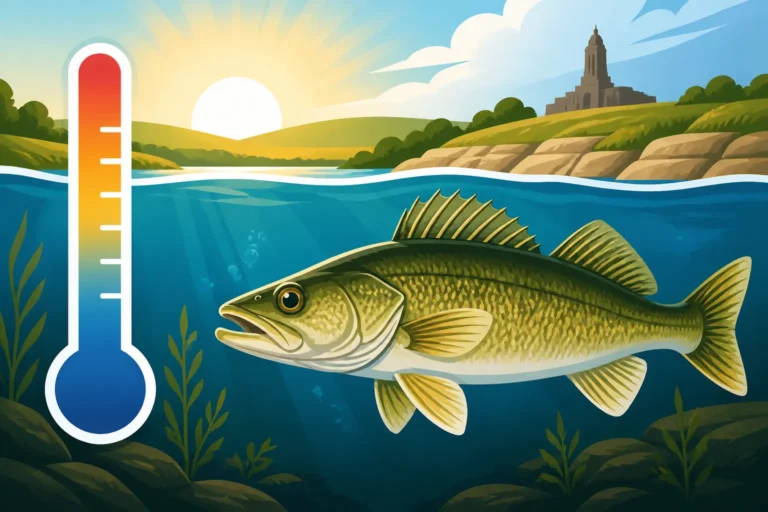
The walleye is often considered the king of Nebraska's game fish for its challenging fight and delectable taste. When you've got a walleye in hand, look for a few distinct features. First, their overall body color is usually a mottled olive green or golden-brown, fading to a creamy white belly. They have large, opaque eyes that give them excellent low-light vision, which is why they're often most active at dawn, dusk, and even night. The most reliable identifying characteristic is the white tip on the lower lobe of their caudal (tail) fin. This white tip is almost always present and is a dead giveaway. Their dorsal fin will have dark blotches, but generally no distinct rows of spots. Their cheeks will also be mostly devoid of scales, feeling quite smooth to the touch. Knowing Nebraska Walleye Bag Limits is essential, and accurate identification prevents accidental violations.
Sauger: The Spotted Cousin
Sauger are often mistaken for walleye, but they're a different fish with different regulations. Typically, sauger are more slender than walleye, with a bronze or brown body color and distinct, dark blotches or spots along their sides, giving them a more "tiger-striped" appearance. Unlike walleye, their dorsal fins (both the spiny and soft-rayed) will have very obvious, distinct rows of dark spots. This is a primary differentiator. Another key difference is the caudal fin: sauger lack the prominent white tip that walleye proudly display. Their cheeks will also be covered in scales, feeling rougher than a walleye's smooth cheek. They prefer murkier, riverine habitats, often found in rivers like the Missouri and Platte. If you're wondering How to Tell a Sauger From a Walleye, these visual cues are your best friend.
Saugeye: The Hybrid Hustle
The saugeye is a hybrid species, a cross between a walleye and a sauger, specifically bred for certain fisheries because they tend to grow faster and are often easier to catch. This makes them a bit of a blended identification challenge! They'll often have a mix of features from both parents. You might see some faint spotting on their dorsal fin, but not usually in the clear rows like a pure sauger. Their body color will be a mix, often more golden-brown than a walleye. The key identifier for a saugeye usually revolves around their caudal fin: they'll often have a white tip, but it will be much less pronounced or smaller than a walleye's. Furthermore, saugeye typically have some scales on their cheeks, but not as many or as prominent as a sauger. When you're fishing in waters known to have saugeye, like some of Nebraska's reservoirs, it's wise to double-check against these characteristics before making a call.
To help clear up the confusion, here's a quick comparison:
| Feature | Walleye | Sauger | Saugeye |
|---|---|---|---|
| Caudal Fin (Tail) | Prominent white tip on lower lobe | No white tip, often dusky/dark | Small or faint white tip on lower lobe |
| Dorsal Fin | Dark blotch at base of spiny dorsal, no distinct spots | Clear, distinct rows of black spots on both dorsal fins | Faint or scattered spots, not distinct rows |
| Body Color | Mottled olive/golden-brown, creamy belly | Bronze/brown with distinct dark blotches/bands | Variable, mix of both parents, often golden |
| Cheeks | Mostly smooth, few or no scales | Fully scaled, rough to the touch | Partially scaled, feels slightly rough |
| Body Shape | More robust and deep-bodied | More slender, elongated | Intermediate |
| Habitat Preference | Clearer, deeper lakes and reservoirs | Turbid rivers, shallower water | Adaptable, often stocked in reservoirs |
Bass Family: Largemouth, Smallmouth, and Wipers
Nebraska is home to several exciting bass species, each with its own characteristics and preferred habitats. While they all offer a great fight, telling them apart is essential for proper identification, especially with varying regulations and for understanding their behavior.
Largemouth Bass: The Classic Greenback
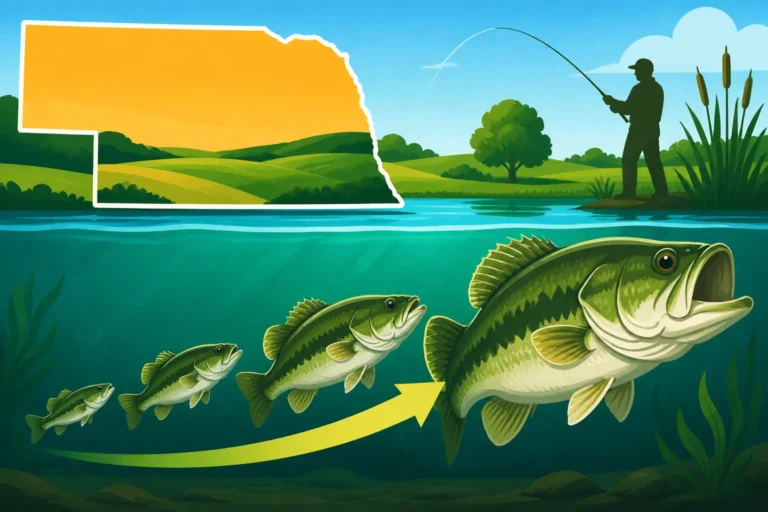
The largemouth bass is probably the most iconic sport fish in Nebraska, found in nearly every pond, lake, and reservoir across the state. They are known for their distinctive dark horizontal stripe or series of blotches along their sides, which usually fades as the fish gets larger. Their body color can range from a bright green to a dark, almost black hue, depending on the water clarity and vegetation. The absolute best way to identify a largemouth is by its mouth: when closed, the upper jaw extends beyond the eye. This is a non-negotiable trait. Their dorsal fin is deeply notched, almost appearing like two separate fins. If you're passionate about Largemouth Bass Fishing in Nebraska, recognizing these features will become second nature.
A trophy largemouth can be a truly impressive sight, with thick shoulders and a powerful tail. They prefer warmer, vegetated waters, often lurking around lily pads, submerged timber, or weed lines, waiting to ambush their prey. You'll find them in farm ponds, small lakes, and the quieter arms of larger reservoirs. Checking out Nebraska Bass Length Limits is crucial for these popular game fish.
Smallmouth Bass: The River Runner
Smallmouth bass are often found in cooler, clearer waters than their largemouth cousins, favoring rocky areas, clear lakes, and flowing rivers. They have a bronze, brown, or golden-green body color with vertical bars or stripes that are often more pronounced than the horizontal markings of a largemouth. Their eyes are typically reddish. The key identification point for a smallmouth is, predictably, their mouth: when closed, the upper jaw does not extend beyond the eye. It stops roughly underneath the middle of the eye. Their dorsal fin is not as deeply notched as the largemouth's, appearing more continuous.
If you're fishing a clear, rocky reservoir or one of Nebraska's beautiful rivers, like parts of the Niobrara or Missouri, and you hook a bass that's putting up an incredible fight with powerful dives and runs, there's a good chance it's a smallmouth. They are notorious for their strong fighting spirit. Understanding Nebraska Smallmouth Bass Habitat can help you predict where you might encounter these exciting fish.
Wipers (Hybrid Striped Bass): The Energetic Crossbreed
Wipers are a hybrid cross between a white bass and a striped bass, and they are built for speed and power. These fish are stocked in several of Nebraska's larger reservoirs and provide an incredible angling experience. Their body is silvery, often with several distinct, broken horizontal stripes along their sides. This "broken" stripe pattern is the most important clue – some stripes will be continuous, while others will be noticeably interrupted or jagged. Their body shape is deeper and more compressed than a white bass, giving them a more football-like build.
Unlike pure white bass, which are smaller, wipers can grow quite large and put up a tremendous fight, often making long, powerful runs. When you're fishing in places like Lake McConaughy or Sherman Reservoir, and you catch a large, striped fish, check those stripes closely. If they're broken, you've likely got a wiper on your hands. The Nebraska Wiper Hybrid Fish Explained offers more insights into this exciting species. They're often found in open water, chasing schools of baitfish, so understanding their feeding habits can help you target them effectively.
The Catfish Crew: Channel, Flathead, and Bullhead
Nebraska is a fantastic state for catfishing, and we have a few different species that are popular with anglers. While they all share that characteristic "whisker" (barbel) around their mouths, their appearances, sizes, and preferred habitats are quite distinct.
Channel Catfish: The Widespread Whiskered Wonder
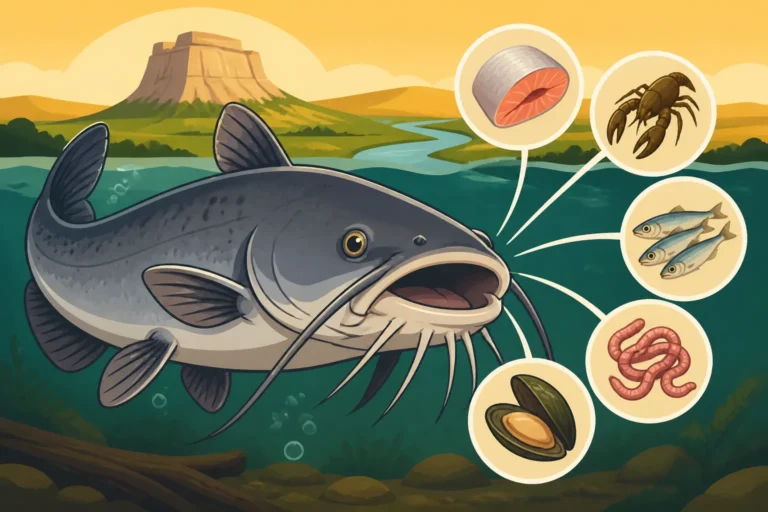
The channel catfish is by far the most common and widely distributed catfish species in Nebraska, found in nearly every body of water. They have a sleek, slender body with a deeply forked tail – a key identifying feature. Their skin is smooth and scale-less, typically olive-brown or grey on the back, fading to silvery sides and a white belly. Younger channel cats and those from clearer waters often have distinct black spots on their body, which tend to fade as they age or in muddier waters. They have eight barbels around their mouth.
Channel catfish are incredibly adaptable, thriving in rivers, lakes, and ponds. They're opportunistic feeders, meaning they'll eat just about anything, which is why they're so popular with anglers using a variety of baits. If you're looking for Nebraska Channel Catfish Daily Limit, it's important to know what you've got on the line. The forked tail is your best friend when identifying a channel cat.
Flathead Catfish: The River Monster
Flathead catfish are the true heavyweights of Nebraska's catfish species, known for their immense size and preference for live bait. As their name suggests, they have a distinctly flat, broad head with small eyes. Their body is usually a mottled yellow, brown, or olive green, often with dark splotches that provide excellent camouflage in woody debris. Unlike the channel cat, their tail is squared or only slightly notched, not deeply forked. They have a prominent lower jaw that protrays beyond the upper jaw, giving them a slightly "underbite" appearance.
You'll typically find flatheads in larger rivers with strong currents and plenty of submerged timber, logjams, or undercut banks, where they can hide and ambush prey. They are solitary and territorial fish. Hooking into a big flathead is a serious endeavor, and they put up a powerful, stubborn fight. Understanding Nebraska Flathead Catfish Fishing requires knowing their unique characteristics and habits.
Bullhead Catfish: The Pond Dweller
Bullheads are smaller, stouter cousins of the channel and flathead catfish. While often overlooked by anglers targeting bigger fish, they provide excellent action, especially for kids, and are surprisingly good eating. There are a few species of bullheads in Nebraska, with the black bullhead being the most common. They have a short, stout body, a broad head, and a slightly rounded or very shallowly notched tail fin – never deeply forked. Their color varies from dark brown to olive green, often with a yellowish belly. They lack the spots of a young channel cat.
Bullheads thrive in muddy, vegetated ponds, ditches, and sluggish streams, tolerating poor water quality better than other catfish. They're often found in large schools. If you've caught a small, dark, stout catfish with a relatively straight-edged tail from a pond, it's almost certainly a bullhead. They're a fantastic target for a simple bobber and worm setup, making them a great "first fish" for new anglers.
Panfish Pleasures: Crappie, Bluegill, and Perch
Panfish are the bread and butter of many angling trips, offering consistent action and delicious fillets. Nebraska has an abundance of these smaller, but no less fun, species. Identifying them is usually a bit easier than the "eyes" or bass, but there are still a few key details to watch for.
Crappie: Black vs. White
Nebraska is home to both black crappie and white crappie, and while they look very similar, there are subtle differences to tell them apart. Both are deep-bodied, silvery fish with compressed sides, giving them a distinctive "dinner plate" shape. They have large dorsal and anal fins that are almost mirrors of each other in size and shape. Crappie are usually found schooling around submerged cover like brush piles, standing timber, or dock pilings. Crappie Fishing in Nebraska is a hugely popular activity, especially in spring.
- Black Crappie: Generally has a darker, more mottled pattern of black spots scattered irregularly over its body. The most reliable way to distinguish them is by counting the spines in their dorsal fin: black crappie typically have 7 or 8 dorsal spines. They also tend to have a more uniform, rounded head profile.
- White Crappie: Usually lighter in color, with more distinct, vertical dark bars or stripes on its sides. Count their dorsal spines: white crappie typically have 5 or 6 dorsal spines. They also tend to have a slightly longer snout and a more concave head profile compared to the black crappie.
Bluegill and Other Sunfish: The Colorful Cousins
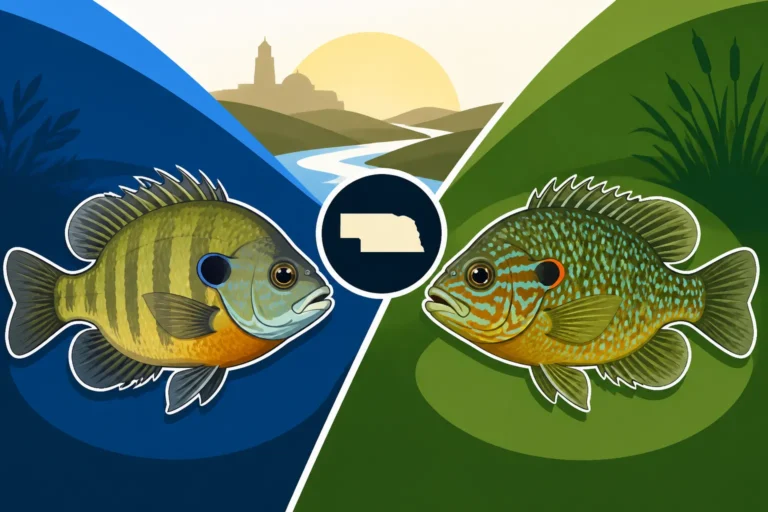
Bluegill are part of the broader "sunfish" family, and they are incredibly popular, especially for youth fishing. They are very deep-bodied, almost disc-shaped, with a small mouth. Their color can be highly variable, ranging from olive to dark blue-green on the back, with yellowish-orange or reddish bellies. They often have several faint vertical bars on their sides. The most reliable identification for a bluegill is the prominent black spot at the posterior (back) edge of their gill cover, which often has an iridescent blue margin. They also have a small, dark spot at the base of their soft dorsal fin.
Nebraska has several other sunfish species, like green sunfish, pumpkinseed, and redear sunfish. Green sunfish, for example, have a larger mouth and a yellowish-orange margin on their dorsal, caudal, and anal fins, with a prominent black spot at the base of the dorsal and anal fins, but usually lack the bluegill's distinct black "ear flap" margin. For casual identification, many anglers lump smaller sunfish together, but if you want to get specific, those subtle fin and gill cover markings are key. These fish are fantastic for bank fishing with light tackle, often found in shallow, vegetated areas.
Yellow Perch: The Striped Delicacy
Yellow perch are a favorite among ice anglers, but they can be caught year-round. They have a distinct, somewhat humpbacked body shape, slenderer than a crappie or bluegill, with two separate dorsal fins. Their body color is typically a bright golden-yellow to brassy green, with 6 to 8 dark, vertical bars or stripes on their sides. Their pelvic, anal, and lower caudal fins are often reddish or orange, especially during spawning season.
You'll find yellow perch in schools, often over sandy or gravel bottoms in lakes and reservoirs. They're a prime target for ice fishing, and their striking coloration makes them relatively easy to identify compared to some other species. They have small, comb-like scales that give them a slightly rough feel.
Bonus Species: Northern Pike and Trout
While perhaps not as widely distributed or numerous as walleye or catfish, Nebraska also offers opportunities for anglers to target northern pike and various trout species. These fish are distinct and highly prized, making their identification crucial.
Northern Pike: The Water Wolf
Northern pike are apex predators in many Nebraska waters, known for their aggressive strikes and powerful fights. They have a long, slender, torpedo-shaped body, perfectly designed for ambush hunting. Their body color is typically dark green to olive, with characteristic bean-shaped or bar-shaped light spots on their sides. Their dorsal and anal fins are set far back on their body, close to their deeply forked tail, which gives them incredible burst speed.
The most defining feature of a northern pike is their large, duck-bill shaped mouth, filled with rows of needle-sharp teeth. When identifying a pike, also pay attention to the scales on their lower gill cover: northern pike have a fully scaled upper gill cover, but only scales on the upper half of their lower gill cover. The rest is bare. They can be found in vegetated areas of lakes and reservoirs, often in shallower water, or lurking around submerged timber. Be extremely careful when handling a pike, as those teeth are no joke! Knowing Nebraska Northern Pike Fishing techniques is one thing, but safely identifying and handling them is another.
Trout: Rainbow, Brown, and Brooks
Nebraska isn't traditionally known as a "trout state," but we do have some fantastic trout fishing opportunities, particularly in tailwaters, coldwater streams, and stocked urban ponds. Identifying the different species of trout is relatively straightforward once you know what to look for. Nebraska Trout Fishing can be a truly rewarding experience.
- Rainbow Trout: These are by far the most common trout stocked in Nebraska. They have a silvery body with a distinct, iridescent pinkish or reddish stripe running horizontally along their sides, much like a rainbow. Their entire body, including the dorsal and caudal fins, is covered in small, distinct black spots. Their tail is usually only slightly forked or squared.
- Brown Trout: Brown trout tend to be more elusive and prefer colder, clearer water. They have a golden-brown or olive-brown body with prominent dark spots, often ringed with a lighter halo, scattered along their sides and extending onto their dorsal and adipose fins. They also often have some reddish or orange spots mixed in. Their tail is typically squared or only very slightly forked.
- Brook Trout: While less common and often found only in specific coldwater streams, brook trout are beautiful fish. They have a dark, mottled olive-green body with distinctive worm-like markings (vermiculations) on their back and dorsal fin. Their sides display pale spots, some of which are red with blue halos. A key identifier is the white leading edges on their pectoral, pelvic, and anal fins, often followed by a black stripe, and then orange or red. Their tail is usually squared.
When you're out fishing in Nebraska, especially if you're exploring new waters or trying for a new species, having a reliable identification guide is like gold. You can even find waterproof fish identification cards or field guides on platforms like Amazon that fit right into your tackle box or fishing vest. Take your time, observe the details, and soon you'll be identifying every fish you catch with confidence!
Disclaimer
This article is for general informational purposes only and does not constitute professional advice. Laws, prices and regulations vary by location and change over time. Consult a qualified professional for guidance on your specific situation.