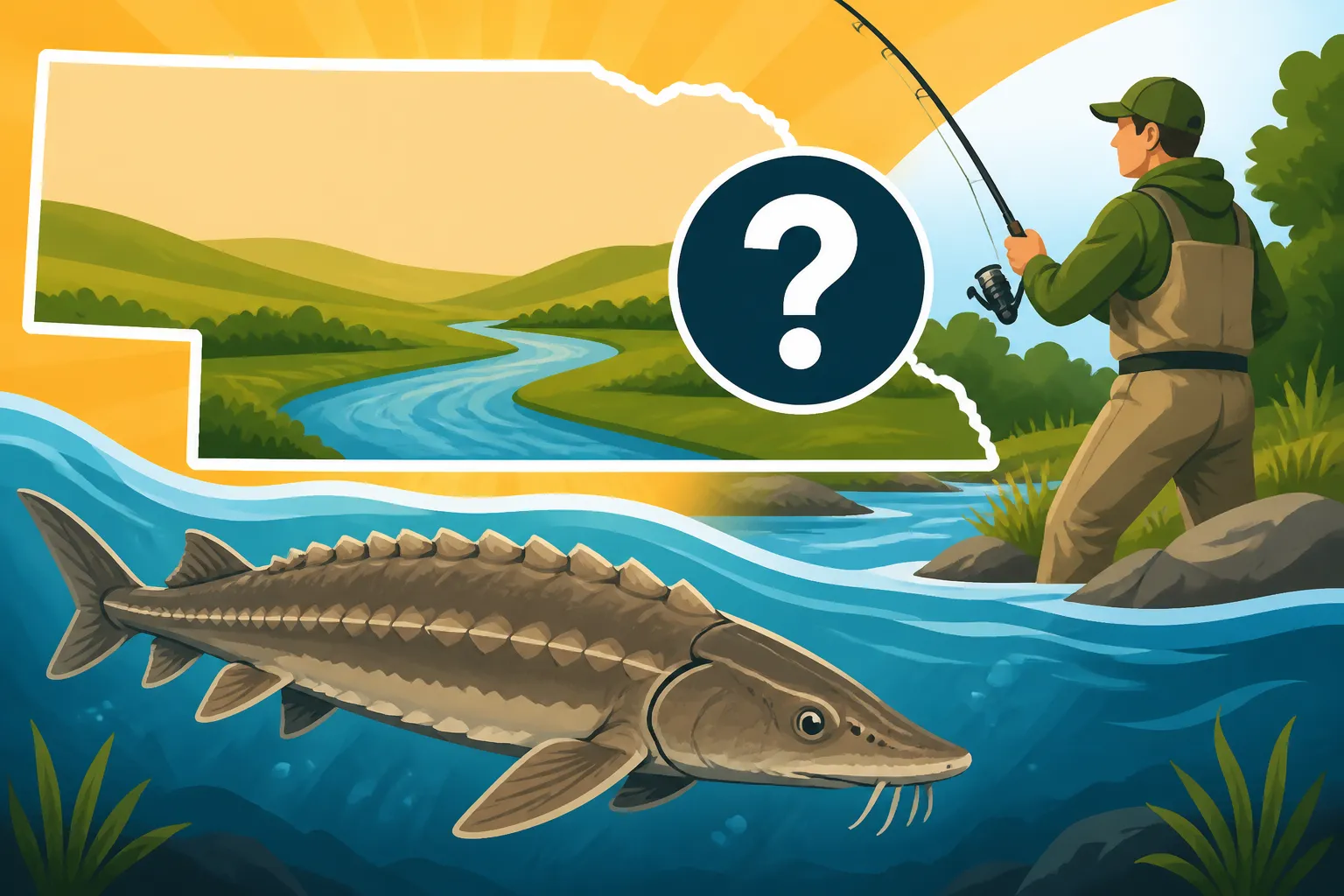
Are There Sturgeon in Nebraska Rivers?
Many anglers across Nebraska have heard whispers or seen old photos of incredible, prehistoric-looking fish dwelling in our mighty rivers – the sturgeon. It's a natural question to ask: are these ancient giants really swimming in Nebraska's waters, or is it just a tall tale? The truth is, yes, sturgeon are indeed part of our aquatic ecosystem, but not in the way many might imagine. This guide will dive deep into the world of Nebraska's sturgeon, revealing which species call our rivers home, where they prefer to live, their unique characteristics, and critically, what every angler needs to know about their conservation status and the rules surrounding them.
The Truth About Sturgeon in Nebraska Waters
It's absolutely true, fellow anglers – sturgeon grace the waters of Nebraska. But before you grab your heaviest gear and imagine reeling in a monster, it's important to understand which sturgeon we're talking about, and why they're such a unique part of our river systems. These aren't the gigantic, caviar-producing sturgeon of eastern Europe, but they are equally fascinating and, in one case, critically endangered. Nebraska is home to two primary species: the Pallid Sturgeon and the Shovelnose Sturgeon. Both are truly remarkable examples of evolutionary resilience, carrying features that harken back to prehistoric times.
Pallid Sturgeon: The Elusive River Dweller
The Pallid Sturgeon (Scaphirhynchus albus) is a name that often brings a hushed tone to conversations among serious Nebraska conservationists and river enthusiasts. This fish is not just rare; it's critically endangered, a true survivor from an ancient lineage. Imagine a fish that's been around since the dinosaurs, evolving to thrive in the wild, untamed currents of the Missouri River basin. Unfortunately, the drastic changes we've made to these rivers, especially habitat alteration, damming, and extensive channelization, have taken an incredible toll on their numbers. You're far more likely to see a picture of one than ever encounter one in person, and that's a testament to their incredibly low population.
These incredible creatures are built for the strong, murky flows of big rivers. They are true bottom-dwellers, often found in deep channels with swift currents, painstakingly scrounging for small fish and aquatic insects using their sensitive barbels. Their pale, almost ghost-like coloration helps them blend in with the silty river bottom, earning them their "pallid" name. They can grow quite large, sometimes exceeding five feet in length and living for many decades, which just adds to their mystique and importance as a long-lived indicator species. Spotting a Pallid Sturgeon is considered a truly rare privilege, and anyone who does is strongly encouraged to report it to the Nebraska Game and Parks Commission, as this data is crucial for monitoring their populations and understanding their distribution. Remember, these fish are protected under the federal Endangered Species Act, meaning it is illegal to harvest, possess, or intentionally harm them.
Shovelnose Sturgeon: The More Common Cousin
While the Pallid Sturgeon is often shrouded in mystery and concern, its relative, the Shovelnose Sturgeon (Scaphirhynchus platorynchus), is a bit more accessible to anglers, though still very unique and fascinating. The Shovelnose is, as its name suggests, characterized by a flattened, shovel-like snout that helps it root around in the riverbed for food. These are significantly smaller than their pallid cousins, typically maxing out around 30 inches in length and rarely exceeding five pounds, though larger specimens have been caught. They are also bottom-feeders, equipped with four distinct barbels (whisker-like appendages) near their mouth, which they use to detect food in the dark, silty waters where visibility is low.
Shovelnose sturgeon are more widely distributed and significantly more numerous than Pallids, inhabiting many of the same river systems but often tolerating a wider range of habitat conditions. While they might not be as critically endangered, they are still a species of special concern, and their populations are carefully monitored by conservation agencies. Anglers do have the opportunity to target Shovelnose sturgeon in specific seasons and with specific regulations, which we'll delve into shortly. However, it's always about responsible angling, ensuring these fascinating fish continue to thrive for future generations. Their continued presence in our rivers is often considered a good indicator of a healthy river ecosystem, as they are quite sensitive to pollution and habitat degradation, much like their larger relatives.
Where to Find Sturgeon (and Why You Can't Keep Them)
Understanding where sturgeon live in Nebraska is crucial, not just for the curious angler, but for anyone who values the unique biodiversity of our state's waterways. These fish aren't found in every lake or pond; they are almost exclusively river dwellers, tied to the large, flowing systems that define our state's eastern and central regions. And when you do find them, remember: their presence comes with strict rules that every responsible angler must respect to aid in their long-term survival.
Key River Systems and Preferred Habitats
Nebraska's sturgeon populations are primarily concentrated in the state's largest river systems. The Missouri River, in particular, is a critical stronghold for both Pallid and Shovelnose sturgeon, providing the vast, dynamic environment they need. The Platte River, especially its lower reaches where it's wider and deeper, also provides suitable habitat, as does the lower Niobrara River near its confluence with the Missouri. These are big, powerful rivers, characterized by strong currents, diverse bottom structures, and often turbid (murky) water, which is precisely what sturgeon have adapted to.
Sturgeon are true bottom-feeders, so they're naturally drawn to areas where the current helps deliver food and where the substrate offers opportunities for foraging. You'll often find them in deep main channel areas, scour holes, and around extensive sandbars and gravel bars where they can sift through the substrate for aquatic insects, small crustaceans, and tiny fish. They absolutely love soft, sandy or silty bottoms where they can use their sensitive barbels to locate hidden prey, much like a cat uses its whiskers. Look for them in areas with a decent current, especially where the river bottom changes significantly, creating eddies, humps, or deeper pockets. While you won't find them in small creeks or clear, shallow streams, the larger tributaries flowing into the Missouri can sometimes hold Shovelnose. If you're planning a trip to these big rivers, you'll need robust gear; a heavy-duty rod and reel setup for river fishing can be a practical Amazon purchase.
Understanding Conservation and Fishing Regulations
This is arguably the most critical section for any angler interested in Nebraska's sturgeon. The rules are not just suggestions; they are legally binding and exist to protect these vulnerable populations, especially the endangered Pallid Sturgeon. Familiarizing yourself with these regulations is a fundamental responsibility of being an ethical angler. You should always consult the official Nebraska Fishing Regulations Explained before heading out.
First and foremost, the Pallid Sturgeon is a federally protected endangered species. This means it is strictly illegal to harvest, possess, or intentionally harm a Pallid Sturgeon. If you accidentally catch one (which, again, is incredibly rare due to their low numbers), you must release it immediately, with as little harm as possible. Do not take it out of the water for photos, as this causes immense stress and can damage their delicate internal organs. Handle it with extreme care and respect, as you would any truly rare wild animal – observe, admire, and let it go quickly and gently. Fishing for Pallid Sturgeon is simply not an option, and the Nebraska Endangered and Protected Fish Species list confirms their status. Violating these protections can lead to severe Nebraska Fishing Violation Penalties.
For Shovelnose Sturgeon, the situation is different but still heavily regulated. There is an open season for Shovelnose sturgeon, primarily in the Missouri River and its navigable tributaries, but with very specific limits and requirements. Anglers must check the current official Nebraska Game and Parks regulations booklet or their website for the precise open season dates, length limits, and daily bag limits. Often, these regulations will include an "Aquatic Habitat Stamp" requirement as part of your overall Nebraska Fishing License Guide. The Nebraska Aquatic Habitat Stamp Explained goes into more detail about that. It's not uncommon for length limits to be quite restrictive, sometimes requiring a minimum and maximum length to ensure smaller, immature fish can grow and larger, breeding fish can continue to reproduce. Always, always verify the latest Nebraska Fishing Season Dates and Limits before heading out. Overharvesting can quickly impact even relatively stable populations, so adherence to these rules is vital for the health of the species.
Identifying Nebraska's Sturgeon Species
Being able to tell the difference between a Pallid Sturgeon and a Shovelnose Sturgeon is not just a point of pride for a knowledgeable angler; it's a legal imperative. Mistaking an endangered Pallid for a Shovelnose could lead to serious legal repercussions, not to mention harming a truly precious creature whose survival hangs by a thread. While they share some general sturgeon-like features, there are distinct and observable differences you can look for right on the water, helping you make an accurate identification.
Pallid Sturgeon vs. Shovelnose Sturgeon: A Detailed Comparison
When you hook into something that feels powerful and looks primitive, your first thought should be identification, especially in Nebraska's river systems where these two species coexist. Here's a handy comparison table to help you discern which sturgeon species you might be holding (briefly, before releasing it safely):
| Feature | Pallid Sturgeon | Shovelnose Sturgeon |
|---|---|---|
| Coloration | Pale, grayish-white to yellowish-white, generally no distinct spots or blotches on the body or fins | Mottled gray to brown, often with noticeable dark spots or blotches on the body and fins |
| Size | Larger, typically 3-5+ feet long, 25-80 lbs+, though juveniles can be smaller | Smaller, typically 1.5-2.5 feet long, 1-5 lbs, rarely exceeding 8-10 lbs |
| Snout | Long, slender, somewhat flattened, no sharp keel underneath | Shorter, broad, distinctly shovel-like, with a pronounced sharp keel underneath the snout tip |
| Barbels | All four barbels roughly equal in length, not fringed (smooth), inner barbels originate distinctly behind outer barbels | Inner barbels significantly shorter than outer barbels, fringed (have small leaf-like projections), all barbels originate in a relatively straight line or nearly so |
| Belly | Entirely scaleless, smooth to the touch, no bony plates or scutes | Partially plated with bony scutes, rough to the touch along the ventral surface |
| Tail Fin | Upper lobe significantly longer than lower lobe, often with an extended white filament | Upper lobe slightly longer than lower lobe, filament often present but typically less prominent and shorter |
| Rostrum/Head | Relatively flat or slightly concave between the eyes | Noticeably humped or convex between the eyes, giving a "domed" appearance |
One of the easiest differentiators once you have the fish in hand (carefully and gently, please!) is the barbels. The presence of distinct fringed barbels on the Shovelnose is a dead giveaway, as Pallid sturgeon have smooth barbels. Another quick check is the belly plates – run your hand gently over the belly. If it's entirely smooth, it's very likely a Pallid. If it's rough, with noticeable bony plates or scutes, then you've got a Shovelnose. Having a good quality Nebraska Fish Species Identification Guide at hand, perhaps a laminated one for your tackle box or downloaded to your phone (if service allows), is invaluable for quick and accurate identification on the water.
What to Do If You Catch a Sturgeon
So, you've done it! You've hooked into one of Nebraska's ancient river residents. Now what? Your immediate actions are critical for the fish's survival and your own legal compliance. This moment requires calm, quick thinking, and a deep respect for the creature in your hands.
- Identify Quickly and Carefully: Refer to the table above. If there's any doubt that it might be a Pallid Sturgeon, treat it as such. Don't risk it – the penalties for harming an endangered species are severe.
- Minimize Out-of-Water Time: These fish are accustomed to constantly moving, oxygen-rich water. Being out of the water for even a minute can be incredibly stressful and harmful, especially for a large, heavy fish that relies on water to support its body. Keep the fish in the water as much as possible while identifying and unhooking it.
- Handle with Care: If you absolutely must bring it aboard a boat or to the bank for unhooking, wet your hands thoroughly first. Avoid squeezing the fish, especially around its belly or gills, as this can cause internal damage. Always support its entire body horizontally, avoiding hanging it vertically by the head or tail. A large, rubberized landing net, often available from retailers like Amazon and designed for catch and release, can be very helpful for managing a larger fish gently and keeping it submerged.
- Unhook Gently: Use needle-nose pliers or a dedicated hook-remover to extract the hook with minimal damage. If the fish is deeply hooked and removing the hook would cause excessive damage or prolong the process, it's often best to cut the line as close to the hook as possible, allowing the hook to rust out over time.
- Release Promptly: Once identified and unhooked, gently guide the fish back into the water, headfirst into the current. Hold it upright in the water, supporting its midsection, and allow the current to flow over its gills. Only release it once it regains its strength, starts moving its tail, and is capable of swimming away on its own. These How to Release a Fish Safely to Survive practices are essential.
- Report Pallid Sturgeon Sightings: If you are certain you've caught and safely released a Pallid Sturgeon, contact the Nebraska Game and Parks Commission as soon as possible. They track these sightings to monitor the population and distribution, which is vital for their ongoing recovery efforts. You can usually find contact information in the official regulations booklet or on their official website for Missouri River Fishing in Nebraska or Platte River Fishing Guide.
The Future of Sturgeon in Nebraska
The existence of sturgeon in Nebraska's rivers is a fascinating echo of a bygone era, a living reminder of the wild, untamed nature of these waterways before extensive human modification. However, their future is far from guaranteed, especially for the Pallid Sturgeon. Their survival hinges on a delicate balance of human intervention, environmental protection, and a widespread understanding of their unique needs and vulnerabilities. Our actions today will profoundly impact whether these ancient fish continue to grace our rivers.
Ongoing Conservation Efforts
Recognizing the dire situation of the Pallid Sturgeon, significant efforts have been put into conservation at both state and federal levels. The Nebraska Game and Parks Commission, in cooperation with other state and federal agencies (like the U.S. Fish and Wildlife Service), actively works to restore their populations. This includes highly specialized captive breeding programs where young Pallid Sturgeon are carefully raised in hatcheries under controlled conditions and then released into suitable river stretches, often with tiny tracking devices to monitor their movements, growth, and survival rates. You can sometimes find information about these stocking events and ongoing research initiatives on the Game and Parks website, showcasing the dedication to these incredible creatures.
Habitat restoration is another critical component of the recovery plan. Projects aim to recreate the diverse riverine habitats that sturgeon need – side channels, sandbars, scour holes, and varying flow regimes that were lost due to extensive channelization and dam construction. These efforts, though slow, expensive, and challenging, are absolutely crucial for providing the necessary nursery grounds, feeding areas, and spawning sites for both juvenile and adult sturgeon. The more natural river processes we can restore, the better the chances for these fish to recover their populations naturally. It's a long-term commitment, but one that reflects the value we place on our unique natural heritage.
Threats to Sturgeon Populations
Despite these dedicated efforts, sturgeon populations, particularly the Pallid Sturgeon, continue to face formidable threats that make their recovery incredibly challenging. The primary and most pervasive challenge is habitat alteration. Large dams, like Gavins Point Dam on the Missouri River, block essential migration routes, preventing sturgeon from reaching historical spawning grounds and fragmenting their habitat, which isolates existing populations. Furthermore, past channelization projects, designed to straighten and deepen rivers for navigation, removed the complex network of sandbars, scour holes, backwaters, and other diverse features that sturgeon rely on for food, shelter, and reproduction. The loss of these varied and dynamic habitats significantly reduces their chances of survival and successful recruitment.
Water quality and altered flow regimes also play a crucial role in their struggles. Pollution from agricultural runoff and urban areas can degrade their sensitive river environments, impacting their health and food sources. Changes in natural water flow, often managed for hydropower generation, irrigation, or flood control, can disrupt natural spawning cues or expose sturgeon eggs and newly hatched fry to drying conditions or unsuitable temperatures. Invasive species, like certain types of Asian carp, can compete directly for food resources with juvenile sturgeon, further stressing already vulnerable populations. It's a complex web of interconnected environmental factors, all pointing to the need for continued vigilance, robust scientific research, and a holistic, long-term approach to river management to ensure these ancient fish have a place in Nebraska's future. Investing in conservation-friendly gear, like biodegradable fishing line, is another small way anglers can contribute, and these items are readily available on platforms like Amazon.
Disclaimer
This article is for general informational purposes only and does not constitute professional advice. Laws, prices and regulations vary by location and change over time. Consult a qualified professional for guidance on your specific situation.