Best Fish Finders for Nebraska Lakes
One of the biggest frustrations for anglers, especially on larger, unfamiliar bodies of water, is spending hours casting without a single bite, wondering if there are even any fish around. It can feel like you’re just blindly tossing a line into an empty bathtub, and it drains the joy right out of the experience. This comprehensive guide is here to unravel the mystery of what's beneath the surface of Nebraska's diverse lakes, helping you understand how a fish finder can transform your fishing trips from frustrating guesswork into successful, targeted angling adventures.
Why a Fish Finder is a Game Changer for Nebraska Lakes
Think about all those times you've cruised across a massive lake like McConaughy or Merritt, seeing nothing but open water, and just hoping there were fish somewhere. A fish finder changes that entire dynamic. It's no longer about pure luck; it's about information, about seeing the underwater world and making educated decisions. For Nebraska's varied waters, from the vast reservoirs to the smaller, structure-rich pits, a good fish finder provides an undeniable advantage.
Beyond Just Seeing Fish: Understanding Structure
Many anglers initially think a fish finder is solely for spotting individual fish. While it absolutely excels at that, its true power lies in revealing the underwater topography and structure. Nebraska lakes, especially our larger reservoirs, are often man-made and feature old creek beds, submerged timber, rock piles, ledges, and roadbeds. These aren't just random underwater features; they are prime real estate for fish. Walleyes, bass, crappie, and catfish all relate to structure for feeding, spawning, and protection.
Imagine motoring over a seemingly barren expanse only for your screen to light up with a sharp drop-off, a hidden brush pile, or a submerged point. These are the places where fish congregate, holding tight to cover or patrolling ambush points. Without a fish finder, these crucial features remain invisible, and you'd likely pass right over them, none the wiser. Understanding structure allows you to present your bait exactly where the fish are most likely to be, dramatically increasing your odds. It helps you build a mental map of the lakebed, turning seemingly featureless water into a detailed blueprint of potential hotspots.
Saving Time and Fuel on Big Waters
Nebraska boasts some truly expansive lakes. Lake McConaughy, Harlan County Reservoir, and Lewis and Clark Lake are vast bodies of water, and trying to find fish by randomly trolling or casting can quickly become a monumental waste of time and fuel. This is where a fish finder becomes your most efficient co-pilot. Instead of burning gas covering miles of unproductive water, you can use your sonar to quickly scan large areas, pinpointing baitfish schools, deep channels, or prime structure where game fish are likely hiding.
Being able to efficiently eliminate unproductive water allows you to focus your efforts on areas with high potential. This not only saves you money at the pump but also maximizes your precious time on the water. More time fishing in promising spots means less time wondering, and more time with a bending rod. It transforms a day of aimless searching into a strategic hunt, making your fishing trips far more productive and enjoyable. Whether you're chasing walleyes on the main lake or seeking out crappie in a tucked-away cove, efficiency is key, and a fish finder delivers it in spades.
Boosting Confidence and Catch Rates
Let's be honest, fishing can be tough, and a lack of success can really chip away at your confidence. When you're constantly coming up empty-handed, it's easy to doubt your techniques, your bait, or even your chosen spot. A fish finder gives you tangible proof that you're in the right place, even if the fish aren't biting aggressively at that exact moment. Seeing fish arches or clear structure on your screen provides a powerful psychological boost.
Knowing there are fish beneath you can encourage you to experiment with different presentations, depths, or baits until you find what works. It validates your presence in a promising area and transforms frustration into determination. Ultimately, this newfound confidence, combined with the ability to precisely target fish and structure, directly translates into higher catch rates. You'll spend less time second-guessing and more time actively engaging with the fish, making every trip more rewarding. It’s like having a superpower that lets you peek into the underwater world.
Understanding the Different Types of Fish Finders
Just like there are different types of fishing, there are different types of fish finders designed to suit various angling styles and needs. From compact, grab-and-go units to sophisticated, multi-function displays, knowing the distinctions will help you choose the best fit for your Nebraska fishing adventures.
Portable and Castable Units: The Angler on the Go
For many shore anglers, kayak enthusiasts, or those who fish from rented boats, a portable or castable fish finder is an absolute godsend. These units are designed for flexibility and ease of use, making them perfect for situations where a permanent installation isn't practical. Castable units, like some popular models from Deeper or Garmin, literally attach to your fishing line and are cast out, transmitting sonar data back to your smartphone or a dedicated display. They're fantastic for scouting new ponds or checking depths and structure from the bank or a dock. You can easily see if there’s a thermocline, baitfish, or even larger fish holding at a specific depth, all without getting wet.
Portable units often consist of a small display and a compact transducer that can be clamped to a boat transom, a kayak, or even dangled into an ice fishing hole. These are battery-powered and can be set up in minutes, offering great versatility. If you frequently fish different locations, borrow boats, or prefer a minimalist setup for a canoe or small jon boat on a river like the Platte, these types of finders are incredibly valuable. They might not have all the bells and whistles of larger console units, but they provide crucial information that elevates your angling considerably. You can find a good selection of these at retailers like Bass Pro Shops or on Amazon.
Console-Mounted Units: The Powerhouse for Boats
For serious boat anglers tackling Nebraska's larger reservoirs, console-mounted fish finders are the standard. These are robust, often multi-function displays that permanently install at your boat's helm or bow. They boast larger screens, more powerful transducers, and integrate a host of advanced technologies like GPS, charting, and multiple sonar views (down imaging, side imaging). Brands like Humminbird, Lowrance, and Garmin dominate this space, offering a wide range of models.
These units are designed for optimal performance on the move, providing continuous, high-resolution views of the bottom and fish. They allow you to mark waypoints for hotspots, track your trolling paths, and navigate safely across expansive waters. For navigating around Lake McConaughy Fishing Guide or Harlan County Reservoir Fishing, a reliable, powerful console unit is practically indispensable. The investment is higher, but the level of detail, performance, and integration with other boat systems (like trolling motors) makes them the preferred choice for dedicated boat owners. They truly give you a comprehensive picture of the underwater world, right from your console.
Specialized Units: Ice Fishing and Kayak Options
Beyond the general categories, there are also specialized fish finders tailored for specific angling scenarios, particularly popular in Nebraska: ice fishing and kayak fishing.
For ice fishing, traditional "flasher" units are incredibly popular. Brands like Vexilar and Marcum offer real-time, circular displays that show a vibrant, instant readout of what's directly beneath your hole. This immediate feedback allows you to see your jig, watch fish approach it, and even see their reaction to your presentation in real time. They're robust, work in extreme cold, and are essential for maximizing success on the hard water. Many modern console-mounted units also have excellent ice fishing modes, sometimes requiring a separate ice fishing transducer and kit, offering the best of both worlds. For more on this, check out our Nebraska Ice Fishing Gear Guide.
Kayak fishing is another booming segment in Nebraska, and fish finders have adapted to this nimble platform. While portable units work well, many kayak anglers opt for compact, dedicated kayak fish finders that offer a good balance of screen size, battery life, and mounting flexibility. They often feature smaller, streamlined transducers designed for easy installation through a scupper hole or on a transducer arm. These units allow kayakers to access shallow backwaters and tight spots while still benefiting from sonar and GPS capabilities, making it much easier to find those hidden pockets of bass or crappie. Many units even integrate with smaller trolling motors, providing a full fishing system for the solo angler.
Key Features to Look for in a Nebraska Lake Fish Finder
Choosing the best fish finder for your Nebraska adventures means diving into the technical specifications and understanding what each feature brings to the table. It's not just about the price tag; it's about matching the technology to your specific fishing style and the characteristics of the waters you'll be exploring.
Transducer Power and Frequency: Penetrating the Depths
The transducer is the "eye" of your fish finder, sending and receiving sound waves. Its power (measured in Watts RMS) and operating frequency are crucial. Higher wattage generally means deeper penetration and better target separation, which is important when fishing deep structure at places like Lake McConaughy or Merritt Reservoir. You want enough power to clearly read the bottom and identify fish even in 50+ feet of water.
Frequency refers to the speed of the sound waves. Lower frequencies (e.g., 50 kHz) penetrate deeper and cover a wider cone angle, excellent for offshore or deep-water scanning, though with less detail. Higher frequencies (e.g., 200 kHz, 83 kHz, or CHIRP sonar, which sweeps a range of frequencies) offer finer detail, better target separation, and clearer images in shallower water. Many modern transducers are dual-frequency or CHIRP-enabled, allowing you to get the best of both worlds. For our diverse Nebraska lakes, a versatile transducer capable of both deeper penetration and high-detail imaging will serve you well, adapting to everything from the Platte River's shallows to the depths of a large reservoir.
Screen Size and Resolution: Clarity is King
You can have the most advanced sonar technology in the world, but if your screen is tiny or low-resolution, you won't be able to effectively interpret the data. Screen size is primarily a matter of personal preference and boat space, but generally, bigger is better for easier viewing, especially when splitting the screen to view multiple sonar types (like 2D and Side Imaging simultaneously). A screen of at least 7 inches is often recommended for boat anglers, though smaller units suffice for kayaks or portable setups.
Resolution, measured in pixels (e.g., 800×480, 1024×600), determines the clarity and detail of the image. Higher resolution means crisper images, making it easier to distinguish individual fish, bait balls, and subtle changes in bottom composition. On a bright, sunny Nebraska day, screen brightness and anti-glare coatings also become important factors. A high-quality, high-resolution display allows you to quickly and accurately read the underwater world, reducing eye strain and improving your ability to react to what you're seeing. This is especially critical when trying to discern a small crappie school from submerged brush or identifying a walleye holding tight to the bottom.
Sonar Technologies: 2D, Down Imaging, Side Imaging
Modern fish finders offer a variety of sonar technologies, each providing a unique perspective of the underwater environment.
- 2D Sonar (Traditional Sonar): This is the classic view, showing fish as arches and bottom contours. It's excellent for marking fish directly beneath the boat and understanding depth. It's simple, effective, and found on virtually all units. It's a reliable workhorse for basic fish detection.
- Down Imaging (or DownVu/DownScan): This technology provides a picture-like view of what's directly beneath your boat, making it incredibly easy to identify submerged trees, rock piles, ledges, and even baitfish. It's like an underwater photograph, revealing structure with stunning clarity. This is fantastic for dissecting brush piles for crappie or pinpointing individual pieces of cover.
- Side Imaging (or SideVu/SideScan): This is often considered the most revolutionary technology for serious anglers. Side Imaging sends sonar beams out to the sides of your boat, allowing you to scan vast areas of water to your left and right. You can see detailed images of structure, cover, and fish up to hundreds of feet away, making it incredibly efficient for finding hidden hotspots. Imagine quickly scanning a flat for rock piles or finding a subtle channel edge without driving directly over it. This is a huge time-saver on large bodies like Branched Oak Lake Fishing Guide or Lewis and Clark Lake Walleye Fishing, allowing you to cover water and locate productive zones much faster.
Many high-end units offer all three technologies, allowing you to combine them on a split screen for a comprehensive view. For finding walleyes relating to specific structure or locating crappie in flooded timber, leveraging all these sonar types can be incredibly effective.
GPS and Mapping Capabilities: Never Get Lost (or Miss a Spot)
While primarily a fish-finding tool, many modern units integrate robust GPS and mapping capabilities, transforming them into powerful navigation and fishing management systems. Having a built-in GPS receiver allows you to mark waypoints – specific spots where you caught a fish, saw good structure, or found a school of bait. You can then easily navigate back to these exact spots on future trips. This is invaluable on large, featureless lakes where finding a small, productive hump again can be a nightmare.
Pre-loaded mapping or the ability to add detailed lake maps (like those from Navionics or LakeMaster) further enhances your experience. These maps often include contour lines, navigation aids, and even highlight specific types of bottom structure. Being able to see underwater contours on a map overlaid with your real-time boat position and sonar data provides an unparalleled understanding of the fishery. You can plan your trolling passes, identify potential fishing spots before you even get there, and navigate safely in unfamiliar waters. This is a critical feature for effectively fishing Nebraska's larger impoundments and ensures you can return to those productive spots time and time again. How to Read a Fish Finder for Walleye dives deeper into using these features for specific species.
User Interface and Ease of Use
No matter how many advanced features a fish finder has, it's only truly valuable if you can easily understand and operate it. A clunky, complicated user interface can lead to frustration and missed fishing opportunities. Look for units with intuitive menus, clear button layouts (or responsive touchscreens), and easily customizable displays. You want to be able to adjust settings, switch sonar views, and mark waypoints quickly and effortlessly, even when conditions are choppy or the bite is hot.
Consider how easy it is to save waypoints, adjust sonar sensitivity, or zoom in on a specific area. Some units offer a "beginner mode" or clear tutorials, which can be helpful if you're new to fish finders. While there's always a learning curve with new technology, a well-designed user interface minimizes that curve, allowing you to spend more time fishing and less time fumbling with controls. Brands often have videos or online simulators available, allowing you to get a feel for their interface before making a purchase. Ultimately, the best fish finder is one you feel comfortable using, allowing you to maximize its potential on the water.
| Feature Category | Key Considerations | Benefit for Nebraska Anglers |
|---|---|---|
| Transducer | Power (Watts RMS), Frequencies (50/83/200 kHz, CHIRP) | Deep penetration for large reservoirs (McConaughy, Merritt), detailed views in shallower rivers (Platte, Elkhorn). |
| Screen | Size (e.g., 5-12 inches), Resolution (pixels) | Clear visibility of fish and structure, easy interpretation of complex sonar data, especially on sunny days. |
| Sonar Technology | 2D, Down Imaging, Side Imaging | Comprehensive underwater view: find fish directly below (2D), identify detailed structure (DI), scan wide areas (SI). |
| GPS & Mapping | Built-in GPS, Chartplotting, Lake Maps (Navionics/LakeMaster) | Mark hotspots, navigate safely, understand contours, and return to productive areas across diverse lakes. |
| User Interface | Intuitive menus, Customizable display, Touchscreen/Buttons | Easy operation in varying conditions, quick access to essential features, less time fumbling, more time fishing. |
| Mounting/Portability | Console mount, Portable, Kayak-specific, Ice flasher | Adaptable to various fishing platforms: dedicated boats, kayaks, shore fishing, or ice fishing. |
Specific Considerations for Nebraska's Diverse Waters
Nebraska's fishing landscape is incredibly varied, from massive deep reservoirs to meandering rivers, shallow sandpits, and intricate urban ponds. What works perfectly on one body of water might be less effective on another. Tailoring your fish finder choice and settings to these unique characteristics is key to maximizing its performance.
Shallow vs. Deep Lakes: Matching Your Transducer
Fishing a deep reservoir like Lake McConaughy presents different challenges than navigating the shallower stretches of the Platte River or a local urban pond. Your transducer, as the "eyes" of your fish finder, needs to be up to the task for the water you're fishing most often. For deep lakes, especially when targeting walleyes that might hold in 40-60 feet of water, a powerful transducer with good low-frequency (50 kHz or low CHIRP) capabilities is paramount. This allows for better depth penetration and a wider cone angle to search large areas effectively. You need that signal strength to punch through the water column and return a clear image from the bottom.
Conversely, in shallower waters, such as many of Nebraska's smaller sandpits or sections of the Niobrara River, high-frequency (200 kHz or high CHIRP) transducers excel. They provide sharper detail, better target separation, and a more accurate picture of what's directly below, which is crucial when trying to pick out a bass hiding near a submerged log in 8 feet of water. Many modern units come with multi-frequency or CHIRP transducers that offer the best of both worlds, automatically adjusting or allowing you to select the optimal frequency for the depth you're fishing. This adaptability is critical for anglers who venture across different types of Nebraska waters, ensuring your unit performs reliably whether you're chasing trout in deep Lake Ogallala Trout Fishing or searching for panfish in a shallow farm pond.
Water Clarity Challenges: Adapting Your Settings
Nebraska waters vary wildly in clarity. Some lakes, like parts of Merritt Reservoir, can be quite clear, while others, particularly after heavy rains or in areas with high agricultural runoff, can be very stained or muddy. Water clarity directly impacts how your fish finder performs. In clear water, your sonar signals can travel unimpeded, often allowing for lower sensitivity settings and still producing crisp images. In these conditions, you might even be able to spot subtle details like a baitfish school just off a drop-off with ease.
However, in stained or muddy water, the sonar signal can be scattered or absorbed by suspended particles, requiring adjustments to your settings. You'll often need to increase the sensitivity on your fish finder to "see through" the murk, but be careful not to turn it up so high that you get excessive clutter and noise on your screen. Adjusting your contrast and color palette can also help distinguish targets from background noise. Some advanced units offer specific "muddy water" or "stained water" modes that automatically optimize settings. Experimenting with frequencies can also help; sometimes, a slightly lower frequency can penetrate stained water more effectively. Learning to tweak these settings is a valuable skill for any Nebraska angler, ensuring your fish finder provides reliable information regardless of the water conditions.
Structure-Rich Environments: Locating Cover
From the flooded timber in many eastern Nebraska reservoirs to the rocky humps of Lake McConaughy and the diverse bottom compositions of our rivers, Nebraska's waters are often rich with fish-holding structure. Your fish finder's ability to clearly identify and differentiate this structure is paramount. Traditional 2D sonar can show changes in bottom hardness and general contours, but Down Imaging truly shines when you're trying to dissect submerged brush piles, distinguish individual logs, or find fish hiding within dense cover. It renders these features with near-photographic clarity, helping you understand how fish are relating to them.
Side Imaging, on the other hand, is a superpower for covering water and finding structure that you might otherwise miss. Imagine cruising a large flat and seeing a series of rock piles or a subtle channel edge extending out hundreds of feet to your side, allowing you to mark them as waypoints without even driving over them. This is incredibly efficient for locating hidden honey holes for bass, walleye, or crappie. The detail provided by these advanced sonar technologies helps you understand not just if there's structure, but what kind of structure it is and how fish are positioned around it. This information allows for highly targeted presentations, whether you're pitching jigs to submerged trees for crappie or trolling crankbaits along a rock-strewn ledge for walleye.
How to Interpret Your Fish Finder Readings
Having a fish finder is one thing; understanding what it's telling you is another. Learning to effectively interpret the visual information on your screen is crucial to turning technology into tangible fishing success. It's a skill that develops with practice, but knowing the basics will give you a huge head start.
Deciphering Arches and Fish Symbols
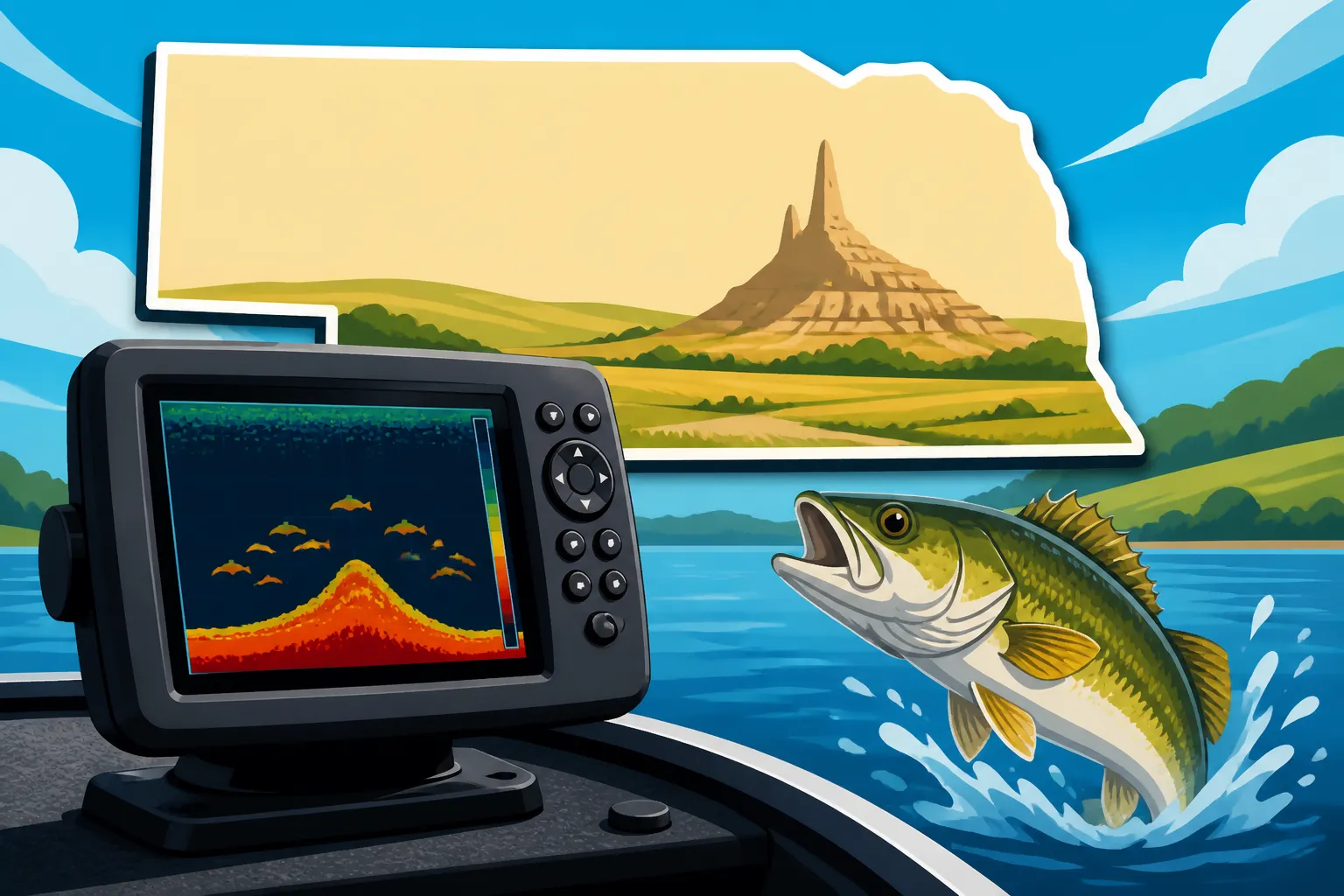
The most iconic image on a fish finder screen is the "arch." A classic arch represents a fish passing through the sonar cone. The longer and thicker the arch, generally the larger the fish. A fish swimming directly through the center of the cone will create a full, pronounced arch, while one on the edge will show a partial arch or a simple dash. If you see multiple arches, it indicates a school of fish. It's worth noting that smaller baitfish often show up as dense clouds or clumps rather than individual arches, which is still a fantastic sign as game fish are rarely far behind their food source.
Many fish finders also offer a "fish ID" mode that uses algorithms to interpret arches and display fish symbols instead. While convenient for beginners, experienced anglers often prefer the raw arch data because it provides more nuanced information about the fish's size and how it's relating to the bottom or structure. For instance, a half-arch just off the bottom might indicate a fish holding tight to the lakebed, a common behavior for walleye or catfish. Learning to read these arches gives you a much better understanding of the fish's behavior and location. Don't be afraid to switch off the fish symbols and learn to trust the arches for a more accurate picture of the underwater world.
Reading Bottom Composition and Structure
Beyond just fish, your fish finder is a powerful tool for understanding the bottom itself. The thickness and intensity of the bottom return on your 2D sonar can tell you a lot about its composition. A thin, soft return often indicates a muddy or silty bottom, while a thick, hard return typically signifies rock, gravel, or a very firm bottom. A double bottom echo, where you see a fainter repeat of the bottom line deeper on the screen, is a classic sign of a very hard bottom. Knowing whether you're fishing over mud, sand, or rock helps you choose appropriate baits and techniques. For example, walleyes often prefer hard bottoms, while some catfish species might favor softer mud.
When it comes to structure, Down Imaging and Side Imaging excel. On Down Imaging, submerged trees, brush piles, and rock formations appear with almost photographic clarity, allowing you to differentiate between individual branches or distinct rocks. Side Imaging reveals these structures as shadows, allowing you to quickly scan large areas for anomalies. A prominent shadow often means a significant piece of structure. Learning to identify these distinct features – a sharp, vertical line for a standing tree, a chaotic clump for a brush pile, or scattered bright spots for a rock field – is essential for targeting fish that relate closely to cover. This is especially useful in reservoirs like Branched Oak Lake Fishing Guide which have a lot of flooded timber.
Understanding Thermoclines and Baitfish Schools
Your fish finder can also reveal crucial environmental factors that influence fish behavior. A thermocline is a distinct layer of water where the temperature changes rapidly with depth. In summer, many Nebraska lakes develop a thermocline, and fish like crappie, walleye, and bass will often suspend just above or within this layer, seeking comfortable temperatures and oxygen levels. On your 2D sonar, a thermocline typically appears as a distinct, often fuzzy, horizontal line across the screen, below which there are few or no fish. Identifying the depth of the thermocline can help you target the most productive part of the water column.
Baitfish schools are another critical indicator. These will show up as dense clouds or masses of small, tightly packed dots or dashes on your screen. Where there's bait, there are usually predators. Seeing a large school of shad or smelt on your screen, particularly if you also spot larger arches nearby or lurking beneath the school, is a strong sign that you're in a productive area. Game fish use baitfish schools as feeding opportunities, ambushing them from below or by herding them against structure. Pay close attention to these indicators; they are often the first sign that you're about to encounter some serious action. Whether you're chasing white bass during their Nebraska White Bass Spring Run or targeting wiper hybrids, finding baitfish is often the first step to success.
Installation, Setup, and Maintenance Tips
A fish finder is an investment, and like any valuable piece of gear, proper installation, initial setup, and ongoing maintenance are crucial for optimal performance and longevity. Skipping these steps can lead to frustrating readings, poor performance, or even damage to your unit.
Mounting Your Transducer for Optimal Performance
The transducer is the heart of your fish finder system, and its mounting location and orientation are paramount. For boat owners with console-mounted units, a transom mount is common, but through-hull or in-hull mounts can offer cleaner readings, especially at higher speeds. The key is to mount the transducer in a location free from turbulence and cavitation caused by the propeller or boat hull. Even a small amount of aerated water passing over the transducer face can disrupt the sonar signal, leading to cluttered or unreliable readings. Ensure it’s level with the water and slightly below the hull. It’s a delicate balance that often requires experimentation.
For kayak anglers, popular options include mounting on a transducer arm that deploys into the water, or using a scupper hole mount or even an in-hull shoot-through setup. Each has its pros and cons regarding ease of installation, portability, and signal quality. Portable units often come with a suction cup or clamp mount, allowing for quick deployment. Always follow the manufacturer's instructions closely for your specific transducer and mounting type. Proper mounting ensures your transducer can send and receive clear, uninterrupted sonar signals, providing you with the accurate information you need to find fish. Don't rush this step, as it's foundational to your fish finder's effectiveness. You can often find great mounting accessories at stores like Bass Pro Shops.
Initial Settings and Calibration
Once your fish finder is installed, don't just turn it on and go! Taking the time to properly set it up and calibrate it will make a world of difference. Most units have an auto mode, which is a good starting point, but manual adjustments will often yield superior results.
- Sensitivity: This controls how much detail your unit displays. Too low, and you'll miss fish and structure; too high, and your screen will be cluttered with noise. Start in auto and then gradually increase it until you see a little static, then back it off slightly. This is an ongoing adjustment based on water clarity and depth.
- Noise Rejection/Filter: This setting helps eliminate interference from your boat's engine, other electronics, or nearby boats. Adjust this to reduce clutter on your screen without filtering out actual fish.
- Color Palette: Experiment with different color palettes. Some are better for distinguishing subtle changes in bottom hardness or for viewing fish against structure, especially in varying light conditions.
- Depth Range: While auto-depth is fine, manually setting your depth range (e.g., if you know you're fishing in 20-30 feet of water, set the range to 0-40 feet) can make fish and structure appear larger and easier to see on the screen.
Regularly calibrating your settings as you move between different lakes or encounter changing conditions (like a shift in water clarity or depth) will ensure you're always getting the best possible view of the underwater world. Don't be afraid to play with the settings; that's how you learn what works best on your specific unit and for the Nebraska waters you're fishing.
Keeping Your Unit Clean and Functional
Just like your fishing rods and reels, your fish finder requires a bit of TLC to stay in top shape. After each outing, especially on muddy or silty lakes, wipe down your screen and unit with a soft, damp cloth. Avoid harsh chemicals, as they can damage the screen coating. Ensure no debris, algae, or fishing line is wrapped around your transducer, as this can impede its performance. If you've been in waters known for Nebraska Aquatic Invasive Species Stamp concerns, like zebra mussels, ensure your transducer and boat hull are thoroughly cleaned to prevent spread.
Protect your screen from scratches when not in use with a cover. If you have a portable unit, store it in a dry, cool place, and ensure the battery is charged or properly maintained. For console-mounted units, periodically check all cable connections to ensure they are secure and free from corrosion. If you boat year-round or through colder weather, protect your unit from extreme temperature fluctuations. Proper care and maintenance not only extend the life of your expensive electronics but also ensure they are always ready to perform when you hit the water, giving you a clear, unobstructed view into Nebraska's underwater fishing hotspots. For general gear maintenance tips, you might find Best Fishing Gear for Nebraska Anglers helpful.
Disclaimer
This article is for general informational purposes only and does not constitute professional advice. Laws, prices and regulations vary by location and change over time. Consult a qualified professional for guidance on your specific situation.