How to Catch Smallmouth Bass in Rivers
It can be incredibly frustrating to hit Nebraska’s rivers, full of anticipation for that exciting fight a smallmouth bass offers, only to come up empty-handed. These bronze beauties are feisty, smart, and often seem to vanish into thin air, leaving many anglers scratching their heads about where they hide and what makes them bite. This comprehensive guide is designed to demystify river smallmouth fishing in Nebraska, equipping you with the knowledge, gear insights, and strategic approaches needed to consistently find and land these incredible game fish.
Understanding Nebraska's Riverine Smallmouth World
Before you can even think about casting, you've got to get inside the head of a river smallmouth bass. They aren't like their largemouth cousins, hanging out in lily pads. River smallmouth thrive in specific, often fast-moving, environments, and understanding their preferences is your first step to success.
Preferred Habitats and River Features
Smallmouth bass in Nebraska's rivers are masters of using current to their advantage and gravitate towards areas that offer a mix of food, shelter, and current breaks. Think of it like real estate: they want a prime location with easy access to food and a place to relax out of the main flow.
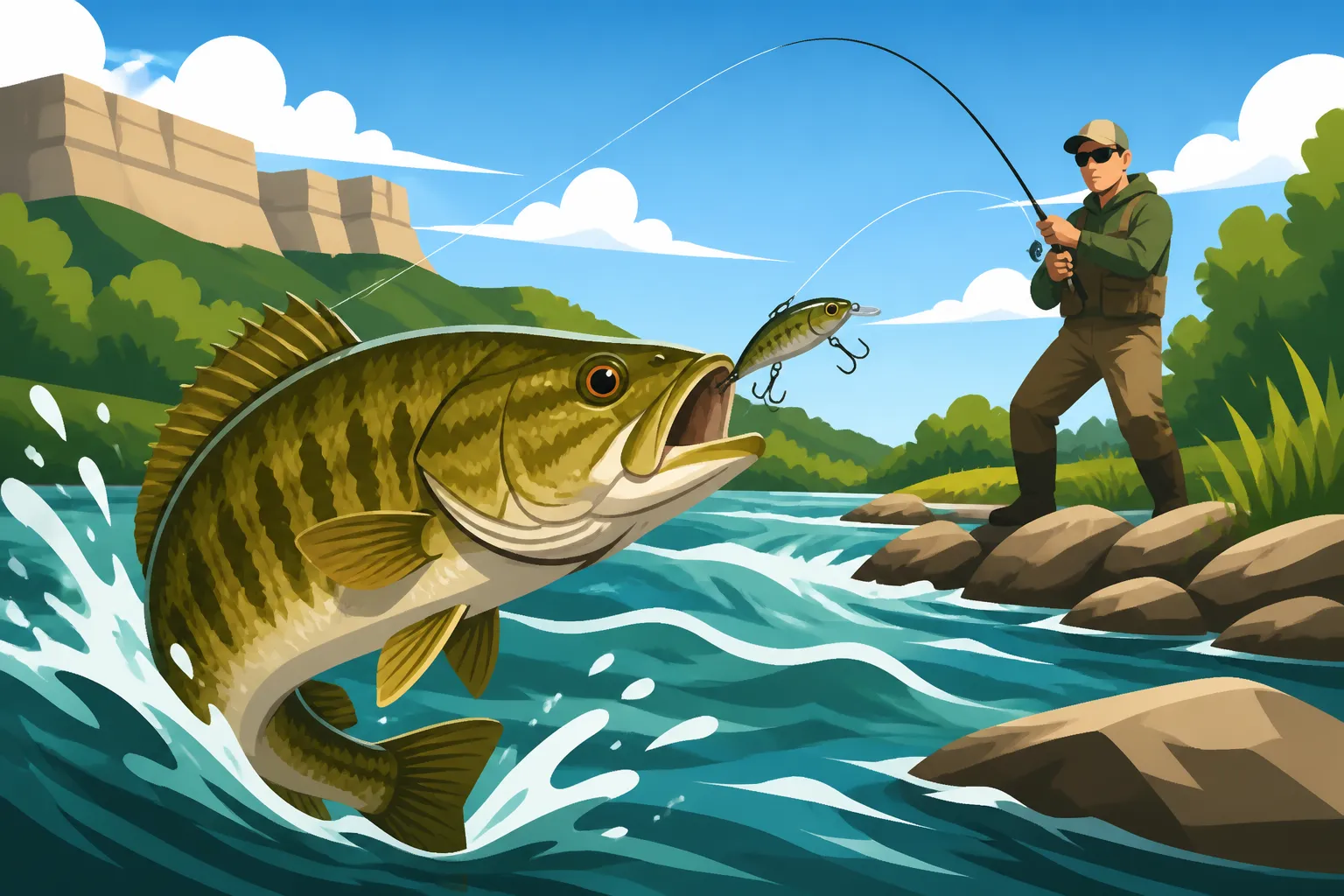
One of their top choices is rock gardens and boulder fields. These areas, often found in bends or stretches with harder bottoms, create natural current breaks and ambush points. The rocks provide cover from predators, a place to rest, and an abundance of crayfish and other invertebrates, which are prime smallmouth forage. You’ll find them tucked behind larger boulders, waiting for an easy meal to drift by.
Another key feature is current seams. These are those visible lines where faster water meets slower water. Smallmouth will position themselves in the slower water, just out of the main current, conserving energy while still being able to dart out into the faster flow to grab passing prey. These seams are often found along the edges of channels, behind mid-river obstructions, or where a feeder creek enters the main river. Learning to spot these subtle changes in water flow is absolutely critical.
Don't overlook deep pools and scour holes, especially those with good current. While smallmouth love moving water, they also need deeper areas for refuge, particularly during bright sunny days or when water temperatures are high. A deep pool at the bend of a river, especially if it has some rock structure or submerged logs, is an absolute magnet for larger smallmouth. They'll also use undercut banks and woody debris, like fallen trees or log jams, for shade, cover, and as ambush points. These areas can be tricky to fish due to snags, but they often hold the biggest fish.
Nebraska's rivers like the Niobrara River and parts of the Elkhorn River are fantastic examples of smallmouth habitat. The Niobrara, with its clear, cool water and numerous rock formations, is renowned for its vibrant smallmouth fishery, offering countless opportunities to explore these preferred zones.
Seasonal Movements and Behavior
Just like us, smallmouth bass change their routines throughout the year, largely dictated by water temperature and their biological needs. Understanding these shifts is key to knowing where to find them and what they might be willing to bite.
In spring, as water temperatures climb into the 50s Fahrenheit, smallmouth begin to shake off their winter lethargy and move towards shallower areas in preparation for spawning. This is often referred to as the prespawn period. They'll be feeding aggressively, trying to pack on calories before the energy-intensive spawning process. Look for them in transitional areas—flats adjacent to deeper holes, rock shelves, and areas with slightly warmer water. They might be in shallower water than you expect, so don't be afraid to cast closer to the bank.
As water temperatures reach the mid-60s, typically late spring to early summer, the spawning ritual begins. Smallmouth will build nests on gravel or rocky bottoms in relatively shallow, protected areas, often near a current break. During this time, they are highly territorial and protective of their nests. While they might strike at lures, many anglers choose to leave spawning fish alone to ensure successful reproduction and future populations. After spawning, the fish enter a post-spawn phase, often resting and recovering in slightly deeper, yet still accessible, water near the spawning grounds before resuming more active feeding.
Summer brings warmer water, and smallmouth will often move to deeper, cooler sections of the river. However, they'll still be very much current-oriented. They seek out those deep pools, log jams, and shaded undercut banks that offer cooler water and refuge from the sun. Low light conditions, such as early mornings, late evenings, or overcast days, often trigger their most active feeding periods during the summer. They become more nocturnal, too, often moving into shallower riffles and feeding flats under the cover of darkness.
As fall approaches and water temperatures begin to drop, smallmouth enter an intense feeding period often called the "fall turnover" or "fall bite." They know winter is coming and they need to build up fat reserves. This can be one of the best times to catch larger smallmouth, as they become incredibly aggressive. They'll often be found near deeper wintering holes, but will make forays into shallower feeding flats and current seams, gorging on crayfish and baitfish. As winter sets in, they retreat to the deepest, most stable pools of the river, becoming much less active and harder to tempt with a lure.
Essential Gear for River Smallmouth Angling
Having the right tools for the job can make a world of difference when chasing river smallmouth. These fish are powerful, and the river environment can be unforgiving on tackle, so investing in quality gear tailored for this type of fishing is paramount.
Rod, Reel, and Line Selection
The nuanced dance of river smallmouth fishing demands a versatile rod and reel setup. For most situations, especially when throwing lighter baits or when precision is key, a medium-light to medium power spinning rod is your best friend. Look for a rod in the 6'6" to 7'2" range with a fast or extra-fast action. This combination provides enough backbone to fight a strong fish in current, while the sensitive tip allows for excellent feel, detecting subtle bites, and accurately presenting lighter lures. You'll want a rod that can cast a variety of lures, from small jigs to spinnerbaits.
Pair your spinning rod with a high-quality spinning reel in the 2000 or 2500 series. These reels offer a good balance of retrieve speed, line capacity, and smooth drag, which is crucial for handling those explosive smallmouth runs. Brands like Shimano and Daiwa offer excellent options that are durable enough for river use.
When it comes to line, a lot of anglers opt for braided line as their main line, usually in the 10-20 pound test range, for its incredible sensitivity and strength. The lack of stretch in braid helps you feel every bump and tick on the bottom, which is vital in river current. However, smallmouth can be line-shy in clearer river sections, so it's almost always a good idea to tie on a fluorocarbon leader of 6-10 pound test. Fluorocarbon is nearly invisible underwater and offers good abrasion resistance against rocks. A simple Surgeon's knot or an FG knot works well for connecting braid to fluorocarbon.
For anglers who prefer to throw slightly heavier reaction baits or those targeting bigger smallmouth in heavier current, a medium power baitcasting setup can also be effective. A 6'8" to 7'0" medium action baitcasting rod with a good quality baitcaster reel spooled with 12-17 pound fluorocarbon can handle crankbaits, spinnerbaits, and heavier jigs with ease. Ultimately, having both a spinning and a baitcasting setup ready can cover nearly every river scenario. For more general advice on picking your setup, check out our guide on the Best Rod Setup for Nebraska Walleye (much of the principles apply to bass, too!).
Lure Selection for River Conditions
The smallmouth bass in Nebraska's rivers have a diverse diet, and your lure selection should reflect that. Having a good variety allows you to adapt to changing conditions and fish preferences.
Topwater Lures: When conditions are right—calm water, low light, or active fish—nothing beats the thrill of a topwater strike. Poppers, walking baits (like a Heddon Zara Spook), and even small buzzbaits can be incredibly effective. Smallmouth will absolutely crush a topwater, making for an unforgettable experience. Try working them over shallow rock gardens or along current seams during early mornings or late evenings.
Crankbaits: These are workhorses for river smallmouth. Shallow-diving squarebill crankbaits are excellent for bumping off rocks and timber in shallower water, mimicking crayfish or baitfish. For deeper pools or when fish are holding tighter to the bottom, a medium-diving crankbait can be deadly. Colors that mimic crayfish (browns, oranges, reds) or natural baitfish (shad, perch patterns) are usually a good bet. You can find a fantastic selection of these on Amazon, allowing you to stock up for different depths and conditions.
Spinnerbaits: These versatile lures are great for covering water, especially in stained conditions or when fish are aggressive. Small, compact spinnerbaits with willow leaf or Colorado blades are effective in current. They provide flash and vibration that can trigger a strike even from a sluggish smallmouth.
Jigs and Soft Plastics: This category is arguably the most important for river smallmouth. Tube jigs are a classic for a reason; they perfectly imitate a crayfish darting across the bottom. Rig them on a football or round head jig and drag or hop them along rocky areas. Creature baits and small grubs on a jig head are also highly effective. For a more subtle presentation, consider Ned rigs—small, mushroom-head jigs paired with short, buoyant soft plastic worms. These are fantastic for pressured fish or when the bite is tough. When fishing soft plastics, colors like green pumpkin, watermelon, and browns are consistent producers, as they mimic the natural forage smallmouth prey on. For a deeper dive, read up on the Best Lures for Nebraska Bass.
Remember, carry a diverse tackle box that includes a mix of these options. You never know what the smallmouth will be keying in on!
Mastering River Smallmouth Techniques
River fishing for smallmouth isn't just about casting and reeling; it's about becoming a detective, reading the water, and understanding how to present your lure in a way that triggers a strike. It’s a dynamic environment that constantly challenges you to adapt.
Reading the River and Identifying Prime Spots
One of the most valuable skills you can develop as a river angler is the ability to "read the water." This means observing the current, the changes in depth, the visible structure, and understanding how these elements create feeding and holding lies for smallmouth bass.
Current breaks are your absolute best friend. Imagine the river flowing downstream. Any object that disrupts that flow—a large boulder, a fallen tree, an eddy created by a point of land—creates a slower water zone behind it. Smallmouth will position themselves in these calmer areas, conserving energy while they wait for food to be swept by in the faster current. Look for these subtle seams where fast water meets slow water. Casting your lure just upstream of these current breaks and letting it drift naturally into the strike zone is often incredibly effective.
Eddies are circular currents often found downstream of large obstructions or on the inside bends of rivers. These are prime resting and feeding areas, often collecting baitfish and other forage. Smallmouth will typically face into the main current, waiting for an easy meal to be delivered. Casting into the eddy and working your lure out towards the main current can produce explosive strikes.
Confluence points, where two rivers or a creek and a river meet, are also high-percentage spots. The merging currents create complex flow patterns, often scouring out deeper holes and depositing a mix of gravel and rock. These areas concentrate baitfish and provide diverse habitat for smallmouth. Fish the seams, the deeper pockets, and any visible structure near these junctions.
Don't overlook log jams and downed trees. While they can be frustrating to fish due to potential snags, they provide incredible cover, shade, and ambush points for smallmouth. Approach these areas carefully, making accurate casts to the edges or into the pockets within the woody debris.
Finally, riprap along bridge abutments or shorelines is another prime smallmouth habitat. The rocks attract crayfish, and the irregular surface creates numerous current breaks and hiding spots. This is a classic spot to throw a squarebill crankbait or a tube jig.
Remember, the river is constantly changing. High water, low water, and even daily fluctuations can alter these prime locations. A good strategy is to cover water, identify areas that look fishy based on these principles, and then thoroughly fish them before moving on. Our guide on How to Wade Fish the Platte River Safely offers excellent insights into navigating river environments that can be applied to other smallmouth rivers.
Presentation Strategies for Different Lure Types
Once you've identified a promising spot, the next challenge is presenting your lure naturally and enticingly. The current plays a huge role here, and you need to use it to your advantage, not fight against it.
When fishing with jigs or soft plastics, the key is often a natural drift. Cast your lure upstream of your target structure (like a boulder or log jam) and let the current carry it downstream. Maintain a semi-slack line, just enough to feel the bottom and detect bites, but not so tight that it pulls the lure unnaturally fast. You want the lure to tumble and bounce along the bottom, mimicking a crayfish or a stunned baitfish. Occasional subtle hops or drags with your rod tip can trigger a strike. For tube jigs, a "drag and hop" retrieve is classic: drag it a few feet, then hop it gently, letting it settle.
For crankbaits, especially squarebills, the "deflection" is crucial. Cast your crankbait to hit rocks, logs, or other structure. The deflection off the obstacle often triggers a reaction strike from a smallmouth that's otherwise hesitant. Vary your retrieve speed. Sometimes a steady retrieve works, but often, adding pauses and sudden bursts of speed can be more effective. When fishing deeper diving crankbaits in larger pools, aim to get the lure to grind the bottom.
Spinnerbaits are excellent for covering water. Cast them across current seams or parallel to undercut banks and retrieve them steadily. The flash and vibration are often enough to draw strikes. If fish are short-striking, try adding a small soft plastic trailer to give them a bigger target.
Topwater lures require specific retrieves. For poppers, a "pop-pause" retrieve is standard: a sharp twitch of the rod tip to make the popper gurgle, followed by a pause. The length of the pause can vary from a few seconds to much longer, allowing the fish time to decide to strike. Walking baits require a rhythmic twitch-twitch-pause of the rod tip to make them "walk the dog" side-to-side across the surface. This retrieve takes practice but is incredibly effective.
Always remember to fish through the current. If you cast directly downstream, your lure will often get washed out quickly. Casting upstream or slightly across stream, and working your lure back with the current, allows for a more natural presentation and keeps your lure in the strike zone longer. This is particularly important if you're exploring Nebraska Kayak Fishing Techniques where boat positioning plays a huge role in your casting angles.
Advanced Tips and River Safety
Being successful at river smallmouth fishing isn't just about lures and techniques; it also involves understanding how to navigate the river safely and how external factors influence fish behavior.
Wading and Kayak Fishing Tactics
Many of Nebraska's smallmouth rivers are perfect for wading. It allows for a stealthy approach, getting you right into the heart of the action without the noise of a boat. However, safety is paramount. Always wear a wading belt, which can greatly reduce the amount of water that enters your waders if you happen to fall. Invest in quality wading boots with good traction, especially if you're dealing with slippery, rocky bottoms. Felt soles or studded soles can provide superior grip. Always test the depth and stability of the bottom with a wading staff before taking a step, especially in murky water. Avoid wading alone, if possible, and always let someone know your float plan. Rivers can be treacherous, and currents can be stronger than they appear.
When wading, approach spots from downstream whenever possible. Smallmouth typically face upstream, so approaching from below makes you less visible. Make casts upstream and let your lure drift down to the fish. Fan cast a section thoroughly before moving, paying close attention to current seams and structure.
Kayak fishing for river smallmouth has exploded in popularity, and for good reason. Kayaks offer incredible stealth and access to stretches of river that are difficult to reach by larger boats or even by wading. When kayak fishing, proper positioning is key. Use a small anchor or a stake-out pole to hold your position above prime habitat, allowing you to thoroughly fish a spot. Learn to use the current to your advantage, drifting through productive stretches while maintaining boat control. Many modern fishing kayaks are designed for stability, allowing you to stand and sight-fish in shallower sections. Always wear your personal flotation device (PFD) – it’s not just a good idea, it's often a legal requirement, and crucial for your safety.
Whether wading or kayaking, stealth is a huge factor. Smallmouth can be very wary, especially in clear water. Move slowly, avoid making unnecessary noise, and keep a low profile.
Best Times and Conditions
Smallmouth bass, like many predatory fish, often feed most actively during periods of low light. This means early mornings, late evenings, and overcast days are typically your best bets. The reduced light penetration makes them feel more secure to venture out of cover and feed aggressively. On bright, sunny days, they tend to hug tighter to cover or drop into deeper, shadier water.
Stable weather patterns are generally more favorable than rapidly changing conditions. A sudden cold front can put the fish off the bite for a day or two, making them lethargic. Look for several days of consistent weather for the best results.
Water clarity is another critical factor. While smallmouth can tolerate some stained water, they generally prefer clearer conditions compared to largemouth bass. In extremely muddy water after heavy rains, smallmouth often shut down or move to the edges where clearer water might be entering. On the flip side, extremely clear water can make them very line-shy and require more subtle presentations. Aim for a moderate amount of stain for ideal conditions.
Water temperature is perhaps the most important condition. As we discussed in seasonal movements, smallmouth are highly temperature-dependent. Their activity levels, metabolism, and preferred locations all shift with temperature. In spring and fall, when temperatures are in the 50s and 60s Fahrenheit, they are often at their most active. During the peak of summer, they seek cooler water, and in winter, they become largely inactive in deep pools. Using a portable thermometer to check water temperature can give you a significant advantage in understanding fish behavior on any given day.
Top Nebraska Rivers for Smallmouth Bass
While Nebraska might not be the first state that comes to mind for smallmouth bass, we actually have some incredible river fisheries that offer fantastic opportunities for these hard-fighting fish. Knowing where to go is half the battle.
Niobrara River Tactics
The Niobrara River is, without a doubt, Nebraska’s premier smallmouth bass destination. Often referred to as "Nebraska's River of National Significance," it boasts stunning scenery, incredible biodiversity, and a thriving population of smallmouth. The river's character varies along its length, offering diverse fishing experiences.
The Niobrara is characterized by its clear, cool waters and abundant rock and gravel substrate, which is ideal smallmouth habitat. Anglers often target sections downstream from Valentine, particularly those areas with good access for canoes, kayaks, or wading. Look for long stretches of current with interspersed rock gardens, submerged boulders, and log jams. The confluence points of smaller, spring-fed tributaries also concentrate smallmouth and often provide cooler water during the summer months.
When fishing the Niobrara, focus on accurate casting to specific structure. Tubes, small crankbaits (especially squarebills in crayfish patterns), and grubs on jig heads are highly effective. The clear water demands a stealthy approach and lighter fluorocarbon leaders. Many anglers choose to float sections of the river in canoes or kayaks, stopping to wade and fish promising stretches. This allows you to cover a lot of water and access areas that shore anglers can't reach. If you’re planning a trip to this renowned river, be sure to read our detailed guide on Niobrara River Smallmouth Bass Fishing for even more specific tips. For even more insights into specific locations and methods, our How to Catch Smallmouth Bass on the Niobrara River article goes into great detail.
Elkhorn River Opportunities
The Elkhorn River is another fantastic, and often overlooked, smallmouth fishery in Nebraska. While it doesn't have the same clear, rocky character as the Niobrara throughout its entire length, certain sections offer excellent smallmouth opportunities, particularly the upper and middle reaches.
The Elkhorn is more of a prairie river, with sections of sand and gravel, but it also has significant stretches of rocky bottom, especially where the current has scoured deeper channels. The smallmouth here thrive in these rockier areas, particularly around bridge pilings, log jams, and areas where the river bends and creates deeper outside turns. These areas provide current breaks and ambush points similar to those found in the Niobrara, though perhaps with less visible rock structure on the surface.
Tactics for the Elkhorn often involve a mix of techniques. Small crankbaits that dive to about 5-8 feet are excellent for probing deeper holes and along riprap. Spinnerbaits and buzzbaits can be very effective in stained water or during low light. Don't forget jigs and soft plastics, especially tube baits in natural colors, for working slower pools and eddies. The fish here are often less pressured than in some other systems, offering a great chance for consistent action. For a more complete overview of this diverse river, check out our guide on Elkhorn River Fishing.
Conservation and Responsible Angling
As anglers, we have a responsibility to protect the resources that provide us with so much enjoyment. Practicing conservation and responsible angling ensures that Nebraska's smallmouth bass fisheries remain vibrant for generations to come.
Catch and Release Best Practices
Smallmouth bass are a valuable sport fish, and many anglers choose to practice catch and release, especially for larger specimens that are important breeders. If you plan to release fish, proper handling is crucial to maximize their survival rate.
Always try to land fish quickly to minimize their exhaustion. The longer a fish fights, the more lactic acid builds up in its muscles, reducing its chances of survival after release.
Use a large, rubberized landing net if possible. These nets are much gentler on a fish's slime coat, fins, and eyes than traditional knotted nylon nets.
Minimize air exposure. A fish cannot breathe air, and prolonged exposure can cause severe stress and damage. Try to keep the fish in the water as much as possible, especially if you're taking a quick photo.
Handle the fish gently with wet hands. Dry hands can remove the protective slime coat, leaving the fish vulnerable to disease. Support the fish's full body weight, especially if it's a larger one. Avoid holding fish by the jaw in a vertical position, as this can damage their spine and jaw joints. If you need to hold it vertically, support its belly with your other hand.
Use barbless hooks or crimp down barbs on your lures. This makes hook removal much easier and quicker, reducing stress and injury to the fish. If a hook is deeply embedded, it's often best to cut the line as close to the hook as possible rather than trying to rip it out. The hook will often rust out over time.
Revive the fish properly. If a fish seems sluggish after release, hold it gently in the water, facing upstream, allowing water to flow over its gills. Move it back and forth slightly to help oxygenate its gills until it swims away strongly on its own. Never just toss a fish back if it's not ready.
For even more detailed information on ethical angling, our Catch and Release Best Practices in Nebraska guide is an excellent resource.
Protecting River Ecosystems
Beyond handling fish properly, we have a broader responsibility to protect the entire river ecosystem.
Leave no trace. Whatever you pack in, pack out. This includes all trash, discarded fishing line, and bait containers. Fishing line is particularly dangerous for wildlife.
Prevent the spread of aquatic invasive species (AIS). This is a critical concern in Nebraska. AIS like zebra mussels and Asian carp can devastate native ecosystems. Always Clean, Drain, Dry your boat, kayak, waders, and all fishing gear after leaving one body of water before entering another. "Clean" means removing all visible mud, plants, and organisms. "Drain" means draining all water from your boat, livewell, and bait bucket. "Dry" means drying all equipment thoroughly, ideally for five days or more. Some areas may require an Nebraska Aquatic Invasive Species Stamp or specific inspections, so always be aware of local regulations.
Respect private property. Many stretches of Nebraska's rivers run through private land. Always know where you're legally allowed to access the water and where you're allowed to wade or float. Obtain permission before trespassing.
Report violations. If you witness poaching, pollution, or other harmful activities, report them to the Nebraska Game and Parks Commission.
By following these practices, we can all contribute to healthy, thriving river environments and ensure that the thrill of catching a Nebraska smallmouth bass can be enjoyed for generations to come.
Lure Selection for River Smallmouth: A Quick Guide
| Lure Type | Best Conditions / Habitat | Retrieve Strategy | Target Depth | Notes |
|---|---|---|---|---|
| Tube Jigs | Rocky bottoms, current breaks, deep pools, clear to stained water | Cast upstream, bounce/drag on bottom with current, subtle hops | Bottom | Excellent crayfish imitation; natural colors (green pumpkin, brown) |
| Squarebill Crankbaits | Shallow rock gardens, riprap, woody debris, current seams | Cast to deflect off structure, varying retrieve, stop-and-go | 1-5 feet | Mimics crayfish/baitfish; aggressive reaction strikes |
| Spinnerbaits | Covering water, stained water, aggressive fish, shallow flats | Steady retrieve, cast across current seams or parallel to banks | Shallow-Mid | Flash & vibration, good for wind or murky water |
| Ned Rigs | Highly pressured fish, clear water, subtle bite, rocky bottoms | Cast upstream, subtle drag-and-pause on bottom, minimal rod movement | Bottom | Finesse presentation, buoyant plastic stands up |
| Walking Topwaters | Calm water, low light, shallow flats, ambush points | "Walk the dog" retrieve with rod tip, varying pause length | Surface | Exciting blow-ups; great for active fish |
| Poppers | Calm water, low light, around docks or overhanging cover | Pop-pause retrieve, sharp rod twitches, longer pauses for tentative fish | Surface | Creates splash/gurgle, triggers aggressive strikes |
| Grubs/Swimbaits (on jig head) | Versatile, open water, current seams, around cover | Steady retrieve, slow roll along bottom, lift-and-drop | Mid-Bottom | Mimics baitfish, effective in many situations |
Disclaimer
The information provided in this guide is for general informational purposes only. Fishing regulations, license requirements, and local conditions can change frequently. Always consult the official Nebraska Game and Parks Commission website or their annual fishing guide for the most up-to-date and specific regulations, season dates, and limits before heading out on the water. Be aware of weather conditions and practice safe boating and wading habits.