Best Water Temperature for Walleye Fishing
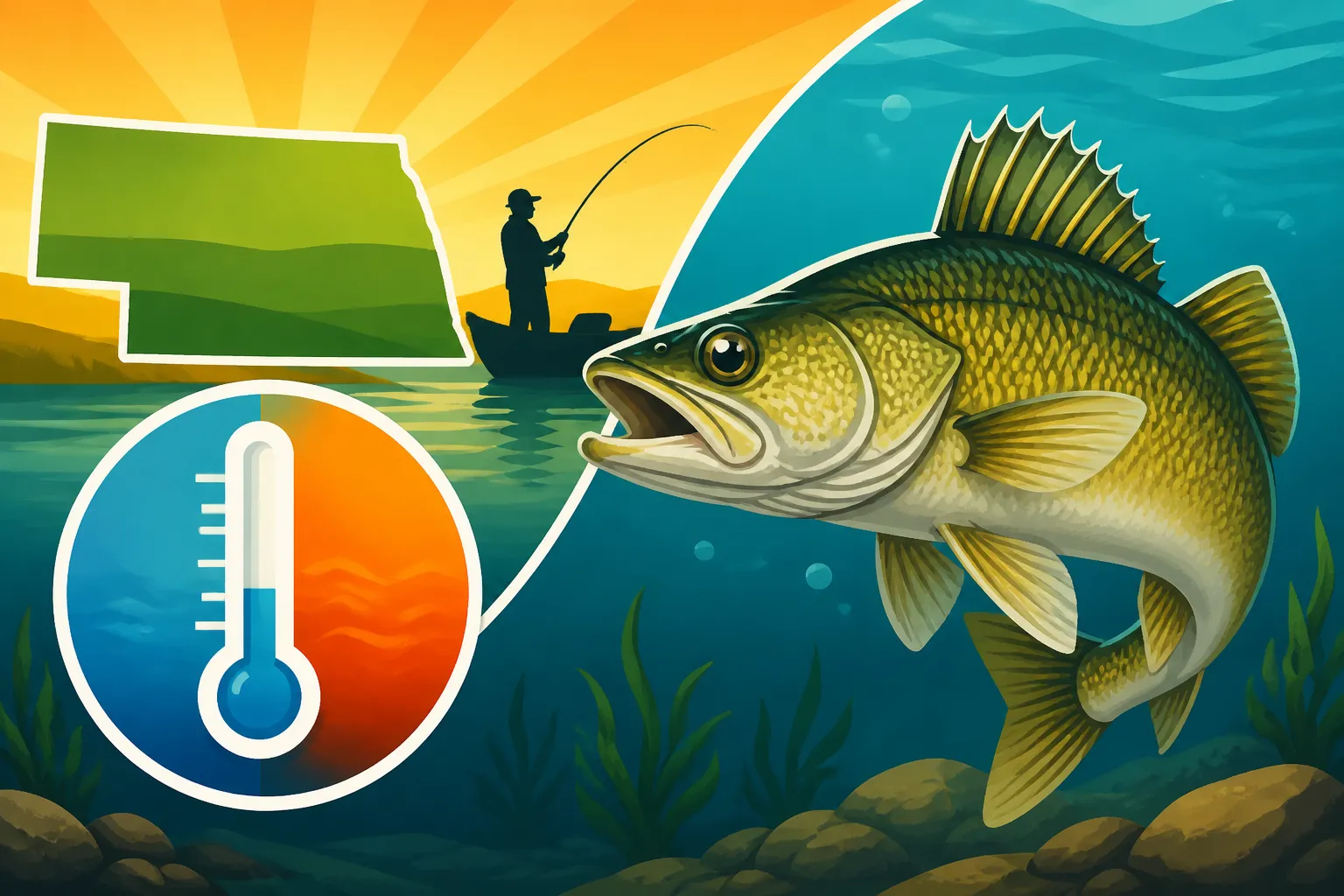
There’s nothing quite as frustrating as heading out to your favorite Nebraska walleye spot, armed with all the right lures and techniques, only to come up empty-handed. It can feel like the fish just vanished! Often, the missing piece of the puzzle isn't your bait or your cast, but a deep understanding of water temperature and how it dictates walleye behavior. This comprehensive guide will explain exactly why water temperature is so crucial for catching walleye and how you can use this knowledge to fill your livewell.
Understanding Walleye Biology and Temperature Preferences
Walleye are coldwater fish, but that doesn't mean they thrive in freezing conditions. Like all fish, their metabolism and activity levels are directly tied to the surrounding water temperature. Understanding their biological needs is the first step to predicting their movements and feeding patterns across Nebraska's diverse lakes and rivers.
The Walleye's Ideal Thermal Zone
Imagine a walleye in its perfect swimming pool – not too hot, not too cold, just right. This "comfort zone" is what we refer to as their ideal thermal zone. For walleye, this typically falls between 60 to 70 degrees Fahrenheit (15 to 21 degrees Celsius). Within this range, their metabolism is optimized, they're actively feeding, and they’re generally more aggressive. However, it's important to remember that they don't only exist in this range. They tolerate a much broader spectrum, from near freezing in winter to well into the 80s in summer, but their behavior will drastically change outside their preferred band. Your goal as an angler is to find where the water temperature best suits their current mood and energy level.
Outside of this ideal range, walleye will adjust. If the water is too cold, their metabolism slows down, making them sluggish and less likely to chase a bait. If it's too warm, they become stressed, seek deeper, cooler water, and might become lethargic or even exhibit a "summer funk" where they're hard to tempt. Knowing these nuances allows you to adjust your approach rather than just hoping for a bite.
How Temperature Impacts Walleye Metabolism and Behavior
Water temperature directly influences almost every aspect of a walleye's life, from how fast they digest food to how quickly they can swim. When the water warms up, their metabolic rate increases. This means they need to eat more frequently to sustain themselves, becoming more active and aggressive feeders. This is often when you find them shallow, chasing baitfish with gusto. Conversely, when water temperatures drop, their metabolism slows significantly. They require less food, move slower, and often hold tight to structure or deep cover, conserving energy.
Think about it like us: in summer, we're active, we eat more, and we're out and about. In winter, we're often less active, crave comfort food, and spend more time indoors. Walleye are similar, just on a different scale. This direct link between temperature and metabolism also impacts their spawning behavior, which is a critical time for anglers. If you're looking for more information on their reproductive cycles, check out our guide on Nebraska Walleye Spawning Season.
Understanding this fundamental principle is key to unlocking consistent success. It tells you not only where they might be, but also how they're likely to react to your bait, guiding your lure choices and presentation speeds.
Seasonal Water Temperature Ranges and Walleye Activity in Nebraska
Nebraska's seasons bring dramatic shifts in water temperature, and with them, significant changes in where walleye can be found and how they behave. Adapting your strategy to the seasonal temperature patterns is crucial for consistent success.
Early Spring: Post-Spawn and Warming Waters
As ice recedes across Nebraska's lakes and reservoirs, walleye are typically in their post-spawn recovery phase. Spawning usually occurs when water temperatures are in the 42-50°F (5.5-10°C) range. Immediately after spawning, walleye are often exhausted and scattered, with little interest in feeding. They might be found near their spawning grounds in shallower rocky areas, but they won't be aggressive.
As the water slowly warms into the 50-55°F (10-13°C) range, they begin to recover and start moving towards feeding areas. Look for them on shallow flats, secondary points, and along the edges of bays where the sun warms the water quickest. This is a great time to target them with slower presentations, like jigging with live bait or dragging a How to Use a Crawler Harness for Walleye near the bottom. The fish are still somewhat lethargic but are starting to feel the urge to feed. Focus on areas with slightly warmer water pockets, even a difference of a couple of degrees can concentrate fish.
Late Spring/Early Summer: Peak Activity
This is often the golden window for many Nebraska walleye anglers. Once water temperatures hit the 58-68°F (14.5-20°C) range, walleye are in their prime. Their metabolism is high, they've recovered from spawning, and they're actively hunting baitfish. You'll find them in a variety of depths, from shallow weed beds in the mornings and evenings to transition areas and main lake points throughout the day.
This is when aggressive techniques really shine. Trolling crankbaits, casting jigs tipped with plastics or minnows, and drift fishing with live bait rigs can all be incredibly effective. The walleye are willing to chase and strike, making for some exciting fishing. This is also a fantastic time to explore different depths and structures, as they'll be broadly distributed where forage is present. Many anglers find this period to be the most rewarding for targeting larger fish before the full heat of summer sets in. You can find many of the lures and baits perfect for this season on Amazon, ensuring you're stocked up for action.
Mid-Summer: Finding Cooler Depths
When Nebraska summers really heat up, and surface water temperatures climb into the 70-80°F+ (21-27°C+) range, walleye often move deeper to find cooler, more oxygenated water. They're still feeding, but their activity might be concentrated during cooler periods like dawn, dusk, or at night. During the day, they'll often relate to deep structure: humps, points, submerged islands, and thermoclines.
The thermocline is a crucial concept here – it's the layer in the water column where the temperature changes rapidly. Walleye will often suspend just above, in, or below the thermocline where conditions are most favorable. Your fish finder becomes an invaluable tool for locating these thermal layers. Look for areas with access to deep water where they can escape the heat. Vertical jigging, drop-shotting, and deep trolling with large crankbaits are effective strategies. Don't be afraid to fish offshore structure, as that's where the bigger fish often hold when the shallow water gets too warm. Check out our guide on How to Fish Deep Structure for Summer Walleye for more in-depth strategies.
Fall: Feeding Frenzy Before Winter
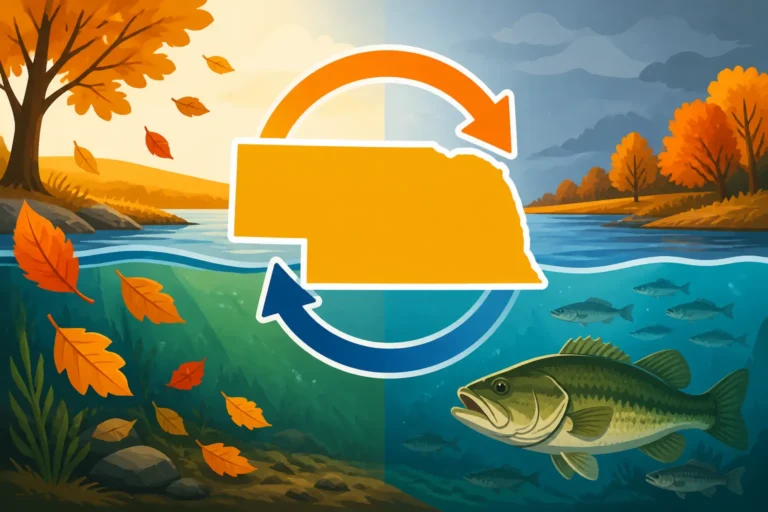
As autumn arrives and water temperatures begin to drop, walleye sense the approaching winter and engage in a massive feeding frenzy to build up fat reserves. This period, typically when temperatures are in the 50-60°F (10-15.5°C) range, offers some of the best fishing opportunities of the year. Walleye will become very aggressive and often move shallower than they were in summer, following baitfish that are also moving to warmer, shallower areas or concentrating before winter.
You can find them on main lake points, rocky reefs, and even shallow flats, especially during overcast days. Trolling crankbaits, casting lipless crankbaits, and using larger jigs tipped with minnows are all excellent choices. The key is to match the hatch – what are the baitfish doing? Where are they? The walleye won't be far behind. This is a fantastic time to target trophy fish, as they are actively gorging themselves.
Winter: Slow and Steady Bites
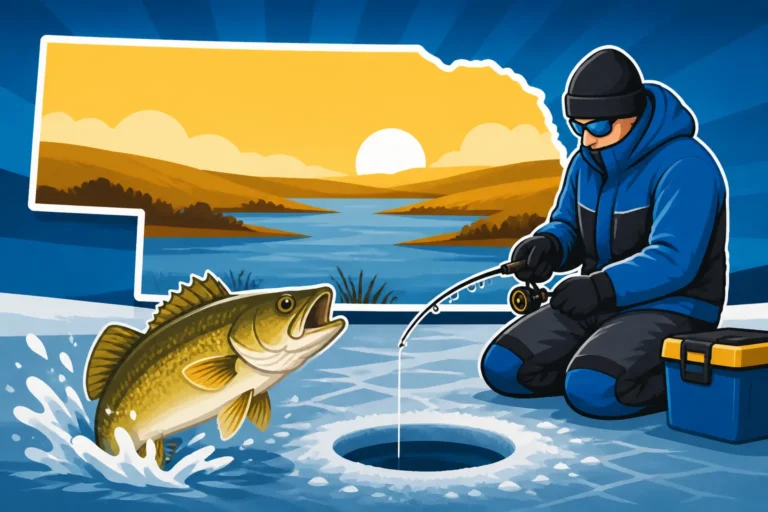
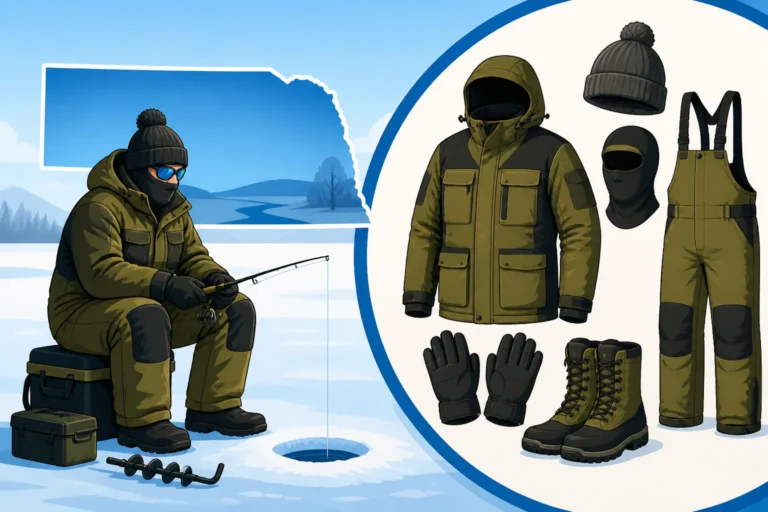
Once the ice covers Nebraska's lakes and water temperatures stabilize in the 32-40°F (0-4.5°C) range, walleye activity slows considerably. Their metabolism is at its lowest, and they conserve energy. This doesn't mean you can't catch them, though! Ice fishing for walleye can be incredibly rewarding, but it requires patience and a slower presentation.
Walleye will often congregate in predictable areas: deep main lake basins, subtle humps, and points near deeper water. They might suspend or hug the bottom. Small jigs tipped with live minnows, jigging spoons, or even dead sticks with a minnow can be effective. Patience is paramount, as bites can be very subtle. Look for groups of fish on your fish finder and be prepared to stay put. Even a slight rise in temperature under the ice, perhaps near an inlet or a spring, can concentrate fish. For more tips on winter fishing, explore our Nebraska Ice Fishing Regulations.
Practical Tips for Locating Walleye Based on Water Temperature
Knowing the ideal temperature ranges is one thing, but actually putting that knowledge to use on the water is where the real magic happens. It's about being a detective, constantly observing and adjusting.
Using Electronics to Find Temperature Breaks
Your boat's electronics, particularly a good fish finder, are your best friend when it comes to temperature-driven walleye fishing. Many modern units come with built-in water temperature sensors, providing real-time readings. Don't just look at the surface temperature; pay attention to how the temperature changes as you move across the lake and, more importantly, through the water column.
A distinct temperature "break" or "front" can often concentrate fish. This might be where a warmer current meets cooler water, or where a thermocline sets up. Scan your sonar for baitfish activity in these zones, as walleye will often be nearby. Even subtle changes of a degree or two can make a huge difference to walleye comfort. Investing in a quality fish finder, which you can easily research and purchase on Amazon, is one of the best ways to elevate your walleye game. It allows you to quickly identify productive depths and avoid unproductive water, saving you valuable fishing time. For a deeper dive into using your electronics, check out our guide on How to Read a Fish Finder for Walleye.
Interpreting Environmental Cues
Beyond electronics, your own eyes and senses can provide valuable clues. Look for areas where the sun might be warming the water more quickly, like shallow, dark-bottomed bays in spring. Observe wind direction and how it might push warmer or cooler surface water, creating currents or concentrated baitfish. Pay attention to inflows from rivers or streams, which can bring different temperature water into a lake. Even factors like heavy rainfall can rapidly change surface temperatures, causing fish to react.
For example, after a strong cold front in summer, walleye might move deeper to escape the shock of rapidly cooling surface water. Conversely, a prolonged period of sunshine in spring can warm shallow flats, drawing walleye in for an easy meal. By combining your electronic readings with these environmental observations, you build a much more complete picture of where the walleye are likely to be.
Adjusting Lures and Presentation
Once you've located walleye in a specific temperature zone, the next step is to choose the right lure and presentation speed. This is where the understanding of their metabolism comes into play.
- Cold Water (Below 50°F / 10°C): Walleye are sluggish. Opt for slow-moving baits like live minnows on a jig or slip-bobber. Finesse plastics, slowly dragged or jigged, can also work. Think subtle movements and baits that stay in the strike zone for a long time. They're not going to chase anything fast.
- Optimal Water (60-70°F / 15.5-21°C): This is when walleye are most active. You can be more aggressive with your retrieves. Trolling crankbaits, fast jigging, ripping lipless crankbaits, or casting reaction baits like spinnerbaits (in areas with weeds) can all be highly effective. Experiment with speed and retrieve patterns.
- Warm Water (Above 70°F / 21°C): Walleye will be deeper and potentially more lethargic, or active during low-light. Deep-diving crankbaits trolled slowly, vertical jigging spoons or heavy jigs, and bottom bouncers with crawler harnesses can entice bites. Focus on precise presentations where the bait is right in front of the fish, or during peak feeding windows when they move up. Many anglers also find success with night fishing when surface temperatures cool.
Different baits perform better at certain temperatures, and your presentation should reflect the fish's energy level. For more specific bait recommendations, refer to our Best Bait for Nebraska Walleye guide.
Gear and Tools for Monitoring Water Temperature
To effectively utilize water temperature data, you need the right tools in your tackle box. Modern technology has made it easier than ever to get precise readings, but even simple tools can make a difference.
Portable Thermometers and Fish Finders
Every serious walleye angler should have a reliable way to check water temperature. The most common and effective tools include:
- Digital Handheld Thermometers: These are affordable and compact, perfect for quickly checking surface water temperature, or even dipping into deeper water (if weighted) from a kayak or small boat. They provide instant, accurate readings. You can find many highly-rated options for these on Amazon.
- Fish Finders with Temperature Sensors: As mentioned, most quality fish finders today come with a transducer that reads water temperature. This is invaluable, as it not only gives you surface temperature but also allows you to see temperature changes as you lower your transducer, helping you pinpoint thermoclines or colder pockets of water in deeper sections of the lake.
- Temperature Gauges on Trolling Motors: Some advanced trolling motors, like those from Minn Kota or Lowrance, integrate temperature sensors directly into their transducer, giving you precise readings right from the bow of your boat.
Remember, consistent monitoring throughout your fishing trip, and even from trip to trip, will help you build a database of knowledge for your favorite Nebraska waters.
Recommended Gear for Temperature-Driven Walleye Fishing
Beyond just temperature-sensing devices, having the right setup for varying water temperatures and walleye behaviors is crucial. This means having a versatile arsenal of rods, reels, and tackle.
- Versatile Rod and Reel Combos: Having a few different rods and reels allows you to switch between techniques quickly. For colder water, a sensitive medium-light spinning rod is great for detecting subtle bites with jigs. For warmer, more aggressive fishing, a medium-heavy baitcasting setup might be better for handling larger crankbaits or heavier jigs. Our Best Rods and Reels for Nebraska Fishing guide can help you pick the perfect setup.
- Wide Range of Lures: Your tackle box should reflect the seasonal changes. In spring and fall, include a variety of jigs (1/8 oz to 1/2 oz), soft plastics, and medium-diving crankbaits. For summer, ensure you have deep-diving crankbaits, bottom bouncers, and heavier jigging spoons. Don't forget live bait options like minnows and nightcrawlers, which are almost universally effective, especially in cooler water. Check out Best Tackle for Nebraska Walleye Fishing for a more detailed list.
- Mapping and GPS: Knowing the contours of the lake and where potential deep-water structures or shallow flats are located becomes even more critical when fishing temperature. GPS-enabled fish finders or standalone GPS units help you navigate to specific spots and track your drifts or trolling passes over productive water.
Being prepared with the right gear ensures that once you’ve figured out the walleye’s temperature preference, you have the tools to actually catch them!
| Water Temperature Range (Fahrenheit) | Walleye Activity Level | Typical Location | Recommended Tactics & Baits |
|---|---|---|---|
| 32-40°F (Ice Fishing) | Very Slow | Deep basins, subtle humps, structure near deep water | Small jigs, spoons, dead sticks with minnows, slow jigging |
| 40-50°F (Early Spring/Pre-Spawn) | Slow/Moderate | Deep breaks, pre-spawn staging areas, river channels | Vertical jigging with minnows, slow trolling blade baits |
| 50-55°F (Post-Spawn Recovery) | Moderate | Shallow flats, sunny bays, secondary points, spawning areas | Live bait (minnows, crawlers) on jigs/rigs, slow crankbaits |
| 55-60°F (Spring Build-Up) | Active | Main lake points, shallow reefs, weed edges, transition areas | Jigs with plastics/minnows, crankbaits, crawler harnesses |
| 60-68°F (Peak Activity) | Highly Active | Diverse: points, humps, weed lines, open water for bait | Trolling crankbaits, casting jigs, spinnerbaits, slip bobbers |
| 68-75°F (Mid-Summer Transition) | Active/Moderate | Deeper structures, thermocline, main lake points, breaks | Deep crankbaits, bottom bouncers, vertical jigging, night fishing |
| 75-80°F+ (High Summer Heat) | Moderate/Lethargic | Deepest available water, thermocline, low-light periods | Deep jigging, slow trolling, targeting dawn/dusk/night bites |
| 50-60°F (Fall Turnover/Feeding Frenzy) | Highly Active | Main lake points, rocky reefs, shallow structure | Crankbaits, jigs with large minnows, lipless crankbaits |
Disclaimer
The information provided in this guide is for general informational purposes only and is based on common angling practices and biological understanding. Fishing conditions, regulations, and fish behavior can vary significantly. Always consult the most current Nebraska Game and Parks Commission regulations before fishing. Adherence to all local, state, and federal laws is the responsibility of the angler. Fishing carries inherent risks, and safety precautions should always be observed.