How Barometric Pressure Affects Fishing in Nebraska
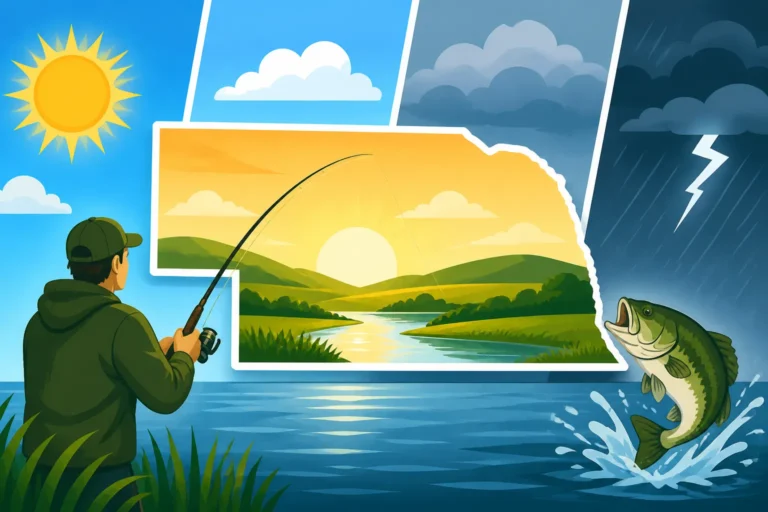
Have you ever had one of those fishing days where the weather feels absolutely perfect – sunny skies, maybe a light breeze – but the fish just aren't biting? Or, conversely, a day that felt a bit "off" but turned into an unexpected frenzy? Many anglers chalk it up to luck, but often, an invisible force is at play, profoundly influencing fish behavior: barometric pressure. For us Nebraska anglers, understanding how these atmospheric shifts impact our beloved walleye, catfish, and bass can truly turn a frustrating day into a successful one. This guide will demystify barometric pressure and equip you with practical strategies to adapt your fishing techniques to the ever-changing Nebraska skies.
Understanding Barometric Pressure: What Even Is It?
Before we dive into how fish react, let's get a handle on what barometric pressure actually is. Don't worry, we're not going for a physics lecture here, just a practical understanding. Think of it as the weight of the air pushing down on everything, including our lakes, rivers, and all the creatures in them.
The Invisible Force Above You Has Weight
We often forget that air, despite being invisible, has mass and therefore weight. This column of air extending from the atmosphere all the way down to the surface of the earth exerts pressure. When we talk about "barometric pressure," we're measuring this weight. It's constantly fluctuating, driven by weather patterns like high-pressure systems (typically associated with clear, stable weather) and low-pressure systems (often bringing clouds, storms, and unsettled conditions). These changes might seem subtle to us humans, but for fish, particularly those with specialized adaptations, they can be as dramatic as flipping a switch.
Imagine standing underwater at the bottom of a lake. If the air pressure above that lake increases, it's like someone is pushing down harder on the entire body of water. If the air pressure drops, that push lessens. This might sound academic, but it has real implications for everything living beneath the surface, especially when you consider how sensitive aquatic life is to its environment.
Why Fish Care More Than You Think
Now, why should fish care about this invisible atmospheric squeeze? The secret lies largely in their swim bladder, a gas-filled organ that helps them maintain buoyancy at different depths. Think of it as an internal ballast tank. When barometric pressure changes, the external pressure on the fish's body and, consequently, its swim bladder changes.
When the external pressure rises, it compresses the gases in the swim bladder, making the fish less buoyant. They might feel "heavy" or need to exert more energy to stay at a comfortable depth. Conversely, when the external pressure drops, the gases in the swim bladder expand, making the fish more buoyant. They might feel "light" or have to work harder to stay down. This constant adjustment is energy-intensive and can make fish uncomfortable, directly impacting their desire to feed, move, and generally be active. It's a bit like how some people get headaches or joint pain before a storm; fish experience a similar, albeit more pronounced, internal shift. This sensitivity is a key factor in how barometric pressure affects how and when they bite.
Decoding the Barometer: How Pressure Swings Affect Nebraska Fish
Understanding the different phases of barometric pressure and their typical effects on fish can be a game-changer for your Nebraska fishing trips. It’s not just about what the thermometer says, but what the barometer is doing.
Stable High Pressure: The Golden Window
When a high-pressure system moves in and stabilizes, it often brings clear skies, calm winds, and generally pleasant weather. Critically, the barometric pressure is high and steady. This is often what many anglers consider ideal fishing weather, and for good reason. Fish, especially species like walleye and bass, tend to be comfortable and active during these periods. Their swim bladders are stable, they feel good, and they are often out cruising and feeding.
During these stable high-pressure periods, you might find fish in a variety of depths, from shallow cover early and late in the day to deeper structures during bright midday sun. They're not stressed, so they're more likely to chase down prey. This is often when you can experiment with a wider range of lures and techniques, as the fish are generally more cooperative. It's a fantastic time for consistent action, whether you're targeting crappie around brush piles or big channel catfish on the Platte River. This is often the time when you'll have the most consistent success trying to figure out the Best Time of Day to Catch Walleye in Nebraska.
The Plunge: Falling Pressure and Pre-Frontal Feeding
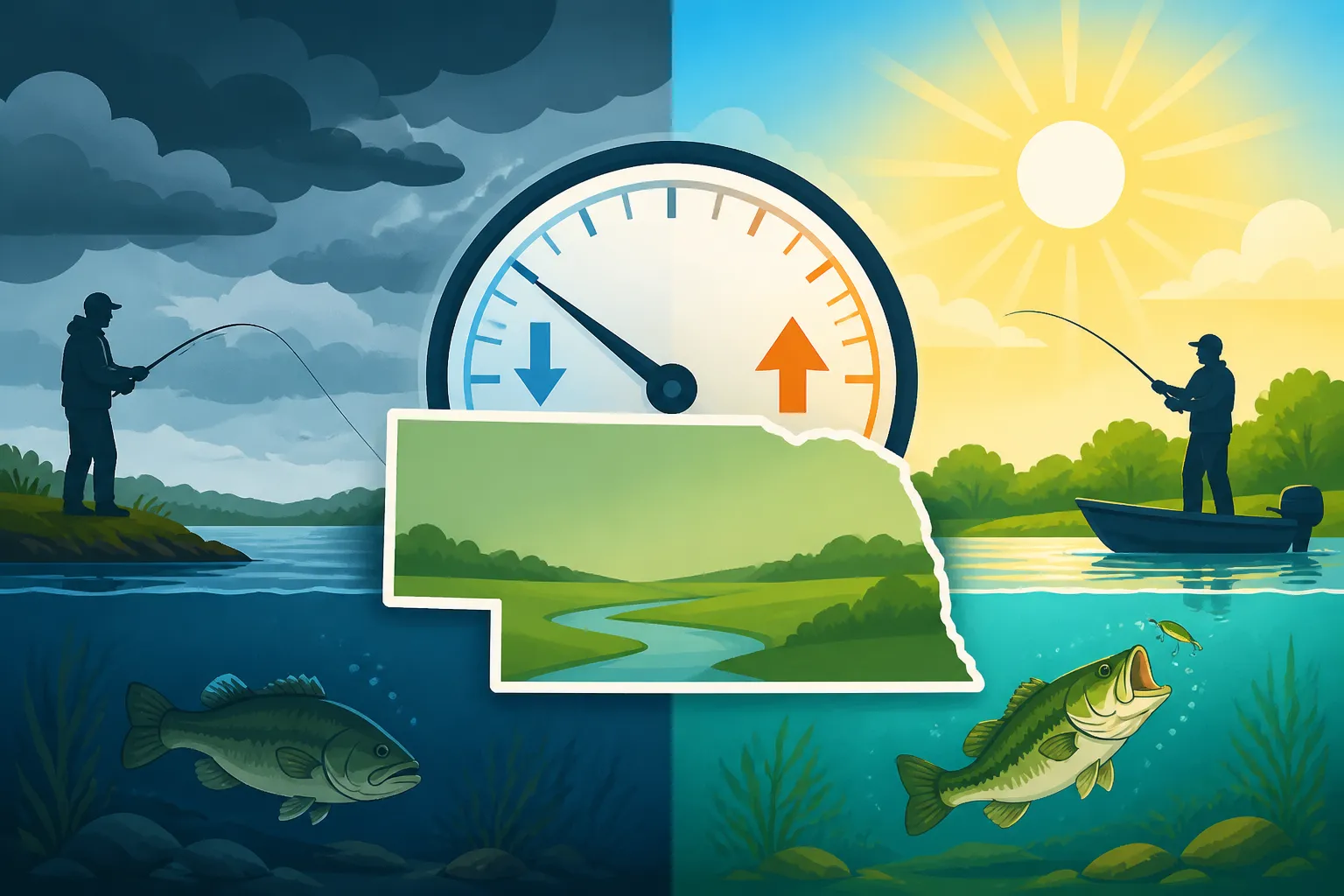
This is arguably the most exciting barometric phase for many anglers. When the barometer starts to fall, it indicates an approaching low-pressure system, often bringing with it unsettled weather – think clouds, wind, and eventually, rain or storms. As the pressure drops, fish sense this change. Their swim bladders begin to expand, and they often react by going on an aggressive feeding binge.
Why the frenzy? Some theories suggest they're "filling up" before the uncomfortable, sluggish period that often follows a major weather front. Others believe the expanding swim bladder makes them feel more buoyant, pushing them to shallower, more active feeding grounds where they can easily chase prey. Whatever the reason, this pre-frontal, falling pressure period is often prime time for big bites. If you can get out on the water as the barometer is steadily dropping, you might encounter some of the most active fish of your season. It's particularly true for species like catfish, where a good rainstorm, often preceded by falling pressure, can trigger fantastic action, as you might find when learning How to Catch Catfish After a Rainstorm.
The Post-Frontal Slump: Low Pressure Blues
Ah, the dreaded post-front. After a low-pressure system has moved through, bringing its storms and unsettled weather, the barometer typically settles into a low and stable phase. The skies might clear, but the air still feels heavy and often cool. This is when fishing can get tough – really tough. Fish are often lethargic, sluggish, and reluctant to feed. Their swim bladders, having expanded during the falling pressure, are now stable but still might be causing discomfort, or they're simply recovering from the preceding storm.
During these low-pressure lulls, fish often retreat to deeper, more stable water where pressure fluctuations are less pronounced. They might hug tight to cover or suspend in open water, barely moving. You'll need to slow down your presentation, use smaller baits, and practically put the lure right on their nose to elicit a strike. This is where many anglers get frustrated and give up, thinking the fish aren't there. But they are – they're just not in the mood. Knowing how to fish cold front conditions often means understanding that low, stable pressure is part of the challenge.
The Recovery: Rising Pressure and Gradual Bites
Eventually, after a low-pressure system, a new high-pressure system will start to build, causing the barometer to begin rising. This is a transitional period, and fish will gradually start to become more active as they acclimate to the increasing pressure. It's not usually an immediate "flip the switch" like falling pressure, but a slow, steady improvement.
During rising pressure, you might find fish slowly moving out from their deep-water sanctuaries and beginning to forage again. The bite might be subtle at first, becoming more consistent as the pressure continues to rise and stabilize. This is a time for patience and observation. Start with slower presentations, and gradually work your way up to more aggressive tactics if the fish respond positively. It's a good time to cover water and look for active fish, knowing that their mood is on an upward trend.
To give you a clearer picture, here's a quick summary of how barometric pressure typically affects fish behavior:
| Barometric Pressure Phase | Weather Indicators | Fish Behavior | Angler Approach |
|---|---|---|---|
| High & Stable | Clear skies, calm, pleasant | Active, comfortable, feeding consistently | Versatile, try various depths and presentations |
| Falling | Approaching clouds, wind, pre-storm | Aggressive feeding frenzy, highly active | Fast retrieves, aggressive baits, target feeding lanes |
| Low & Stable | Post-storm, cloudy/clear but heavy air | Lethargic, uncomfortable, reluctant to feed | Slow, subtle presentations, deep water, patience |
| Rising | Clearing skies, improving weather | Gradually more active, slowly resuming feeding | Start slow, gradually increase activity, observe |
Angler's Playbook: Adapting Your Tactics to Pressure in Nebraska
Knowing what barometric pressure does is one thing; knowing how to use that information to your advantage on the water is another. Here’s how you can integrate pressure readings into your Nebraska fishing strategy.
Monitoring the Mercury: Getting Your Pressure Intel
The first step is knowing what the barometer is doing, and what it's predicted to do. Forget just looking at the temperature. Modern technology makes this incredibly easy. Many popular weather apps now include barometric pressure readings and trends. Dedicated fishing apps often overlay pressure data with other environmental factors, making it simple to track. If you're old school or just like having physical tools, a portable barometer can be a great addition to your tackle box, and you can find a variety of reliable options on sites like Amazon.
Beyond just the current reading, pay close attention to the trend. Is the pressure rising, falling, or stable? The trend is often more important than the absolute number. A steady fall of pressure is usually better than a sudden, sharp drop. Incorporating this into your pre-trip planning can give you a significant edge, helping you decide where to go and what techniques to prepare.
High-Pressure Tactics: Precision and Presentation
During stable high-pressure periods, fish are often active and cooperative. This doesn't mean you can just throw anything out there and expect a bite, especially if the water is clear. This is when precision and matching the hatch really pay off. Think finesse. For walleye, consider slower presentations with live bait like nightcrawlers or leeches, or subtle jigs tipped with plastics. For bass, a carefully presented shaky head or a Texas-rigged worm can be deadly.
- Go Natural: If using live bait, make sure it's fresh and lively. Present it as naturally as possible.
- Match the Hatch: Observe what baitfish or insects are present. Your lures should mimic these in size, shape, and color. Check out our guide on Best Bait for Nebraska Walleye for specific recommendations that work well in these conditions.
- Target Key Structures: Fish will still relate to structure like drop-offs, points, and submerged cover. They're just more likely to roam around these areas rather than sit lethargically deep inside them. For bass, this might mean a slower retrieve with a crankbait or spinnerbait near cover, as outlined in our guide on Best Lures for Nebraska Bass.
Falling Pressure Tactics: Aggression Pays Off
This is when you can often get away with more aggressive presentations. Fish are on the move and looking to feed, so don't be afraid to make some noise and draw attention.
- Bigger, Bolder Baits: Use larger crankbaits, spinnerbaits, or even swimbaits. The fish are often willing to expend more energy to chase down a meal.
- Faster Retrieves: Speed up your retrieve. A fleeing baitfish often triggers an instinctual strike. This is a great time to experiment with faster jigging retrieves for walleye, as discussed in How to Jig for Walleye in Nebraska.
- Cover More Water: Since fish are likely to be roaming, fan-cast and move around more to find active schools. Don't sit in one spot for too long.
- Target Feeding Lanes: Look for areas where baitfish are likely to be pushed by current or wind, or where predatory fish have an ambush advantage. Creek channels, submerged points, and weed lines can be hotspots.
Low-Pressure Tactics: Go Slow, Go Deep, Stay Patient
These are the tough days, but they're not impossible. Success often comes down to slowing way down and being incredibly patient.
- Finesse is Key (Again): Smaller baits, lighter lines, and slower retrieves are crucial. Think tiny jigs, drop-shot rigs, or even just a bobber and a worm.
- Go Deeper: Fish often seek deeper, more stable water during low pressure. Explore deep ledges, humps, and structure where they can feel more comfortable. Our guide on How to Fish Deep Structure for Summer Walleye can give you some excellent pointers here.
- Vertical Presentations: Often, fish won't chase horizontally. Present your bait vertically, right on their nose. Jigging spoons or blade baits dropped directly onto fish marked on your fish finder can be effective.
- Patience, Patience, Patience: Don't expect aggressive bites. Often, strikes will feel like a slight "tick" or just added weight. You might need to leave your bait still for longer periods.
Rising Pressure Tactics: Transitioning Back to Normal
As the pressure starts to rise after a low, fish will gradually become more active. Your tactics should reflect this slow transition.
- Start Slow, Then Speed Up: Begin with low-pressure tactics, but as the day progresses and pressure continues to rise, gradually increase the size of your baits and the speed of your retrieve.
- Look for Movement: Watch your fish finder for signs of fish spreading out from deep structure or starting to cruise. They might not be actively chasing yet, but they're moving.
- Experiment with Depths: Fish might be moving up and down the water column as they adjust. Don't be afraid to try different depths until you find where they're most comfortable.
Integrating Pressure with Other Factors for Success
While barometric pressure is a powerful influence, it's not the only factor. Truly successful anglers consider a holistic view of the environment.
The Water's Influence: Temperature and Clarity
Water temperature and clarity always play a significant role. For instance, cold water temperatures might mean fish are already lethargic, so even a slight drop in barometric pressure might not trigger a huge feeding frenzy. Conversely, in warm summer months, high pressure might push fish deeper, but they'll still be looking for comfortable Best Water Temperature for Walleye Fishing spots. Clear water often demands more finesse, regardless of pressure, while stained or muddy water might allow for more aggressive, noisy baits even when fish are less active due to low pressure. All these elements work together, and the best strategy considers their combined impact.
Light, Wind, and Moon: A Full Picture
Other environmental factors like light conditions (overcast vs. sunny), wind direction and speed, and even moon phases can also influence fish behavior. A strong wind, for example, can create current and chop that stirs up baitfish, sometimes triggering a bite even under less-than-ideal barometric pressure. Understanding How Wind Direction Affects Walleye Fishing can be crucial, as wind can concentrate bait and oxygen. Don't get so fixated on the barometer that you ignore these other critical elements. Think of barometric pressure as a key piece of the puzzle, but not the entire puzzle itself.
Gear for Every Pressure Situation
Having the right gear always helps. For example, sensitive rods and reels can help you detect those subtle bites during low-pressure conditions. A good fish finder, readily available from retailers like Amazon, can help you locate those deeper, lethargic fish that aren't actively chasing. Sometimes, just having a variety of baits and lures, from tiny finesse jigs to large, noisy crankbaits, allows you to adapt on the fly. Reviewing your Best Fishing Gear for Nebraska Anglers is a great way to ensure you're ready for whatever the barometer throws your way. Being prepared means you can react quickly to changing conditions, whether it's switching to a lighter line or a more aggressive lure.
Understanding barometric pressure won't guarantee a fish on every cast – nothing ever does! But it will give you a deeper understanding of why fish behave the way they do and provide you with actionable strategies to improve your chances on the water. For Nebraska anglers, learning to read the barometer and adapt your approach can be one of the most valuable tools in your tackle box, turning those slow days into productive ones and those good days into truly memorable experiences. Tight lines!
Disclaimer
This article is for general informational purposes only and does not constitute professional advice. Laws, prices and regulations vary by location and change over time. Consult a qualified professional for guidance on your specific situation.