Lake McConaughy Water Level and Fishing Conditions
There's nothing quite as frustrating as planning a much-anticipated fishing trip to a legendary spot like Lake McConaughy, only to arrive and find the water levels drastically different from your last visit, throwing all your previous strategies out the window. It's a common challenge for anglers in Nebraska, and understanding how these fluctuations impact everything from fish behavior to boat ramp access is key to a successful outing. This comprehensive guide will walk you through the dynamic nature of Lake McConaughy's water levels, how they influence fishing conditions, and what you can do to adapt and still reel in that trophy catch.
Understanding Lake McConaughy's Dynamic Water Levels
Lake McConaughy, affectionately known as "Big Mac," isn't just a vast body of water; it's a living, breathing reservoir with a water level that constantly changes. Unlike natural lakes, its levels are largely managed for various critical purposes, making it one of the most dynamic fishing environments in Nebraska.
Why Lake McConaughy's Water Levels Change So Much
The primary reason for Lake Mac's fluctuating water levels boils down to its role as a multi-purpose reservoir. It's not just there for our fishing pleasure, as much as we wish it were!
First and foremost, it's a vital irrigation source for farmers downstream in the Platte River Valley. During the peak growing season, usually from late spring through late summer, significant amounts of water are released to nourish crops. This drawdown can lead to noticeably lower lake levels, sometimes exposing vast stretches of shoreline that were once underwater.
Secondly, hydropower generation plays a role. The dam at Lake McConaughy, Kingsley Dam, generates electricity, and water releases can be adjusted based on demand, which further influences the lake's elevation.
Thirdly, natural factors like precipitation and snowmelt from the Rocky Mountains, which feed the Platte River system, dictate how much water flows into the lake. A year with heavy snowfall upstream can mean higher inflows and rising lake levels, while a drought year will naturally result in lower water. It's a delicate balance between what comes in and what goes out, and anglers are keenly aware of the results on the water.
How to Track Current Water Levels
Staying informed about Lake McConaughy's current water level is absolutely crucial for planning any trip. You don't want to drive hours only to find your favorite boat ramp is high and dry or submerged under unexpected high water.
The most reliable source for real-time data is often the Central Nebraska Public Power and Irrigation District (CNPPID), which manages Kingsley Dam and the lake. They typically provide daily updates on lake elevation, inflows, and outflows. The Nebraska Game and Parks Commission (NGPC) website also often aggregates this information, sometimes with additional fishing reports and advisories. Many local bait shops around Ogallala and Keystone also keep a close eye on the water and are excellent resources for local intel. Before you head out, a quick check of these resources can save you a lot of hassle and help you plan your day effectively. Knowing the current water level can also help you understand the Nebraska Fishing Regulations Explained in relation to specific access points or submerged structures.
Historical Context of Lake Levels and Their Impact
Lake McConaughy has seen it all, from historic lows during severe droughts to impressively high levels after years of abundant precipitation. Each of these extremes leaves a lasting impact on the fishery and the angling experience.
During prolonged low-water periods, like the severe droughts of the early 2000s, many boat ramps become unusable, forcing anglers to launch at specific, deeper access points. Whole areas of former shoreline structure, like old trees, rock piles, or submerged roads, become exposed, altering fish habitat. While challenging, these lows can also create new, visible structure for anglers to target when the water eventually returns. Conversely, periods of high water can submerge existing terrestrial vegetation, creating fantastic new cover and feeding grounds for fish. The lake's fish populations, particularly its celebrated walleye, striped bass, and wiper populations, adapt to these changes, often moving to deeper areas during drawdowns or spreading out into new cover during high water. Understanding these historical patterns can give you a better intuition for where fish might be holding when current conditions shift.
Navigating Fishing Conditions at Different Water Levels
The constantly changing face of Lake McConaughy means that a "one-size-fits-all" approach to fishing simply doesn't work. Successful anglers are adaptable, understanding how fish react to these shifts and adjusting their tactics accordingly.
High Water and Its Fishing Opportunities
When Lake McConaughy experiences higher water levels, it can be a blessing in disguise for anglers, though it comes with its own set of challenges. The lake expands, often flooding shoreline vegetation, brush, and even small trees that were previously dry. This creates an abundance of new cover and feeding opportunities for fish.
Predatory species like walleye, largemouth bass, and crappie will often move into these newly inundated areas, seeking out baitfish that are also exploring the fresh cover. Targeting the edges of this new submerged vegetation with spinnerbaits, jigs, or even topwater lures can be incredibly productive, especially during the spring and early summer. However, high water also means that familiar landmarks might be submerged, making navigation trickier. Submerged hazards like fences, old roads, or even abandoned structures can become prop-killers, so extreme caution and careful navigation are essential. Boat ramp access might be improved at some spots, while others could be entirely submerged if not designed for higher levels. Always double-check Lake McConaughy Boat Ramp Locations before heading out when the water is up.
Low Water Challenges and Adaptations
Low water conditions are often the bane of many anglers at Lake McConaughy, primarily because they restrict access and change the underwater landscape dramatically. When the water drops significantly, many boat ramps become unusable, forcing everyone to funnel into a handful of deeper, typically busier ramps. Launching and retrieving can become a logistical challenge, sometimes requiring 4×4 vehicles or extended ramps.
More importantly, low water concentrates fish, but also exposes many traditional hiding spots. Fish that relied on submerged brush or rocky points in higher water might move to deeper channels, drop-offs, or the main lake basin. This can make them harder to locate, as they're not spread out in vast cover. However, the upside is that structure that was once hidden is now exposed, allowing you to scout new areas. Take photos, mark waypoints, and study these exposed features. When the water returns, you'll have a treasure map of prime fishing spots. For species like walleye, this might mean focusing on main lake humps, deep rock piles, or channel edges with jigs or bottom bouncers. Always be mindful of your boat's draft and potential obstructions. Safety is paramount, and it's always a good idea to chat with local experts or guides, perhaps even booking a trip through a service like FishingBooker, to get the most up-to-date local knowledge on low-water tactics.
Stable Water Periods: The Angler's Dream
While Lake McConaughy is known for its fluctuations, there are periods of relative stability, and these are often when the fishing really shines. When water levels remain consistent for a week or more, fish tend to settle into more predictable patterns. They become accustomed to their surroundings, establishing routines around structure, forage, and feeding lanes.
During stable periods, you can often rely on established patterns for Lake McConaughy Walleye Fishing or targeting other species. Fish are less stressed by habitat changes and are more likely to be found in their usual haunts. This is when your fish finder really earns its keep, allowing you to pinpoint schools of baitfish or game fish holding tight to a particular breakline, submerged hump, or timber pile. Stable conditions also generally mean better boat access and less concern about navigating sudden hazards. It's the ideal time to explore new areas, experiment with different techniques, and truly dial in on what the fish are doing. Many anglers find these conditions perfect for long days on the water, whether casting for bass, trolling for wipers, or jigging for walleye.
Species-Specific Strategies for Changing Conditions
Different fish species react uniquely to changes in water levels. Understanding these nuances can significantly improve your success at Lake McConaughy.
Walleye Tactics in Fluctuating Waters
Walleye, being keen sight feeders and somewhat sensitive to their environment, can be particularly impacted by water level changes.
In high water, walleye often push shallower, following baitfish into newly flooded vegetation. This is a great time for pitching jigs tipped with live bait like minnows or worms, or slow-rolling spinnerbaits along the edges of submerged grass. Don't be afraid to fish shallower than you normally would, even in just a few feet of water, especially during low-light conditions.
In low water, walleye retreat to deeper, more stable environments. They'll often congregate on prominent main lake points, humps, and channel edges. Bottom-bouncing with a crawler harness or trolling crankbaits along these deeper contours become highly effective. Jigging spoons or blade baits vertically over suspended schools can also produce results. Remember that reduced access can mean more concentrated fishing pressure on remaining accessible areas, so stealth and finesse can make a difference. For a deeper dive, check out our guide on How to Fish for Walleye in Nebraska.
Striper and Wiper Fishing Amidst Water Swings
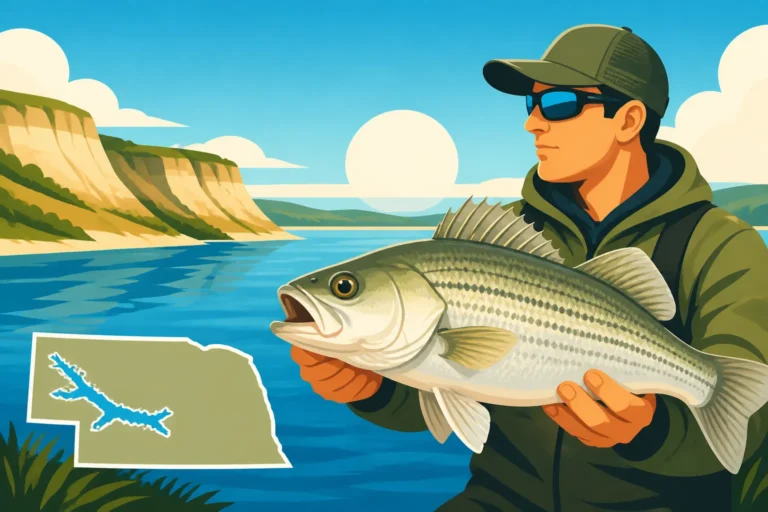
Lake McConaughy is famous for its powerful striped bass and wiper (hybrid striped bass) populations, which are typically pelagic, meaning they roam the open water. Their movements are often dictated by schools of baitfish like gizzard shad.
During high water, stripers and wipers might push closer to shore, particularly in the mornings and evenings, hunting baitfish that are also moving into the flooded areas. Throwing large topwater lures, spoons, or swimbaits near main lake points or along shorelines with steep drops can be productive.
In low water, these fish tend to stay in the main lake basin, following bait schools in deeper water. Look for them over submerged river channels, main lake humps, or in the vicinity of the dam. Trolling large crankbaits, using live gizzard shad if legal, or casting heavy spoons into schooling fish are common tactics. Sometimes, they'll school up and feed on the surface, creating explosive action that's hard to miss. Many anglers rely on charter captains for these species, and a quick search on FishingBooker can connect you with experienced guides who specialize in Striped Bass and Wiper Fishing in Nebraska on Lake McConaughy, regardless of the water level.
Panfish and Catfish in Variable Conditions
While walleye and stripers get a lot of attention, Lake Mac also offers excellent fishing for panfish and catfish, which often present more consistent opportunities even with fluctuating water.
Panfish (Crappie, Bluegill): In high water, crappie and bluegill absolutely thrive in newly flooded brush and timber. They'll move into these areas to spawn and feed. Small jigs, minnows, or worms fished near any submerged structure will often yield great results. In low water, these fish will retreat to the remaining cover—deep brush piles, submerged cedar trees, or dock pilings if available. Vertical jigging or using a slip bobber to present bait at the right depth can be effective. Our Crappie Fishing in Nebraska guide offers more specific strategies.
Catfish (Channel, Flathead): Catfish are robust and adaptable. In high water, channel cats will cruise flooded flats and shorelines, especially after rain, looking for terrestrial food sources washed into the lake. Stink baits, cut bait, or chicken livers cast near these areas can be dynamite. Flatheads will stick to their preferred cover—large submerged logs, rock piles, or undercut banks. In low water, channel catfish will concentrate in deeper holes, channels, and along riprap shorelines. Fresh cut bait or prepared baits are key. Flatheads remain in deep, heavy cover, often near current, and require live bait presentations. You can learn more about finding these whiskered warriors in our Channel Catfish Fishing in Nebraska article.
Essential Gear and Planning for Lake Mac's Variability
Being prepared for Lake McConaughy's dynamic conditions goes beyond just knowing where the fish might be. It involves having the right equipment and a solid plan.
Boat and Gear Considerations
Your boat choice and setup are critical when dealing with fluctuating water levels at Lake McConaughy.
For high water, a boat that can navigate shallow, timber-filled areas might be advantageous, but a deep-V hull is still preferred for handling the main lake's open water and potential chop. Ensure your trolling motor is working well, as you'll be using it extensively to maneuver through flooded cover. An anchor is always essential, especially on windy days, but a shallow water anchor system can also be incredibly useful for holding position in new, shallow areas.
For low water, the ability to launch at challenging ramps is key. This might mean having a robust trailer, a capable tow vehicle, and potentially longer ropes for launch and retrieval. A boat with a shallower draft can be beneficial for navigating newly exposed hazards, but a deep-V is still crucial for safety on the expansive main lake. Ensure your electronics are dialed in, especially your mapping and sonar, as visible landmarks may be gone, and you'll be relying on contour lines and depth readings to find fish and avoid danger. You can find more advice on this in our guide to the Best Boats for Nebraska Reservoir Fishing. Also, consider the Nebraska Aquatic Invasive Species Stamp for your boat, as it's required and crucial for protecting Lake Mac's ecosystem.
Essential Angler Preparedness
Beyond your primary fishing gear, there are several things every angler should bring to Lake McConaughy, especially given its size and potential for rapid changes.
Always carry detailed maps of the lake, whether paper or digital on your GPS or phone app. Many fishing apps provide bathymetric (underwater contour) charts that are invaluable for understanding submerged structure regardless of water level. Life jackets are non-negotiable for everyone on board, and extra safety equipment like a marine radio, first-aid kit, and an emergency signal device are always wise.
Checking the weather forecast is paramount. Lake McConaughy is notorious for strong winds that can whip up quickly, turning calm waters into treacherous waves. Always plan for wind, and if conditions are too rough, consider fishing a more sheltered cove or rescheduling your trip.
Finally, don't forget your Nebraska Fishing License Guide and ensure you understand all the current Nebraska Fishing Daily Bag and Possession Limits for the species you intend to target. Whether you're a seasoned local or planning a fishing adventure from afar, say by consulting options on FishingBooker, staying informed and prepared will make your trip to Lake Mac much more enjoyable and successful.
| Water Level Condition | Fish Behavior Trend | General Fishing Strategy | Key Challenges & Considerations |
|---|---|---|---|
| High Water | Spreading out, exploring new flooded cover, chasing bait | Target new submerged vegetation/brush, fish shallower, pitch jigs/spinnerbaits | Submerged hazards, navigation, potential for less concentrated fish |
| Low Water | Concentrating in deeper structure, channels, main lake basin | Focus on main lake points, humps, channel edges, deeper presentations (trolling/bottom bouncing) | Limited boat ramp access, exposed hazards, concentrated fishing pressure |
| Stable Water | Settling into predictable patterns, active on established structure | Rely on established patterns, target known structure (humps, points, drops), consistent techniques | Can still be affected by weather/fish migration, but generally predictable |
Disclaimer
Please remember that fishing conditions, regulations, and water levels can change rapidly. Always consult the latest official Nebraska Game and Parks Commission (NGPC) regulations and real-time water level reports before planning your trip to Lake McConaughy. Your safety and adherence to all laws are your responsibility.