Best Time of Year to Fish Lake McConaughy for Walleye
One of the biggest headaches for any angler planning a trip to a massive lake like McConaughy is figuring out when to go. You want to hit it right, especially when you’re chasing a specific species like walleye, but knowing when those golden windows of opportunity open can feel like trying to solve a puzzle without all the pieces. This comprehensive guide is here to unravel that mystery, breaking down the best times of year to target walleye on Nebraska’s Big Mac.
The Walleye Season Unpacked: Why Timing Matters on Lake Mac
Lake McConaughy is a powerhouse fishery, famous for its incredible walleye population. But these finicky fish don't just bite all year long with the same enthusiasm. Their behavior, feeding patterns, and locations change dramatically with water temperature, light penetration, and spawning cycles. Understanding these shifts is absolutely crucial for success. You can have all the right gear, the perfect lures, and a beautiful boat, but if you're not there when the walleye are active and accessible, you might as well be fishing in a bathtub. It's about being in the right place at the right time, with the right approach. Whether you're a seasoned local or planning a fishing vacation, deciphering the seasonal movements of walleye on this expansive reservoir will dramatically increase your chances of landing that trophy.
Walleye are cold-water predators, which means their metabolism and activity levels are heavily influenced by water temperature. They'll move from shallow spawning grounds to deeper, cooler main lake basins, and then back to shallower feeding flats as the seasons progress. Factors like wind, clarity, and even boat traffic can also play a role, making Lake Mac a dynamic challenge.
Spring: The Prime Walleye Spawning Run
Ah, spring! This is arguably the most anticipated time for walleye anglers on Lake McConaughy. As the ice recedes and water temperatures start to climb into the 40s and 50s Fahrenheit, walleye begin their annual migration to spawn. This period offers some of the most consistent and exciting action of the entire year.
Pre-Spawn and Spawn Aggression
Before the actual spawn, typically from late March through April, female walleye are gorging themselves to build energy for egg production. They are incredibly active and can be found staging near spawning areas, often in shallower water than during other times of the year. This is a fantastic time for aggressive presentations. Think crankbaits, jerkbaits, and even large jig-and-minnow combinations fished along main lake points, rocky outcroppings, and sandy flats where they'll eventually drop their eggs. The fish are concentrated and hungry, which makes them easier to locate and entice.
The actual spawn usually peaks in April, though it can vary based on the specific year's weather and water temperatures. During the spawn itself, the bite can slow down a bit for a few days, especially for the actively spawning females. However, the males remain aggressive, defending their territory and hitting anything that invades their space. The key during this phase is to target transition areas near known spawning grounds. A common strategy involves using jigs tipped with minnows or soft plastics, slowly working them along rocky shorelines, riprap, and submerged humps. This is also a great time to explore specific bays and creek arms where tributary flows create ideal spawning habitat. For a deeper dive into the biology of this crucial period, you might want to read our article on the Nebraska Walleye Spawning Season.
Post-Spawn Recovery and Feeding Frenzy
Immediately after the spawn, usually in late April and early May, female walleye are recuperating and exceptionally hungry. They've expended a tremendous amount of energy and are looking to replenish their reserves. This "post-spawn bite" can be just as, if not more, productive than the pre-spawn. Fish will spread out a bit from the congested spawning areas but will still be found in relatively shallower water, often on flats adjacent to deeper breaks. Trolling crankbaits or pulling spinner rigs with nightcrawlers becomes incredibly effective during this phase.
Many anglers find success by covering water in 8-20 feet using medium-diving crankbaits that mimic the baitfish walleye are actively chasing. Colors that imitate shad or perch tend to be very effective. This is also a prime time for shoreline fishing, especially during evening hours, as walleye will move shallow to feed under the cover of darkness. If you're looking for expert guidance to navigate these dynamic spring conditions, considering a guided trip through a service like FishingBooker can provide invaluable local knowledge.
Summer: Deep Water and Nighttime Strategies
As Nebraska's summer heats up, Lake McConaughy's waters warm significantly, pushing walleye into deeper, cooler havens. This is when the fishing shifts from an aggressive shallow-water game to a more technical deep-water hunt.
Locating Summer Walleye
From June through August, walleye on Lake Mac will often relate to submerged structures in the main lake basin. We're talking about deep humps, ledges, points, and even the main river channel itself. They'll suspend over these structures or hug the bottom, typically in depths ranging from 20 to 40 feet, sometimes even deeper during the brightest parts of the day. A good fish finder is your absolute best friend during the summer months. Learning how to effectively How to Read a Fish Finder for Walleye is paramount to success.
Once you locate schools of fish, vertical jigging, slip bobber fishing with live bait (like leeches or nightcrawlers), or slowly trolling deep-diving crankbaits are highly effective. Patience is key, as summer walleye can be a bit more finicky. They might not chase a lure far, so presenting your bait directly in their strike zone is crucial. Early mornings, late evenings, and even nighttime often produce the best results when walleye move shallower to feed under low light conditions. You might consider checking out our article on Nebraska Night Fishing Rules if you plan to extend your angling adventures after sundown.
Trolling for Summer Success
Trolling is arguably the most popular and effective method for covering large expanses of water and locating scattered summer walleye on Lake Mac. Anglers often use planer boards to spread out their lines, allowing them to cover a wider swath and present multiple baits at different depths. Deep-diving crankbaits, crawler harnesses, and even jigging raps can all be trolled successfully. Experiment with colors and speeds until you find what the fish are reacting to.
The key to successful summer trolling is precision. Pay close attention to your boat speed, lure depth, and retrieve patterns. Sometimes a slight speed change or a momentary stop can trigger a strike. GPS and mapping features on your electronics are invaluable for marking productive trolling passes and returning to areas where you’ve found fish. If you're planning on using these advanced techniques, don't miss our guide on How to Troll for Walleye in Nebraska.
Fall: The Pre-Winter Feast
Just like spring, fall brings another fantastic surge in walleye activity as water temperatures begin to cool. The fish are preparing for winter, and this means another aggressive feeding period.
Autumn Aggression and Shallow Feeds
As September rolls into October, Lake McConaughy's waters start to cool, triggering walleye to move shallower and feed heavily. The thermocline, which defined their summer habitat, begins to break down, allowing fish to utilize a wider range of depths. You'll find walleye moving onto main lake points, secondary points, and extensive flats, often in 10-25 feet of water. They're actively pursuing baitfish, which are also congregating in preparation for winter.
This period is excellent for casting crankbaits, jigging spoons, or snap-jigging soft plastics. The fish are often very aggressive and willing to chase. Trolling remains highly effective, especially with crankbaits and crawler harnesses. Don't be afraid to experiment with brighter, more erratic lure presentations, as walleye are trying to put on as much weight as possible. Look for areas with current or significant baitfish concentrations; where the bait is, the walleye won't be far behind. This is a time when understanding Fall Fishing in Nebraska dynamics can lead to some truly memorable catches.
Late Fall Deepwater Transitions
As fall progresses into November and early December, and water temperatures drop into the low 40s, walleye will start to transition back to deeper wintering holes. They'll still feed, but their metabolism will slow, and they become less active. During this late fall period, targeting deep rock piles, main lake points, and channel edges with slow-presentation baits like blade baits, heavy jigs tipped with minnows, or even slow-trolled spoons can be productive. The bite might be subtle, requiring sensitive equipment and a keen eye for light line bites.
Many anglers find that during late fall, the fishing window narrows, often producing the best results during midday hours when the sun has had a chance to warm the upper water column slightly. This is also a fantastic time for targeting larger, trophy-sized walleye, as they are often more willing to expend energy on a substantial meal.
Winter: Ice Fishing Opportunities
While many anglers pack it in for the winter, a dedicated group knows that Lake McConaughy offers some incredible ice fishing opportunities for walleye. Once the ice is safe, typically from late December through February, a whole new world of fishing opens up.
Early and Mid-Winter Ice Tactics
Early ice is often the most productive, as walleye are still relatively active from their fall feeding binge. They can be found shallower, often in 10-25 feet of water, relating to structures like points, humps, and weed lines (if they exist under the ice). Jigs tipped with minnows, Jigging Raps, and spoons are go-to baits. Setting up multiple tip-ups with live minnows is also a very effective strategy for covering more water and enticing less active fish. Be sure to check ice conditions thoroughly and review Nebraska Ice Fishing Safety Tips before venturing out.
As mid-winter sets in and temperatures drop further, walleye often move to deeper basins and become more lethargic. You'll need to scale down your presentations, fish slower, and be incredibly patient. Electronics are crucial for locating these deeper fish and presenting your bait precisely. Sometimes just a slight jiggle of the lure is all it takes to trigger a strike from a cold-water walleye. Don't forget to have your Nebraska Fishing License Guide handy, as regulations still apply even on the ice.
Late Ice Walleye Resurgence
Just before ice-out, as daylight hours lengthen and slight warming begins, walleye can experience a pre-spawn surge in activity. This "late ice" period, usually in March, can be phenomenal. Fish will start to move towards shallower staging areas near future spawning grounds. This can be a short but incredibly productive window. Look for areas where spring creeks might be entering the lake, as these can provide warmer, oxygenated water.
It's important to exercise extreme caution during late ice, as conditions can change rapidly. Always check ice thickness regularly and be aware of deteriorating conditions. When conditions are safe, this can be a truly rewarding time to brave the elements for a chance at some fantastic walleye action.
Summarizing the Seasonal Walleye Bite
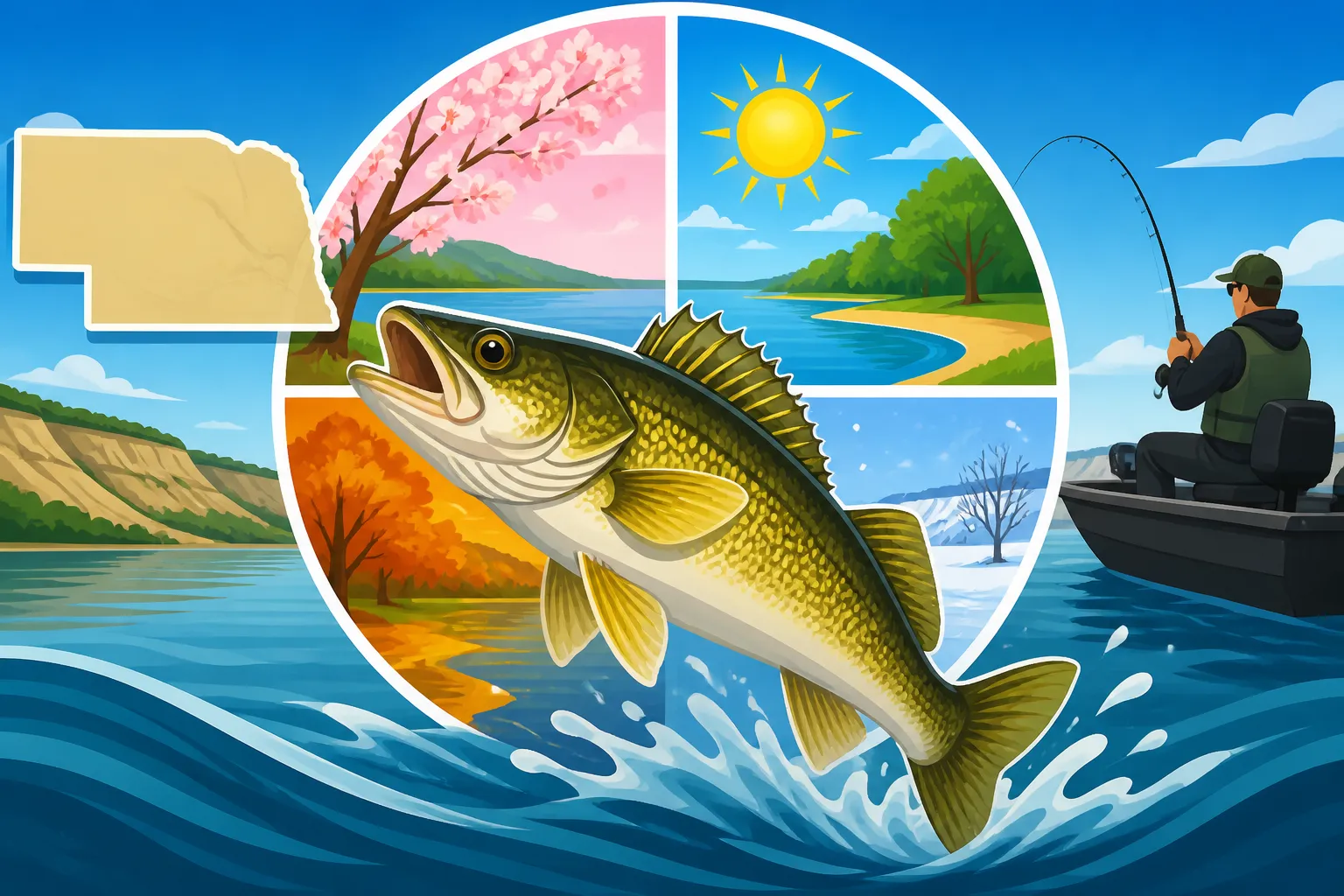
To give you a quick overview, here's a table summarizing the general trends for walleye fishing on Lake McConaughy throughout the year. Remember, these are guidelines, and local conditions can always vary!
| Season | Prime Months | Water Temperature (F) | Walleye Behavior | Key Locations | Top Techniques |
|---|---|---|---|---|---|
| Spring | Late March – May | 40s – 50s | Pre-spawn feeding, spawning, post-spawn recovery | Rocky points, riprap, sandy flats, creek arms | Jigs, crankbaits, spinner rigs, jerkbaits |
| Summer | June – August | 60s – 70s+ | Deep water refuge, nighttime shallower feeding | Deep humps, ledges, channel edges, main basin | Trolling deep cranks, vertical jigging, slip bobbers |
| Fall | September – November | 60s – 40s | Pre-winter feeding frenzy, deeper transitions | Main lake points, large flats, channel edges | Casting crankbaits, trolling, snap-jigging |
| Winter | December – February | 30s | Ice fishing, slower metabolism, deeper holes | Humps, points, deep basins (under ice) | Ice jigs, spoons, tip-ups with minnows |
Planning Your Lake McConaughy Walleye Trip
When you're ready to plan your trip to Lake McConaughy, consider a few additional tips. First, always check the latest Nebraska Fishing Season Dates and Limits provided by the Nebraska Game and Parks Commission, as regulations can change. Secondly, weather plays a huge role. Pay attention to fronts, wind direction, and air temperature, as these can drastically impact walleye activity. Many anglers find the best success on overcast days or during stable weather patterns.
If you're traveling from out of state, be sure to understand the Nebraska Nonresident Fishing License Guide requirements. And if you're feeling overwhelmed by the sheer size of Lake Mac and its various fishing challenges, don't hesitate to seek local expertise. A fishing guide who specializes in walleye on Lake McConaughy can be an invaluable resource. Services like FishingBooker can help connect you with experienced local guides who know the lake inside and out, providing not just fish-catching opportunities but also an incredible learning experience. There’s nothing quite like having a seasoned pro show you the ropes, especially on a lake as dynamic as Lake Mac.
Remember, the "best time" can sometimes just be your best time – when you can get out there and enjoy the water! However, understanding these seasonal patterns will undoubtedly put you in a better position to have a successful and memorable walleye fishing adventure on Nebraska's Lake McConaughy.
Disclaimer
Fishing conditions and regulations in Nebraska can change. Always consult the latest Nebraska Game and Parks Commission rules and regulations before heading out. Be mindful of ice safety during winter, and prioritize personal safety on the water at all times.