How to Release a Fish Safely to Survive
There’s nothing quite like the thrill of reeling in a beautiful fish, seeing it up close, maybe snapping a quick photo, and then watching it swim strong back into the depths. But that joy can quickly turn to heartbreak if you see your released fish float belly-up moments later. We’ve all been there, feeling that pang of guilt. This guide is all about helping you minimize stress and maximize survival chances for those fish you intend to release in Nebraska waters, ensuring they thrive for future angling adventures.
Understanding Why Fish Die After Release
It’s easy to think a fish just swims away perfectly fine after you let it go, but there's a lot going on beneath the surface that can lead to post-release mortality. Understanding these factors is the first step in becoming a more responsible angler. It's not always about a visible wound; sometimes, the damage is internal and unseen, a silent killer that we can often prevent.
Physiological Stress and Lactic Acid Buildup
Imagine running a marathon without proper training, or holding your breath for far too long. That’s a bit like what a prolonged fight feels like to a fish. When a fish fights hard on the line, especially for an extended period, its muscles rapidly consume oxygen and produce lactic acid. Just like in humans, this lactic acid builds up in their system, leading to acidosis. This physiological stress can impair their ability to regulate bodily functions, interfere with their metabolism, and even disrupt their central nervous system. A fish might look fine when you release it, but if its system is overwhelmed by lactic acid, it might swim erratically, lose equilibrium, or simply not recover enough to escape predators or find food. This is particularly true for powerful species like a large walleye or a hard-fighting bass. The longer the fight, the higher the lactic acid, and the greater the chance of delayed mortality.
Physical Injuries and Handling Trauma
Sometimes, the damage is much more obvious. Physical injuries sustained during the catch and release process are a major cause of mortality. Deep hooking is a classic culprit, where the hook is swallowed past the mouth into the gills or gut. This can cause severe internal bleeding and damage vital organs. Even if the hook is removed, the trauma can be fatal. Then there's the handling itself. Fish have delicate slime coats that protect them from infections; rough handling, like dry hands or dropping them on hard surfaces, can strip this coat away, leaving them vulnerable. Squeezing a fish too hard, especially around the internal organs, can also cause internal injuries. Think about a small panfish you might catch, like a bluegill or crappie, which are particularly susceptible to gill and scale damage from careless handling. These unseen injuries can fester, leading to infection and death days after release.
Environmental Factors After Release
Even if a fish is handled perfectly, the environment it returns to can play a significant role in its survival. Water temperature is perhaps the most critical factor. In warm summer months, especially when water temperatures climb into the 70s or 80s, the oxygen content in the water drops. Fish, already stressed from being caught, have a harder time recovering in oxygen-depleted water. A study might show that a fish that recovers well in 60-degree water might succumb in 80-degree water, even with identical handling. You might notice this when fishing for species like trout in smaller Nebraska streams; if the water is too warm, they simply don't have the oxygen to recover from the fight. How to Handle Fish in Hot Summer Water goes into more detail on this specific challenge. Predation is another factor. A disoriented or weakened fish is an easy target for opportunistic predators like larger fish, birds, or even snapping turtles waiting nearby. Think of a young angler releasing a small bass that struggles to swim straight, making it an easy meal for a lurking flathead catfish.
Best Practices for Catching and Handling
Minimizing the stress and trauma to a fish starts long before you ever bring it to hand. It's about a conscious effort throughout the entire process, from your gear choices to how quickly and gently you get them off the hook. Every moment counts when you're aiming for a successful release.
Choosing the Right Gear to Minimize Harm
Your tackle can make a huge difference in a fish’s survival. First and foremost, consider using barbless hooks, or at least pinching down the barbs on your regular hooks with a pair of pliers. This makes hook removal infinitely easier and quicker, reducing tissue damage significantly. When you're using a single hook for catfish, a circle hook is often recommended. Best Circle Hooks for Catfish Fishing explains how these hooks are designed to hook fish in the corner of the mouth, avoiding deep hooking, which is especially important for larger species like Nebraska's channel cats.
Beyond hooks, your rod and line setup matter. Using tackle that is appropriately matched to the size of fish you expect to catch helps shorten the fight. A medium-heavy rod with strong line for targeting large walleye at Lake McConaughy will allow you to land the fish more quickly than trying to use ultra-light gear, minimizing the lactic acid buildup we talked about earlier. Conversely, overly heavy tackle can tear a fish's mouth if it makes a sudden move close to the boat. Think about the balance: strong enough to land it quickly, but not so stiff that it causes unnecessary damage. For instance, if you're targeting Walleye Fishing in Nebraska, a medium-action rod might be perfect for a fast retrieve without over-stressing the fish.
Landing the Fish Quickly and Efficiently
The goal is to bring the fish to hand or net as quickly as possible, without exhausting it or exposing it to unnecessary air time. A prolonged fight not only increases lactic acid but also prolongs the fish's stress. When a fish is hooked, try to keep steady pressure on it. Don't horse it in, but don't let it run endlessly either. Learn to "pump and reel," gaining line whenever the fish isn't pulling.
Once the fish is close, decide whether to net it or hand-land it. For many species, a good quality, rubber-coated net is your best friend. These nets protect the fish's delicate slime coat and fins better than knotted nylon nets, which can scrape scales and strip slime. Best Landing Nets for Big Fish will guide you to some excellent options. Position the net in the water and lead the fish into it headfirst, rather than chasing it around with the net. For smaller fish, a quick hand-landing might be fine, but always wet your hands first. This helps preserve that crucial slime layer. Try not to let the fish flop around on the boat deck or the bank. Every bounce and scrape is a potential injury or loss of that protective coating.
Proper Hand-Holding and Net Usage
Once the fish is secured, how you handle it determines a lot. If you're using a net, keep the fish in the net and in the water as much as possible while you prepare for hook removal. This provides support and keeps it breathing. If you need to bring it out for a quick photo, keep it horizontal, supporting its body weight, especially for larger fish. Never hold a fish vertically by the jaw or gills unless it's a specific species like a largemouth bass, and even then, support its belly with your other hand. Holding a large walleye or trout vertically by the mouth can dislocate its jaw or damage its spine, leading to irreversible injury.
When removing the hook, try to use long-nosed pliers or a de-hooking tool. These tools, easily found on Amazon, allow for quick and precise hook removal without putting your fingers near sharp teeth or gills, further minimizing contact with the fish's body. If the fish is thrashing, keep it partially submerged in the water while you work. For species like trout, handling with wet hands is even more critical; their delicate scales and slime coat are very easily damaged. Be mindful of the gills; they are incredibly sensitive and crucial for oxygen exchange. Avoid touching or tearing them at all costs.
The Release Itself
This is the moment of truth. You’ve done all the hard work to catch and handle the fish carefully; now it’s time to send it back home in the best possible condition. The way you perform the actual release can be just as critical as the handling.
Reviving and Releasing Back into the Water
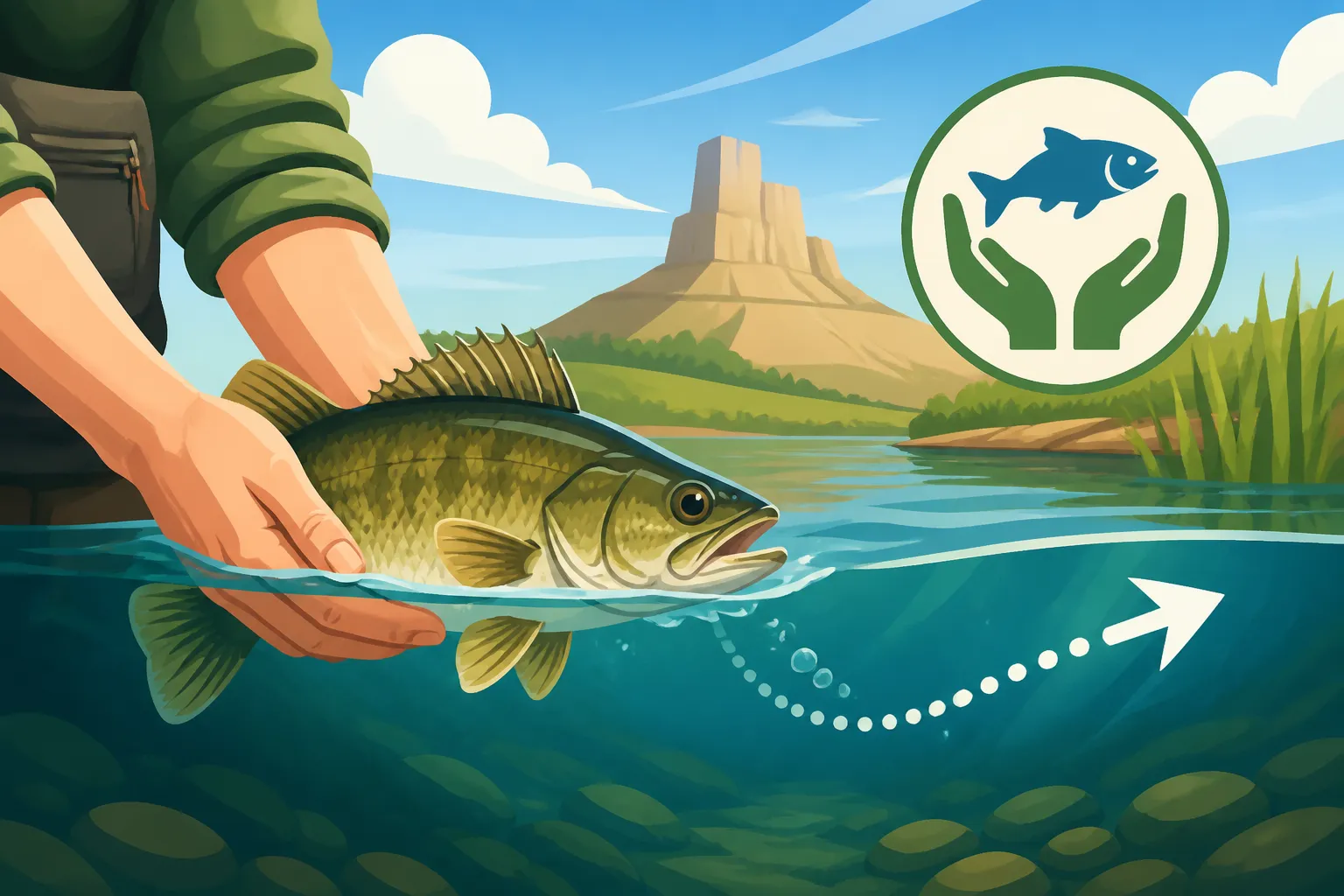
After removing the hook, gently place the fish back into the water. For many fish, especially after a tough fight, they might need a moment to regain their bearings. This is where revival comes in. Hold the fish gently upright in the water, facing into a mild current if available. If there’s no current, gently move the fish back and forth, allowing water to flow over its gills. This helps to force oxygenated water through its respiratory system, much like CPR for a human.
You’ll know a fish is reviving when it starts to show signs of life – perhaps a twitch of the tail, a slight movement of the fins, or an attempt to swim away from your grasp. Don't just toss it back in and hope for the best. Continue to support it until it can swim strongly on its own. For instance, a hard-fighting Channel Catfish Fishing in Nebraska might need several minutes of revival, especially if the water is warm. Resist the urge to give it a forceful push; let it swim away under its own power. You want to see that strong, decisive flick of the tail that says, "I'm ready!"
Observing for Signs of Recovery
It’s not enough to just watch it swim away; sometimes, the recovery takes a bit longer. Keep an eye on the released fish for a minute or two, if possible. You’re looking for it to swim normally, maintaining its equilibrium, and submerging back into the depths. If it floats on its side or struggles to stay upright, it needs more revival. Gently net it again (if possible and without further stress) and continue the revival process.
Pay attention to what the fish isn't doing. Is it staying near the surface, sluggish and unresponsive? Is it being targeted by other fish or birds? These are all signs that it hasn't fully recovered. In such cases, if revival attempts are consistently failing, it’s a tough decision. Sometimes, if a fish is clearly not going to make it, and regulations permit, it might be more humane to keep it if it's within Nebraska Fishing Daily Bag and Possession Limits and legal size, rather than leaving it to suffer or die uselessly. However, always prioritize proper revival techniques first.
Special Considerations for Safe Release
Not all fish and not all situations are created equal. There are specific scenarios and species that require extra care and knowledge to ensure a successful catch and release. Being prepared for these situations can dramatically improve your success rate.
Deep-Hooked Fish and Gill Damage
Encountering a deep-hooked fish is arguably the most challenging scenario for catch and release. When a fish swallows the hook, especially in the gills or esophagus, attempts to remove it can often do more harm than good. In these situations, the best practice is usually to not try to aggressively remove the hook. Instead, clip the line as close to the hook as possible, leaving the hook embedded. Many studies have shown that fish have a surprising ability to shed hooks over time or encapsulate them without fatal injury.
This is particularly true for fish with sturdy digestive systems. For a species like a Nebraska Largemouth Bass Length Limit fish, if it's deeply hooked, cutting the line quickly and leaving the hook is often its best chance. Trying to wrench a hook out of sensitive gill tissue almost always causes fatal damage. Investing in a good pair of long-nosed scissors or line cutters, which you can easily purchase on Amazon, is critical for making a quick, clean snip. Avoid yanking or twisting; just clip the line and send it on its way.
Warm Water and Oxygen Depletion
We touched on this briefly, but it bears repeating: warm water is a silent killer for released fish. As water temperatures rise in summer, the dissolved oxygen levels drop significantly, while at the same time, a fish’s metabolic rate increases, meaning it needs more oxygen. This is a deadly combination. During periods of extreme heat, consider limiting your fishing during the hottest parts of the day, or switch to targeting species more tolerant of warm water. How to Fish During the Heat of the Day in Summer offers additional strategies.
If you are fishing in warm water and intend to release, take extra precautions. Shorten the fight time as much as possible. Avoid taking the fish out of the water for photos; if you must, make it extremely brief, just a few seconds, and keep your hands wet. Focus heavily on thorough revival, ensuring the fish is vigorously swimming before release. For cold-water species like trout, if water temperatures exceed 70 degrees, consider not fishing for them at all, as their survival rate dramatically decreases. It's a tough call, but sometimes the most responsible action is to leave them undisturbed.
Specific Species Handling
Different fish species have different physiologies and handling requirements. Knowing these nuances can make a big difference.
- Walleye: These fish have delicate fins and can be prone to jaw damage if held improperly. Always support their body horizontally. Their spines can also be sharp, so handle with care or use a net. A quick release is paramount for walleye. Check Nebraska Walleye Daily Bag Limit for specific regulations.
- Catfish: Channel catfish and flathead catfish are incredibly hardy but still benefit from proper handling. They have tough mouths, making hook removal generally easier. Be wary of their sharp pectoral and dorsal fins. A good pair of fish grippers can help stabilize them without squeezing the body.
- Bass (Largemouth & Smallmouth): While largemouth bass can be lip-gripped vertically, it's still best to support their belly, especially for larger specimens, to prevent jaw damage. Smallmouth bass are often more delicate and should ideally be kept horizontal. Both species should be returned to the water swiftly.
- Trout: As mentioned, trout are highly sensitive to temperature and handling. Wet hands, minimal air exposure, and gentle revival are critical. Avoid touching their eyes or gills. For specific regulations, refer to the Nebraska Fishing Regulations Explained.
- Panfish (Crappie, Bluegill): These smaller fish are often caught by beginners. While seemingly robust, their delicate fins and slime coat can be easily damaged. Teach new anglers to handle them gently, with wet hands, and release them quickly. A quick overview of different species can be found in a How to Identify Nebraska Game Fish guide.
Here's a quick summary table of best practices for common scenarios:
| Scenario | Best Practice | Why It Works |
|---|---|---|
| Deep Hooking | Cut the line as close to the hook as possible. | Minimizes tissue damage from removal attempts. |
| Prolonged Fight | Use appropriate gear, land fish quickly. | Reduces lactic acid buildup and exhaustion. |
| Warm Water Temperatures | Minimize air exposure, shorten fight, thorough revival. | Combats low oxygen levels and metabolic stress. |
| Hand-Landing Fish | Wet hands thoroughly before touching fish. | Preserves protective slime coat, prevents infection. |
| Removing Hooks | Use long-nosed pliers or de-hooking tool. | Quicker, safer removal, less tissue damage. |
| Releasing Disoriented Fish | Hold gently upright in water, allow water flow over gills. | Helps fish regain equilibrium and oxygenate gills. |
| Handling Large Fish | Support body horizontally, avoid vertical lip gripping. | Prevents jaw dislocation, spinal injury, organ damage. |
| Using a Net | Choose rubberized, knotless mesh; lead fish into net. | Protects slime coat and fins; reduces stress. |
Remember, the goal is to leave the fish in as good or better condition than when you found it. By following these guidelines, we can all contribute to healthier fish populations and ensure that the joy of catching a fish is a sustainable one for generations of Nebraska anglers to come. Whether you're carefully releasing a trophy Nebraska Walleye Daily Bag Limit fish or a plump crappie, your efforts make a real difference.
Disclaimer
This article is for general informational purposes only and does not constitute professional advice. Laws, prices and regulations vary by location and change over time. Consult a qualified professional for guidance on your specific situation.