Nebraska Blue Catfish Fishing
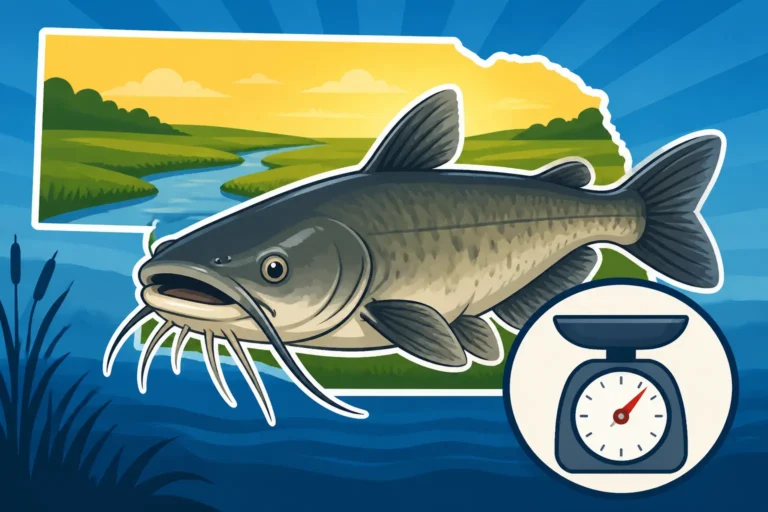
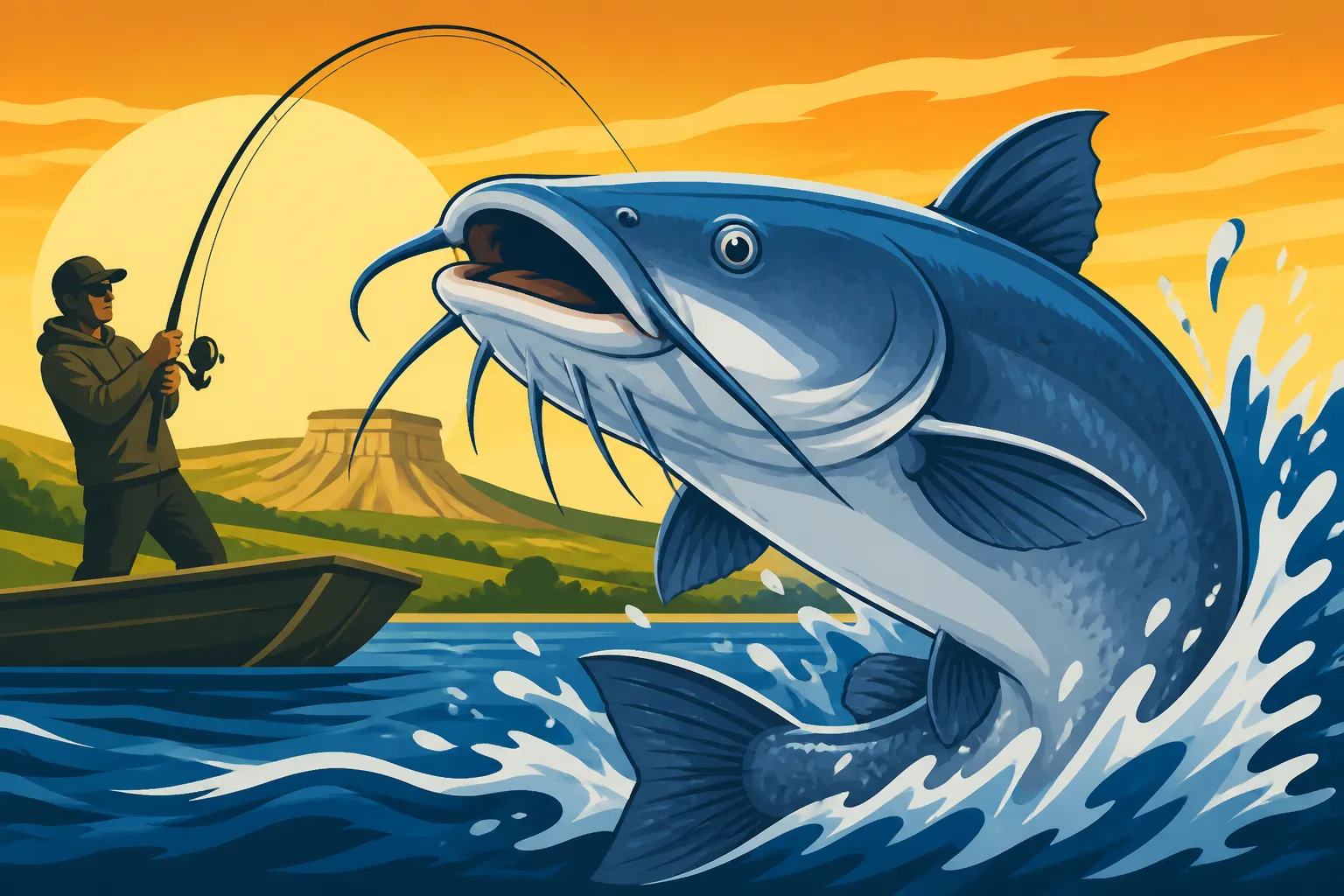
For many anglers in Nebraska, the idea of hooking into a truly massive blue catfish is something of a legendary quest. While channel catfish are abundant and flatheads lurk in our river systems, the blue catfish holds a special, almost mythical, status. It’s not always clear if these giants are truly established here, or if the occasional monster catch is a rare wanderer from downstream. This guide aims to clear up the confusion, help you identify these magnificent fish, and arm you with the knowledge and techniques you'll need to chase the elusive Nebraska blue cat.
The Elusive Nebraska Blue Catfish: Are They Truly Here?
The first question on many anglers' minds when the topic of blue catfish in Nebraska comes up is usually, "Are they actually here?" It's a fair question, as the waters of the Cornhusker State are far better known for their robust populations of channel catfish and impressive flatheads. Blue catfish are indeed present in Nebraska, but their distribution is far more limited and their numbers considerably lower than their whiskered cousins. They tend to be more prevalent in the lower Missouri River basin, but their appearance in Nebraska waters, particularly beyond the immediate river borders, is often a matter of migration or very localized populations.
Separating Fact from Fishermen's Tales
Let's be honest, we've all heard the stories: "My buddy caught a blue cat bigger than a small child down by the river!" Sometimes these tales turn out to be true, but more often than not, a "blue cat" caught in Nebraska is actually a very large channel catfish. Channel cats can grow quite big, especially in nutrient-rich reservoirs and rivers, and their coloration can sometimes lean towards a steely blue-gray, leading to understandable misidentification. The genuine blue catfish is a prized catch precisely because it's so rare in much of our state. The Nebraska Game and Parks Commission (NGPC) periodically studies fish populations, and while blue catfish are noted in the Missouri River, they aren't generally stocked in inland Nebraska waters like channel catfish are.
This rarity makes any confirmed blue catfish catch a truly special event, almost like finding a needle in a haystack for many anglers. It means that pursuing them isn't just about fishing; it's about understanding river systems, habitat, and having an eagle eye for identification. The thrill isn't just in the fight, but in the chase for a species that demands both dedication and a bit of luck. It's a stark contrast to the readily available Nebraska Channel Catfish Fishing opportunities that abound throughout the state.
Blue Catfish Identification vs. Channel Catfish
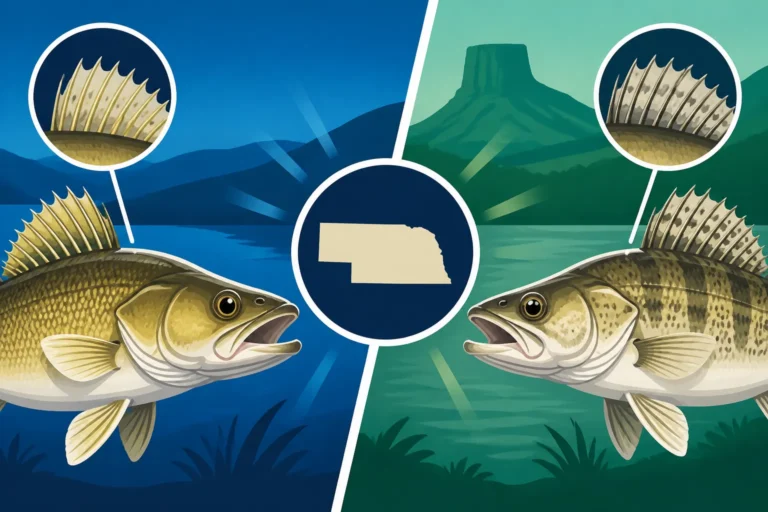
To truly know if you've landed a blue catfish, you need to be familiar with their distinguishing characteristics. This is where many anglers get tripped up, as a large channel catfish can look quite similar at a glance. However, there are a few key features that set the blue cat apart. The most reliable indicator is the anal fin. Blue catfish have a much straighter-edged anal fin with 30-35 rays, compared to the rounded anal fin of a channel catfish, which typically has 24-29 rays. This is a subtle but crucial difference that requires a careful count.
Beyond the anal fin, blue cats generally have a more pronounced hump on their back just behind the head, and their head profile is typically more sloped. Their coloration is often a uniform slate blue or gray, lacking the spots that are characteristic of juvenile and sometimes adult channel catfish (though older channel cats often lose their spots). Blue catfish also tend to have a deeply forked tail, similar to a channel cat, but their overall body shape can appear more robust and streamlined, built for battling strong currents. Misidentification is common, and understanding these differences is vital for accurate reporting and simply knowing what incredible fish you've just wrestled to the bank or boat.
| Feature | Blue Catfish | Channel Catfish |
|---|---|---|
| Anal Fin | Straight margin, 30-35 rays | Rounded margin, 24-29 rays |
| Body Coloration | Slate blue to gray, unspotted (usually) | Olive-brown to gray, often spotted (especially juveniles), can lose spots with age |
| Head Profile | More sloped, often with a slight hump behind head | More rounded, less pronounced hump |
| Mouth | Often appears smaller relative to head size | Terminal mouth, similar size |
| Size Potential | Can grow much larger (50+ lbs common in prime habitat) | Typically smaller (up to 30-40 lbs in Nebraska), though larger ones are caught |
| Tail | Deeply forked | Deeply forked |
Where to Potentially Find Blue Catfish in Nebraska Waters
Given their elusive nature, knowing where to even begin your search for blue catfish in Nebraska is paramount. You're not likely to find them in every farm pond or small creek. Instead, you need to focus your efforts on specific environments that mimic their preferred habitat.
Major River Systems and Their Blue Catfish Potential
Without a doubt, the Missouri River is your prime target for blue catfish in Nebraska. This mighty river acts as a natural highway for fish, and blue catfish are well-established in the lower reaches of the Missouri, particularly in states like Missouri and Kansas. It's from these robust populations that blue cats will occasionally venture upstream into Nebraska's border waters. Areas along the Missouri River with deep holes, strong current breaks, and abundant forage fish are the most promising. Think about the stretches near the confluence of major tributaries or around the wing dams and deep scour holes that the river creates.
Anglers fishing the Missouri River Fishing in Nebraska might find them in eddies, behind submerged structures, or in the deep channels. These fish thrive in strong currents and prefer deeper water, so don't expect to find them lurking in shallow flats. Focus on areas where the current creates natural holding spots, allowing them to ambush prey without expending too much energy. This often means boat fishing is the most effective way to reach these prime locations, although dedicated bank anglers with the right gear can still find success on accessible river bends.
Reservoirs with Deep, Riverine Characteristics
While blue catfish are predominantly river dwellers, there's always a possibility of them venturing into large reservoirs that are directly connected to or heavily influenced by river systems known to hold blue cats. However, in Nebraska, this is a much longer shot than the Missouri River itself. Most of Nebraska's major reservoirs, while excellent for channel catfish and other species, generally lack the consistent, strong current and vast, deep, connected riverine environment that blue catfish typically prefer for long-term residency and reproduction.
If you were to theorize a reservoir where a blue cat might be found, it would be one with a direct, large river inflow from the Missouri, or one that has been historically stocked, though current stocking efforts for blue cats in Nebraska reservoirs are not widespread. Focus on the main river channels within these reservoirs, especially near the dam or where the original river channel runs deepest. Look for areas with hard bottom, steep drop-offs, and plenty of large structure like submerged timber or rock piles. Still, be realistic: finding a blue cat in an inland Nebraska reservoir would be a truly exceptional catch, and many "reservoir blue cats" turn out to be impressive channel cats.
Gear Up for Blue Catfish: What You'll Need
Chasing blue catfish, especially those large ones that can migrate into Nebraska's border waters, is not a job for light tackle. These fish are powerful, live in strong currents, and grow to immense sizes. You need gear that can stand up to the fight.
Heavy-Duty Rods, Reels, and Line
When targeting blue catfish, think "heavy-duty." You're looking for stout rods, robust reels, and strong lines that can handle both the power of a large fish and the resistance of heavy current. For rods, a medium-heavy to heavy power rod, usually 7 to 9 feet in length, is ideal. Look for a strong backbone with a sensitive tip, allowing you to detect subtle bites while having the power to really lean into a fish. Many anglers opt for a specialized catfish rod, often found on Amazon, that's designed for this kind of rigorous use.
Matching that rod with a quality reel is crucial. A baitcasting reel with a smooth, powerful drag system and a high line capacity is preferred. Brands like Penn, Abu Garcia, or Shimano offer excellent options for this type of fishing. Make sure your reel can hold at least 200-300 yards of heavy line. Speaking of line, braided line is the go-to for many serious catfishermen. Its strength-to-diameter ratio is unbeatable, it has virtually no stretch for solid hooksets, and it cuts through current better than monofilament. Opt for braided line in the 50-80 lb test range. If you prefer monofilament, go with at least 20-30 lb test, but be prepared for more stretch and current drag. A short, heavy monofilament or fluorocarbon leader (50-80 lb test) can be added for abrasion resistance.
Essential Terminal Tackle for Big Cats
Your terminal tackle needs to be as robust as the rest of your setup. This is where the business end of your fishing takes place, and a weak link here can mean a lost trophy. Circle hooks are absolutely essential for blue catfish. They are designed to hook fish in the corner of the mouth, which is much safer for the fish if you're practicing catch and release, and they significantly reduce gut-hooking. Sizes will vary depending on your bait, but 6/0 to 10/0 are common. Brands like Mustad or Gamakatsu offer reliable circle hooks that you can readily find on Amazon.
You'll also need plenty of heavy sinkers. Fishing in strong river currents means you'll need enough weight to keep your bait on the bottom. Pyramids, no-roll sinkers, or flat bank sinkers ranging from 3 to 8 ounces (or even heavier in extreme current) are common. Strong swivels (barrel or ball-bearing) are important to prevent line twist, especially with rotating baits, and rated for at least 80-100 lbs. Lastly, consider using a heavy-duty leader of 50-80 lb monofilament or fluorocarbon between your mainline and hook. This leader provides an extra layer of abrasion resistance against rocks, logs, and the sandpaper-like mouth of a big cat. For more general advice on what to use, check out Best Bait for Nebraska Catfish.
Best Baits and Techniques for Blue Catfish
Blue catfish are primarily piscivores, meaning they eat other fish. This preference dictates the most effective baits and fishing techniques. Forget about your standard punch baits and stink baits – while they work for channel cats, blue cats want fresh, natural prey.
The Power of Fresh Cut Bait
If there's one golden rule for targeting blue catfish, it's to use fresh cut bait. Blue cats are primarily predators, and they hunt by scent and vibration. A chunk of fresh, oily fish bleeding in the current is an irresistible meal. The best options for cut bait typically come from species that are native to the blue cat's environment or readily available. Shad (gizzard or threadfin), skipjack herring (if you can get them), carp, and even buffalo are excellent choices. Bluegill or other panfish can also work, cut into strips or chunks.
When preparing your cut bait, don't be shy. Large blue cats want large meals. Cut the fish into steaks or strips that expose plenty of flesh and blood. For smaller blue cats, a 1-2 inch chunk might suffice, but for trophy hunters, don't hesitate to use a piece the size of your palm. Thread the cut bait onto your circle hook, ensuring the hook point is exposed to maximize your chances of a solid hookset. Presenting fresh, bloody bait makes all the difference when trying to attract a discerning blue cat from its deep lair.
Fishing Deep and Strong Currents
Successful blue cat fishing in Nebraska's river systems (like the Missouri) involves understanding and effectively fishing deep water and strong currents. These fish use current breaks and deep holes to ambush prey. Your primary technique will often involve anchoring your boat upstream of a promising spot and fan-casting multiple baits down current. Allow your heavy sinkers to settle on the bottom and keep your line tight, but not so tight that your bait is lifted off the bottom. Remember to pay close attention to the Nebraska Fishing Daily Bag and Possession Limits as you fish.
Target specific structures:
- Deep River Channels: These are the highways for big cats.
- Current Seams/Edies: Where fast water meets slower water, creating a prime ambush point.
- Submerged Timber and Rock Piles: Structure provides cover and concentrates baitfish.
- Drop-offs and Ledges: Places where the bottom contours change dramatically.
Another effective technique, especially for covering more water, is controlled drifting. Using a trolling motor to slowly drift your bait along deep channels or over large flats where baitfish are present can be highly effective. The key is to keep your bait on the bottom without snagging too often. This often requires adjusting your weight and drift speed. You can find robust tackle for these applications, including heavy weights and specialized braided lines, from retailers like Amazon. Patience is key; blue cats are not always actively feeding, but when they are, they'll hit hard.
Nebraska Regulations and Ethical Considerations for Blue Catfish
Fishing for any species requires an understanding of the local regulations, and blue catfish are no exception. While they are rarer in Nebraska, knowing the rules helps ensure you're fishing legally and responsibly. Furthermore, when you do encounter these magnificent fish, practicing ethical catch and release is vital, especially for a species that isn't widely abundant in the state. Always consult the most current Nebraska Fishing Regulations Explained booklet before heading out.
Understanding Catfish Regulations in Nebraska
Nebraska has specific regulations for various catfish species, primarily channel catfish and flathead catfish. Due to the rarity of blue catfish, they are often lumped into the general "catfish" category, or sometimes considered under the "other game fish" umbrella if specific blue cat rules aren't explicitly stated. It’s critical to check the most recent regulations published by the Nebraska Game and Parks Commission for bag limits, length limits, and any special provisions for catfish. For instance, sometimes a larger minimum length limit or a reduced daily bag limit might apply to larger species or certain waters to protect trophy fish.
At the time of writing, it's important to remember that there aren't usually specific blue catfish regulations separate from general catfish rules in Nebraska, primarily because they are not a widely distributed or stocked species here. This means they often fall under the same rules as channel catfish, which are much more common. Always verify the current rules as they can change annually. If you're unsure, it's best to err on the side of caution and release any unusually large catfish unless you are absolutely certain of its species and the legal harvesting requirements.
Catch and Release Best Practices for Large Fish
Given their relative rarity and impressive size, practicing responsible catch and release for blue catfish in Nebraska is highly encouraged. Releasing these fish ensures they can continue to grow, potentially spawn, and contribute to the population, allowing future generations of anglers the chance to experience the thrill of catching one. This is especially true for any fish that might be a state record contender; you wouldn't want to unknowingly harvest a record-breaker if the goal is to promote conservation. For more general guidelines, look up Catch and Release Best Practices in Nebraska.
Here are some key practices:
- Minimize Fight Time: Use appropriate heavy tackle to land the fish as quickly as possible, reducing stress.
- Proper Landing: Use a large, knotless rubberized landing net or a sturdy fish gripper (with care) to bring the fish into the boat. Avoid dragging large fish onto rough surfaces. You can find suitable nets on Amazon, such as the Best Landing Nets for Big Fish.
- Handle with Care: Support the fish horizontally, especially large ones, to protect its internal organs. Avoid holding it vertically by the head or tail for extended periods.
- Quick Hook Removal: Use long-nosed pliers or a hook remover to quickly extract the hook. Since you're using circle hooks, they should be in the corner of the mouth, making removal easier.
- Revive the Fish: Hold the fish gently in the water, facing into the current, until it regains its strength and can swim away under its own power. Don't just toss it back.
By following these practices, you increase the chances of the released fish surviving and thriving, ensuring the pursuit of the Nebraska blue catfish remains a possibility for years to come. If you encounter what you believe is a blue catfish, especially a large one, consider taking photos, noting its size, and reporting it to the NGPC. This helps biologists track populations and distribution. If you ever suspect foul play or see someone violating regulations, you should know How to Report a Fishing Violation in Nebraska.
The Thrill of the Chase: Patience and Persistence
The pursuit of blue catfish in Nebraska is a journey that demands patience, persistence, and a keen understanding of their unique habits. Unlike the more common channel catfish, blue cats are not found in every nook and cranny of the state. Their presence, particularly beyond the immediate Missouri River corridor, truly defines them as a trophy species in Nebraska waters.
The Lowdown on Blue Catfish Population Status
Let's be realistic: if you're targeting blue catfish specifically in Nebraska, you're looking for a needle in a haystack in most places, and an uncommon catch even in the most promising spots. The main population of blue catfish resides further south in the Missouri River system. Nebraska waters serve as the northernmost frontier for these fish in many respects, making them a migratory or sparse population in our state. The Nebraska Game and Parks Commission does not extensively stock blue catfish in Nebraska's interior waters, focusing instead on the highly successful channel catfish program. This means that any blue cat you encounter is either a wanderer from downstream or part of a very localized, naturally reproducing pocket.
Because of this, expectations must be managed. You're not likely to go out and catch a stringer of blue catfish like you might with channel cats. Instead, each strike, each bent rod, holds the potential for something truly special. It's a testament to the wildness of our rivers and the incredible journey these fish undertake. Think of it as a bonus catch when targeting other large river cats, or a dedicated, long-term quest for a true freshwater giant. The thrill comes from the possibility, the fight, and the sheer rarity of such a magnificent creature in your hands.
Contributing to the Knowledge Base
Because blue catfish are not widely distributed or frequently encountered in Nebraska, every legitimate catch is a valuable piece of data for fisheries biologists. If you are fortunate enough to catch a blue catfish, especially a large one, consider reporting it to the Nebraska Game and Parks Commission. Take clear photographs, measure its length and girth (if you have the tools), and note the exact location of the catch. This information helps biologists understand their distribution, growth rates, and potential for establishing more significant populations within the state.
Your angler reports, along with data from commercial fishermen on the Missouri River and scientific surveys, help paint a clearer picture of blue catfish presence and movement. It's an opportunity for you, the angler, to become a citizen scientist and contribute directly to the management and understanding of Nebraska's aquatic resources. So, if you're out there on the Platte River Fishing Guide or the mighty Missouri, and you pull in a blue cat, document it! It's not just a personal trophy; it's a contribution to the broader fishing community and the future of Nebraska's fishery.
Disclaimer
This article is for general informational purposes only and does not constitute professional advice. Laws, prices and regulations vary by location and change over time. Consult a qualified professional for guidance on your specific situation.