How Big Walleye Get in Nebraska Lakes
It's a common question for any angler dreaming of that wall-hanger fish: just how big do walleye really get in Nebraska's waters? We've all seen pictures of monster fish, but the reality on the water can sometimes feel a little different. This guide is here to shed light on the true potential for walleye size across the Cornhusker State, from your average keeper to those truly exceptional, once-in-a-lifetime catches that make headlines.
Understanding Walleye Growth Potential in Nebraska
Nebraska might not be the first state that comes to mind when you think of trophy walleye, but our reservoirs and rivers hold some truly impressive fish. The size a walleye can attain is a complex dance between several factors, much like a garden needs the right soil, sun, and water to grow. Understanding these elements can help you appreciate the journey of a Nebraska walleye from a fry to a formidable predator.
Key Factors Influencing Walleye Size
Several critical elements play a role in how big a walleye can grow. It's not just about how long they live; it's about the quality of that life. Think of it like a professional athlete – some are naturally gifted, but even they need the right training, nutrition, and environment to reach their peak.
First and foremost, the forage base is paramount. Walleye are predators, and their growth is directly tied to the abundance and type of baitfish available. Lakes rich in shad, gizzard shad, yellow perch, or even smaller panfish provide a consistent, high-energy diet that fuels rapid growth. If a lake has a booming population of shad, those walleye are going to be chowing down and packing on pounds much faster than walleye in a less fertile environment. This is why certain lakes consistently produce larger fish – they're essentially a walleye buffet. You might find great discussions about this in articles like What Walleye Eat in Nebraska Lakes.
Secondly, water quality and habitat are crucial. Walleye prefer cooler, well-oxygenated water with plenty of structure – think submerged humps, old river channels, rock piles, and points. These areas provide ambush points for hunting and cover for protection. A healthy, diverse habitat means less stress, better feeding opportunities, and ultimately, bigger fish. Lakes with extensive deep-water structure and clean environments are often prime candidates for housing larger walleye. Conversely, lakes with poor water quality or limited suitable habitat will see slower growth rates and smaller average sizes.
Lastly, genetics and fishing pressure also play a part. While all walleye have the potential to grow, some strains might naturally grow larger or faster than others. And then there's fishing pressure. In heavily fished waters, larger, older fish are often removed, leaving behind a population of younger, smaller individuals. Lakes with more remote access or those that are less heavily targeted can sometimes hold hidden giants simply because they've had more time to grow without encountering an angler's hook. It's a delicate balance, and management efforts often try to find the sweet spot to ensure a healthy population with good size structure.
The Walleye Lifespan and Its Impact on Size
Walleye are relatively long-lived fish, which gives them the potential to reach impressive sizes. In Nebraska, a walleye can live for over a decade, sometimes even into their mid-teens, though catching a fish of that age is a true accomplishment. The first few years of a walleye's life see fairly rapid growth as they establish themselves and feast on abundant forage. They'll typically reach legal harvest size within 2-4 years, depending on the specific water body and food availability.
As walleye age, their growth rate tends to slow down, but they continue to put on weight and girth, becoming those thick-bodied, powerful fish we all dream of catching. A 10-year-old walleye, for example, will be significantly heavier and more robust than a 5-year-old fish, even if the length difference isn't as dramatic as it was in their younger years. It's this longevity combined with consistent feeding that allows them to eventually achieve trophy status. It highlights why catch-and-release of larger fish is so important if we want to ensure future generations have the chance to encounter these magnificent specimens.
Typical Walleye Sizes You Can Expect in Nebraska
When you head out fishing for walleye in Nebraska, it’s good to have realistic expectations. While that 10-pounder is certainly out there, the majority of fish you encounter will fall into a more common size range. Understanding what constitutes an "average" walleye versus a "trophy" helps set your goals and appreciate every catch.
Average Walleye Size for Nebraska Waters
Most walleye caught in Nebraska lakes and reservoirs will typically range from 15 to 22 inches in length and weigh anywhere from 1.5 to 4 pounds. This is a solid "keeper" size, providing a nice meal and a good fight. These are the fish that make up the bulk of the population in most well-managed waters. They're often in the 3 to 6-year-old age range, having had a few seasons to grow after hitting their initial growth spurts.
For example, on a busy weekend at Branched Oak Lake or Lewis and Clark Lake, if you're consistently catching walleye in this size range, you're having a very successful day! These fish are energetic, delicious, and a testament to the healthy populations in many Nebraska fishing spots. While not record-breakers, they're the bread and butter of our walleye fishery. Anglers often discuss bag limits for these sizes, like in Nebraska Walleye Daily Bag Limit.
Defining a "Trophy" Walleye in Nebraska
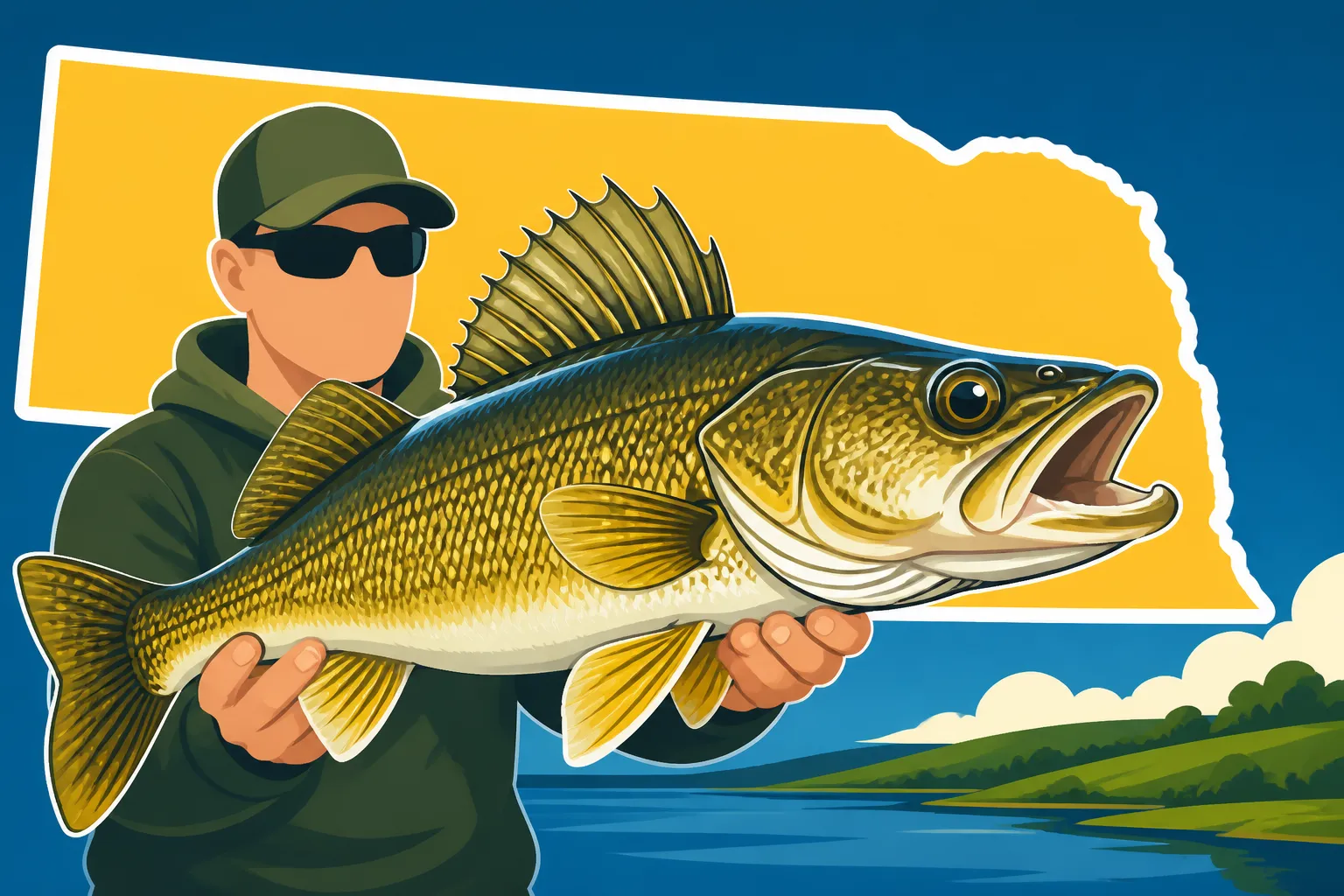
Now, let's talk about the big ones – the fish that get your heart pounding and make for unforgettable memories. In Nebraska, a "trophy" walleye generally starts at about 25 inches in length and can weigh anywhere from 5 to 8 pounds. These are significant fish that have eluded anglers for many seasons and have had ample opportunity to grow. A walleye over 28 inches and pushing 10 pounds or more is truly a giant in Nebraska waters.
Catching one of these larger specimens often requires patience, skill, and sometimes a bit of luck. They tend to be older, wiser, and more wary. These are the fish that push the limits of your tackle and give you a story to tell for years. When anglers speak of a "trophy walleye," they're usually referring to one that stands out significantly from the average catch, representing a mature, dominant fish in its ecosystem. Many seasoned anglers will check online retailers like Amazon for specialized heavier gear when targeting these larger fish, ensuring their setup can handle the fight.
Here’s a quick comparison of what you might expect:
| Category | Length Range (Inches) | Weight Range (Pounds) | Typical Age (Years) | Characteristics |
|---|---|---|---|---|
| Small/Young | 10-14 | 0.5-1.5 | 1-2 | Often abundant, fast-growing, good for beginners |
| Average | 15-22 | 1.5-4 | 3-6 | Common keepers, good table fare, respectable fight |
| Large | 23-27 | 4-8 | 7-10+ | Significant catch, approaching trophy status |
| Trophy | 28+ | 8-15+ | 10-15+ | Rare, powerful, often state-record contenders |
Nebraska State Records and Trophy Potential
Every state has its legends, those fish that push the boundaries of what we thought possible. Nebraska is no different, and our state record walleye stands as a testament to the incredible potential of our waters. Chasing these behemoths is what drives many serious anglers.
Nebraska's State Record Walleye
The current Nebraska state record walleye is a truly magnificent fish that weighed in at a whopping 16 pounds, 2 ounces. This colossal walleye measured an incredible 33 inches long and had a girth of 20.5 inches! It was caught in late spring from a pit lake near the Platte River, showing that even smaller, often overlooked waters can hold giants. This record is a reminder that while certain reservoirs are known for their consistent walleye fishing, a true monster can turn up almost anywhere with the right conditions and a bit of luck.
This specific record, and others like it, are celebrated milestones in the angling community. They not only inspire future generations of anglers but also highlight the robust health of Nebraska's aquatic ecosystems. You can delve deeper into these legendary catches by looking up Nebraska Walleye Size and Weight Records. Imagine the thrill of hooking into something that big! It's the kind of moment that lasts a lifetime.
Lakes Known for Producing Large Walleye
While the state record came from a pit lake, certain Nebraska reservoirs are consistently renowned for their ability to produce larger-than-average walleye. These are often the places serious walleye anglers flock to, knowing their chances of encountering a trophy are higher.
Lake McConaughy is undoubtedly at the top of this list. Known as "Big Mac," this massive reservoir in western Nebraska boasts an incredible forage base, particularly gizzard shad, which fuels explosive walleye growth. It has deep, clear water with extensive structure, providing ideal habitat for mature walleye. Anglers frequently report walleye in the 6-10 pound range from McConaughy, with many bigger fish landed each year. It's a true walleye factory, and a bucket list destination for anyone serious about catching a trophy. Information on fishing this legendary lake can be found in guides like Lake McConaughy Walleye Fishing.
Another consistent producer of big walleye is Merritt Reservoir. Located in the Sandhills, Merritt offers pristine waters and a strong population of yellow perch and gizzard shad. While perhaps not as massive as McConaughy, Merritt’s health and abundant food sources allow walleye to grow to impressive sizes, with 5-8 pound fish being common and double-digit walleye certainly possible. The unique, wild beauty of the Sandhills also adds to the allure of fishing Merritt. Merritt Reservoir Walleye Fishing offers great insights into this fantastic fishery.
Other lakes like Harlan County Reservoir and Sherman Reservoir also have a reputation for producing quality walleye, especially during peak seasons. While the average size might be slightly smaller than at McConaughy, these lakes regularly kick out fish in the 3-6 pound range, with larger individuals present for those who put in the time. The consistent presence of these larger fish reinforces Nebraska's status as a top-tier walleye destination, even if it's sometimes overshadowed by other states.
Strategies for Targeting Nebraska's Bigger Walleye
Catching a truly large walleye isn't usually an accident. While luck certainly plays a role, consistent success with bigger fish often comes down to understanding their behavior, knowing the right techniques, and being prepared with the appropriate gear. It’s about being deliberate in your approach, much like a hunter stalking a prize deer.
Best Times and Conditions to Target Trophy Walleye
Timing is everything when it comes to trophy walleye. These larger fish often become more active and accessible during specific periods, particularly related to their feeding patterns and spawning cycles.
The pre-spawn and spawn periods in early spring are prime times. As walleye prepare to spawn, they feed heavily to build energy reserves, and then gather in predictable locations. While it might be tempting to chase them during the actual spawn, these fish are often focused on reproduction, but before and after this intense period, they can be aggressive feeders. Look for them in shallower areas near rocky points, reefs, and river current breaks where they stage before moving onto spawning grounds. The exact timing varies by lake, but typically late March through April is key. You can learn more about this by reading Nebraska Walleye Spawning Season.
Another excellent window is late fall into early winter. As water temperatures drop, walleye feed aggressively to pack on fat reserves for the winter months. They often school up in deeper main lake basins or along structural elements like humps and drop-offs. This can be a fantastic time for jigging or slow-trolling presentations, as the fish are concentrated and actively feeding, making them a bit more predictable. Cold front conditions can slow them down, but persistent anglers can still find success. The article Best Time of Year to Catch a Trophy Walleye in Nebraska delves deeper into these seasonal opportunities.
Additionally, night fishing can be incredibly productive for larger walleye, especially during the summer. Walleye are highly light-sensitive, and big fish often move into shallower feeding areas under the cover of darkness. Casting crankbaits or slow-trolling with planer boards in areas where they feed on baitfish can yield impressive results. Investing in a good headlamp and learning specialized night fishing techniques can make a huge difference.
Gear and Techniques for Bigger Fish
When you're serious about landing a monster walleye, your gear needs to be up to the task. While a general-purpose spinning combo might handle a 2-pounder, a 10-pound walleye will test its limits.
Rods and Reels: Opt for medium-heavy power rods with a fast or extra-fast action. This provides the backbone needed to set hooks deeply in a walleye's bony mouth and control a heavy fish, while the fast tip ensures sensitivity for detecting subtle bites. Rods in the 6'6" to 7'6" range are versatile for jigging, casting, and trolling. Pair this with a reliable spinning reel in the 2500-3000 size or a baitcasting reel with a smooth drag system. Many anglers find great deals on quality walleye-specific rods and reels on platforms like Amazon. For more detailed advice, check out Best Rod Setup for Nebraska Walleye.
Line: For bigger fish, many anglers prefer braided line as their main line due to its strength, sensitivity, and lack of stretch. A 10-20 lb test braided line is common, often paired with a fluorocarbon leader (8-12 lb test) for abrasion resistance and invisibility in clear water. The no-stretch nature of braid helps immensely with deep-water hook sets.
Lures and Bait: While walleye will eat a variety of offerings, certain baits and lures are known for attracting larger fish.
- Jigs: Vertical jigging with heavier jigs (3/8 oz to 3/4 oz) tipped with a minnow, plastic grub, or paddle tail can be deadly, especially on deep structure.
- Crankbaits: Trolling deep-diving crankbaits that mimic shad or perch is a classic big-walleye tactic, particularly in large reservoirs. Colors that imitate local forage are often key.
- Crawler Harnesses: Slow-trolling or drifting with a bottom bouncer and a crawler harness (with a large nightcrawler) is a tried-and-true method that appeals to walleye of all sizes, but often tempts the biggest fish.
- Live Bait: Large shiner minnows or substantial nightcrawlers presented on a simple hook-and-sinker rig or under a slip bobber are irresistible to hungry walleye, especially when they're less active. Find more about this in Best Bait for Nebraska Walleye.
When using a fish finder, particularly for locating deep-water walleye on structural elements, understanding how to interpret the sonar returns can be the difference between an average day and a trophy day. Techniques for How to Read a Fish Finder for Walleye are invaluable. Remember, persistence and adaptation are key. The walleye that grows to trophy size in Nebraska is an intelligent survivor, and it often takes a calculated approach to outsmart it.
Conserving Nebraska's Walleye Population
While the thrill of landing a huge walleye is unmatched, it's equally important to consider the long-term health of Nebraska's walleye fisheries. Conservation efforts ensure that future generations can experience the same excitement and opportunities we enjoy today. Every angler plays a role in this.
Understanding Regulations for Walleye
Nebraska has specific regulations in place to manage walleye populations, including length limits, bag limits, and possession limits. These rules are designed to protect spawning fish, allow younger fish to reach maturity, and ensure a sustainable harvest. It's crucial to be familiar with these regulations before you head out, as they can vary by water body and sometimes change.
For instance, many lakes have a minimum length limit, meaning you cannot keep a walleye shorter than a certain size, typically 15 inches. Some lakes might have slot limits, where fish within a certain size range (e.g., 20-24 inches) must be released, while those smaller or larger can be kept. This is often done to protect prime breeding-age fish and allow them to contribute to the population. Always check the current Nebraska Walleye Minimum Length Limit for your specific fishing destination.
Additionally, there are daily bag limits which restrict the number of walleye you can keep in a single day, and possession limits which dictate how many fish you can have in your cooler or at your home at any given time. These limits help prevent overharvesting and distribute the fishing pressure across the population. Strict adherence to these rules is not just about avoiding fines; it's about being a responsible steward of our natural resources. Ignorance of the law is never an excuse, so make sure you're always informed.
The Role of Catch and Release for Big Walleye
For truly large walleye, particularly those pushing trophy dimensions (25 inches and up), practicing catch and release is highly encouraged and plays a vital role in conservation. These older, larger fish are often the most productive spawners, contributing significantly more eggs than younger, smaller females. By releasing them, you're allowing them to continue their crucial role in the reproductive cycle, ensuring strong walleye populations for years to come.
When practicing catch and release, it's important to handle these big fish with care.
- Minimize Air Exposure: Keep the fish in the water as much as possible, especially during warm weather.
- Wet Hands: Always wet your hands before handling a fish to protect its protective slime coat.
- Support Its Weight: Support the fish horizontally, especially large ones, to avoid damaging internal organs or its jaw. Never hold a large walleye vertically by its mouth alone.
- Use Proper Tools: Have a good pair of long-nosed pliers or a hook remover ready for quick and easy hook extraction. Some anglers even use specialized tools bought from places like Amazon to make the process smoother.
- Revive Gently: If the fish seems sluggish, hold it gently in the water, facing into the current, until it regains its strength and can swim away on its own.
Releasing a magnificent walleye, especially a truly large one, might feel counterintuitive to some, but it’s a powerful act of conservation. It ensures that those genes for fast growth and large size remain in the population, and that another angler – or even you, on a future trip – might have the chance to encounter that very same fish again. It's part of the ethical responsibility we all share as anglers to protect the sport we love.
Disclaimer
This article is for general informational purposes only and does not constitute professional advice. Laws, prices and regulations vary by location and change over time. Consult a qualified professional for guidance on your specific situation.