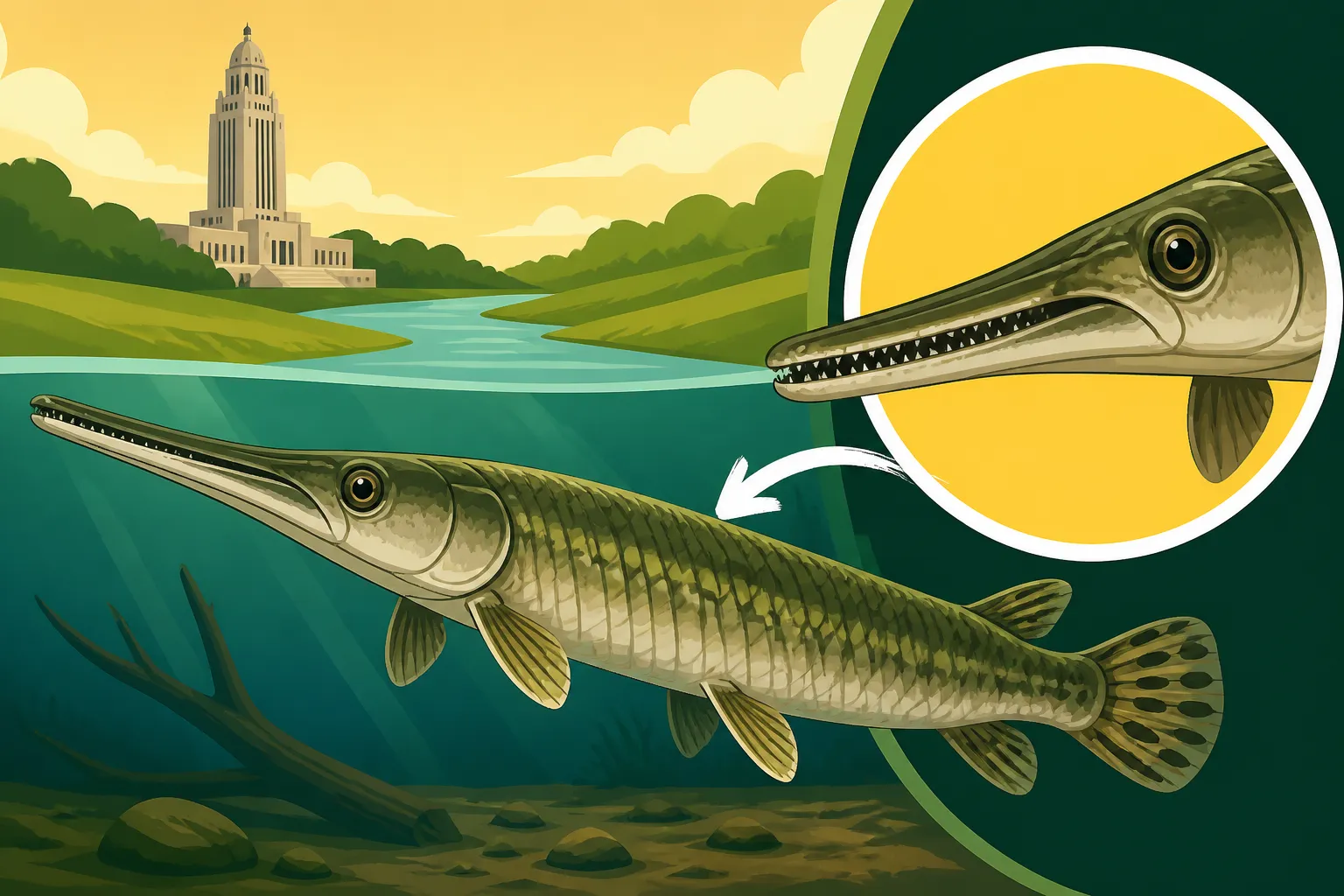
How to Identify a Longnose Gar
There's nothing quite like the thrill of reeling in a powerful, prehistoric-looking fish, and in Nebraska, that often means encountering a gar. But when you look down at your catch, you might wonder, "Is this a longnose gar, or something else entirely?" It can be tricky to tell the different species apart, especially when they're flopping around in your boat or on the bank. This guide is here to unravel that mystery, providing clear, detailed information so you can confidently identify a longnose gar the next time one strikes your bait on a Nebraska waterway.
What Exactly is a Longnose Gar?
The longnose gar (Lepisosteus osseus) is one of Nebraska's more distinctive native fish, a true survivor with an ancient lineage. These fish are often encountered by anglers, sometimes by accident while targeting other species, but often by those specifically seeking out these unique predators. Identifying them starts with understanding their fundamental characteristics, which truly set them apart from most other fish you'll find in our waters.
General Appearance and Body Shape
When you first see a longnose gar, its torpedo-like body and diamond-shaped, ganoid scales are immediately striking. These scales aren't like the typical flexible scales of a bass or a walleye; they're hard, bony plates that make the fish incredibly tough and give it a truly armored appearance. This makes handling them a bit different, as they can feel quite rigid to the touch. The overall coloration tends to be olive-brown or greenish-gray on the back, fading to silvery-white on the belly, often with dark spots on the fins and sometimes on the body. These spots, however, are less pronounced and less numerous than on some other gar species.
Imagine you're fishing a quiet backwater slough off the Platte River. You feel a solid thud on your line, and after a good fight, you bring in a long, slender fish. The first thing you'll notice is that streamlined shape, built for speed and ambush. It's almost like a living spear, perfectly adapted to dart through cover and snatch unsuspecting prey. Their hardy scales offer incredible protection, a testament to their survival through millions of years.
Unique Snout and Teeth
The most defining feature of a longnose gar, as its name cleverly suggests, is its remarkably long, slender snout. This isn't just a slightly elongated nose; it's a prominent, bony extension that can be as long as, or even longer than, the rest of its head. The snout is cylindrical and packed with rows of sharp, needle-like teeth. These teeth are perfectly designed for grasping and holding onto slippery prey, making them incredibly efficient predators in the aquatic environment. When you look closely, you'll see these teeth are conical and point backward, ensuring anything caught in their jaws has a very tough time escaping.
Think about comparing it to a pair of forceps or tweezers, rather than the broad, powerful jaws of a largemouth bass. This unique tool allows them to quickly snap at fish, frogs, and even crustaceans, impaling them before they can get away. If you're struggling to identify a gar, the length and slender profile of that snout are your absolute best indicators. This isn't a subtle difference; it's a glaring, unmistakable characteristic. Keep in mind, however, that while impressive, this long snout also makes them prone to short-striking baits, often just nipping the tail or missing the hook entirely.
Dorsal and Caudal Fin Placement
Another key identifier for the longnose gar is the placement of its fins, particularly the dorsal and anal fins. These fins are positioned very far back on the body, almost directly above and opposite each other, and very close to the caudal (tail) fin. This "posterior" placement of fins is common among predatory fish that need a burst of speed for ambush attacks. The tail fin itself is somewhat rounded, or heterocercal, meaning the upper lobe is slightly longer than the lower, a primitive characteristic.
When a longnose gar is swimming, these rear-set fins act like a powerful propeller and rudder, allowing for rapid acceleration and precise steering. If you observe a gar swimming near the surface or fighting on your line, take note of how those fins are clustered towards the very end of its body, almost as if the fish is designed to be all business in the front, and all propulsion in the back. This distinctive arrangement helps distinguish it from other fish species that might have a similar elongated body but more centrally located fins. It's a key anatomical clue that, combined with the snout, provides a definitive identification.
Distinguishing Longnose Gar from Other Nebraska Gar Species
While the longnose gar is certainly unique, Nebraska waters are also home to other gar species, most notably the shortnose gar. Learning to tell them apart is crucial for accurate identification, especially since their appearance can be quite similar at a glance. It's easy to get them mixed up, but once you know what to look for, the differences become quite clear.
Longnose vs. Shortnose Gar
The most common point of confusion for anglers in Nebraska is distinguishing between a longnose gar and a shortnose gar. As their names suggest, the primary difference lies in the length and width of their snouts. The longnose gar, as discussed, has a very long, slender snout. To be more precise, if you measure the distance from the tip of its snout to the front of its eye, and then divide that by the width of its snout at its narrowest point (usually just in front of the eyes), for a longnose gar, this ratio is typically greater than 10 to 1. In simpler terms, its snout is exceptionally narrow and long, like a needle.
On the other hand, the shortnose gar (Lepisosteus platostomus) has a noticeably shorter and broader snout. Using the same measurement ratio, a shortnose gar's snout length to width ratio will be significantly less than 10 to 1, often in the range of 5 to 7. Its snout will appear more flattened and paddle-like compared to the longnose. Additionally, shortnose gar often have more distinct dark spots on their bodies and heads, not just on their fins, though this can vary. A good rule of thumb is if you think the snout looks "too thick" for a longnose, it's likely a shortnose. These are two very different mouth designs for two slightly different hunting strategies. Anglers often encounter Nebraska Gar Fishing when targeting either of these species.
To illustrate, imagine holding two pencils side-by-side. One is a regular, sharpened pencil – that's your shortnose gar snout. Now imagine a super-thin, extra-long mechanical pencil lead – that's the longnose. The visual difference is quite pronounced once you train your eye. Observing these characteristics carefully when you land a gar is paramount.
| Feature | Longnose Gar | Shortnose Gar |
|---|---|---|
| Snout Length | Very long and slender | Shorter and broader |
| Snout Ratio | Length to width ratio usually > 10:1 | Length to width ratio usually < 10:1 |
| Body Spots | Less prominent/fewer, mostly on fins | More distinct spots on body and head, as well as fins |
| Overall Appearance | More "needle-like" or "spear-like" | More "alligator-like" or "paddle-like" |
Avoiding Confusion with Other Long, Slim Fish
Beyond other gar species, you might encounter other elongated fish in Nebraska that could cause momentary confusion, though they lack the distinctive snout and armored scales of a gar. For example, northern pike and muskellunge (often found in places like Merritt Reservoir, as covered in Merritt Reservoir Muskellunge Fishing Tips) are long and predatory, but their mouths are very different. Pike and muskie have a duck-bill shaped snout, and while they have sharp teeth, their mouth structure is not the bony, elongated jaw of a gar. They also have typical flexible scales, not the ganoid scales.
Another example might be a large bowfin, another ancient fish species. Bowfin are also long and muscular, but they have a very different, rounded head with a short, blunt snout and a distinctive spot on their caudal fin. Their dorsal fin is also incredibly long, running almost half the length of their back, unlike the short, posterior dorsal fin of a gar. So, while long, slender fish can be found throughout Nebraska, always return to the key identifiers: the hard, diamond-shaped scales, the unique snout, and the rear-set dorsal and anal fins. These features are exclusive to gar in our state's waters.
Habitat and Behavior Clues for Identification
Knowing where and how a fish lives can offer excellent clues for identification, even before you get a clear look at its physical features. Longnose gar, like all fish, have preferred habitats and behaviors that can help you anticipate encountering them and further confirm your identification.
Preferred Waters in Nebraska
Longnose gar are highly adaptable fish, but they generally prefer warm, slow-moving waters. In Nebraska, you'll find them in the quiet backwaters, oxbows, sloughs, and slower sections of larger rivers like the Platte River and the Missouri River. They thrive in areas with abundant submerged vegetation, fallen trees, and other structures where they can lie in ambush. They're not typically found in fast-flowing trout streams or very cold, deep lakes, although they can adapt to a surprising range of conditions. For instance, while not their primary habitat, you might find them in the calmer coves of large reservoirs.
If you're out fishing in an area known for Missouri River Fishing in Nebraska or exploring a quiet bend of the Elkhorn River, and you see a long, dark shadow lingering just beneath the surface, there's a good chance it could be a longnose gar. They use these calm, weedy areas as their hunting grounds, blending in perfectly with the surroundings. Their preference for these warmer, nutrient-rich environments means they're often found alongside other warm-water species like catfish and various panfish.
Surface Behavior and Feeding Habits
One of the most characteristic behaviors of gar, including the longnose, is their tendency to "roll" or "bask" near the surface. They have a primitive lung-like swim bladder that allows them to gulp air, which is especially beneficial in low-oxygen environments or warmer waters. So, seeing a gar's back and snout break the surface for a quick gulp of air is a very common sight, particularly on still, hot summer days. This behavior alone can tip you off that a gar is in the vicinity. You can often spot them from a distance, looking like a floating log before they briefly surface.
When it comes to feeding, longnose gar are opportunistic predators. Their long, toothy snouts are perfect for side-swiping small fish, impaling them before re-orienting them to swallow headfirst. They are not particularly picky eaters and will target anything small enough to fit in their jaws, from minnows and shiners to small sunfish and even frogs. This is why you often catch them on various baits, sometimes even when you're targeting other species. Anglers often specifically target them using live bait, cut bait, or even artificial lures designed to mimic baitfish, like those you might find on Amazon.
Seasonal Presence and Activity
Longnose gar can be found throughout the warmer months in Nebraska, typically becoming more active as water temperatures rise in spring and peaking in activity during the summer. They are quite resilient and can tolerate a wide range of water conditions, but their feeding and surface activity will be most pronounced when the water is warm. As fall approaches and water temperatures drop, their metabolism slows down, and they become less active, often moving to deeper, more stable waters for the winter. You might still encounter them during Fall Fishing in Nebraska, but their surface activity will decrease significantly.
During the spring, they will move into shallower areas to spawn, often in dense vegetation, where they lay adhesive eggs. This can be a prime time to observe them, though they might be less interested in feeding during the actual spawning process. Understanding these seasonal patterns can help you narrow down your identification, as seeing a fish frequently basking or rolling in a warm, shallow backwater in July strongly points towards a gar species, likely a longnose given its prevalent range.
Tips for Safe Handling and Further Identification
Catching a longnose gar can be an exciting experience, but their unique anatomy requires a bit of caution when handling them. Their sharp teeth and rigid scales can pose a challenge, especially if you're not used to dealing with them.
Handling Gar Safely
First and foremost, extreme care should be taken when handling any gar. Their needle-sharp teeth are no joke, and a thrashing gar can easily inflict a nasty cut. It's highly recommended to use a set of long-nosed pliers or a dehooking tool to remove hooks, rather than putting your fingers anywhere near its mouth. A sturdy, protective glove can also be a wise investment, particularly when fishing for species with sharp teeth or spines. You can find excellent options on Amazon. Some anglers prefer to subdue the fish gently with a wet rag over its head and eyes, which can calm it down, or use a firm grip behind the head, being mindful of the gill plates.
When bringing a gar into the boat or onto the bank, avoid gripping it by the eye sockets or gills, as this can cause serious harm to the fish. A robust landing net with rubberized mesh can be helpful, as the ganoid scales can easily tangle in traditional nylon nets. If you plan to release the fish, minimize its time out of water and handle it as little as possible. For those interested in Catch and Release Best Practices in Nebraska, ensuring the gar is returned to the water quickly and gently is key to its survival.
Photography for Positive ID
If you're still unsure about your gar's identity after reviewing its features, a good photograph can be invaluable. Try to get clear shots from multiple angles, focusing especially on the snout. Capture the entire fish, but also get close-ups of the head, paying attention to the length and width of the snout, and the body, noting any spot patterns. If possible, place a ruler or a familiar object (like a fishing license or a specific lure) next to the snout to provide a sense of scale.
Many online fishing forums or state wildlife agency websites have communities or resources where you can upload photos for expert identification. You might even consult local bait shops or seasoned anglers who can offer their insights. A clear photo means you're not just relying on memory, which can sometimes be faulty when the excitement of a catch takes over.
Resources for Learning More
The Nebraska Game and Parks Commission is an excellent resource for all things related to Nebraska Fishing Regulations Explained and fish identification. Their website often provides detailed descriptions and illustrations of various fish species found in the state, including gar. They might also have a specific Nebraska Fish Species Identification Guide that provides visual aids. Local bait shops are also goldmines of information; the folks working there usually have a wealth of firsthand experience and can often confirm your suspicions or offer additional tips.
Beyond local resources, there are numerous field guides and online references available. A good quality fish identification book covering North American freshwater species can be an invaluable tool for any serious angler. These resources, often available on Amazon, provide not just identification keys but also details on habitat, diet, and behavior, which enrich your understanding of the fish you encounter. Understanding the nuances of species like the longnose gar only enhances your appreciation for Nebraska's diverse aquatic ecosystems.
Disclaimer
This article is for general informational purposes only and does not constitute professional advice. Laws, prices and regulations vary by location and change over time. Consult a qualified professional for guidance on your specific situation.