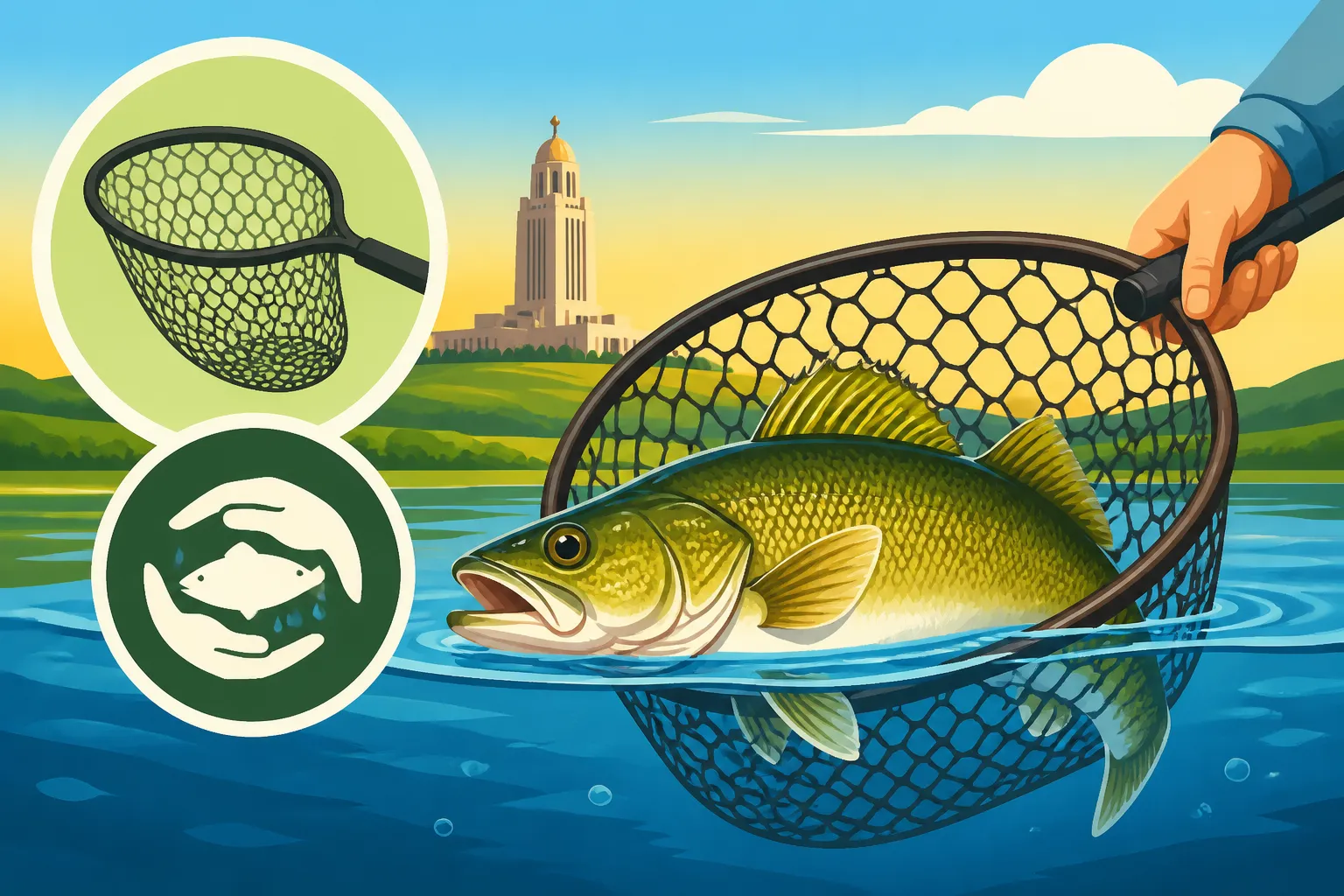
Best Net for Releasing Fish Unharmed
There’s nothing quite like the thrill of reeling in a beautiful fish on a Nebraska lake or river. We anglers often spend so much time perfecting our casting, choosing the right bait, and learning the nuances of our favorite fishing spots. But what about the moment the fish is finally at the boat or shore? Many of us, myself included at times, have made the mistake of using a net that, while effective at landing the fish, can inadvertently cause more harm than good, especially if our intention is a healthy catch-and-release. This guide is all about helping you understand why your landing net is a critical piece of gear for fish survival and how to choose and use the best net to ensure that fish swims away strong and healthy.
The Unseen Damage: Why Your Net Matters for Fish Survival
It's easy to think a net is just a net. We use it to scoop up a fish, bring it aboard, snap a photo, and then, if we're releasing it, send it back on its way. But the reality is, the type of net you use can be the difference between a fish that thrives after release and one that struggles, or worse, doesn't make it. For years, many of us used those traditional, knotty nylon nets because that's what was available and affordable. We didn't always realize the silent damage they were doing.
The Problem with Traditional Knotty Nets
Those old-school nets, the ones with the coarse, knotted mesh, were certainly sturdy, but they were far from fish-friendly. Imagine a beautiful walleye, its scales shimmering, its body covered in a protective slime coat. When that fish hits a knotty net, the rough material can act like sandpaper. It strips away that vital slime coat, which is the fish's primary defense against bacteria, fungi, and parasites. It's like taking off a layer of its skin.
Beyond the slime coat, those knots can fray delicate fins, especially the dorsal and tail fins that are crucial for a fish's balance and propulsion. You might see a small tear, or a fin ray bent out of shape, and think it's minor. However, these injuries can impair a fish's ability to swim, feed, and escape predators once it's back in the water. For prized species like those we target for Nebraska Walleye Fishing, minimizing stress and physical damage is paramount for their long-term health and the overall fishery. We want these fish to grow and spawn, contributing to the fantastic fishing opportunities we have here in Nebraska.
The Importance of a Healthy Release
For many anglers, catch and release isn't just a practice; it's a philosophy rooted in conservation and respect for the resource. We want to enjoy the fight and the moment, but also ensure that the fish has the best possible chance to survive and potentially be caught again another day. A healthy release starts with minimizing stress throughout the entire process, and the net plays a huge role in that.
When a fish is netted with a harsh, damaging net, the physical trauma combined with the stress of the fight can lead to delayed mortality. It might swim away initially, but the damage to its slime coat, fins, or even internal organs from thrashing can weaken it significantly. This leaves it vulnerable to infection, unable to properly regulate its body temperature, or an easy meal for an opportunistic predator like a bigger fish or a bird. Following Catch and Release Best Practices in Nebraska means considering every step, from the moment you hook the fish to the moment it swims free, and your net is a crucial link in that chain. We owe it to the fish and future generations of anglers to do everything we can to ensure their survival.
Decoding the Design: Key Features of a Truly Fish-Friendly Net
So, if those old knotty nets are out, what should we be looking for? The good news is that manufacturers have come a long way in designing nets that prioritize fish safety without compromising on effectiveness. It’s all about the materials and the thoughtfulness put into the design.
Soft, Rubberized Mesh: The Non-Negotiable Feature
If there's one single feature that defines a fish-friendly net, it's the mesh material. You absolutely want a net with soft, rubberized, or knotless coated mesh. Why? Because these materials are gentle on a fish's delicate skin and fins. The smooth, pliable rubber or coated fabric doesn't strip away the protective slime coat. Instead, the fish slides into it almost as if it were entering a soft, watery hammock.
Beyond protecting the slime coat, rubberized mesh prevents hooks from getting tangled. Anyone who has spent frustrating minutes trying to untangle a treble hook from a traditional net knows the pain – and the extra stress that puts on a fish while it's waiting to be released. With rubber mesh, hooks rarely snag, allowing for a much quicker and smoother unhooking process. This is particularly important for species that are more delicate or have sharper fins, like a Nebraska Crappie Daily Limit fish, where minimizing handling time is critical. You'll find a great selection of these types of nets at places like Bass Pro Shops, which often carries models specifically designed for catch and release.
Net Size and Depth for Various Nebraska Species
Just like you wouldn't use a tiny panfish rod for a trophy channel catfish, you shouldn't use a net that's too small for the fish you're targeting. The size and depth of your net are crucial for a healthy release. A net that's too small will force a fish to bend awkwardly, potentially causing internal injury or external damage as it flops against the frame.
For most general angling in Nebraska, targeting species like walleye, bass, or channel catfish, you'll want a net with a hoop size between 18 and 24 inches wide and a depth of at least 20-30 inches. This allows the fish to lay relatively flat and submerged within the net's soft mesh, reducing thrashing. For larger species, like a trophy Nebraska Channel Catfish Daily Limit specimen or a large northern pike, you might even consider a net with an even wider hoop and deeper basket, or even a specialized cradle net designed to fully support their body. Think about the largest fish you realistically expect to catch and size your net accordingly.
Handle Length and Portability Considerations
The handle length of your net impacts its utility significantly. If you're primarily bank fishing, especially on rivers like the Platte or at steep reservoir banks, a longer handle (6-8 feet or more) can be invaluable for reaching out and scooping a fish without pulling it onto dry land prematurely. Conversely, if you're fishing from a small boat, kayak, or pontoon, a shorter handle (3-5 feet) might be more maneuverable.
Many nets now feature telescoping or folding handles, offering the best of both worlds. A telescoping handle allows you to adjust the length as needed, while a folding net is fantastic for portability, fitting neatly into a kayak or a backpack if you're hiking to a remote pond. You can find many portable options on Amazon, which are perfect for anglers who need versatile gear. Consider where and how you typically fish in Nebraska, and that will guide your choice in handle style.
Finding Your Perfect Match: Types and Considerations for Nebraska Anglers
With the core features in mind, let's explore the different types of fish-friendly nets available and what to consider when making your purchase. The market offers a great variety, so understanding the nuances will help you pick one that suits your fishing style and target species in Nebraska's diverse waters.
Rubber Coated vs. Full Rubber Nets
When it comes to fish-friendly mesh, you'll primarily encounter two categories: rubber-coated nylon nets and full rubber (or "ghost") nets. Both are excellent choices compared to traditional knotted nylon, but they have subtle differences.
Rubber-coated nylon nets feature a fabric mesh that has been dipped and sealed in a rubbery coating. This makes the mesh smooth, less abrasive, and reduces hook snagging. They tend to be a bit lighter and often more affordable than full rubber nets. They're a fantastic all-around option for most freshwater fishing, providing excellent protection for the fish's slime coat and fins. They're also quite durable. However, over time, the coating can sometimes wear off in high-friction areas, but this generally takes a long while with proper care.
Full rubber nets, sometimes called "ghost nets" because the clear or translucent rubber seems to disappear in the water, are made entirely of soft, pliable rubber. These are arguably the ultimate in fish safety. They are incredibly gentle on fish, virtually eliminate tangles, and are extremely easy to clean. They also don't absorb water, which can be a plus for transport. The main downsides are that they can be heavier and often come with a higher price tag. They can also create more drag in the water when netting, which is something to get used to. For anglers serious about catch and release, especially for delicate species or those who target larger fish like a record walleye, a full rubber net is an investment worth considering.
Cradle Nets and Specialty Nets
For anglers who specifically target very large fish, such as trophy flathead catfish, muskellunge, or northern pike, a standard hoop net might not be enough. This is where specialty nets, like cradle nets, come into play. A cradle net is essentially a large, soft mesh sling designed to fully support the entire body of a big fish while it's still largely submerged. Instead of scooping a fish, you slide the cradle under it.
Cradle nets are fantastic because they distribute the fish's weight evenly, preventing undue stress on its internal organs and spinal column, which can happen if a very heavy fish is lifted vertically by its head or tail. They are often used by muskie and pike anglers, as these species are particularly sensitive to handling stress. While not necessary for every angler, if you’re planning a trip specifically to chase true giants in Nebraska’s larger reservoirs, like Merritt Reservoir or Lake McConaughy, a cradle net or a very large, deep rubberized hoop net is a wise addition to your gear.
What to Look for When Buying
Beyond the mesh type and size, consider the overall construction of the net. Look for a sturdy, rigid frame, often made of aluminum, which is durable and lightweight. The connection point between the handle and the hoop should be robust, especially if you plan on landing larger fish. Pay attention to the handle grip; a comfortable, non-slip grip will make netting easier and more secure, especially with wet hands.
When you're ready to buy, it's always a good idea to check out reviews and compare different models. Websites like Amazon offer a vast selection with user feedback, which can be incredibly helpful. Retailers like Bass Pro Shops allow you to get a feel for the net in person, which can be invaluable. Consider your budget, the types of fish you primarily target, and your preferred fishing environment in Nebraska. Remember, this isn't just another piece of gear; it's a tool that directly contributes to the health of the fish you encounter.
Here's a quick comparison of common net types for reference:
| Net Type | Mesh Material | Pros | Cons | Ideal Use Case |
|---|---|---|---|---|
| Traditional Knotted | Nylon | Very cheap, widely available | Damages slime coat, tangles hooks, harms fins | Not recommended for catch and release |
| Rubber-Coated Nylon | Rubber-coated fabric | Gentle on fish, less tangles, durable | Coating can wear over time, slightly more expensive | General freshwater angling, good value |
| Full Rubber ("Ghost") | Solid soft rubber | Most fish-friendly, no tangles, easy clean | Heavier, more expensive, more water drag | Serious catch & release, trophy fish, delicate species |
| Cradle Net | Soft, knotless mesh | Supports entire large fish body, minimal stress | Bulky, specialized, not for everyday use | Large trophy fish (Muskie, Pike, huge Catfish) |
Beyond the Catch: Mastering Safe Netting and Release Techniques
Having the best fish-friendly net is only half the battle. Knowing how to use it effectively and how to handle the fish once it's in the net is equally important for ensuring a healthy release. A clumsy netting job or improper handling can undo all the good your specialized net provides.
The Art of a Smooth Netting Operation
The goal when netting a fish is to do it quickly, efficiently, and with minimal stress to the fish. First, don't rush the net. Continue fighting the fish until it's tired and close to the boat or bank. Bringing a green (full of fight) fish into the net can lead to thrashing, which is exactly what we want to avoid. Once the fish is tiring, lead it headfirst into the net. This is often easier than trying to scoop it tail-first, as fish typically swim forward.
Ideally, keep the net and the fish submerged in the water as much as possible while netting. This provides support and keeps the fish calm. Once the fish is in the net, try to quickly subdue it by covering its eyes gently or keeping it in the water. Avoid lifting the net high out of the water if possible, especially for larger fish, as this puts immense strain on their jaws and internal organs. Instead, slide the net into the boat or onto a flat bank area, always keeping the fish supported within the mesh. Remember, a net is for landing, not for swinging the fish around!
Quick and Gentle Release Strategies
Once the fish is secured in your soft, rubberized net, the clock starts ticking for a safe release. Your primary objective is to unhook the fish as quickly and gently as possible. If conditions allow, try to unhook the fish while it's still in the water, secured in the net. This minimizes its time out of its natural element. Use needle-nose pliers or a hook remover to extract the hook efficiently. Avoid touching the fish with dry hands if you can, or wet your hands thoroughly if you must handle it directly. Dry hands can remove that crucial slime coat.
For larger fish, once unhooked, cradle the fish horizontally with both hands, supporting its belly and tail, and gently release it back into the water. Never hold a large fish vertically by its jaw or tail, as this can cause spinal and organ damage. If the fish seems stunned or sluggish, gently hold it upright in the water, facing into a mild current, or slowly move it back and forth to push water over its gills. This "revival" process helps oxygenate its blood. Wait until it strongly kicks its tail and swims away under its own power. You can learn more about proper fish handling in articles like How to Release a Fish Safely to Survive.
Handling Different Fish Species
While the general principles of safe netting and release apply to all fish, some species require a little extra consideration due to their anatomy or temperament. For instance, species with sharp dorsal spines like walleye, or toothy predators like northern pike, necessitate careful handling. Your rubberized net will help contain them, but use caution when reaching for the hook. Employ pliers to avoid any contact with their mouths.
Catfish, particularly large channel and flathead catfish, are incredibly hardy, but still benefit from gentle handling. Their spines can be formidable, so a net helps manage them. For very large catfish, a cradle net or a substantial, deep net that allows you to fully support their body is ideal to prevent internal injury from their own weight. Always be mindful of their whiskers and never grab them by the gills unless absolutely necessary for an emergency. The key is to be prepared for the species you are targeting and have the right tools, including your net, ready before the fish hits the surface. When you're ready to clean your catch, this gentle handling also makes the job easier, as discussed in How to Clean and Fillet a Channel Catfish.
Maintaining Your Fish-Friendly Net for Longevity
Investing in a good fish-friendly net is a smart move for conservation and for your fishing success. To ensure it serves you well for many seasons, proper cleaning and maintenance are essential. Neglecting your net can not only shorten its lifespan but also potentially spread disease or invasive species.
Cleaning and Sanitization
After every fishing trip, especially if you've landed fish, take a few minutes to clean your net. This is crucial for preventing the spread of Nebraska Aquatic Invasive Species Stamp such as zebra mussels or curly-leaf pondweed, which can hitch a ride on wet gear. Rinse the entire net thoroughly with fresh water. If you've been fishing in different bodies of water, or if the net has been exposed to any potential contaminants, a diluted bleach solution (about 1 part bleach to 10 parts water) or a specialized gear disinfectant can be used. Just make sure to rinse it very thoroughly afterward to remove all chemical residue.
Pay particular attention to any slime, bait residue, or vegetation caught in the mesh. A soft brush can help remove stubborn debris from the rubberized mesh without damaging it. Proper cleaning not only protects the fish and the ecosystem but also prevents your net from developing unpleasant odors or becoming a breeding ground for bacteria.
Storage and Inspection
Once clean, allow your net to air dry completely before storing it. Hanging it up in a well-ventilated area is ideal. Storing a wet net can lead to mildew, which can degrade the mesh and frame over time. Once dry, store your net in a cool, dry place, away from direct sunlight, which can cause rubber to degrade and plastic components to become brittle.
Before each outing, give your net a quick inspection. Check the mesh for any tears or weak spots. Examine the frame for bends or cracks, and ensure the handle (especially if it's telescoping or folding) operates smoothly and locks securely. The connection points between the handle and the hoop, and any folding mechanisms, are critical areas to check for wear. Addressing small issues early can prevent a major failure when you're trying to land that trophy fish. Keeping your gear in top shape, including your net, is just as important as having the right Best Rod and Reel Combo for Beginners in Nebraska or understanding the Nebraska Fishing Regulations Explained. Your net is a silent partner in your fishing adventures, and a well-maintained one will always be ready to perform when that big fish bites.
Disclaimer
This article is for general informational purposes only and does not constitute professional advice. Laws, prices and regulations vary by location and change over time. Consult a qualified professional for guidance on your specific situation.