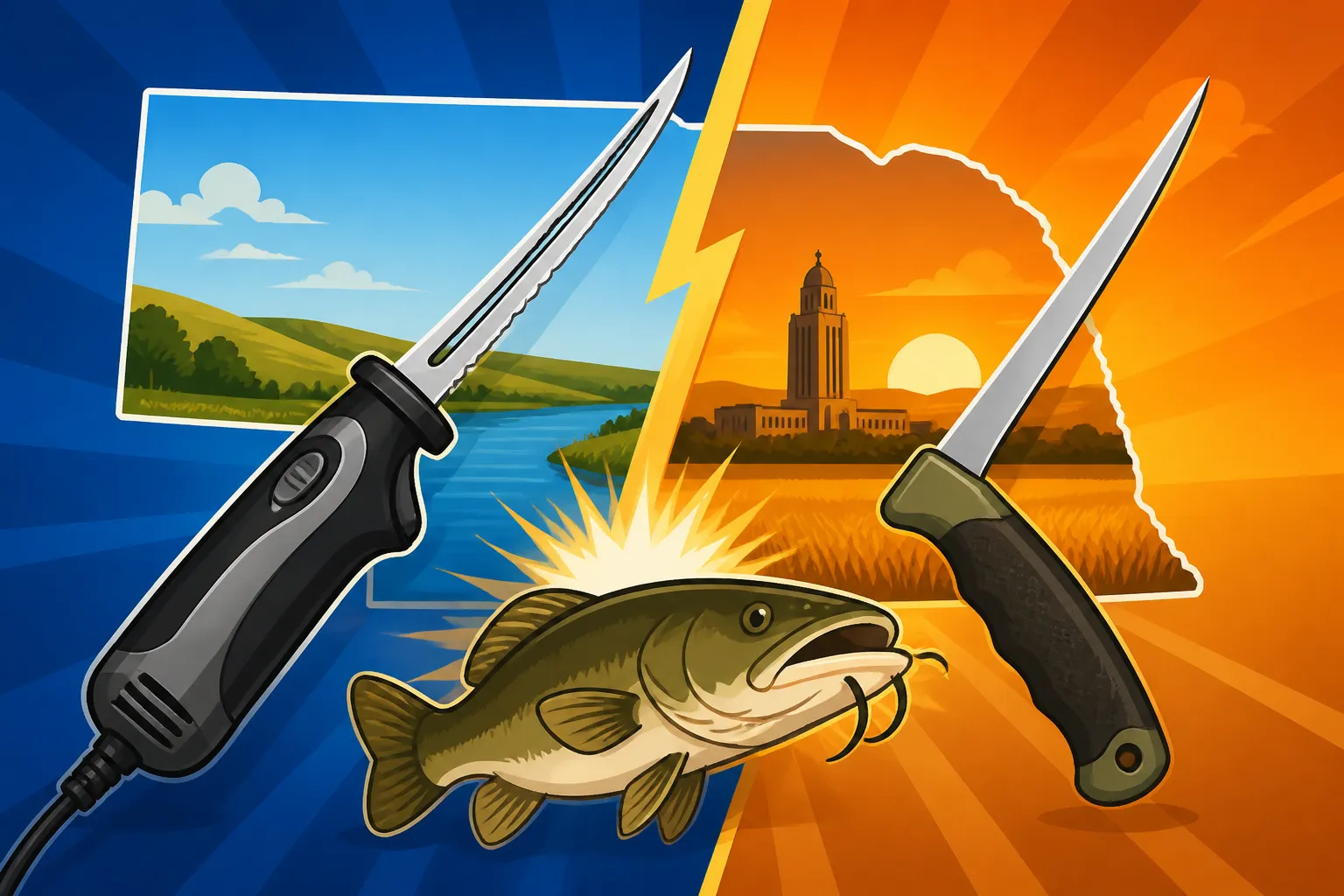
Electric Fillet Knife Versus Manual Fillet Knife
Tired after a long day of casting lines and reeling in fish across Nebraska's beautiful lakes and rivers, the last thing anyone wants is to face a mountain of fish to fillet with aching hands. Deciding between an electric fillet knife and a good old-fashioned manual one can feel like a big choice, especially when you're looking to efficiently process your catch. This guide will dive deep into the pros and cons of both types, helping you figure out which one will best suit your Nebraska fishing adventures.
The Manual Fillet Knife: A Timeless Classic
For generations, anglers have relied on the trusty manual fillet knife. It's a simple, elegant tool that, in skilled hands, can produce perfect, clean fillets. There's a certain satisfaction that comes with mastering its use, a quiet tradition that many Nebraska fishermen still uphold.
Pros of Manual Fillet Knives
Manual knives offer unparalleled control. When you're working around delicate bones, especially on smaller panfish or trying to get that perfect, boneless walleye fillet, the direct feedback from a manual blade in your hand is invaluable. You can feel every bone, every contour, allowing for incredibly precise cuts. This level of finesse is often harder to achieve with the vibrating power of an electric knife. For anglers who pride themselves on clean, aesthetically pleasing fillets, a sharp manual knife is often the preferred tool.
Generally, a quality manual fillet knife comes at a significantly lower initial cost than an electric model. This makes it a great entry point for new anglers or those on a tighter budget. Beyond the initial purchase, there's no need for batteries, power outlets, or expensive motor replacements. It's a simple, straightforward tool that requires minimal extra investment beyond a good sharpening stone or two. Their mechanical simplicity also means there are fewer parts that can break down or wear out over time.
A manual knife is the definition of reliability. No dead batteries, no tripped breakers, no cords to snag. It works anywhere, anytime, as long as it's sharp. This makes it ideal for remote camping trips, impromptu shoreline filleting sessions, or when you're cleaning fish at a rustic cabin without modern conveniences. You can easily tuck one into a tackle box or boat compartment without worrying about power sources, which is a huge plus when you're out exploring different Nebraska Fishing Spots With RV Camping Nearby.
For many veteran anglers, filleting fish with a manual knife is a cherished skill, passed down through generations. There's a real sense of accomplishment in expertly processing a catch by hand. It connects you to the entire fishing process, from the hook-set to the plate. Mastering the art of sharpening and maintaining a manual blade also adds another layer to the angling experience, making you a more self-sufficient and skilled outdoorsperson.
Cons of Manual Fillet Knives
This is perhaps the biggest drawback, especially after a banner day on the water. Filleting a dozen walleye or a cooler full of big channel catfish by hand can quickly lead to aching hands, wrists, and forearms. The constant pressure, repetitive cutting motions, and the need for significant physical effort can turn a satisfying chore into a painful one. Anglers with arthritis, carpal tunnel syndrome, or simply those getting older often find this aspect particularly challenging, limiting how many fish they can comfortably process.
If you've had an incredibly successful outing, perhaps hauling in your Nebraska Walleye Daily Bag Limit or hitting a fantastic crappie bite, processing all that fish manually can take a considerable amount of time. Each fish requires careful, deliberate cuts, and the sheer volume can mean hours at the cleaning table. This can cut into family time, rest, or getting ready for the next day's adventure. The efficiency simply isn't there for high-volume processing compared to its electric counterpart.
Achieving truly excellent fillets with a manual knife takes practice, patience, and a good deal of skill. Learning how to navigate ribs, separate meat from bone, and get maximum yield without wasting precious flesh can be frustrating for beginners. It often involves experimenting with different angles and pressures. While certainly a rewarding skill to master, the initial learning phase can be a barrier for those who just want to get to the cooking part quickly and efficiently.
A dull knife is a dangerous knife, and a useless fillet knife. Manual knives require frequent sharpening to maintain their edge, especially after filleting several fish or if you happen to hit a bone or two. This means regularly touching up the blade with a stone, steel, or pull-through sharpener. If you're not diligent about this, you'll find yourself struggling through fillets, tearing meat, and making the entire process far more difficult and less effective than it should be.
The Electric Fillet Knife: Powering Through Your Catch
In recent decades, electric fillet knives have grown immensely in popularity, offering a powerful alternative to the traditional manual blade. These tools promise to speed up your fish processing and reduce the physical strain, making them a favorite for many anglers dealing with large hauls.
Pros of Electric Fillet Knives
This is where electric fillet knives truly shine. With a powerful motor and rapidly oscillating blades, an electric knife can glide through fish flesh with astonishing speed. What might take minutes with a manual knife can be done in mere seconds. This makes them indispensable when you've got a cooler overflowing with fish – think big hauls of Nebraska Crappie Daily Limit or numerous Nebraska Walleye Bag Limits. You can process a significant catch in a fraction of the time, getting you from the cleaning station to the dinner table much faster.
Say goodbye to aching hands and forearms! The motor does almost all the work, dramatically reducing the physical strain on your hands and wrists. This is a massive benefit for anyone processing large quantities of fish, older anglers, or those with hand-related physical limitations. It allows you to clean more fish comfortably and enjoy the entire experience without the post-filleting soreness. The knife practically glides through the fish, letting you focus on guiding the blade, not on sawing through tough spots.
Electric knives, once you get the hang of them, tend to produce more consistent fillets. The vibrating blades make it easier to follow the backbone and rib cage, often resulting in cleaner bone removal and maximum meat yield. This consistency is particularly helpful for anglers who might not have years of manual filleting experience. Even beginners can quickly learn to produce decent fillets, leading to less wasted meat and more delicious meals. Many models, readily available at retailers like Bass Pro Shops or online platforms such as Amazon, offer various blade types for different fish species.
Certain fish species, like large northern pike with their intricate Y-bones or big, thick-skinned flathead catfish, can be a real challenge for a manual knife. The powerful, reciprocating action of an electric knife can cut through these tough areas with greater ease. It simplifies tasks that might otherwise be a wrestling match, ensuring a smoother and safer filleting experience, even with the most formidable catches from Nebraska's waters.
Cons of Electric Fillet Knives
Electric fillet knives typically come with a higher initial price tag than their manual counterparts. Beyond that, there are potential ongoing costs. Cordless models require replacement batteries over time, and all electric knives eventually need new blades, especially if you're a frequent angler. The cost difference can be substantial, and it's something to factor into your overall fishing budget.
An electric knife, by its very nature, creates noise. While not deafening, the constant buzzing can be a minor annoyance for some, especially during prolonged filleting sessions. More significantly, it requires a power source. Corded models need an outlet, limiting where you can clean your fish. Cordless models, while more portable, are beholden to battery life. Nothing is more frustrating than running out of juice halfway through a pile of fish when you're far from a charging station or without a generator. This dependency can be a real logistical challenge when you're at remote spots.
While great for speed and power, electric knives can sometimes lack the delicate touch required for ultra-fine precision work. The constant vibration can make it harder to feel subtle changes in the fish's anatomy, which can lead to slightly less perfect fillets or more meat left on the bones if you're not careful. For very small fish, the blades can sometimes chew up more meat than desired. It's a trade-off between raw power and nuanced control that depends on the size and type of fish you're cleaning.
Unlike manual knives which are sharpened, electric knife blades dull and eventually need to be replaced. While some claim you can sharpen electric blades, it's generally not recommended or as effective as simply getting new ones. This adds to the ongoing cost and means you need to keep spare blades on hand, particularly if you're planning a multi-day fishing trip where a blade might wear out. Finding the correct replacement blades for your specific model can also be an extra hassle, though popular models usually have readily available parts.
Key Considerations for Nebraska Anglers: Choosing Your Weapon
When you're standing at the cleaning station, whether it's by the shores of Lake McConaughy or a quiet farm pond, the knife in your hand makes a difference. For Nebraska anglers, the decision between electric and manual often boils down to a few practical factors specific to our local fishing scene.
Your Typical Catch and Volume
Consider what kind of fish you typically target and how many you usually bring home. This is arguably the most critical factor.
If your cooler is usually full of smaller panfish like crappie, bluegill, or perch, a manual knife offers excellent control for delicate fillets, ensuring you get the most meat from each small catch. For a truly massive crappie haul, though, the speed of an electric knife can save your hands. Many anglers who fish for Nebraska Crappie Bag Limits will argue fiercely for either side, depending on their personal filleting style and the size of their cooler.
Nebraska is renowned for its walleye fishing. A good walleye often has a sturdy frame, and processing several can be a workout. An electric knife can make quick work of a limit of walleye, cleanly separating fillets from the backbone with minimal effort. However, if you're aiming for that perfect, boneless "zipper fillet," a sharp manual knife can provide the precision needed to expertly remove the rib bones with less waste.
For big, tough-skinned Nebraska Channel Catfish Fishing or a behemoth flathead, the power of an electric knife is often a game-changer. Manual knives can struggle with the thick skin and robust bone structure of larger catfish, leading to more effort and potentially less clean fillets. An electric knife simply powers through, making the process much smoother and faster. Imagine tackling a few of those impressive Platte River flatheads by hand – it’s a workout!
When you land that once-in-a-lifetime trophy bass or walleye, you want to handle it with care. While an electric knife can be fast, some anglers prefer the meticulous control of a manual knife to ensure every ounce of that prize fish is preserved perfectly, especially if you're preparing it for a mount or a special meal.
Power Source and Portability
Where do you usually clean your fish? This factor heavily influences the practicality of an electric knife.
Corded electric knives are fantastic if you always clean your fish at home, at a permanent cleaning station at a lake, or at a cabin with readily available power outlets. They offer consistent, unwavering power and generally cost less than cordless versions. The downside, of course, is the literal cord – it tethers you to a power source, which isn't always convenient when you're out in the wilder parts of Nebraska.
Offering ultimate freedom, cordless models run on rechargeable batteries. This makes them perfect for cleaning fish dockside, at remote campsites, or right on your boat if you have enough battery life. However, you'll need to consider battery capacity and runtime. Nothing is more frustrating than running out of juice halfway through a cooler full of fish when you're far from a charging station or without a generator. Always check reviews for battery life and consider having a spare battery pack on hand, especially for long trips or if you plan to hit several different Best Nebraska State Recreation Areas for Fishing. Think about how you'll recharge them; some anglers carry portable power banks, while others might rely on vehicle charging ports, especially if they’re spending extended time off-grid.
The convenience of a cordless model is undeniable when you're truly out in the elements. Imagine being deep in the Sandhills, having just pulled in a mess of fish, and being able to clean them right at your campsite without needing to haul them back to a power source. This freedom, however, comes with the responsibility of battery management. For serious anglers, investing in a robust battery system that can handle multiple cleaning sessions on a single charge is a wise move.
Manual knives win hands down for true portability. No power source needed, ever. Just tuck it in your Best Tackle Box Setup for Nebraska Anglers and go. This is ideal for those spontaneous fishing trips to a quiet creek or a friend's private pond where electricity is a distant luxury.
Durability and Maintenance
Regardless of your choice, a fishing knife is a tool that sees a lot of action, and how you care for it directly impacts its longevity and performance.
The primary maintenance for a manual fillet knife is sharpening. Learning how to properly sharpen your blade is a fundamental angling skill. A sharp knife is not only more efficient but also safer. Beyond sharpening, simply keeping the blade clean and dry prevents rust. Good quality manual knives, with proper care, can last for decades, becoming a trusted companion on countless fishing trips. You might even find some classic, well-maintained blades at local tackle shops or at Bass Pro Shops that have seen years of service.
Electric knives require different considerations. The motor needs to be protected from water and debris, and the blades, as mentioned, are usually replaced rather than sharpened. This means stocking up on spare blades and understanding how to safely remove and install them. Cleanliness is also key; thoroughly washing the removable blades and wiping down the motor housing after each use will prevent fish remnants from building up and potentially damaging the internal components. Look for models that are easy to disassemble for cleaning, as this will extend the life of your investment.
Beyond just cleaning, storing your electric knife properly is vital. Keep it in a dry place, ideally in its original case or a protective pouch, to prevent damage to the motor or blades. Avoid leaving batteries discharged for long periods, as this can reduce their overall lifespan. Regular checks for any frayed cords on corded models or corrosion on battery terminals are also good practices to ensure your electric knife is always ready for your next fishing adventure.
| Feature | Manual Fillet Knife | Electric Fillet Knife |
|---|---|---|
| Effort Required | High, especially for large catches | Low, motor does the work |
| Speed | Slower, depends on skill and fish size | Very fast, especially for multiple fish |
| Precision | Excellent, highly controlled, good for delicate work | Good, but less nuanced control due to vibration |
| Portability | Extremely portable, no power needed | Varies (corded vs. cordless), needs power/charging |
| Cost (Initial) | Generally lower | Generally higher |
| Maintenance | Sharpening, cleaning | Blade replacement, cleaning, battery care (cordless) |
| Noise Level | Silent | Moderate buzzing |
| Best For | Small catches, delicate fish, remote locations, precision work, tradition | Large catches, tough fish, reducing fatigue, speed |
Making the Decision: Which Knife is Right for You?
Ultimately, the "best" fillet knife isn't about one being inherently superior to the other; it's about what best fits your angling style, your typical catch, and your personal preferences. There's no wrong answer here, only the right tool for your job.
When a Manual Knife Excels
If you're an angler who values tradition, enjoys the tactile feedback of a sharp blade, and typically deals with smaller to moderate catches, a manual knife is probably your go-to. It's fantastic for those mornings when you've snagged a few beautiful panfish from a quiet pond or patiently worked a few modest walleye from a hidden cove. The control allows for meticulous work, getting every ounce of delicious meat, and the quiet operation doesn't disturb the peace after a relaxing day. If you cherish the ritual of sharpening your own blade and the precise cuts it allows, then the manual knife remains an unbeatable classic.
Manual knives also excel for specific techniques, like removing pin bones from trout or carefully skinning thin-filleted crappie without tearing the delicate meat. The ability to vary pressure and angle with absolute precision is unmatched. For anglers who truly enjoy the art of filleting and see it as an extension of their fishing craft, the manual knife offers a level of personal engagement that an electric model simply can't replicate. If you're looking for guidance on techniques, resources like How to Clean and Fillet a Walleye or How to Clean and Fillet a Crappie can help you refine your manual filleting skills.
When an Electric Knife Shines
For the angler who consistently brings in limits, targets larger species, or faces physical limitations that make manual filleting difficult, an electric knife is a game-changer. Imagine pulling up to the cleaning station after a hot bite at Harlan County Reservoir with a cooler full of white bass or a mess of big channel catfish. An electric knife will make quick work of that bounty, saving your hands and hours of time. It's also a fantastic option for beginners who want to produce decent, consistent fillets quickly without the frustration of a steep manual learning curve. For sheer volume and power, especially with species like Nebraska Northern Pike Fishing or a pile of stubborn catfish, the electric knife is undeniably superior. Many anglers swear by brands like Rapala or Bubba Blade, easily found on Amazon, for their power and ease of use.
Consider an electric knife if you're often fishing for a crowd, needing to process a large number of fish for a family gathering or a community fish fry. Its efficiency means less time at the cleaning table and more time enjoying the fruits of your labor. For species like Walleye Fishing in Nebraska where daily limits can add up, or for those robust Nebraska Channel Catfish Fishing expeditions, the electric knife transforms a daunting task into a manageable one, allowing you to focus on the cooking rather than the cutting.
The Best of Both Worlds
For many seasoned Nebraska anglers, the answer isn't "either/or" but "both." Owning both a high-quality manual fillet knife and a reliable electric one gives you the ultimate versatility. You can use the electric knife for the bulk of your processing when you have a large catch, saving your energy and time. Then, you can switch to the manual knife for those delicate finishing touches, for smaller fish, or when precision is paramount. This dual approach ensures you always have the right tool for any filleting task, no matter the size of the fish or the size of your haul. It's like having a full tackle box with a variety of lures; different situations call for different tools. So, whether you're targeting big fish with a Best Catfish Rods for Big Nebraska Rivers or finessing panfish with lighter tackle, having the right fillet knife – or two – makes all the difference.
Think of it as having a utility vehicle for heavy hauling and a sports car for nimble precision. The electric knife handles the heavy lifting – those long, swift cuts along the backbone of a big fish. The manual knife comes out for the finer details, like trimming away skin, removing that last bit of rib bone, or making intricate cuts on smaller fish where an electric blade might be overkill. This combination allows you to tackle any situation on the cleaning table with confidence and efficiency, ensuring minimal waste and maximum enjoyment from your Nebraska catch. This versatility truly enhances the overall fishing experience, allowing you to adapt to any catch, big or small.
Disclaimer
This article is for general informational purposes only and does not constitute professional advice. Laws, prices and regulations vary by location and change over time. Consult a qualified professional for guidance on your specific situation.