Difference Between Bluegill and Green Sunfish
It's happened to every Nebraska angler, whether you're a seasoned veteran or just starting out: you pull a feisty panfish from the water, admire its iridescent colors, and then pause. Is it a bluegill? Or is it a green sunfish? The two can look incredibly similar at first glance, leading to a moment of doubt that can be frustrating, especially when you're trying to identify your catch, understand their habits, or even stick to regulations. This comprehensive guide is here to clear up that confusion once and for all, helping you confidently tell the difference between these two common and beloved Nebraska panfish species, so you can better enjoy your time on the water and become a more effective angler.
The Panfish Puzzle: Why Bluegill and Green Sunfish Get Confused
The world of panfish can be a glorious mix of feisty fighters and delicious table fare, but it's also a place where visual distinctions can blur, especially between bluegill and green sunfish. Many anglers, myself included, have spent a moment or two staring intently at a wriggling fish, trying to pinpoint its exact identity. It's a common dilemma, and there are good reasons why these two species frequently get mixed up.
Shared Characteristics That Blend Them Together
At a fundamental level, both bluegill and green sunfish are part of the Centrarchidae family, which means they are both sunfish. This shared lineage gives them many common traits that contribute to the confusion. For starters, they often inhabit similar waters across Nebraska, from farm ponds and small creeks to the shallow, vegetated bays of larger reservoirs like Branched Oak Lake or Pawnee Lake. You'll find them both lurking near submerged structures, weed beds, or along riprap shorelines, especially where there's plenty of cover to ambush small insects, crustaceans, and minnows.
They also share a generally similar body shape: flat, roundish, and compressed laterally, designed for quick bursts of speed through dense cover. Their coloration can vary wildly depending on the water clarity, diet, and even the time of year or spawning activity, making visual identification based solely on color incredibly tricky. A bluegill in muddy water might look dull and greenish, while a green sunfish in clear water could display surprising vibrancy. This adaptability in appearance is a major reason why anglers often struggle to differentiate them, especially if they're used to seeing one in a particular environment and then encounter the other in similar conditions.
The Frustration of Misidentification
Beyond the initial "what is this fish?" moment, misidentifying bluegill and green sunfish can lead to several frustrations for anglers. While neither species typically has complex, species-specific bag limits in Nebraska (they often fall under a general "sunfish" category for regulations), knowing the exact species still matters. Imagine you're out specifically targeting bluegill, known for their cooperative nature and excellent eating quality. If you're consistently catching what you think are bluegill, but they're actually green sunfish, your understanding of local bluegill populations, preferred baits, and habitat choices might be skewed. You might be using lighter tackle, smaller baits, or focusing on areas that are actually more suited to the more aggressive green sunfish.
Conversely, if you're trying to educate a new angler or a child on identifying different fish species, the inability to confidently name a fish can be a real roadblock. It takes away from the learning experience and can even make fishing seem more complicated than it needs to be. Accurate identification allows you to refine your techniques, understand the ecology of the waters you fish, and truly appreciate the diversity of Nebraska's aquatic life. It's not just about a name; it's about understanding the nuances of the ecosystem you're engaging with.
Bluegill Breakdown: Identifying the True Bluegill
The bluegill (Lepomis macrochirus) is perhaps the quintessential panfish, beloved by anglers of all ages for its eagerness to bite and its delicious fillets. Learning to identify a true bluegill is a fantastic step toward becoming a more knowledgeable and successful angler in Nebraska. They are a staple of many Nebraska waters, from small ponds to large reservoirs. For a comprehensive look at various panfish, you might want to check out the Nebraska Panfish Species Guide.
Key Physical Features of a Bluegill
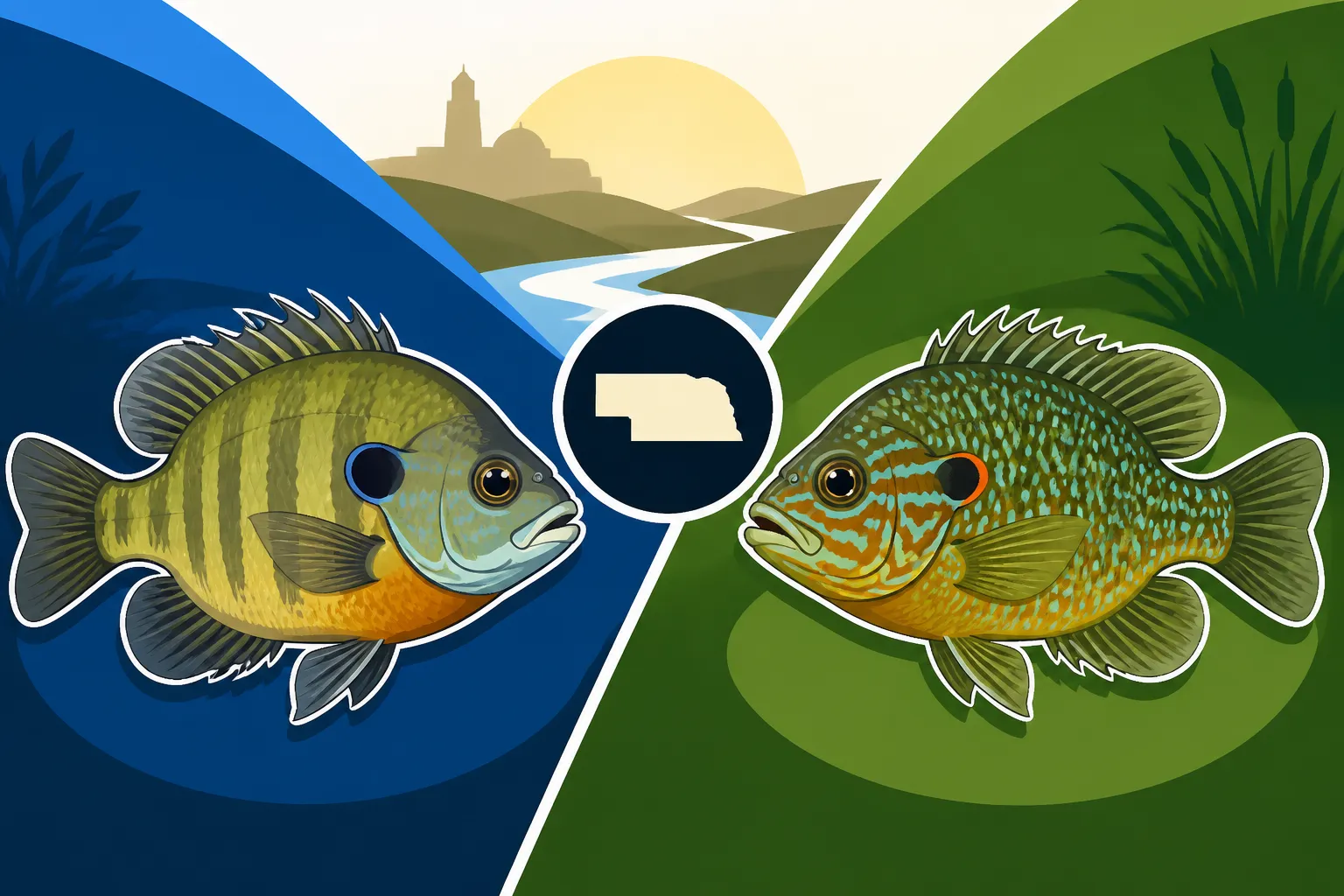
When you pull a bluegill from the water, there are a few tell-tale signs that scream "bluegill!" The most prominent and often cited feature is the opercular flap, also known as the "ear flap." On a true bluegill, this flap is entirely black, with no visible colored margin. It looks like a solid black tab extending from the gill cover. This is a crucial identifier.
Next, look at its body shape. Bluegill tend to be very deep-bodied and compressed, almost like a dinner plate turned on its side. Their scales often have a subtle iridescent blue, green, and yellow sheen, giving them their "bluegill" name, though this can vary. Many bluegill, especially males during spawning season, will exhibit several distinct dark vertical bars along their sides. These bars can be quite pronounced or faint, but they are typically present.
The mouth of a bluegill is relatively small. If you were to extend its upper jaw backwards, it typically wouldn't reach past the front of its eye. This smaller mouth means they prefer smaller baits, jigs, and flies. Finally, observe the pectoral fin (the fins on their sides, behind the gill plate). Bluegill pectoral fins are long and pointed, often extending well past the eye when pressed forward. This long, pointed fin is another consistent characteristic that helps distinguish them.
| Feature | Bluegill |
|---|---|
| Opercular Flap | Solid black, no colored margin |
| Body Shape | Deep-bodied, round, "dinner plate" like |
| Mouth Size | Small, does not extend past front of eye |
| Pectoral Fin | Long and pointed |
| Coloration | Iridescent blue/green/yellow, vertical bars (often) |
| Behavior | Curious, less aggressive, schooling |
Bluegill Habitat and Behavior in Nebraska
Bluegill in Nebraska are typically found in clear, vegetated waters. Think lily pads, cattail edges, submerged weeds, brush piles, fallen trees, and docks. They thrive in environments with abundant cover, which provides both protection from predators and a rich feeding ground. You'll often find them schooling in these areas, especially during the warmer months. Places like local urban ponds mentioned in Nebraska Urban Fishing Program Stocked Ponds Near Me are prime bluegill territory.
Their diet consists primarily of aquatic insects, larvae, small crustaceans, and sometimes very small minnows. This preference for smaller prey aligns with their smaller mouth. When fishing for bluegill, you'll often find them to be quite curious and willing to investigate a bait. They'll readily take small worms, crickets, corn, bread, and tiny artificial lures like micro jigs or spinnerbaits. They are excellent targets for light tackle, often providing a surprisingly strong fight for their size.
Bluegill are also known for their distinct spawning behavior. Males will fan out circular nests in shallow, soft bottoms, often in large "colonies" close to each other. During this time, their colors become even more vibrant, and they can be quite aggressive in defending their nests, making them easy to catch. Understanding these habitat preferences and behaviors can significantly improve your success rate when targeting bluegill across Nebraska's diverse waters. If you're wondering where else to find these and other panfish, check out What Panfish Species Live in Nebraska Ponds.
Green Sunfish Guide: Spotting the Distinctive Greenie
The green sunfish (Lepomis cyanellus) is another common and widely distributed panfish in Nebraska, but it's often overlooked or mistaken for its bluegill cousin. While it might not reach the same size or have the same table-fare reputation as a bluegill, the green sunfish is a tenacious fighter and an interesting species to target in its own right. Knowing how to correctly identify a green sunfish will help you understand its unique characteristics and preferences.
Key Physical Features of a Green Sunfish
The easiest way to tell a green sunfish apart from a bluegill is, again, by looking at its opercular flap. While the bluegill has a solid black flap, the green sunfish's flap is black but will almost always have a distinct orange or yellow margin around the edge. This bright trim is a dead giveaway that you're holding a greenie.
Next, consider its body shape. Green sunfish tend to be more elongated and robust than bluegill, less round and more football-shaped. They are still compressed laterally but lack that deep, plate-like appearance of a bluegill. Their overall coloration is typically a darker olive-green to bluish-green, often with iridescent blue or emerald green spots and streaks on their head and fins, particularly on the gill plates. They usually do not have the prominent vertical bars that bluegill often display.
The mouth of a green sunfish is noticeably larger than a bluegill's. If you extend its upper jaw back, it will typically reach to the middle or even past the back of its eye. This larger mouth indicates a more aggressive feeding strategy and a broader diet. Finally, check the pectoral fin. Green sunfish have shorter, more rounded pectoral fins compared to the long, pointed fins of a bluegill. This subtle difference is another good clue for accurate identification.
| Feature | Green Sunfish |
|---|---|
| Opercular Flap | Black with orange/yellow margin |
| Body Shape | More elongated, "football" like |
| Mouth Size | Large, extends to or past middle of eye |
| Pectoral Fin | Shorter and rounded |
| Coloration | Darker olive-green, iridescent blue/emerald spots |
| Behavior | Aggressive, territorial |
Green Sunfish Habitat and Behavior in Nebraska
Green sunfish are truly adaptable and hardy fish, often found in less pristine environments where bluegill might struggle. They tolerate murkier water, higher temperatures, and lower oxygen levels than many other sunfish. You'll find them in creeks, small rivers, muddy ponds, ditches, and the rocky, less vegetated areas of larger lakes. They are excellent colonizers of new or disturbed habitats.
Their diet is broader than bluegill, thanks to their larger mouth. They'll readily consume insects, worms, minnows, small crayfish, and even the fry of other fish species, including their own. This aggressive nature makes them feisty fighters, often striking lures with surprising force. They are more territorial than bluegill and less likely to school in large numbers, though you might find several congregated around a prime piece of cover.
When targeting green sunfish, you can use slightly larger baits and lures than you would for bluegill. Small spinnerbaits, crankbaits, or even larger worms work well. They are often less picky than bluegill and can be a blast to catch, especially for young anglers learning to cast and feel a bite. For tips on bait, check out Best Bait for Bluegill and Sunfish.
Side-by-Side: A Comparative Look at Bluegill vs. Green Sunfish
Now that we've gone through the individual characteristics, let's put them head-to-head to really cement those identification skills. Seeing the differences laid out clearly can make all the difference when you're on the water.
Visual Comparison Table
This table summarizes the most critical distinctions between bluegill and green sunfish. Keep this mental checklist handy next time you're trying to identify your catch!
| Feature | Bluegill (Lepomis macrochirus) | Green Sunfish (Lepomis cyanellus) |
|---|---|---|
| Opercular Flap (Ear) | Solid black, no colored margin. | Black with a distinct orange or yellowish margin. |
| Body Shape | Very deep-bodied, round, compressed (like a dinner plate). | More elongated, torpedo-shaped, not as deep-bodied (more "football" like). |
| Mouth Size | Relatively small; upper jaw typically does not extend past the front of the eye. | Larger mouth; upper jaw usually extends to the middle or even past the back of the eye. |
| Pectoral Fin | Long and pointed; often extends past the eye when pressed forward. | Shorter and more rounded. |
| Coloration | Variable, often olive green to bluish with iridescent hues, distinct dark vertical bars (especially on males). | Dark olive-green to bluish-green, often with iridescent blue/emerald spots on head and fins, typically lacks vertical bars. |
| Behavior | Gregarious, often schools, prefers weed beds and clear water. | More solitary or territorial, aggressive, tolerates varied habitats including murky or rocky water. |
Angling Implications and How to Adjust Your Approach
Understanding these differences isn't just for bragging rights at the boat ramp; it directly impacts your fishing strategy. If you're specifically after those broad-sided, pan-fried bluegill, you'll want to focus on calm, vegetated areas with smaller baits like pieces of worm, crickets, or tiny jigs under a float. A light spinning reel setup like those recommended in Best Spinning Reels for Panfish would be perfect. You'll likely find schools of them, and once you locate one, you've probably found many.
On the other hand, if you're exploring a small creek, a rocky shoreline, or a pond with fewer weeds and maybe a bit murkier water, you're more likely to encounter green sunfish. Their larger mouths mean you can get away with slightly larger offerings, and their aggressive nature makes them less hesitant to strike at a small spinner or even a tiny crankbait. They'll be more willing to hit artificial lures than bluegill sometimes, especially if they are territorial around a piece of structure. They might not be schooling, so you might need to cover more ground.
Both species are excellent for introducing kids to fishing because they are so willing to bite. However, the green sunfish's larger mouth can sometimes make it easier for a beginner to get a good hookset. Regardless of which you're catching, learning to differentiate them will make you a more observant and adaptable angler. And when it comes to cleaning your catch, while both are panfish, techniques for filleting can be generalized. You can find some useful tips by looking at resources like How to Clean and Fillet a Crappie, which share similar structures.
Why Does It Matter for Nebraska Anglers?
For many casual anglers, distinguishing between a bluegill and a green sunfish might seem like a trivial detail. After all, they're both fun to catch, often found in similar places, and collectively referred to as "panfish." However, a deeper understanding of these two species offers tangible benefits that can enhance your fishing experience, improve your success rates, and even contribute to better conservation practices in Nebraska.
Understanding Regulations and Bag Limits
While Nebraska fishing regulations often group bluegill, green sunfish, and other sunfish species under a general "panfish" category with a generous aggregate daily bag limit, there are still good reasons to know exactly what you've caught. For one, accurate identification ensures you're always in compliance, should a specific water body or situation have unique regulations for one species over another. While less common for these two specific panfish, it's a critical skill for other game fish where length limits or specific bag limits are strictly enforced. Knowing your species also becomes vital if you ever hope to submit a fish for a state record – you need to know exactly what you caught!
Beyond the letter of the law, understanding the composition of a fishery is crucial for its health. If a pond is consistently producing only green sunfish and very few bluegill, it might indicate environmental stress, overpopulation of green sunfish (which can be very hardy and competitive), or a lack of suitable bluegill habitat. As anglers, our observations contribute to the overall understanding of aquatic ecosystems. By correctly identifying and perhaps even recording your catches, you indirectly contribute to better data that can inform fishery management decisions. This helps ensure that the places we love to fish remain healthy and productive for generations to come.
Targeting Your Desired Catch More Effectively
This is where knowing the difference really pays off. Let's say your goal for the day is to catch a mess of fat bluegill for a fish fry. If you're mistakenly fishing green sunfish habitats or using tactics better suited for green sunfish, you're going to have a less successful bluegill outing. Bluegill, with their smaller mouths and preference for vegetation, respond best to tiny baits, subtle presentations, and typically in calmer, weedier areas. Think small worms, crickets, or a tiny jig tipped with a Berkley Gulp! Alive! Waxworm on a light line. You can find many of these items easily on online retailers like Amazon.
On the flip side, if you're after the aggressive tug of a green sunfish, perhaps in a brushy creek or around a rocky dam face, you'll want to adjust. You might use a slightly larger hook, a small spinner, or even a tiny Rapala crankbait. Green sunfish are known for hitting artificial lures with gusto, and their larger mouth makes it easier for them to engulf a slightly more substantial offering. Their robust build also means they can put up a surprisingly strong fight for their size, especially in current. For general panfish strategies, consider guides like How to Catch Bluegill in Nebraska Ponds.
By honing your identification skills, you develop a sharper angler's eye. You learn to read the water not just for structure and cover, but for the subtle clues that indicate which panfish species might be present. This allows you to choose the right spot, the right bait, and the right presentation, turning a generic "panfish" trip into a focused and highly productive outing, tailored to the specific species you desire. It makes you a more versatile and ultimately, a more successful angler in Nebraska's diverse fishing environments.
Disclaimer
This article is for general informational purposes only and does not constitute professional advice. Laws, prices and regulations vary by location and change over time. Consult a qualified professional for guidance on your specific situation.