What Water Temperature Walleye Prefer
Have you ever spent a beautiful day out on a Nebraska lake or river, casting your line, feeling the sun on your face, but coming up empty-handed when it comes to walleye? It's a common frustration, and often, the secret to unlocking those elusive bites lies not just in your lure choice or technique, but in understanding one crucial factor: water temperature. Walleye are highly sensitive to temperature fluctuations, and knowing their preferred ranges can turn a slow day into a successful one. This guide will walk you through the precise water temperatures walleye prefer and how to use this knowledge to your advantage when fishing in Nebraska's diverse waters.
Understanding Walleye Temperature Preferences
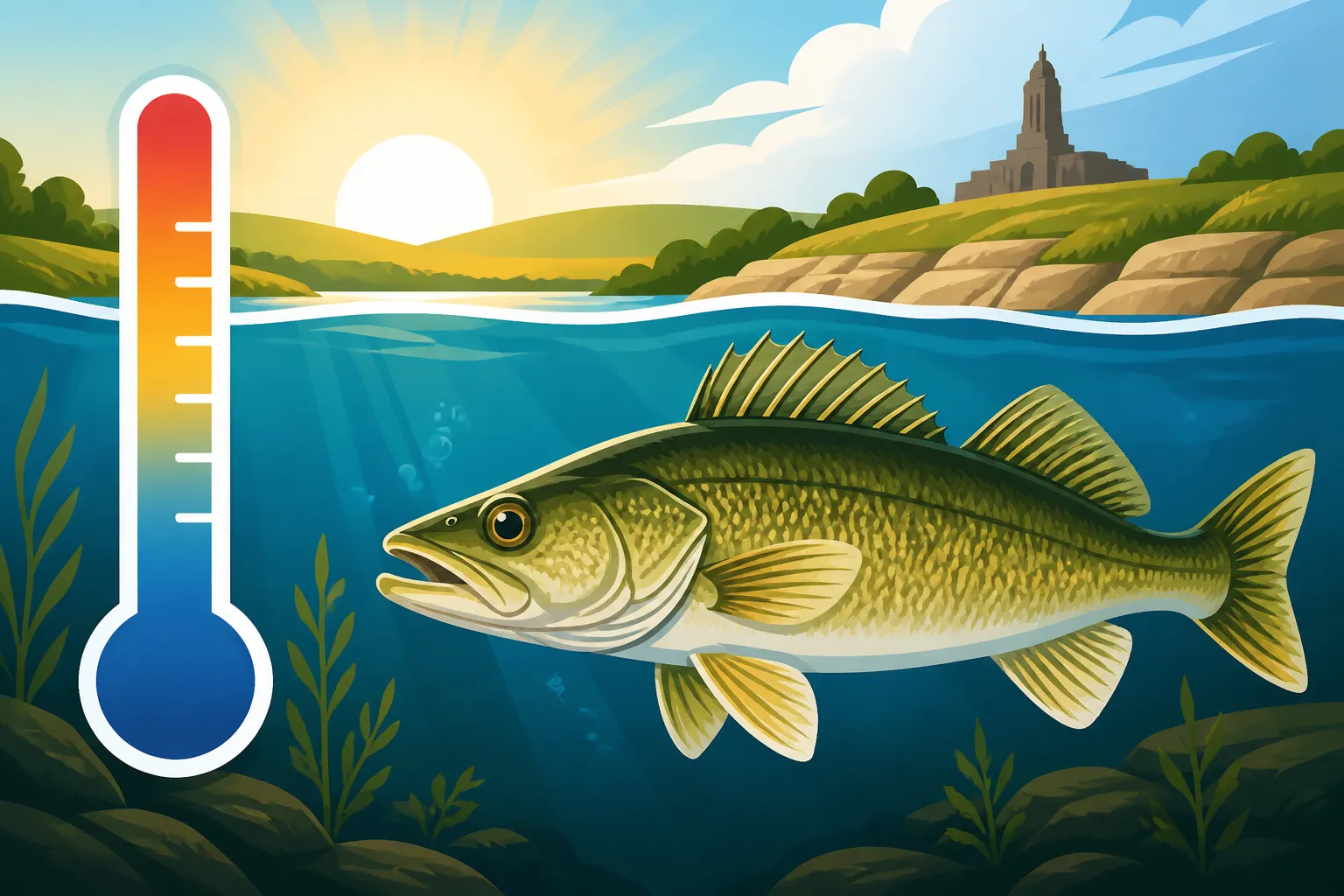
Walleye are cold-water fish, but like all species, they have specific temperature ranges where they are most comfortable, most active, and most likely to feed or spawn. Thinking of a walleye's "preference" is really about understanding their metabolic needs and behavioral patterns tied to the water around them. It's not just a single magic number, but a dynamic range that dictates their entire life cycle.
Spawning Temperature Sweet Spot
One of the most critical temperature windows for walleye occurs during their spawning season. In Nebraska, this typically happens in the spring when water temperatures begin to rise. The exact timing can vary year to year, depending on how quickly the ice melts and how rapidly the spring warm-up progresses.
Walleye generally prefer water temperatures between 42°F and 50°F (5.5°C to 10°C) for spawning. This window is their biological trigger to move into shallower, rocky areas or gravel shoals where they can deposit their eggs. If the water is too cold, their bodies aren't ready for the rigors of spawning, and if it warms up too quickly, the spawn can be compressed and stressful. Many anglers pay close attention to this window, not necessarily to fish directly on spawning beds, but to understand the pre-spawn staging and post-spawn recovery periods. It's a time of intense activity, even if the fish themselves aren't actively feeding in the traditional sense. You can learn more about this crucial time by reading Nebraska Walleye Spawning Season.
Optimal Feeding Zone Temperatures
Beyond spawning, walleye have a broader range where they are actively feeding and feeling their best. This is where most anglers want to target them. The sweet spot for aggressive feeding is typically between 55°F and 70°F (13°C to 21°C). Within this range, their metabolism is high, they're digesting food efficiently, and they're more inclined to chase down a bait.
When the water hits these temperatures, you'll often find walleye spreading out more, moving between different depths and structures. They're not just looking for comfort; they're looking for forage. Whether you're casting crankbaits or dragging live bait, understanding this feeding zone is paramount to consistent success. Think of it as their prime dining temperature—not too hot, not too cold, just right for a hearty meal.
Comfort and Survival Ranges
While 55-70°F is ideal for feeding, walleye can survive and be caught in a wider range of temperatures. They can tolerate water as cold as the low 30s under ice, and as warm as the high 70s or even low 80s in deeper, oxygenated pockets during summer. However, outside their optimal range, their behavior changes dramatically.
In colder water (below 50°F), walleye tend to be more lethargic, hugging the bottom or tight to structure. Bites can be subtle, and a slower presentation is often key. Conversely, in warmer water (above 70°F), they might seek deeper, cooler water, becoming less active during the day and possibly feeding more aggressively during low-light hours or at night. Understanding these broader ranges helps you locate fish even when conditions aren't perfect, adjusting your tactics to match their mood and location.
How Walleye React to Temperature Changes
Water temperature isn't static; it's constantly changing with seasons, weather patterns, and even time of day. Walleye are masters at adapting to these shifts, constantly moving to find their preferred comfort zones. Recognizing these movements is like having an inside scoop on their daily agenda.
Spring Warm-up and Post-Spawn Movement
As winter ice recedes and Nebraska's lakes and rivers begin their gradual thaw, water temperatures start to climb. This is the signal for walleye to begin their pre-spawn movements. They’ll migrate from deeper wintering holes towards shallower spawning grounds. As mentioned, the 42-50°F range triggers the actual spawn.
After the strenuous activity of spawning, walleye enter a post-spawn recovery period. They might be sluggish and less interested in feeding for a short time. As the water continues to warm into the 50s and low 60s, they regain their energy and start to transition to more aggressive feeding patterns. They'll often move to nearby secondary points, submerged humps, or weed lines to recuperate and feed. This can be a fantastic time for anglers, as these fish are hungry and often easier to pattern. For specific tactics during this time, consider exploring Nebraska Spring Walleye Fishing Techniques.
Summer Stratification and Deep Water Locating
Summer brings significant changes to many Nebraska reservoirs and lakes. As surface temperatures rise, the water often stratifies, meaning it forms distinct layers based on temperature and oxygen levels. The warmer, oxygen-rich water stays near the surface, while cooler, denser water settles below. The critical factor for walleye in summer isn't just coolness, but also oxygen. They'll seek out the thermocline—the layer where warm surface water meets cooler deep water—as this often provides the ideal combination of temperature and dissolved oxygen.
In the heat of July and August, when surface temperatures can soar into the 80s, walleye will hold in deeper sections of the lake, often relating to submerged structures like humps, points, and channel edges at the depth of the thermocline. They might move shallower to feed during low-light conditions, but during the bright, hot parts of the day, those deep, cooler haunts are where you'll find them. This makes fish finders and electronics particularly valuable during summer.
Fall Turnover and Feeding Frenzy
Autumn in Nebraska brings a natural phenomenon known as "fall turnover." As air temperatures cool, the surface water of lakes also cools. When this surface water becomes denser than the deeper water, it sinks, causing the layers of the lake to mix. This process equalizes the water temperature and oxygen levels throughout the water column, often bringing cooler, oxygenated water to the surface and mixing up the fish.
Fall turnover can initially scatter walleye, making them a bit harder to find. However, once the lake has fully mixed and stabilized, usually when temperatures hover in the 50s, walleye often go on a massive feeding spree in preparation for winter. This is a prime time to target large, aggressive fish. They can be found at various depths, frequently relating to the same structures they used in spring and early summer. Understanding Nebraska Fall Turnover Fishing Tips can be a game-changer for your autumn angling.
Winter and Ice Fishing Considerations
When Nebraska's waters freeze over, walleye enter their winter phase. Under the ice, the water column remains relatively stable, often ranging from the low 30s Fahrenheit just beneath the ice to the high 30s or low 40s closer to the bottom. While their metabolism slows considerably in these frigid conditions, walleye still need to feed.
Ice fishing for walleye often involves targeting deep structure, suspended fish, or points and humps. Fish activity can be highly dependent on factors like light penetration, oxygen levels, and subtle temperature differences in specific areas. A good understanding of Winter Fishing in Nebraska is essential, as slower presentations and specific jigging techniques are often necessary to entice a bite from these cold-water predators.
Finding Walleye in Varying Water Temperatures
Knowing what temperatures walleye prefer is only half the battle; the other half is knowing how to find them and what to use based on those temperatures. This is where the art and science of fishing truly merge.
Targeting Structure in Different Temperatures
Walleye are highly structure-oriented fish, and how they relate to that structure changes with water temperature. In colder water (e.g., early spring or late fall, below 50°F), they'll often be tight to the bottom, seeking the warmest available water or dense cover for ambush. Think deep breaks, rock piles, or channel edges. Their movements will be slower, and they might not venture far from their comfort zone.
As water temperatures move into the optimal feeding range (55-70°F), walleye become more active and willing to roam. They'll use structure less as cover and more as ambush points along migration routes or feeding flats. You might find them on top of submerged humps, along weed edges, or cruising shallower points, especially during low-light periods. In very warm water (above 70°F), they'll typically retreat to deeper, cooler water, only moving shallower to feed briefly. This is when deep humps, main lake points, and river channels become prime targets. Walleye Fishing in Nebraska provides broader strategies for targeting these prized fish.
Bait and Lure Choices by Temperature
The bait and lure choices you make should directly reflect the walleye's activity level, which is largely dictated by water temperature.
- Cold Water (Below 50°F): In colder water, walleye are sluggish. Slower presentations are key. Think live bait like shiners or fatheads on a slip-bobber or a simple jig-and-minnow presentation. Small, slow-moving crankbaits or blade baits can also be effective, worked painstakingly slowly along the bottom. The goal is to put a meal right in front of their face, requiring minimal effort. Many anglers will head to Amazon to stock up on cold-water specific jigs and slow-moving plastics.
- Optimal Feeding Water (55-70°F): This is when walleye are aggressive. You can get away with a wider variety of techniques. Trolling crankbaits at various depths, jigging aggressively, casting jerkbaits, or using spinner rigs with crawlers or leeches are all highly effective. Fish are willing to chase, so faster retrieves and more vibrant colors can often trigger strikes. Consider techniques like How to Jig for Walleye in Nebraska or How to Troll for Walleye in Nebraska.
- Warm Water (Above 70°F): When the water is warm, walleye often become nocturnal or seek deeper haunts. Large minnows, leeches, or nightcrawlers fished on bottom bouncers or jigs can be effective in deeper, cooler water. Night fishing with large stickbaits or jigs can also be productive as walleye move shallower under the cover of darkness. Keep in mind that for Best Bait for Nebraska Walleye, live bait is often hard to beat in challenging conditions.
Reading Environmental Cues
Beyond simply checking your thermometer, savvy anglers learn to read other environmental cues that indicate water temperature patterns. Look for areas where spring creeks or rivers might be warming the main body of water, attracting early season walleye. Observe wind direction; strong winds can push warm surface water to one side of a lake or reservoir, concentrating baitfish and walleye. In summer, watch for schools of baitfish suspended at certain depths, as walleye are likely to be lurking just below them, enjoying similar temperature and oxygen levels. Even observing where other anglers are successfully fishing can provide clues, though always respect their space!
Here's a quick reference table for walleye behavior and ideal temperatures:
| Behavior Stage | Preferred Temperature Range (°F) | Typical Depth / Location | Recommended Presentation |
|---|---|---|---|
| Pre-Spawn / Staging | 40-48 | Shallow rocky points, river mouths, tributary junctions | Slow jigging with live minnows, blade baits, stickbaits |
| Spawning Peak | 42-50 | Shallow gravel, rock shoals, current areas | (Generally not targeted directly on beds) |
| Post-Spawn Recovery | 50-58 | Secondary points, shallow flats, first breaklines | Slow crawler harnesses, jigs with minnows or plastics, subtle crankbaits |
| Active Feeding (Spring/Fall) | 55-65 | Humps, main lake points, weed edges, current breaks | Trolling crankbaits, jigging, spinner rigs, casting jerkbaits |
| Summer Deep Feeding | 65-72 (Thermocline) | Deep structure (humps, points, channels) below thermocline | Bottom bouncers with crawlers/leeches, deep diving crankbaits, vertical jigging, night trolling shallow running stickbaits |
| Winter / Ice Fishing | 32-40 | Deep structure, main lake basins, subtle contours | Vertical jigging with small spoons, tungsten jigs, dead sticks with minnows |
Tools to Measure Water Temperature and Increase Success
You can't effectively fish for walleye based on water temperature if you don't know what it is! Fortunately, there are many tools available to help you monitor this critical factor, ranging from simple and affordable to high-tech and integrated. Having these tools will significantly boost your understanding of the water and, ultimately, your fishing success.
Portable Thermometers
The simplest and most budget-friendly way to measure water temperature is with a portable thermometer. These range from basic floating models you can cast out and retrieve, to more sophisticated digital versions with a probe on a line that allows you to check different depths. A quality waterproof thermometer is a must-have for any serious angler.
Using a portable thermometer is straightforward. You simply deploy it to the desired depth, let it sit for a minute or two to stabilize, and then read the temperature. This is especially useful for bank anglers or those in kayaks who may not have advanced electronics. You can often find reliable and affordable portable thermometers on Amazon that are durable enough for regular use. Taking multiple readings at different spots and depths can help you map out temperature variations and identify potential walleye holding areas.
Boat-Mounted Electronics
For anglers with boats, modern fish finders and chartplotters often come equipped with integrated water temperature sensors. These sensors provide real-time surface temperature readings, and some advanced models even offer depth-specific temperature readouts if paired with specialized transducers. This allows you to monitor temperature as you move across the lake or river, quickly identifying temperature breaks or ideal zones.
Features like side imaging and down imaging, coupled with temperature overlays, can paint a complete picture of the underwater environment. For instance, if you're marking fish on a deep hump and your electronics show that hump sitting right in the middle of a 60-degree thermocline, you've likely found a walleye hotspot. Investing in a good fish finder that includes temperature sensing, such as those discussed in Best Fish Finders for Nebraska Lakes, can drastically improve your efficiency on the water, letting you spend less time searching and more time fishing.
Online Resources and Apps
Beyond on-the-water tools, there are various online resources and mobile apps that can provide valuable information about water temperatures in Nebraska. Many state game and parks departments, local fishing clubs, and even popular fishing forums or reports will often include water temperature readings for specific lakes and reservoirs. Weather apps might also offer surface water temperature estimates for larger bodies of water.
While these resources are excellent for pre-trip planning and getting a general idea, always verify with your own thermometer once you're on the water. Conditions can change rapidly due to wind, cloud cover, and recent precipitation. Combining reliable online information with your own real-time readings gives you the most accurate and actionable data for locating walleye. Getting a rough idea before you go can help you decide if it's a good day for Lake McConaughy Walleye Fishing or perhaps better suited for a different species.
Disclaimer
This article is for general informational purposes only and does not constitute professional advice. Laws, prices and regulations vary by location and change over time. Consult a qualified professional for guidance on your specific situation.