Nebraska Carp Fishing
Carp fishing in Nebraska often gets a bad rap, sometimes relegated to the "rough fish" category, but let me tell you, overlooking these powerful fish is a huge mistake! Many anglers, myself included, have discovered that carp offer some of the most exciting, line-peeling fights you can experience in our state's waters. They're intelligent, they're strong, and they're abundant, making them a fantastic target for anyone looking for a real angling challenge. This comprehensive guide is here to shed light on everything you need to know about carp fishing in Nebraska, from identifying different species to mastering the techniques and finding the best spots to hook into a true river monster.
Understanding Carp in Nebraska Waters
Before we dive into the nitty-gritty of catching them, let's get acquainted with the carp species you're likely to encounter here in Nebraska. It's not just "a carp"—there's actually a bit of diversity, and understanding these differences can help you tailor your approach.
Common Carp (Cyprinus carpio): The Ubiquitous Bottom Feeder
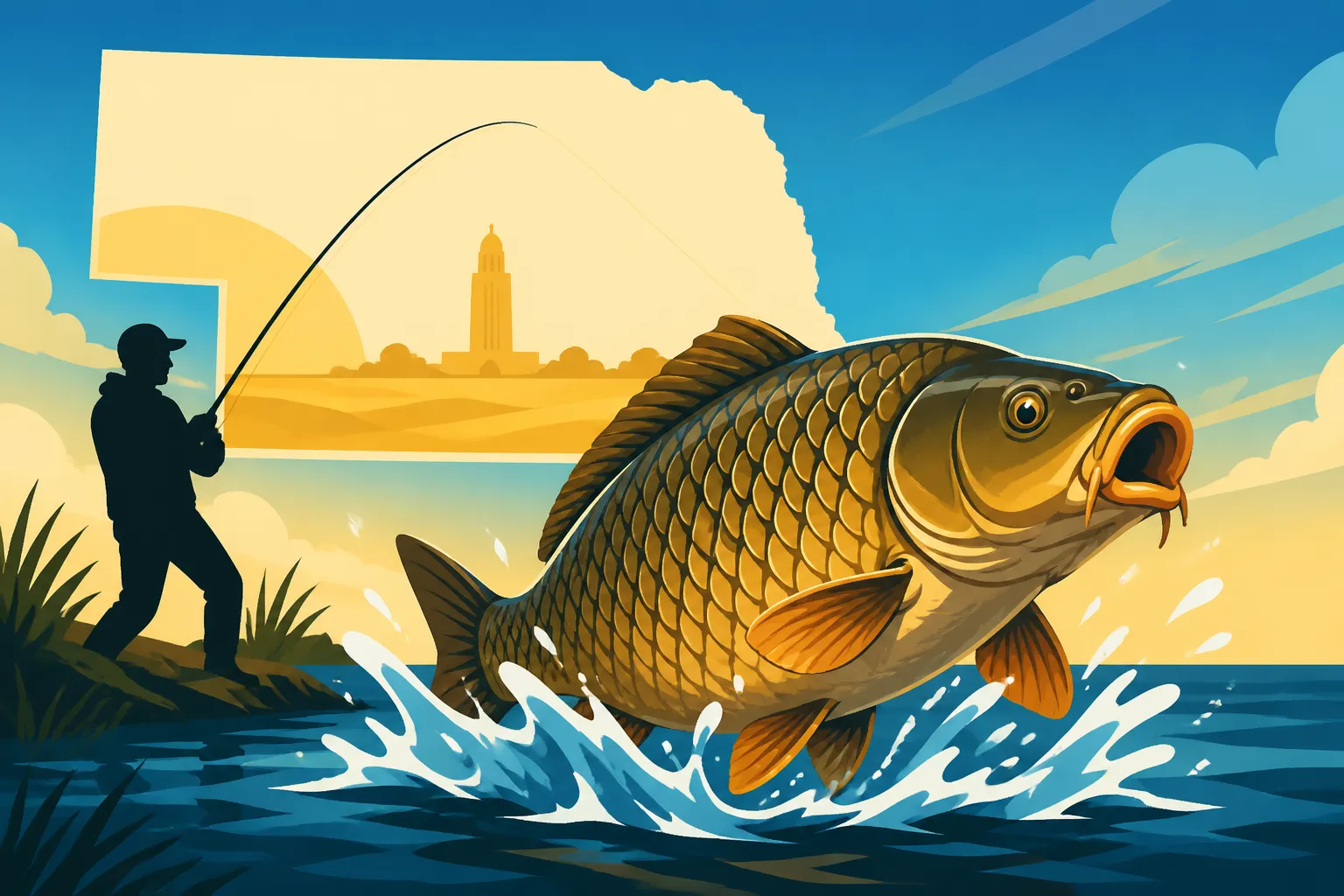
The common carp is, as its name suggests, the most widespread and recognizable carp species in Nebraska. These are the big, often golden-bronze fish with prominent scales and two pairs of barbels around their mouths, which they use to root around in the mud for food. They're incredibly adaptable and can thrive in a wide range of habitats, from slow-moving rivers and muddy creek bottoms to large reservoirs and urban ponds. Because they're not native to North America, they often get a bad rap for disturbing native habitats, but there's no denying the sheer power they possess when hooked.
Many anglers might scoff at the idea of targeting common carp, viewing them as a nuisance rather than a sport fish. However, for those who embrace the challenge, common carp offer an incredible fight, often making long, powerful runs that will test your tackle and your stamina. They can grow to impressive sizes in Nebraska, with fish exceeding 20 or even 30 pounds not uncommon, especially in larger river systems like the Platte and Missouri. Catching one of these bruisers on appropriate gear is an experience that can quickly convert skeptics into dedicated carp anglers. They're cunning, too, and can be quite sensitive to pressure, making them a thinking angler's game.
Grass Carp (Ctenopharyngodon idella): The Aquatic Weed Warriors
Grass carp are a different beast altogether, primarily introduced into various Nebraska waters (often as sterile, triploid fish) for biological aquatic weed control. Unlike their common carp cousins, grass carp are vegetarian. They lack the barbels of common carp and have a more elongated, torpedo-shaped body. Their mouths are designed for grazing on submerged vegetation, which means their feeding habits and, consequently, how you catch them, are quite different.
Targeting grass carp can be an exciting challenge because they aren't typically bottom feeders in the same way common carp are. They often cruise near the surface or in the middle of the water column, leisurely munching on weeds. This behavior makes them more challenging to target with traditional bottom rigs. Anglers often have success with baits that float or are suspended, mimicking their natural food source. They can grow even larger than common carp, with some specimens reaching gargantuan sizes, offering an even more intense fight once hooked. Catching a large grass carp often involves more finesse and observation, looking for signs of feeding in weedy areas.
Mirror Carp and Leather Carp: Unique Variations
Within the species of common carp, you'll sometimes hear whispers among dedicated carp anglers about "mirror carp" and "leather carp." These aren't separate species but rather genetic variations of the common carp, distinguished by their unique scale patterns.
- Mirror Carp get their name from their distinctive, large, irregular scales that are often patchy or sparse, with some areas of their body completely scale-free, appearing almost like scattered mirrors. These unique scale patterns make each mirror carp almost one-of-a-kind, adding a special thrill for anglers who appreciate their aesthetic beauty. They fight just as hard as their fully scaled counterparts, but catching one often feels like a special trophy due to its distinctive appearance.
- Leather Carp are an even rarer variation, characterized by having very few or no scales at all, giving them a smooth, leathery appearance. These are truly a prize for any carp enthusiast in Nebraska. The genetics behind these scale patterns are fascinating, and dedicated carp anglers often develop a keen eye for spotting these unique fish. While they are still common carp at heart and exhibit the same powerful fighting characteristics, encountering a mirror or leather carp in Nebraska waters is a memorable event that highlights the diversity hidden within this often-underappreciated species.
| Feature | Common Carp | Grass Carp | Mirror Carp (Variety of Common) | Leather Carp (Variety of Common) |
|---|---|---|---|---|
| Scientific Name | Cyprinus carpio | Ctenopharyngodon idella | Cyprinus carpio | Cyprinus carpio |
| Primary Diet | Omnivorous: insects, crustaceans, plant matter, detritus | Herbivorous: aquatic vegetation | Omnivorous | Omnivorous |
| Appearance | Fully scaled, golden-bronze, two pairs of barbels | Elongated, torpedo-shaped, no barbels, uniform scales | Large, irregular, sparse scales, often patchy | Very few or no scales, smooth, "leathery" skin |
| Habitat | Wide range: rivers, lakes, ponds, muddy bottoms | Vegetated lakes, ponds, slow rivers | Same as Common Carp | Same as Common Carp |
| Fighting Style | Powerful, long runs, strong head shakes | Extremely powerful, long, sustained runs | Powerful, long runs, strong head shakes | Powerful, long runs, strong head shakes |
| Angling Focus | Bottom fishing with dough, corn, boilies, worms | Surface/mid-water baits, mimicking vegetation | Bottom fishing, highly sought for aesthetics | Bottom fishing, highly sought for rarity |
Essential Gear for Nebraska Carp Fishing
You might think carp fishing means just any old rod and reel, but if you want to seriously target these powerful fish in Nebraska, having the right gear makes a huge difference. You'll not only increase your chances of landing that trophy carp but also ensure the fish's safety if you plan on releasing it.
Rods, Reels, and Line: Building Your Carp Arsenal
When it comes to carp, power is paramount. These fish can test the limits of your equipment, so don't skimp here.
- Rods: Look for a medium-heavy to heavy action spinning or casting rod, typically between 7 and 10 feet in length. The extra length helps with longer casts, especially in open reservoirs, and provides better leverage when fighting a strong fish. Many dedicated carp anglers opt for specialized carp rods, which are usually 10-13 feet long with a softer tip for bite detection and a powerful backbone for fighting. A good multi-species rod can also work, just make sure it has enough backbone. You can find a good selection of options that fit different budgets by searching for "carp rods" or "heavy action fishing rods" on Amazon. For more general guidance, check out Best Rods and Reels for Nebraska Fishing.
- Reels: A sturdy spinning reel in the 4000-6000 size range is a solid choice. Many advanced carp anglers prefer baitrunner or free-spool reels. These reels allow the carp to take line with minimal resistance (preventing your rod from being pulled into the water!) until you engage the main drag. This feature is a game-changer when carp pick up your bait and run. For those serious about battling big carp, some might even consider a robust baitcasting reel for ultimate power and control, especially on larger rivers.
- Line: Spool up with a strong, abrasion-resistant line. Monofilament in the 12-20 lb test range is popular for its stretch, which acts as a shock absorber during powerful runs. However, braided line (20-40 lb test) offers superior sensitivity and strength for its diameter, which can be invaluable for feeling subtle bites and fighting fish in heavy cover. If using braid, I highly recommend a fluorocarbon leader of 15-25 lb test for its invisibility and abrasion resistance. Carp have excellent eyesight, and a clear leader can make a big difference.
Terminal Tackle: Hooks, Sinkers, and Rigs
This is where the nuances of carp fishing really come into play. Carp are intelligent feeders, and their mouths are designed for bottom feeding, so your presentation needs to be spot-on.
- Hooks: Opt for strong, sharp hooks. Wide gap, circle, or "carp" specific hooks in sizes #2 to #6 are commonly used. Circle hooks are fantastic for ensuring a hookset in the corner of the carp's mouth, minimizing harm if you plan to release the fish. Make sure they are sturdy enough to handle the immense power of a fighting carp.
- Sinkers: You'll need enough weight to hold your bait on the bottom, especially in river currents or windy conditions on large reservoirs. Pyramid, no-roll, or flat teardrop sinkers in weights from 1 to 4 ounces are typical. A common setup is a slip sinker rig, where the line runs through the sinker, allowing the carp to pick up the bait without feeling the weight immediately.
- Rigs: The "hair rig" is a cornerstone of modern carp fishing. This rig presents the bait off the hook, tethered by a short "hair." When the carp sucks in the bait, the hook follows, lodging securely. It's incredibly effective because the carp doesn't feel the hook while investigating the bait. Other effective rigs include the Method Feeder rig, which incorporates a ball of groundbait around a feeder, and simple ledger rigs that present bait directly on the bottom. Each rig has its advantages depending on the bait and conditions. Using robust swivels and high-quality leader material (like fluorocarbon) is crucial to prevent break-offs.
Essential Accessories for the Dedicated Carp Angler
Carp fishing isn't just about the rod and reel; some accessories can significantly enhance your experience and the welfare of the fish.
- Landing Net: A large, sturdy landing net is absolutely essential. Carp are big fish, and trying to land a 20-pounder with a bass net is a recipe for disaster for both you and the fish. Look for a net with a wide opening and a deep, soft, rubberized mesh to protect the fish's scales and fins. This helps prevent snagging and injury. Consider something similar to what you'd use for big catfish; for more details, check out Best Landing Nets for Big Fish.
- Unhooking Mat: If you intend to practice catch and release, an unhooking mat is non-negotiable. This padded mat provides a safe, soft surface for the carp once it's out of the water, preventing injury to its body while you unhook it and snap a quick photo.
- Rod Holders/Bank Sticks: When fishing multiple rods or simply waiting for bites, bank sticks or rod pods are invaluable. They keep your rods secure and pointed at the optimal angle for bite detection.
- Bite Alarms: For hands-off fishing, especially when using multiple rods, electronic bite alarms are fantastic. They signal visually and audibly when a carp takes your bait, allowing you to relax and enjoy the scenery until the action starts.
- Pliers/Forceps: Always carry a good pair of long-nosed pliers or forceps for easy and safe hook removal, especially if the hook is deep.
- Bucket/Bait Container: Essential for your corn, dough balls, or pre-bait. You can often find a wide array of specialized carp fishing accessories, from bite alarms to unhooking mats, by browsing fishing supplies on Amazon.
Top Baits and Lures for Nebraska Carp
Carp are notorious bottom feeders, and their diet can be incredibly varied. This means you have a wide array of options when it comes to bait. From time-honored classics to more advanced options, understanding what works best can significantly increase your success.
Traditional and Homemade Carp Baits
Carp are not picky eaters, especially the common carp. They are scavengers and opportunists, which means many readily available and inexpensive baits work wonders.
- Sweet Corn: Hands down, one of the most effective and universally loved carp baits. Its bright color, sweet smell, and soft texture are irresistible to carp. You can buy it canned or frozen, and it's inexpensive. Many anglers will "chum" or "pre-bait" an area with a generous amount of corn to attract carp and get them comfortable feeding there before casting their hook bait. While specific chumming regulations for carp might vary, the principles are similar to those discussed in How to Chum for Catfish Legally in Nebraska.
- Doughballs: A classic for a reason! These can be simple, made from flour and water, or more complex, incorporating various flavors like vanilla extract, garlic powder, or even Kool-Aid. The trick is to get the consistency just right so it stays on the hook but is soft enough for the carp to readily mouth. My grandmother used to swear by a simple mix of flour, cornmeal, and a bit of honey, kneaded until it was like a firm play-doh.
- Worms: Nightcrawlers or red wigglers are always a good bet for almost any freshwater fish, and carp are no exception. They provide a natural protein source and plenty of movement to attract attention.
- Bread: Simple white bread, balled up and pressed firmly onto a hook, can be surprisingly effective. It breaks down slowly, creating a cloud of scent and particles that carp love. You can also fish small pieces of bread on the surface for cruising carp, particularly effective for grass carp.
When pre-baiting an area, consistency is key. Returning to the same spot day after day, scattering a generous amount of corn or a mix of particles, can train carp to associate that area with a reliable food source, making them less wary when your hook bait eventually lands among the free offerings.
Advanced Baits and Attractants for Serious Carp Anglers
For those looking to take their carp fishing to the next level, especially targeting larger, wiser fish, specialized baits offer a significant advantage.
- Boilies: These are perhaps the most popular specialized carp bait globally. Boilies are hard, round baits made from a mix of ingredients (flour, eggs, flavorings, proteins) that are boiled to create a durable, highly attractive bait. They come in countless flavors (fruity, spicy, fishmeal, sweet) and sizes, designed to be used on a hair rig. Their hardness means smaller "nuisance" fish are less likely to nibble them away, allowing your bait to remain present for larger carp. You can purchase ready-made boilies or even make your own if you're truly dedicated.
- Pellets: Similar to boilies, but often softer and designed to break down more quickly, releasing attractants into the water. They are excellent for use with method feeders, creating a cloud of enticing particles around your hook bait. They come in various sizes and compositions, from high-protein fishmeal pellets to sweet corn-based ones.
- Tiger Nuts: These crunchy, sweet nuts are a carp delicacy. They need to be prepared properly (soaked and then boiled) to be digestible and safe for the fish. Once prepared, they are incredibly effective, especially for larger carp that have seen many traditional baits.
- Groundbait: This is a mixture of various particles, flours, and attractants mixed with water to form a ball or paste. It's used to create an attractive feeding zone for carp, drawing them into your fishing area. It's often used in conjunction with method feeders or simply thrown into the water to create a "chum" slick. Groundbait can be customized with additives like liquid flavors, corn, or chopped worms to make it even more enticing.
- Flavors and Additives: Carp have a keen sense of smell and taste. Incorporating liquid attractants, dips, or glugs can significantly boost the appeal of your hook baits. These concentrated liquids, available in a vast array of scents from scopex to strawberry, are designed to leak out into the water, creating a strong scent trail that draws carp to your bait. Many of these specialized baits and attractants can be found online through retailers like Amazon, allowing you to experiment with different options until you find what works best for your local Nebraska waters. You can find some overlap in effectiveness with baits for other species; for example, many of these same principles apply to Best Bait for Nebraska Catfish.
Effective Techniques for Catching Carp in Nebraska
Carp fishing offers a surprising variety of techniques, from patiently waiting for a bite to actively stalking your quarry. The method you choose often depends on the water you're fishing and the type of carp you're targeting.
Still Fishing and Bottom Rigs
This is perhaps the most common and effective way to target common carp, especially in larger lakes, reservoirs, and slow-moving rivers. The premise is simple: present an attractive bait on the bottom where carp naturally feed, and wait for them to find it.
- Setting Up: The most popular bottom rig is a simple lead setup. You'll typically use a slip sinker (1-3 oz, depending on current) above a swivel, followed by a fluorocarbon leader (12-24 inches) tied to a strong hook. For common carp, a hair rig (as discussed in the gear section) is incredibly effective, presenting a boilie, corn, or tiger nut just off the hook. This allows the carp to suck in the bait without immediately feeling the hook, leading to a solid hookset.
- Casting and Waiting: Cast your rig out to a likely carp holding area – think subtle drop-offs, weed edges, mudflats, or areas with submerged structure. If you're using multiple rods, space them out to cover a wider area. Engage your baitrunner or set your drag light enough that a running fish won't pull your rod in. Then, it's a waiting game. Carp bites can range from subtle taps to aggressive runs that make your rod tip bend dramatically. If you're using electronic bite alarms, they'll scream when a fish takes the bait, letting you know it's time to spring into action. Patience is a virtue, but the reward of hooking a powerful carp makes every minute worthwhile.
Method Feeder Fishing
Method feeder fishing is a highly efficient technique that combines bait presentation and chumming into one compact package. It's particularly effective for common carp and can be a fantastic way to fish smaller ponds or target specific areas within larger bodies of water.
- How it Works: A method feeder is essentially a lead weight with a frame or plastic body designed to hold a compact ball of groundbait or mashed pellets. Your hook bait (often a small boilie, corn, or pellet) is either molded into the groundbait or tied directly to a short hooklink that sits on top of the feeder. When cast, the feeder hits the bottom, and the groundbait slowly breaks down, releasing a concentrated cloud of attractants and food particles right around your hook bait.
- Benefits: This technique creates an irresistible "dinner plate" for carp, drawing them in and encouraging them to feed aggressively in a very localized area. It's great for shorter sessions or when you want to attract fish quickly. The carp often become competitive for the food, making them less cautious about picking up your hook bait. It's a fantastic way to deliver a consistent, highly attractive presentation right where the fish are. The compact nature also allows for very accurate casting, letting you hit the same spot repeatedly.
Stalking and Float Fishing for Carp
While bottom fishing is generally the go-to, sometimes carp, especially grass carp or common carp in clearer, shallower water, can be targeted using more active techniques like stalking or float fishing.
- Stalking: This involves actively searching for carp, observing their behavior, and then carefully presenting a bait. Look for signs of carp, such as muddy water from their rooting, bubbles rising to the surface, or fish cruising just below the surface in shallow bays or along weed lines. Once you spot feeding carp, a stealthy approach is crucial. You might cast a light, free-lined piece of bread, corn, or a small boilie ahead of a cruising fish, or gently lower a bait into a feeding area. This is a very visual and engaging way to fish, often leading to explosive takes.
- Float Fishing: Using a float (or bobber) allows you to present your bait at a specific depth, off the bottom, or even on the surface. This is particularly effective for grass carp, which often feed higher in the water column on vegetation. A slip bobber rig (similar to those used for panfish, as described in How to Rig a Slip Bobber for Panfish) allows you to cast to deeper areas while keeping your bait suspended. For common carp, float fishing can be useful in shallower ponds or when they are actively feeding mid-water on suspended particles. It's also incredibly fun, as watching the float disappear can be one of the most exciting moments in fishing. Use a waggle float or a large carp specific float, and balance it carefully with split shot to ensure good bite indication.
Where to Find Carp and Regulations in Nebraska
Nebraska is blessed with an abundance of water, and where there's water, there's often carp. From sprawling reservoirs to meandering rivers, these powerful fish can be found throughout the state. Understanding where to look and the local regulations is key to a successful and responsible outing.
Prime Carp Fishing Locations Across the State
You'd be hard-pressed to find a major body of water in Nebraska that doesn't hold carp. They are incredibly resilient and adaptable. However, some locations consistently produce excellent carp fishing opportunities.
- Rivers: Nebraska's river systems are fantastic for carp, especially the larger, slower sections.
- The Platte River is a renowned carp factory. Its wide, often turbid waters and extensive mudflats provide ideal habitat for common carp. Look for areas with slower current, eddies, and deeper holes. Access points near towns like Kearney, North Platte, and Columbus can be productive. For more specific information, refer to a Platte River Fishing Guide.
- The Missouri River, especially in its lower reaches and backwaters, holds massive carp. The fertile bottom and diverse structure, including wing dams and snags, provide excellent feeding grounds. Locations near Omaha, Nebraska City, and along the border offer great access. Check out the Missouri River Fishing in Nebraska for more details.
- Other rivers like the Loup River, Elkhorn River, and Niobrara River also contain good populations of common carp, particularly in their slower, wider sections.
- Reservoirs and Lakes: Many of Nebraska's larger reservoirs offer incredible carp fishing, often holding truly monstrous specimens.
- Lake McConaughy might be famous for walleye, but its vast size and diverse bottom structure also support a thriving carp population, including some giants. Focus on shallower, warmer bays and sandy points.
- Branched Oak Lake near Lincoln is another excellent spot. Its numerous coves, shallower areas, and muddy bottoms are perfect for carp. Anglers frequently catch large carp here. A Branched Oak Lake Fishing Guide can provide more localized tips.
- Harlan County Reservoir in south-central Nebraska, with its extensive shallow flats and nutrient-rich waters, is a consistent producer of big carp.
- Lewis and Clark Lake on the northern border, like the Missouri River itself, has abundant carp, particularly in its shallower bays and creek mouths. Consult a Lewis and Clark Lake Fishing Guide for specific access points.
- Smaller urban and state park ponds across the state are also excellent places to target carp, especially for beginners or those looking for convenient access. Look for visible signs of carp activity like disturbed mud or cruising fish.
When choosing a spot, look for areas with a soft, muddy bottom, submerged vegetation, or any kind of natural structure that provides cover or concentrates food. Carp are often found in areas that might look less appealing to other anglers, but that's precisely where they thrive.
Nebraska Carp Regulations and Conservation
One of the great things about carp fishing in Nebraska is the relative lack of restrictive regulations. Because common carp are considered an introduced species and often categorized as a "rough fish," they typically do not have bag or length limits. This means you can keep as many as you wish, or, as many dedicated carp anglers prefer, practice catch and release for these magnificent fighters.
However, always double-check the current Nebraska fishing regulations booklet or the Nebraska Game and Parks Commission website before heading out, as rules can change. While most focus is often on game fish, understanding the impact of species like the common carp, which is often listed as an Invasive Fish Species in Nebraska, is important. While they are a sport fish, managing their populations is also a consideration for native ecosystems.
Many carp anglers are dedicated to the careful handling and release of the fish they catch, especially the larger, older "trophy" carp. Using unhooking mats, large nets, and practicing quick, gentle release techniques ensures these powerful fish can continue to challenge future anglers. Remember, whether you plan to keep your catch (many people enjoy eating carp, especially smoked or deep-fried) or release it, ethical treatment of the fish is paramount. Another popular and regulated method for targeting rough fish like carp is bowfishing; you can learn more about this alternative approach in How to Bowfish for Carp in Nebraska.
The Thrill of the Fight: Playing and Landing Big Carp
Hooking a carp is one thing, but bringing it to the net is another entirely. These fish are renowned for their strength, stamina, and clever tactics. Mastering the art of playing and landing a big carp is where the real satisfaction lies.
Hookset and Initial Fight
When a carp takes your bait, especially on a free-spool reel or with a tight drag, the initial response can be explosive. Your rod tip will often slam down, or your bite alarm will scream as the fish makes a powerful run.
- The Hookset: If you're using a baitrunner or free-spool reel, let the fish take a few feet of line before engaging the main drag. Then, firmly sweep the rod backward to set the hook. With a standard spinning reel, keep your eye on the rod tip. When you see a definitive bend or a steady pull, pick up the rod, reel down to remove any slack, and sweep back to set the hook. Avoid a jarring, overhead hookset, as it can pull the hook free or snap your line with a powerful fish.
- The First Run: Carp will often make a strong, sustained run immediately after being hooked. This is where your reel's drag system is critical. Let the fish take line when it wants to, but maintain steady pressure. Don't try to stop a powerful run; you'll either break your line or pull the hook. Instead, control the speed of the run by keeping constant tension. Keep the rod tip up, maintaining a good arc in the rod to absorb the shock of the carp's surges. They'll often try to head for cover—snags, weed beds, or deeper water—so try to steer them away from these hazards by applying side pressure with the rod.
Bringing Them to the Net
As the fight progresses, the carp will start to tire, but don't get complacent. They often have one last burst of energy right at the net.
- Pumping and Reeling: Use a rhythm of "pumping" and reeling. When the fish pauses its run, lower your rod tip toward the water (but don't point it directly at the fish), and reel in the slack line. Then, lift the rod tip back up, gaining more line. Repeat this motion. This technique allows you to gain line efficiently without putting too much strain on your gear or the fish.
- Controlling the Head: As the carp gets closer, try to keep its head up and pointed toward you. A carp can easily kick off a lot of line if it gets its head down and turns sideways. Work to bring it within netting range, guiding it rather than forcing it.
- Netting the Fish: This is a crucial moment. Have your large landing net ready and submerged, waiting for the fish. Don't try to scoop the fish; instead, lead the tired carp over the net. Once its head and shoulders are over the hoop, lift the net firmly and smoothly. Never try to lift a heavy carp out of the water by its body alone; always use the net to support its full weight. For handling large fish, a big, soft net is essential, similar to those recommended for catfish in Best Landing Net Size for Big Catfish.
Handling and Releasing Your Catch
For many carp anglers, the goal isn't just to catch the fish, but to ensure its safe return to the water, especially if it's a trophy-sized specimen.
- On the Mat: Once the carp is in the net and you've brought it ashore, immediately place it on an unhooking mat. This protects the fish from scrapes and abrasions on rough ground. Keep the fish calm by covering its eyes with a wet towel, if necessary.
- Unhooking: Use your pliers or forceps to carefully remove the hook. If the hook is deeply embedded, cut the line and leave the hook in place; the fish's natural processes will often expel it, and attempting to wrench it out can cause more damage. Always handle the fish with wet hands to protect its slime coat, which is vital for its health and disease resistance.
- Photography: If you want a photo, hold the carp horizontally with both hands, supporting its full weight. Avoid holding it vertically by the mouth or gills, as this can cause severe internal damage. Get your photos quickly and efficiently.
- Release: Gently slide the carp back into the water, ideally in a calm, shallow area. Hold it upright, supporting its belly, and allow it to regain its strength. It might take a minute or two for it to kick off vigorously. Only release it when it's ready to swim away on its own power. Proper catch and release practices are vital for sustaining healthy fish populations, and you can learn more about general guidelines in Catch and Release Best Practices in Nebraska. By following these steps, you ensure that these magnificent Nebraska carp can continue to grow and provide thrilling battles for future anglers.
Disclaimer
This article is for general informational purposes only and does not constitute professional advice. Laws, prices and regulations vary by location and change over time. Consult a qualified professional for guidance on your specific situation.