Nebraska Fishing Violation Penalties
It can be incredibly frustrating and disheartening to head out for a peaceful day of fishing, only to find yourself in hot water with Nebraska Game and Parks for an inadvertent violation. Many anglers, both new and seasoned, often discover that the rules are more complex than they initially appear, leading to unexpected fines, loss of privileges, and even confiscation of gear. This comprehensive guide is here to shed light on the various Nebraska fishing violation penalties, helping you understand the rules, avoid common pitfalls, and ensure your time on the water remains enjoyable and worry-free.
Understanding Nebraska Fishing Violations
Nobody goes out fishing with the intention of breaking the law, right? Yet, it happens more often than you might think. Sometimes it's a simple oversight, other times it's a genuine misunderstanding of the regulations, which, let's be honest, can feel like navigating a legal labyrinth. The good news is that by understanding what constitutes a violation and why these rules are in place, you can significantly reduce your chances of running into trouble.
What Constitutes a Fishing Violation?
At its core, a fishing violation in Nebraska is any act that goes against the rules and regulations set forth by the Nebraska Game and Parks Commission (NGPC). These rules are published annually in the Fishing Guide, a document that every angler should at least skim through, if not read thoroughly. A violation isn't always about malice; often, it's simply a matter of not being fully aware. For instance, forgetting your fishing license at home, accidentally catching and keeping too many fish, or using bait that's prohibited in a specific water body can all lead to a violation. It’s not just about what you do but also what you fail to do, such as properly displaying your boat registration or not having the required safety equipment on board. Even possessing certain prohibited species or aquatic invasive species can land you in trouble, regardless of intent.
Consider a scenario where you've been having an incredible day catching crappie, and you're so focused on the excitement that you don't realize you've kept two over the daily limit. Or perhaps you're fishing a small pond with a "catch and release only" sign that you genuinely didn't see. These are real-world examples of how easily an angler can unintentionally cross the line. The state's game wardens aren't out there to ruin your day, but they are obligated to enforce these laws to protect the state's natural resources.
Why Regulations Exist
It might feel like regulations are just there to make your life harder, but in reality, every single rule and restriction serves a critical purpose: conservation. The Nebraska Game and Parks Commission is tasked with managing the state's diverse aquatic ecosystems and fish populations. Without regulations, our lakes, rivers, and ponds would quickly become overfished, certain species could face endangerment, and the delicate balance of nature would be severely disrupted. Think about it this way: if there were no limits on how many walleye could be kept from Lake McConaughy, imagine how quickly that prized fishery could be depleted.
Regulations also aim to ensure fair chase and ethical fishing practices. This means preventing methods that give an unfair advantage or could harm fish populations beyond sustainable levels. For example, rules around snagging, trotlines, or specific types of nets are all in place to maintain a healthy, sporting environment for all. Furthermore, regulations protect habitat by controlling what can be used as bait, how boats are cleaned, and where certain activities can take place. They also ensure public safety on the water by dictating boat operation rules and required safety equipment. Ultimately, these rules are designed to preserve Nebraska's fantastic fishing opportunities for current and future generations.
Common Misconceptions About Fishing Laws
There are quite a few myths and misunderstandings floating around about fishing regulations in Nebraska, and buying into them can definitely lead you astray. One common misconception is that if you're fishing on private property, you don't need a license. This is generally not true. Unless you are the landowner, the landowner's tenant, or a member of their immediate family, and fishing on your own property, you almost always need a valid Nebraska fishing license, even if it's a farm pond you have permission to fish. Another frequent mistake is assuming that "catch and release" means no rules apply. Not so! Even when practicing catch and release, bag and size limits still factor in for legal possession, and certain methods or gear might still be prohibited.
Some anglers mistakenly believe that specific age groups are completely exempt from all rules. While there are special provisions, like the Nebraska Youth Fishing License Rules or Nebraska Fishing License for Seniors, these often come with specific criteria and don't grant a free pass from all regulations. For instance, kids under 16 don't need a license, but they are still subject to bag and possession limits. It's crucial not to rely on hearsay or outdated information. Always consult the current Nebraska Fishing Guide or the official NGPC website for the most accurate and up-to-date information.
Navigating Penalties for License Violations
One of the most straightforward ways to get a fishing violation in Nebraska is related to your fishing license. It sounds simple enough – buy one, carry it, and you're good. But there are nuances that can trip up even the most diligent angler, leading to penalties that can put a damper on your whole outdoor experience.
Fishing Without a License
This is perhaps the most common and easily avoided violation. If you are 16 years of age or older and not exempt, you must possess a valid Nebraska fishing license to fish in the state's public waters. Period. Whether you genuinely forgot to renew it, thought you were exempt, or just decided to take a chance, the consequences can be significant. The fine for fishing without a license in Nebraska can vary, but it's typically a hefty sum, often in the range of $100-$300 or more for a first offense, plus court costs. It's a misdemeanor offense, and repeated offenses can lead to even higher fines, suspension of your fishing privileges, and even potential jail time.
Imagine pulling up to Lake Branched Oak, excited for a day of crappie fishing, only to realize you never bought your annual permit. A game warden checks, and suddenly your fun day turns into a costly lesson. You might be issued a citation on the spot, or in some cases, you could even have your fishing gear confiscated. It’s a far cry from the small cost of a license itself. The state uses the revenue from these licenses to fund critical conservation efforts, fish stocking programs, and habitat restoration, so having everyone contribute their fair share is essential for maintaining healthy fisheries. You can easily purchase your license online through the GoOutdoorsNE Online Permit System or visit a local vendor.
Using the Wrong License Type
Okay, so you bought a license – good start! But did you get the right one? This is where things can get a little tricky, especially for non-residents or those with specific situations. For example, if you're an out-of-state angler, you need a Nebraska Nonresident Fishing License Guide, not a resident one. Misrepresenting your residency to purchase a cheaper resident license is a serious offense, often resulting in higher fines and potential loss of fishing privileges across multiple states. Similarly, if you're fishing for species that require special stamps, like trout or aquatic habitat stamps, and you don't have them, that's another violation.
Let's say you're a college student from Iowa attending the University of Nebraska-Lincoln. You might assume you qualify for a resident license, but Nebraska has specific criteria for residency that typically require a longer period of continuous habitation with intent to remain. If you purchase a resident license without meeting these criteria, you could face penalties similar to fishing without a license, as your purchased permit would be deemed invalid. Always double-check the specific requirements for different license types, including the Nebraska Aquatic Habitat Stamp Explained, to ensure you're fully covered. It’s always better to pay a few extra dollars for the correct permit than to face hundreds in fines.
Failure to Possess or Display Your License
You bought the license, you got the right type, but where is it? Forgetting to carry your physical license or having it on your phone but unable to display it due to a dead battery is a surprisingly common issue. While many states, including Nebraska, now allow digital proof of purchase via apps like GoOutdoorsNE, you must be able to show it to a game warden upon request. If you can't, it's considered a violation. You might receive a citation with a "fix-it" ticket component, allowing you to show proof of a valid license at the courthouse within a certain timeframe to potentially reduce or dismiss the fine. However, this isn't guaranteed and still requires a court appearance or administrative hassle.
Imagine you're out on the Missouri River, jigging for walleye, and your phone, which holds your digital license, just died. A game warden pulls up for a routine check, and you can't produce proof. While they might be understanding, they are within their rights to issue a citation. The lesson here is simple: treat your fishing license like your driver's license. Keep it accessible and in good condition. If you use a digital copy, ensure your device is charged. You can also print a physical copy if you prefer, which is often a good backup, especially if you get yours from the GoOutdoorsNE Online Permit System. Don't let a simple oversight turn into an expensive headache.
Consequences of Bag and Size Limit Infractions
Beyond licenses, the regulations concerning the fish you catch are perhaps the most frequently violated, often due to excitement, misidentification, or just plain miscounting. These rules are fundamental to managing fish populations, and breaking them carries serious repercussions.
Exceeding Daily Bag Limits
Nebraska sets daily bag limits for a reason: to ensure sustainable harvesting of fish species and prevent overfishing. These limits specify the maximum number of a particular species you can legally keep in one day. Exceeding these limits, even by one fish, is a violation that can lead to significant fines. For popular species like walleye, crappie, or catfish, these limits are strictly enforced. The fine for over-possession can be a base amount, plus an additional charge per fish over the limit, making it escalate quickly.
Picture this: You're on Harlan County Reservoir, and the white bass are biting like crazy. You've got a stringer full, feeling great, but in your enthusiasm, you lose count. You thought you had 15, but a quick check by a game warden reveals you have 18 – three over the daily limit. Suddenly, that triumphant fishing trip turns into a costly mistake. For some species, like Nebraska Walleye Bag Limits or Nebraska Catfish Bag Limits, the fines can be substantial. Remember, these limits apply to your person, not your boat. So if you and your buddy are fishing and each have your own limit, that’s fine, but one person cannot have another person's limit stored under their name. Always keep a mental or even physical count as you catch fish to avoid this common slip-up.
Keeping Undersized or Oversized Fish
Just as important as bag limits are size limits, which protect juvenile fish, allowing them to grow and reproduce, and sometimes protect large, trophy-sized fish that are crucial for breeding or maintaining genetic diversity. Keeping a fish that is below the minimum length or, in some cases, above a maximum length (slot limit) is a violation. The penalties are similar to exceeding bag limits, with fines per illegal fish and potential court costs.
Consider the detailed Nebraska Bass Length Limits that apply to certain lakes. You might hook into a beautiful largemouth bass, and it looks "big enough," but without a measuring device, you're just guessing. If that fish is even a fraction of an inch too short, and you keep it, you're in violation. It’s also important to understand slot limits, where you might be required to release fish within a certain size range, while only being allowed to keep those smaller or larger than that slot. For example, some areas might have a slot limit that requires releasing walleye between 20-28 inches. Always carry a reliable measuring tape or board. Many anglers even mark their boats or tackle boxes with common size limits for quick reference. When in doubt, measure carefully before putting a fish on the stringer.
Misidentifying Species to Evade Limits
This is a trickier one, and it often comes down to intent. Some fish species look very similar, and misidentification can happen honestly. However, intentionally misidentifying a fish to bypass bag or size limits for a more regulated species is a serious offense that falls under poaching. For instance, if you're fishing for walleye but keep a sauger, claiming it was a walleye to fill your limit, that could be a violation if sauger have different limits or are caught out of season. While honest mistakes in identification might sometimes be met with a warning, blatant attempts to deceive law enforcement will result in full penalties, often with higher fines and stricter repercussions than accidental infractions.
A good example is distinguishing between white crappie and black crappie, or between a walleye and a sauger, as their limits can sometimes differ by location. If you’re not sure, it’s always best to release the fish or, if you plan to keep it, be absolutely certain of its identity and legal limits. The Nebraska Fish Species Identification Guide can be a valuable resource for anglers. Many experienced anglers use apps or carry small, laminated cards with identification tips. When in doubt, a quick photo and release is always the safest bet. After all, the joy of fishing is about the experience, not just filling a cooler with questionable catches.
Penalties for Unlawful Fishing Methods and Gear
The "how" and "where" of your fishing also come with a strict set of rules in Nebraska. Using the wrong equipment or fishing in restricted areas can not only lead to fines but can also harm fish populations or put other anglers at risk.
Using Prohibited Gear or Techniques
Nebraska fishing regulations specify what gear and methods are permissible. Using gear that's not allowed, such as certain types of nets, excessive numbers of lines, or methods like snagging outside of designated seasons and areas, will result in violations. Fines for using prohibited gear can be substantial, and the gear itself will almost certainly be confiscated. Repeated offenses could lead to a loss of fishing privileges.
Consider an angler who decides to use a gill net in a local lake, thinking it will quickly fill their freezer. This is highly illegal and incredibly damaging to fish populations, as gill nets are indiscriminate killers. Penalties for such serious infractions can involve large fines, jail time, and permanent loss of fishing rights. Even less severe violations, like using more than the legal number of fishing poles per angler (which is typically two in Nebraska, unless specified otherwise), can lead to a citation. If you’re into more specialized techniques, make sure you understand the specific rules for things like Nebraska Trotline Fishing Rules or Nebraska Bowfishing Rules. Always check the most current regulations before experimenting with new gear or techniques, especially if you're buying something obscure from places like Amazon.
Fishing in Closed Waters or Seasons
Certain bodies of water or specific sections of rivers may be closed to fishing at certain times of the year, or permanently. These closures are typically in place to protect spawning fish, sensitive habitats, or for public safety. Fishing in a closed area or during a closed season is a direct violation, carrying fines and other penalties. Likewise, some species might have specific open seasons, such as for paddlefish snagging, and fishing for them outside those dates is illegal.
Imagine a section of a trout stream that's designated as "catch-and-release only with artificial flies and lures" to protect its fragile wild trout population. If you're found there with live bait or keeping fish, you've violated the rules for that specific water. Or perhaps you're ice fishing in a lake that has specific Nebraska Ice Fishing Regulations regarding shelter removal dates, and you leave your shack out too long. Both scenarios can lead to citations. It's vital to pay attention to signage at boat ramps and access points, and always cross-reference with the official fishing guide to ensure the waters you plan to fish are open and that your target species is in season. Ignorance of a closure or seasonal restriction is rarely an acceptable defense.
Issues with Attended Lines and Trotlines
Nebraska has specific rules about how many lines an angler can use and whether those lines need to be "attended." Generally, an attended line means you must be close enough to have direct control over the line and be able to respond immediately to a bite. Leaving multiple lines unattended, especially if they are set out like a trotline without proper permitting and marking, can lead to serious trouble. Trotlines, limb lines, and jug lines are allowed in certain waters under very specific conditions, requiring a special permit and strict marking requirements.
Consider a situation where you're bank fishing on the Platte River and decide to set up two poles, then wander off to check out a different spot for a while. If a game warden observes your lines unattended, that's a violation. The whole point of attended lines is to prevent "lazy" fishing that can lead to lost gear, unnecessary mortality of fish, and even hazards for wildlife. If you're using specialized gear like trotlines for catfishing, you absolutely must familiarize yourself with the Nebraska Trotline Fishing Rules, including proper tagging, numbering, and attendance requirements. Failure to comply can result in fines and confiscation of all your gear.
Serious Violations and Associated Legal Ramifications
While many fishing violations might be considered misdemeanors, some offenses are much more severe, carrying significant legal ramifications that go beyond simple fines. These serious violations often involve deliberate attempts to exploit resources, introduce harm, or obstruct justice.
Poaching and Commercial Violations
Poaching refers to the illegal taking of fish (or wildlife), often involving large quantities, protected species, or methods that are explicitly prohibited due to their destructive nature. This is not a simple oversight; it's typically a deliberate act of theft from the state's natural resources. Commercial violations involve fishing for profit without the proper commercial licenses or permits, or violating the terms of those permits. Both are serious crimes, often classified as misdemeanors or even felonies, depending on the scale and nature of the offense.
For instance, if someone is found to be illegally netting large numbers of fish to sell on the black market, or intentionally killing more than their Nebraska Walleye Daily Bag Limit to bypass regulations, they're engaging in poaching. Penalties for poaching can include exorbitant fines (often thousands of dollars), confiscation of vehicles, boats, and all fishing gear, mandatory revocation of fishing privileges for extended periods (or even lifetime bans), and significant jail time. The courts treat these offenses very seriously because they undermine conservation efforts and steal from all law-abiding citizens. It's a stark reminder that the rules are there to protect our shared resources.
Aquatic Invasive Species AIS Violations
Aquatic Invasive Species (AIS) are a massive threat to Nebraska's waters. Species like zebra mussels, Eurasian watermilfoil, or Asian carp can outcompete native species, destroy habitat, and clog water infrastructure. Nebraska has strict "Clean, Drain, Dry" regulations for boats and related equipment to prevent the spread of these invaders. Violating these rules, such as failing to drain water from your boat or livewell before leaving a boat ramp, or transporting an AIS, can lead to significant penalties.
Imagine you just pulled your boat out of Lake McConaughy after a great day of fishing. You're tired, it's getting late, and you skip the crucial step of draining your livewell and bilge water. If a game warden is conducting an inspection at the ramp and finds undrained water, you could face a citation. Fines for AIS violations can be hundreds of dollars, and in some cases, your boat could even be quarantined or seized until it's properly decontaminated. It's not just about the fine; it's about protecting every lake you might visit next. Always thoroughly clean, drain, and dry your boat and gear, including waders and fishing nets, especially if you move between different water bodies. You can find more details on these vital rules in the Nebraska Aquatic Invasive Species Stamp information and associated regulations.
Interfering with Law Enforcement
This is probably one of the most ill-advised actions anyone can take. Game wardens are fully commissioned law enforcement officers. Interfering with them in the performance of their duties – whether by refusing to comply with a lawful request, providing false information, attempting to flee, or physically obstructing them – is a serious criminal offense. These actions can escalate a minor fishing violation into a felony charge, carrying far more severe penalties than any fishing infraction alone.
If a game warden approaches you for a license check, always be cooperative, respectful, and honest. Present your license and any requested documentation promptly. Arguing, attempting to hide fish, or refusing to allow inspection of your livewell or cooler will only worsen your situation dramatically. It’s a moment to stay calm, understand the situation, and comply. Even if you believe you are in the right and the warden is mistaken, the time to dispute the facts is in court, not on the water. Obstructing law enforcement can result in arrest, high bail, significant fines, and potential jail time, fundamentally changing the trajectory of your life for a completely avoidable reason.
The Enforcement Process and Your Rights
Coming face-to-face with a game warden can be intimidating, even if you know you haven't done anything wrong. Understanding the process and your rights can help you navigate the situation calmly and effectively, ensuring your interests are protected.
What Happens During a Stop
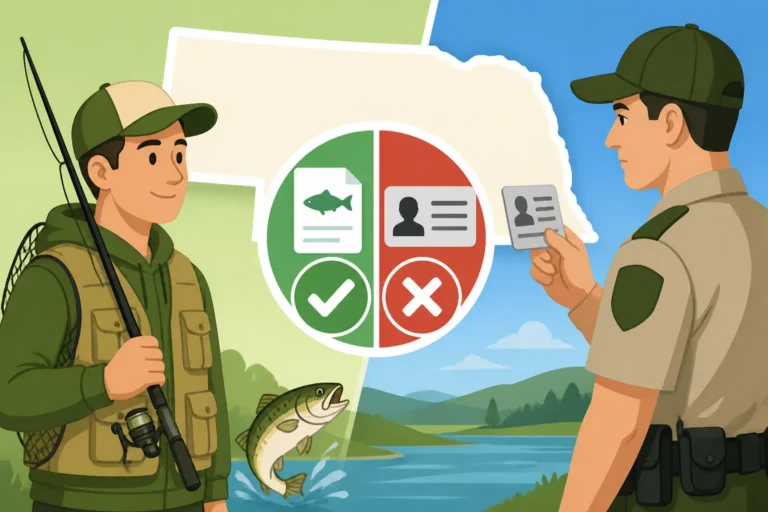
When a Nebraska Game and Parks conservation officer (game warden) approaches you, whether on the water or at a boat ramp, they typically identify themselves and state the reason for the stop. This could be a routine license and equipment check, an investigation based on a tip, or an observation of a potential violation. They will usually ask to see your fishing license, any required stamps, and photo identification. They may also ask to inspect your catch, cooler, livewell, and fishing gear to ensure compliance with bag limits, size limits, and gear restrictions.
During this interaction, remain calm and cooperative. Answer questions truthfully and politely. You are generally required to provide identification and display your license. If you are found to be in violation, the warden will explain the nature of the violation and may issue a citation (ticket). This citation will detail the specific offense, the date, time, and location, and usually include instructions on how to respond, such as paying a fine or appearing in court. In some serious cases, or if you refuse to cooperate, you could be arrested, and your property (fish, gear, boat) might be seized as evidence. Knowing your Nebraska Fishing License Requirements and having them readily accessible can make these encounters smooth and quick.
Fines, Court Appearances, and Plea Bargains
Once you receive a citation, you typically have a few options, which will be outlined on the ticket:
- Plead Guilty and Pay the Fine: For many minor violations, you can simply pay the fine by mail or online (e.g., via the GoOutdoorsNE Online Permit System) by the specified due date. This usually means you're admitting guilt and closing the case without a court appearance.
- Plead Not Guilty and Request a Court Date: If you believe you were wrongly cited or want to contest the charges, you can plead not guilty. This will schedule a court appearance where you can present your case to a judge. It's often advisable to seek legal counsel for this, especially for more serious violations.
- Plea Bargain: In some cases, particularly for more complex or multiple violations, your attorney (or you, representing yourself) might be able to negotiate a plea bargain with the prosecutor. This could involve pleading guilty to a lesser charge or receiving a reduced fine in exchange for avoiding a full trial.
Fines vary widely depending on the severity of the violation, the species involved, and whether it's a first or repeat offense. For example, a minor license infraction might be $150-$250, while a serious over-limit or poaching charge could be thousands of dollars, plus court costs, and potentially restitution for the value of the illegally taken fish. Keep in mind that points might also be assessed against your outdoor permit record, which could lead to license suspension if you accumulate too many.
Reporting Violations and Game Warden Contact
If you witness a fishing violation, whether it's blatant poaching, someone clearly over their limit, or suspicious activity involving prohibited gear, the Nebraska Game and Parks Commission encourages you to report it. You can do this anonymously. Reporting violations is crucial for conservation, as game wardens can't be everywhere at once, and tips from the public often lead to successful enforcement.
You can report violations by calling the Nebraska Wildlife Crimestoppers Hotline. The specific phone number and online reporting options are available on the NGPC website, and often printed in the annual fishing guide. For direct contact with game wardens, specific regional offices have phone numbers, or you can generally find Nebraska Game Warden Contact Information on the NGPC website. When reporting, try to provide as much detail as possible: the date, time, location, description of the individuals involved (clothing, boat type, vehicle, license plates), and the nature of the violation. Do not approach or confront suspected violators yourself; leave that to the trained professionals. Your safety is paramount.
Avoiding Future Fishing Violations
The best way to deal with fishing violation penalties is, quite simply, to avoid them altogether. While mistakes can happen, a proactive approach to understanding and respecting the rules will keep you out of trouble and allow you to fully enjoy your time on Nebraska's beautiful waters.
Staying Informed on Current Regulations
Fishing regulations aren't static; they change from year to year. New rules are implemented, limits are adjusted, and special restrictions might be put in place for certain water bodies or species. Relying on what you "heard" or "used to know" is a recipe for trouble. The most reliable sources for current regulations are:
- The Annual Nebraska Fishing Guide: This free booklet is available digitally on the NGPC website and in print at permit vendors (like Walmart, Cabela's, or local bait shops). Make it a habit to pick up a new one every year and read through it, paying special attention to any "Changes for This Year" sections.
- The NGPC Website: The official Nebraska Game and Parks Commission website (OutdoorNebraska.gov) is an invaluable resource. It contains the most up-to-date regulations, news releases about changes, and specific details about individual water bodies.
- GoOutdoorsNE App: This app, available on your smartphone, can provide access to your digital license and often has links to the regulations.
Take some time before your first fishing trip of the season to review the Nebraska Fishing Regulations Explained. Pay close attention to specifics like Nebraska Walleye Bag Limits for different lakes or special rules for border waters like the Missouri River. Remember, it's your responsibility as an angler to know and follow the rules.
Double-Checking Your Gear and Catch
Before you even leave home, do a quick check:
- License: Is your Nebraska Fishing License Guide valid and with you? If digital, is your phone charged?
- Stamps: Do you have all necessary stamps, like the Aquatic Habitat Stamp or Trout Stamp, if you plan to fish for those species or in waters where they are required?
- Measuring Device: Do you have a reliable tape measure or bump board? Keep it handy and use it every time you catch a fish you intend to keep, especially for species with minimum or maximum length limits.
- Counting: If you're keeping fish, keep a mental count, or even better, a physical tally. Many anglers use clickers or simply move fish to a separate compartment in their cooler once they hit the limit for a certain species.
On the water, be mindful of your actions. If you're unsure about a fish's identity or size, err on the side of caution. Release it if there's any doubt. It's far better to let a fish go than to face a fine. Consider carrying a small, waterproof copy of the Nebraska Fishing Daily Bag and Possession Limits chart with you, perhaps even a printed one from Amazon if you don't want to rely on your phone.
When in Doubt, Ask a Game Warden
Don't ever hesitate to reach out to the Nebraska Game and Parks Commission if you have a question about a specific regulation. They are there to help, and they much prefer answering a question beforehand than issuing a citation afterward. You can contact them through their regional offices, via email, or even by politely asking a game warden you encounter on the water. They are a fantastic resource for anglers seeking clarification on complex rules or unique situations.
Remember, the vast majority of game wardens are passionate about conservation and want people to enjoy the outdoors responsibly. Approaching them with a genuine question shows respect for the resource and the law. This proactive step can save you a lot of grief and money down the road. The goal is to have fun and make memories, not headaches!
Disclaimer
The information provided in this article is for general guidance and informational purposes only and does not constitute legal advice. Fishing regulations in Nebraska are subject to change, and specific rules may vary by location and species. Always consult the official Nebraska Game and Parks Commission website and the current year's Nebraska Fishing Guide for the most accurate and up-to-date regulations before engaging in any fishing activities. Compliance with all applicable laws is the sole responsibility of the angler.