How to Catch Carp on Rod and Reel
There's a common misconception out there, one that often leads anglers to overlook some of the most accessible and hard-fighting fish right in our Nebraska waters: the carp. Many folks see them as bottom feeders, "trash fish," or simply not worth the effort compared to walleye or bass. But let me tell you, that couldn't be further from the truth! If you've ever felt the sheer power of a big carp on the end of your line, you know the thrill. This guide is dedicated to showing you how to effectively catch carp using a rod and reel, transforming those overlooked giants into a fantastic fishing adventure.
The Misunderstood Fighters: Why Target Carp in Nebraska?
Before we dive into the nitty-gritty of gear and techniques, let's challenge some of those old-school notions about carp. For too long, these incredible fish have been unfairly maligned, but they offer an exhilarating experience for anglers willing to give them a fair shot.
Dispelling the "Trash Fish" Myth
Honestly, the term "trash fish" is pretty unfair, especially when it comes to carp. Yes, they can thrive in less-than-pristine waters, and they do feed on the bottom, but that doesn't diminish their sporting value. Carp are incredibly strong, offering powerful runs and tenacious fights that will test your tackle and your angling skills. Pound for pound, a big common carp can pull harder than many other popular game fish. They're also abundant in almost every water body across Nebraska, from major rivers to small farm ponds, meaning you often don't have to travel far to find them. They provide an excellent opportunity for anglers of all ages and skill levels to enjoy consistent action, especially on days when other species might be less cooperative. Plus, some folks even enjoy eating them, especially when prepared properly, though catch and release is also very popular with carp enthusiasts.
Common Carp Species in Nebraska Waters
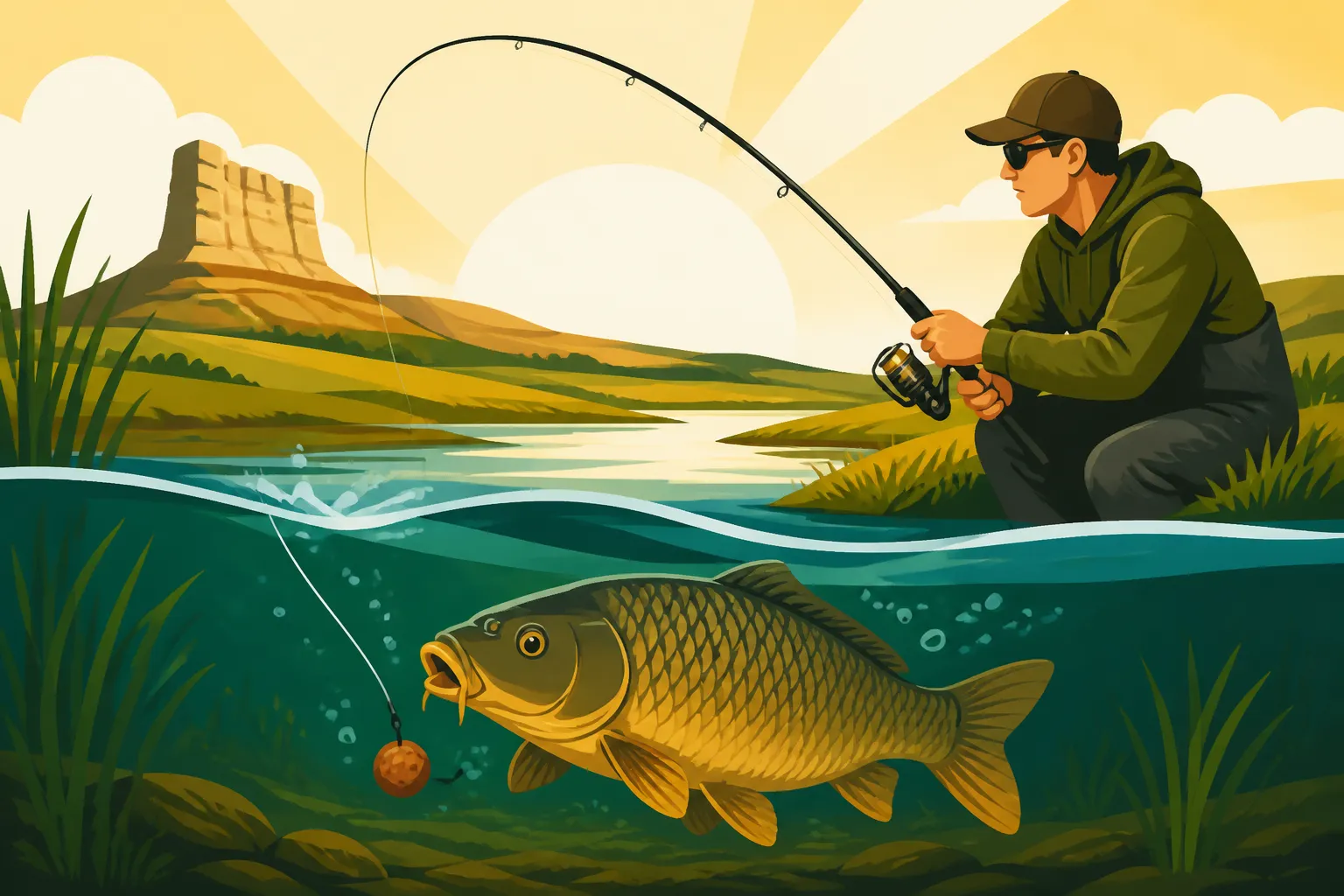
When we talk about "carp" in Nebraska, we're usually referring to the Common Carp ( Cyprinus carpio). These are the broad, golden-bronze fish with large scales and two barbels on either side of their mouth. They're widely distributed and can grow to impressive sizes, with many fish over 10 or even 20 pounds being relatively common catches. While there are other carp species, like Silver Carp and Bighead Carp (which are invasive and often targeted with methods like bowfishing due to their jumping behavior), the Common Carp is the primary target for rod and reel anglers. Understanding the difference is important, especially when you're thinking about the proper methods and even considering different regulations. For a broader understanding of what swims in our state, check out our guide on Nebraska Rough Fish Species Guide.
Where Carp Hang Out: Habitat Preferences
Carp are incredibly adaptable, which is part of why they're so widespread. They prefer warmer, shallower waters with soft, muddy bottoms where they can root around for food, but they'll also frequent deeper channels and points in larger reservoirs. Look for them in areas with plenty of submerged vegetation, fallen trees, or brush piles, as these provide both food and cover. River bends, oxbows, backwaters, and slow-moving stretches of streams are also prime carp territory.
In lakes and reservoirs, think about shallow bays, flats, and the edges of weed lines. They love areas where agricultural runoff might provide a steady food source. You might even spot them "tailing" in very shallow water, their tails breaking the surface as they feed head-down on the bottom. Keep an eye out for muddy water plumes or strings of bubbles rising to the surface, which are tell-tale signs of carp actively feeding. Places with current breaks or obstacles that create slack water can be fantastic too, as food items tend to collect there. You'd be surprised how often you can find them close to urban areas; many city parks and ponds hold healthy populations, making it easy to enjoy Best Fishing Spots Near Omaha or Best Fishing Spots Near Lincoln for carp.
Gearing Up for the Battle: Rod, Reel, and Line Essentials
Alright, now that we've given carp the respect they deserve, let's talk about the tools you'll need. These aren't dainty panfish; you'll want gear that can handle a powerful fight.
Choosing the Right Rod and Reel
For carp fishing, you want something robust but still sensitive enough to detect subtle bites. A medium-heavy to heavy action spinning rod, typically in the 7 to 10-foot range, is ideal. This length helps with casting heavier baits and rigs, and the strong backbone provides the leverage you need to turn a big fish heading for cover. Some anglers prefer longer rods, up to 12 feet, especially when bank fishing and needing to cast a good distance or use a "bolt rig" setup.
Match that rod with a durable spinning reel in the 4000 to 6000 size range. This size reel offers a good balance of line capacity and cranking power. Look for a reel with a smooth, reliable drag system – this is absolutely crucial for carp, as they make powerful, sustained runs. You can find some excellent combos on places like Amazon that are specifically designed for heavier freshwater species, or even check out our general guide on Best Rod and Reel Combo for Beginners in Nebraska for good starting points. The key is to avoid ultralight gear; it might be fun for bluegill, but a 15-pound carp will make short work of it!
The Importance of Strong Fishing Line
Carp are notorious for their strong runs and their habit of trying to rub off hooks on submerged snags. Because of this, your fishing line is arguably one of the most critical components of your setup.
- Monofilament: A good quality monofilament line, in the 10-20 pound test range, is a popular choice. It has excellent stretch, which acts as a shock absorber during powerful runs and can help prevent hooks from tearing out. It's also relatively abrasion-resistant, which is a big plus around rocky or snaggy bottoms.
- Braided Line: Many experienced carp anglers swear by braided line, especially in the 20-40 pound test range. Its near-zero stretch provides incredible sensitivity, allowing you to feel even the most delicate takes. Its thinner diameter for its breaking strength means you can pack more heavy line onto your reel. However, braid isn't as abrasion-resistant as mono, so it's wise to use a monofilament or fluorocarbon leader (2-4 feet) if you're fishing snaggy areas. This also makes the business end of your rig less visible to wary carp.
Regardless of your choice, make sure your line is fresh and regularly inspected for nicks or frays. A small compromise in your line can lead to heartbreak when that trophy carp finally bites.
Landing Nets and Other Must-Have Accessories
You've hooked a monster, fought it like a champion, and brought it to shore – now what? A good landing net is essential. Carp are often too large and powerful to simply "lift" out of the water, and trying to do so can injure the fish or break your line. Look for a large, deep net with rubberized or knotless mesh. This not only protects the fish's slime coat and fins (especially if you plan on releasing it) but also prevents hooks from getting tangled.
Other useful accessories include:
- Rod Holders: When bank fishing, having a sturdy rod holder (or multiple if you're running several lines) is invaluable. Carp bites can be very aggressive, and a good rod holder prevents your rod from being pulled into the water.
- Pliers/Forceps: For easy and safe hook removal.
- Disgorger: If a fish swallows the hook deeply.
- Scales and Measuring Tape: If you're into documenting your catches (and trust me, when you land a giant carp, you'll want to!).
- A comfortable chair: Carp fishing is often a game of patience, so get comfy!
- Sunscreen and Bug Spray: Essential for any day out on the water, especially in Nebraska's unpredictable weather.
| Item | Description | Why It's Important for Carp |
|---|---|---|
| Rod | Medium-heavy to Heavy action, 7-10 feet spinning or conventional | Power for fighting large fish, casting heavy rigs |
| Reel | 4000-6000 size spinning reel with smooth, strong drag | Holds ample line, reliable for powerful runs |
| Line | 10-20 lb monofilament or 20-40 lb braided with mono/fluoro leader | Strength, abrasion resistance, shock absorption |
| Hooks | Size 4-8 wide gap or circle hooks (barbless often preferred for release) | Secure hook-sets, minimizes damage to fish |
| Weights/Sinkers | Assorted pyramid, flat, or inline sinkers (1-4 oz) | Keeps bait on bottom, aids casting, self-sets hook (with bolt rigs) |
| Swivels/Snaps | Heavy-duty, anti-twist | Prevents line twist, allows quick rig changes |
| Landing Net | Large, deep, rubberized/knotless mesh | Safely lands big fish, protects fish and prevents snags |
| Rod Holders | Sturdy bank sticks or tripods | Prevents rod from being pulled in, stable bait presentation |
| Bait | Corn, dough balls, boilies, worms, bread, small crayfish | Attractive to carp, readily available |
| Pliers/Forceps | For hook removal | Safety for angler and fish |
The Secret to Success: Baits and Rigs Carp Can't Resist
Carp are opportunistic feeders, but they also have surprisingly sophisticated senses. The right bait and a well-presented rig can make all the difference between a slow day and a bent rod.
Tried-and-True Carp Baits
Carp aren't picky eaters, which is great news for anglers! You don't need fancy, expensive lures. Some of the most effective carp baits are surprisingly simple and readily available:
- Sweet Corn: This is, hands down, one of the most popular and effective carp baits. Carp love the sweet taste and bright color. You can buy canned corn at any grocery store, or even pick up special flavored corn from bait shops.
- Dough Balls/Boilies: These are homemade or commercially prepared balls of dough, often flavored with sweet or savory attractants. Boilies are essentially hardened dough balls, very popular in European carp fishing, designed to be boil-resistant and selective for larger fish. You can find ingredients and recipes for these online or purchase pre-made versions.
- Worms: Nightcrawlers or large earthworms are a natural food source for carp and can be very effective, especially when fished near the bottom. They also have the added bonus of attracting other species, like catfish.
- Bread: Simple bread, rolled into a tight ball, is a fantastic budget-friendly bait. You can even try bread flakes or crusts free-lined on the surface for some exciting topwater action.
- Crayfish/Small Shrimp: For a more natural presentation, especially in waters where carp feed on crustaceans, small pieces of crayfish or even frozen shrimp (often available at grocery stores) can be deadly.
- Prepared Baits: Many bait shops and even large retailers like Amazon offer a wide array of commercially prepared carp baits, from flavored pastes to pellets and artificial boilies. Experimentation is key to finding what works best in your local waters.
The best approach is often to bring a variety of baits and see what the carp are keying in on that day.
Crafting Effective Carp Rigs
The way you present your bait is almost as important as the bait itself. Carp are often wary, and a clunky or unnatural-looking rig can deter them.
- The Bottom Rig: This is the most common and versatile rig for carp. It typically involves a weight (like a pyramid or flat sinker) at the end of your main line, with a leader (often 6-12 inches) tied to a hook about 6-12 inches above the weight. This keeps your bait directly on the bottom, where carp naturally feed. You can use a snap swivel to easily change weights, which can be useful when you're casting to different depths or dealing with varying currents.
- Hair Rig: Very popular among serious carp anglers, the hair rig is designed to present the bait next to the hook, rather than directly on it. This means when a carp sucks in the bait, the hook is free to catch in its mouth, leading to more solid hook-ups. It's often used with boilies or corn, where the bait is tied to a small "hair" extending from the hook shank. This can feel a little advanced at first, but it's incredibly effective once you get the hang of it.
- Method Feeder Rig: This rig combines feeding and presentation. A specialized feeder (often a plastic cage or a flat, molded weight) is packed with groundbait or pellets. Your hook bait is then attached to a short leader and presented right among the loose feed. When cast, the groundbait breaks down, creating an irresistible pile of food with your hook bait right in the middle. This is a brilliant way to concentrate carp in your fishing spot.
Regardless of the rig, using strong, sharp hooks (size 4-8 wide gap or circle hooks are good choices) is critical. If you're practicing catch and release, consider using barbless hooks or pinching down the barbs for easier and safer unhooking. Understanding Nebraska Fishing Regulations Explained regarding hook types and other rules is always a good idea before you head out.
The Art of Chumming for Carp
Chumming (or pre-baiting, as it's often called in carp fishing circles) is a technique used to attract fish to your chosen fishing spot and keep them there. It's perfectly legal for carp in Nebraska, unlike some other species. The idea is to scatter a small amount of attractive food in the area you plan to fish, creating a "dinner table" that entices carp.
- What to Chum With: Canned corn, soaked and softened dried corn, old bread crumbs, oatmeal, or even specially prepared groundbaits work wonders. The key is to use small, digestible particles that the carp can feed on without getting full too quickly.
- How to Chum: A simple hand toss is often enough for close-in spots. For longer distances, a dedicated spod (a rocket-shaped device attached to a separate rod and reel) or a large catapult can be used to deliver chum accurately. You want to scatter the chum over a reasonable area, not in one concentrated pile, to encourage carp to cruise around and search for food, increasing their chances of encountering your hook bait.
- When to Chum: You can chum before you even start fishing, or "feed" your spot periodically throughout the day. If you plan to fish a spot for several days, pre-baiting it for a day or two beforehand can significantly increase your success. Just be mindful of local regulations, as the specific rules on How to Chum for Catfish Legally in Nebraska (which often applies similarly to carp) can sometimes vary. The main goal is to draw them in and make them comfortable, leading to more confident bites.
Mastering the Techniques: How to Hook and Land Nebraska Carp
You've got the gear, the bait, and the perfect rig. Now, let's talk about the actual fishing – finding them, getting them to bite, and bringing those powerful fish to the net.
Locating Carp Hotspots
Finding carp is often the biggest challenge, but once you do, you're usually in for a treat. As mentioned earlier, look for signs of their presence: muddy water, rising bubbles, or even the flash of a large tail in shallow water.
- Observe the Water: Spend some time just watching. Carp are often more active at dawn and dusk, but can feed throughout the day. Look for areas where the wind is pushing food, or where deeper water meets shallow flats.
- Structure is Key: Just like with bass or crappie, carp relate to structure. Think about fallen trees, rock piles, sudden drop-offs, or the edges of dense weed beds. These areas offer food and protection. In rivers, current seams, eddies, and the insides of bends are prime locations. Consider areas where the river widens, creating slower, deeper pools.
- Patience and Persistence: Sometimes, the best strategy is to pick a likely looking spot, set up your gear, and wait. Carp move around, and your chumming efforts will eventually draw them in. Don't be afraid to try different depths or casting distances within your chosen area. If a spot isn't producing after a couple of hours, it might be time to move and try another promising location. Using effective Nebraska Pond Fishing Techniques can sometimes be adapted for carp in larger stillwaters too.
Presentation and Patience: Your Best Friends
Carp are not always aggressive biters. Sometimes their take can be very subtle, a slight twitch of the rod tip, or a slow bending motion. Other times, they can hit your bait like a freight train, nearly ripping the rod from its holder!
- Rod Setup: When using a bottom rig, place your rod in a sturdy rod holder with the bail open or a very light drag setting. This prevents the rod from being pulled in on a powerful run. Many carp anglers will use bite alarms, electronic devices that attach to your rod and signal when a fish takes the line.
- Detecting Bites: If you're not using a bite alarm, watch your rod tip carefully. A carp bite can range from a series of gentle taps to a full-on screaming run where the line peels off your reel. Be ready!
- Setting the Hook: When you get a definitive bite, particularly a strong pull or run, reel up any slack and set the hook with a firm, sweeping motion. You don't need a huge, violent hookset like you might use for bass, but enough force to properly embed the hook in the carp's tough mouth. If you're using circle hooks, a steady retrieve is often all that's needed – the hook is designed to set itself in the corner of the fish's mouth. Knowing How to Set the Hook on a Catfish Bite is good practice here, as the strength is comparable.
- Patience: Carp fishing is often a waiting game. Chum your spot, cast your rigs, and settle in. Read a book, listen to a podcast, or just enjoy the peace and quiet. The reward for your patience will be a memorable fight.
Fighting and Landing Big Carp
This is where the excitement really kicks in! A large carp is an incredibly powerful fish, and fighting one on rod and reel is an experience all its own.
- The Initial Run: Expect a strong, often surprising, initial run. Let the drag do its job. Don't try to muscle the fish in too quickly, or you risk breaking your line or pulling the hook. Keep your rod tip up, maintaining a good bend in the rod to absorb the shock.
- Steering the Fish: Carp will often try to head for cover – submerged trees, weed beds, or rocky areas. Try to steer the fish away from these obstacles by applying side pressure with your rod. This is where a longer, more powerful rod really shines. If the fish tries to go under a snag, try to guide it around or over. Being prepared to fight them aggressively yet carefully is similar to what you'd learn when understanding How to Fight a Big Fish on Light Tackle.
- Pumping and Reeling: Once the initial run is over, you can start to "pump and reel." This means raising your rod tip to gain line, then quickly lowering it while reeling in the slack. Repeat this process, gradually bringing the fish closer.
- The Final Stages: As the carp gets closer to shore, it will likely make more strong, short runs. Be ready for these. Don't rush it. Once it's close and appears to be tiring, guide it gently towards your waiting landing net. Have your net ready and positioned before the fish is right at your feet. Slide the net under the fish head-first, lifting it only once the entire fish is safely in the mesh.
- Handling and Release: If you plan to release the fish (which is common practice for carp), handle it with care. Keep it in the net in the water as much as possible, especially if you're taking a photo. Use wet hands when touching the fish to protect its slime coat. Unhook it carefully, and allow it to recover in the water before letting it go. Our guide on How to Release a Fish Safely to Survive offers excellent tips for ensuring your catch swims away strong.
Catching carp on rod and reel can be one of the most rewarding fishing experiences you'll have in Nebraska. They're abundant, powerful, and accessible, making them a fantastic target for anglers seeking a real challenge and a lot of fun. Grab your gear, head to your nearest lake or river, and get ready for a fight!
Disclaimer
This article is for general informational purposes only and does not constitute professional advice. Laws, prices and regulations vary by location and change over time. Consult a qualified professional for guidance on your specific situation.