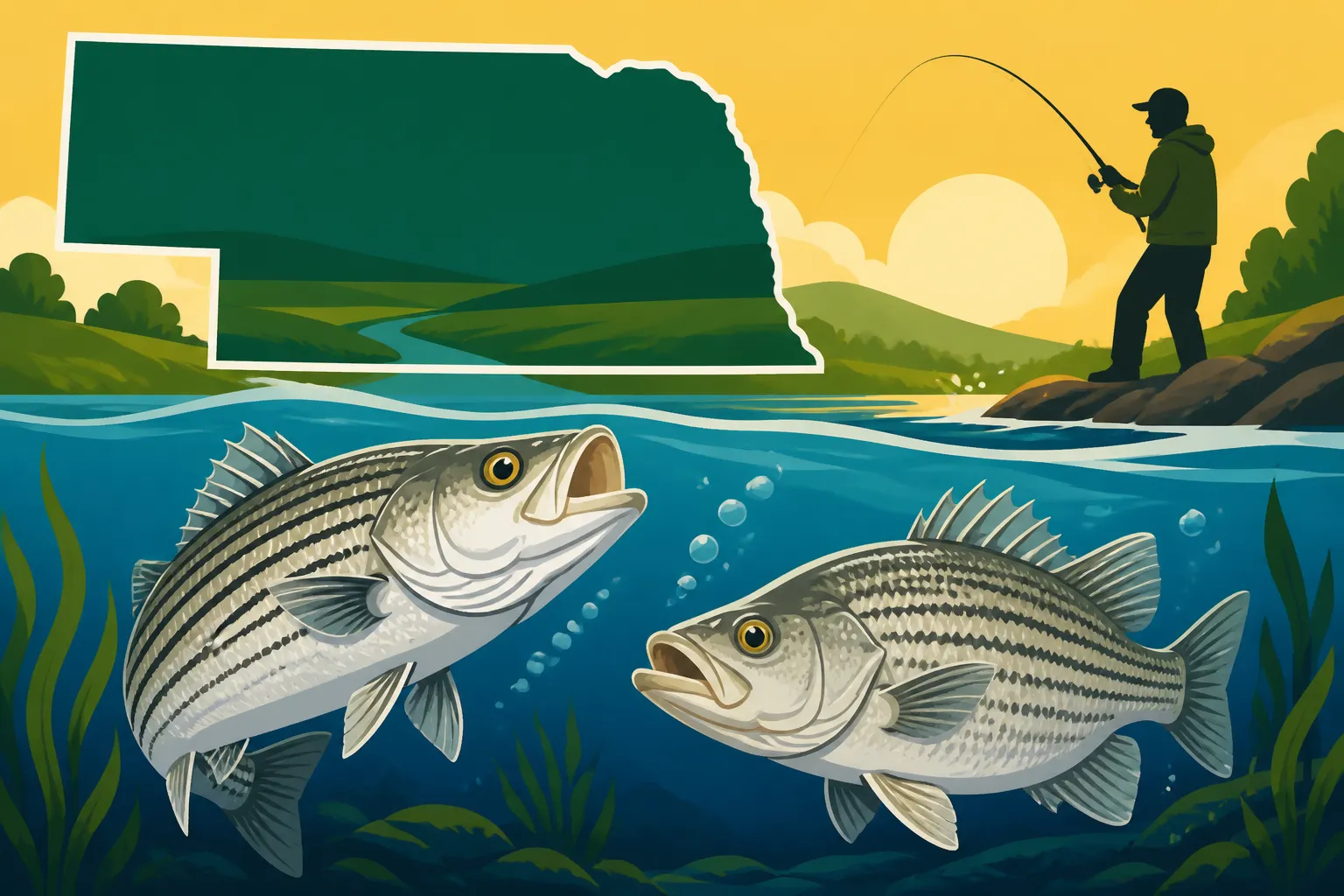
Striped Bass and Wiper Fishing in Nebraska
Anglers in Nebraska often hear whispers of "stripers" and "wipers" – powerful, hard-fighting fish that promise an exhilarating battle on the line. But for many, these impressive species remain a bit of a mystery, from how to tell them apart to where and how to actually catch them in our unique waterways. This comprehensive guide is here to demystify striped bass and wiper fishing in Nebraska, offering you all the insights, tips, and strategies you need to tackle these formidable fish and experience some truly unforgettable angling adventures.
Understanding Nebraska's Striped Bass and Wipers: The Powerful Hybrids
When we talk about striped bass and wipers in Nebraska, we're talking about some of the most sought-after sport fish in our waters. These aren't your typical panfish or even your average bass; these are fish built for speed, power, and a fight that will test your gear and your resolve. Understanding their biology and behavior is the first step toward successfully targeting them. They thrive in large, open waters, often associating with schools of baitfish, making them a challenge but a rewarding one.
Striped Bass vs. Wiper: A Tale of Two Species
Let's clear up some common confusion right off the bat. While both are incredible game fish, there's a distinct difference between a purebred striped bass and a wiper. A true striped bass, Morone saxatilis, is native to saltwater but has adapted incredibly well to large freshwater reservoirs, like Lake McConaughy, where it's successfully stocked. These fish can grow absolutely massive, often exceeding 20 or even 30 pounds in Nebraska, making them a true trophy. They are characterized by seven to eight distinct, unbroken horizontal stripes running along their silver-flanked bodies.
Wipers, on the other hand, are a hybrid. They're a cross between a female striped bass and a male white bass, Morone chrysops. This hybridization is usually done in hatcheries to create a fish that combines the growth potential and fighting spirit of the striped bass with the hardiness and prolific nature of the white bass. Wipers are typically found in many of Nebraska's larger reservoirs, offering fantastic angling opportunities. The key visual difference for wipers is that their stripes are often broken or discontinuous, especially below the lateral line, unlike the solid stripes of a pure striped bass. They also tend to have a slightly more "stocky" body shape compared to the often more elongated profile of a pure striper.
The Allure of These Hard-Fighting Fish
So, why do anglers flock to pursue these fish? Simple: the fight. Both striped bass and wipers are renowned for their incredible strength and endurance. When you hook into a sizable one, be prepared for long, powerful runs and a relentless battle that will often take you across the boat or down the shoreline. They hit lures and bait with incredible aggression, making for exciting strikes that can send a jolt through your rod arm. This isn't subtle finesse fishing; it's often about power, speed, and holding on tight.
Beyond the fight, their size is also a huge draw. A trophy wiper can easily push into the 10-15 pound range, and as mentioned, pure stripers can get even bigger. Landing a fish of that caliber in Nebraska is a significant accomplishment and a memory that sticks with you for years. They're also excellent table fare, offering firm, white, flaky meat, which only adds to their appeal. Whether you're after a thrilling fight or a delicious meal, these fish deliver.
Where to Find Striped Bass and Wipers in Nebraska
Nebraska might be a landlocked state, but don't let that fool you – we have some incredible fisheries for both pure striped bass and their feisty hybrid cousins, the wipers. Knowing where to look is paramount, as these fish tend to congregate in specific habitats within our larger reservoirs, often dictated by baitfish availability, water temperature, and structure.
Lake McConaughy: The Premier Striped Bass Destination
When most Nebraskans talk about striped bass, their minds immediately go to Lake McConaughy. "Big Mac" is arguably the crown jewel for pure freshwater striped bass fishing in the state, and for good reason. The sheer size of the reservoir, its deep, clear waters, and abundant forage base create the perfect environment for these powerful fish to thrive. Stripers here often suspend in open water, chasing schools of shad, so you'll often find them over deep basins or near the main lake channels.
Key areas to focus on at Lake McConaughy include the main lake body, particularly around the dam, the face of the dam itself, and any major points or submerged humps that extend into deeper water. In the warmer months, especially, you'll want to target these deep-water haunts, as the stripers will often go deep to find cooler, more oxygenated water. In the spring and fall, they might move shallower, closer to the shorelines and coves, following baitfish that are more active in those areas. Keeping an eye on local fishing reports and water temperatures is crucial for success here. If you're planning a trip, be sure to check out our detailed Lake McConaughy Fishing Guide.
Other Top Reservoirs for Wipers
While Lake McConaughy is king for pure stripers, several other Nebraska reservoirs boast phenomenal wiper fishing, offering exciting opportunities across the state. These hybrids are stocked in numerous locations because of their excellent growth rate and adaptability.
- Harlan County Reservoir: Located in south-central Nebraska, Harlan is a consistent producer of large wipers. The reservoir's vast expanse and fluctuating water levels create dynamic fishing conditions, and wipers here are often found chasing shad in the open water or ambushing them around prominent points and submerged timber. Anglers often find success trolling crankbaits or casting spoons during the white bass run in spring, as wipers will often join the feeding frenzy. You can learn more about fishing this area in our Harlan County Reservoir Fishing guide.
- Sherman Reservoir: In central Nebraska, Sherman is another hotspot for wipers. This reservoir is known for its irregular shoreline, numerous coves, and significant amounts of standing timber, which can hold baitfish and, in turn, wipers. Look for wipers relating to submerged trees, main lake points, and the dam area. Trolling deep-diving crankbaits or casting swimbaits are popular methods here.
- Calamus Reservoir: Nestled in the Sandhills, Calamus offers clear waters and a healthy population of wipers. Like other reservoirs, wipers here will chase shad in open water. Anglers often find success near the dam, around the numerous submerged humps, and along the main lake channel, especially during feeding windows. The clear water here can make finesse tactics more effective at times, especially when the fish are pressured.
- Branched Oak Lake: Near Lincoln, Branched Oak also offers good wiper opportunities, especially for those looking for a quick trip from the city. While perhaps not producing the giants of McConaughy or Harlan, it’s a very accessible lake with solid numbers of wipers that provide great action. Branched Oak Lake Fishing Guide can give you more details.
These reservoirs provide diverse fishing experiences, each with its own quirks and best times to fish. Regardless of where you go, understanding the general patterns of these aggressive predators will serve you well.
Seasonal Movements and Habitat Preferences
Striped bass and wipers are highly nomadic fish, constantly on the move in search of baitfish. Their movements are largely dictated by water temperature, oxygen levels, and the location of their food source, primarily gizzard shad or threadfin shad where present.
- Open Water Patrols: These fish are often found suspended in the water column over deep areas, far from shore. They're pelagic, meaning they live in the open ocean or open waters of lakes, chasing schools of baitfish. Using a good fish finder is absolutely critical to locate these roving schools, especially in larger reservoirs like Lake McConaughy. Look for large arches or bait balls with bigger individual arches around them – that's often your sign!
- Structure and Cover: While they love open water, wipers and stripers will also relate to structure, especially during feeding periods or in cooler water. Main lake points, submerged humps, deep rock piles, underwater islands, and even the riprap along dams are all prime ambush points. They will use these structures to corral baitfish or to take a break from their constant patrols. Below dams, particularly those with strong current, can also be a magnet for these fish, as the current disorients baitfish and concentrates them.
- Temperature and Oxygen: During the heat of summer, both species will seek out cooler, more oxygenated water. This often means moving deeper, sometimes to the thermocline – the layer of water where the temperature changes rapidly. Conversely, in spring and fall, as the entire water column cools down, they might be found in shallower depths as baitfish become more active there.
Understanding these habitat preferences and seasonal shifts will drastically improve your chances of success. Always consider the time of year and the specific characteristics of the water body you're fishing.
Essential Gear for Battling Striped Bass and Wipers
Taming a powerful striped bass or a hard-fighting wiper requires more than just luck; it demands the right gear. These fish aren't shy, and they'll test every knot, every component of your tackle. Investing in appropriate rods, reels, line, and lures is crucial to turning those exciting strikes into landed fish. Skimping on quality here can lead to heartbreak, snapped lines, and lost trophies.
Rods and Reels for Maximum Power and Sensitivity
For striped bass and wipers, you're going to want gear that can handle a serious fight. Think strong, durable, and capable of both casting heavy lures and absorbing powerful runs.
- Rods: A medium-heavy to heavy-action casting or spinning rod, typically 7 to 8 feet long, is ideal. The longer rod provides better casting distance, which is often crucial when targeting schooling fish, and offers more leverage during a fight. A fast action tip with plenty of backbone is perfect – it allows for good hooksets and sensitivity to detect subtle bites, while the robust lower section provides the power needed to muscle in big fish. Look for rods rated for line weights from 15-30 pounds and lure weights up to 1-3 ounces. Brands like Ugly Stik, St. Croix, and Fenwick offer excellent options that can be found on platforms like Amazon.
- Reels: A high-quality spinning reel in the 4000-6000 size range, or a baitcasting reel with a good drag system and strong retrieve, is essential. The most important feature is a smooth, reliable drag. These fish will make blistering runs, and a sticky or unreliable drag will result in snapped lines or pulled hooks. Look for reels with strong gears and a high line capacity, as you'll often need to spool up with heavier lines. Gear ratios around 6.0:1 or higher are beneficial for quickly retrieving line and keeping up with fast-moving fish. When shopping, always prioritize drag quality.
Line Choices: Braided, Monofilament, and Fluorocarbon
Your choice of fishing line is just as important as your rod and reel. Each type of line has its strengths and weaknesses, and understanding them will help you rig up for success.
- Braided Line: This is often the preferred main line for striped bass and wiper fishing due to its incredible strength-to-diameter ratio and zero stretch. Its strength allows you to use lighter test lines for more casting distance while retaining immense breaking strength. The lack of stretch provides superior sensitivity, allowing you to feel every bump and subtle bite, and delivers powerful hooksets, even at long distances or in deep water. For wipers and stripers, 20-50 pound test braided line is common.
- Fluorocarbon Leader: While braided line is excellent, it can be highly visible in clear water, and its lack of stretch can be unforgiving during a sudden head shake. This is where a fluorocarbon leader comes in. Tie a 2-4 foot section of 15-30 pound fluorocarbon leader to your braided main line. Fluorocarbon is nearly invisible underwater, extremely abrasion-resistant (great around rocks and submerged timber), and offers a bit of stretch to absorb shocks. This combination gives you the best of both worlds: the power and sensitivity of braid with the stealth and shock absorption of fluorocarbon.
- Monofilament (less common as main line): While not typically used as a main line for serious striper/wiper fishing due to its stretch and thicker diameter, a heavier monofilament line (e.g., 20-30 lb) can be used for trolling with some crankbaits, as its stretch can act as a shock absorber. However, most serious anglers opt for braid with a fluoro leader.
Must-Have Lures and Baits
Striped bass and wipers are aggressive predators, and they'll hit a wide variety of presentations. Having a diverse tackle box will prepare you for different conditions and moods.
- Deep-Diving Crankbaits: These are workhorses for trolling open water or casting to deep points. Choose crankbaits that dive to 10-25 feet or more, mimicking shad. Colors like chrome/blue, shad patterns, white, and chartreuse are perennial favorites. Brands like Rapala, Strike King, and Berkley offer excellent deep divers.
- Jigs and Soft Plastics: Bucktail jigs, often tipped with a piece of plastic or a soft plastic swimbait, are incredibly effective, especially when vertical jigging over schools of fish or casting to structure. Heavy jigheads (1/2 oz to 2 oz) are often needed to get down quickly. Swimbait bodies in white, pearl, or chartreuse can be rigged on leadheads for casting and retrieving.
- Spoons: Casting spoons (like a Kastmaster or Little Cleo) or vertical jigging spoons (like a Hopkins or Cicada) are deadly for these fish, especially when they're feeding on smaller baitfish or when you mark schools deeper in the water column. The flashing, erratic action drives them wild.
- Topwater Lures: Don't overlook topwater! When stripers or wipers are schooling baitfish on the surface, causing "boils" or "blowups," a large popper, walking bait, or even a prop bait can trigger explosive strikes. This is some of the most exciting fishing you'll experience.
- Live Bait: Where legal and available, live gizzard shad or large shiners are often irresistible to big striped bass and wipers. These can be fished under a slip bobber, free-lined, or slow-trolled. Always check Nebraska Fishing Regulations Explained for rules on live bait use and collection. For more on what these aggressive feeders might target, consider reviewing Best Bait for Nebraska Walleye as some preferences can overlap, particularly for shad imitations.
Equipping yourself with these essentials will put you in a strong position to tackle Nebraska's striped bass and wipers effectively. Remember, presentation is key, so don't be afraid to experiment with different lures and retrieval speeds.
Effective Techniques for Catching Striped Bass and Wipers
Successfully targeting striped bass and wipers often means adapting your approach to their nomadic nature and aggressive feeding habits. These fish are constantly on the move, chasing down schools of baitfish, so your tactics need to be dynamic and cover a lot of water. Mastering a few key techniques will drastically improve your chances of success.
Trolling for Open Water Success
Trolling is arguably one of the most consistent and effective ways to locate and catch striped bass and wipers in Nebraska's large reservoirs, especially when they are suspended in open water. This technique allows you to cover vast areas and present your lure at the exact depth where the fish are holding.
Start by using your electronics – a good fish finder is invaluable here – to locate schools of baitfish and any larger arches (the stripers/wipers) near them. Once you find them, you'll want to troll through and around those areas. Deep-diving crankbaits are the go-to choice for trolling, often deployed with lead core line or planer boards to reach specific depths and spread out your presentation. Pay close attention to your boat speed; typically, 2-4 mph is a good starting point, but slight variations can trigger bites. Experiment with different depths and lure colors until you find what's working. Sometimes, a single crankbait will produce, other times you might need to run multiple lines at varying depths and distances behind the boat. For some transferable knowledge, you might find our guide on How to Troll for Walleye in Nebraska helpful, as the principles of covering water and depth control are quite similar.
Casting and Jigging Near Structure
While trolling excels in open water, when striped bass and wipers are relating to structure, casting and jigging become incredibly effective. These tactics allow for precision presentations in specific areas where fish might be ambushing bait.
Look for main lake points, submerged humps, rock piles, dam faces, and any other irregularities on the lake bottom, especially those that drop off into deeper water. These are natural ambush points where stripers and wipers will hold, waiting for unsuspecting baitfish.
- Casting: When you spot fish schooling on the surface ("boils") or identify them holding near structure on your electronics, casting becomes a high-action strategy. Throw large spoons, heavy jigs, swimbaits, or topwater lures directly into the feeding frenzy or over the structure. Retrieve your lure with a varied cadence – a fast retrieve with occasional pauses, or a rip-and-fall action, can often trigger aggressive strikes.
- Jigging: Vertical jigging directly over schools of fish marked on your sonar is incredibly potent. Use heavy spoons or bucktail jigs and drop them straight down to the fish's depth. Work the jig with sharp snaps and pauses. The idea is to mimic a dying baitfish, an easy meal that these powerful predators can't resist. Sometimes a more subtle lift-and-drop is required, other times an aggressive jigging motion will elicit the bite.
Live Bait Tactics for Finicky Biters
Even aggressive fish like striped bass and wipers can become finicky, especially under high-pressure conditions or during specific times of the year. This is when live bait can often be the most effective presentation. Where legal, live bait offers an irresistible, natural presentation that even the most hesitant fish will strike.
- Gizzard Shad & Other Baitfish: The absolute best live bait for large striped bass and wipers is often the very forage they naturally consume, typically gizzard shad or large shiners. Catching your own shad can be part of the adventure, often done with a cast net in shallower areas or around boat ramps.
- Rigging and Presentation: You can rig live bait in several ways. One common method is to simply free-line a large shad with a single circle hook through its back (above the lateral line, avoiding the spine) or lips, allowing it to swim naturally. Add a small split shot or two if you need to get it down slightly. Another effective method is to fish them under a large slip bobber, which allows you to present the bait at a precise depth over suspended fish or structure. When slow-trolling, you can use a three-way swivel rig with a bell sinker to keep the bait near the bottom or at a specific depth. Remember to use sturdy hooks, like strong Kahle hooks or large circle hooks, capable of handling the powerful jaw of a striper or wiper.
Live bait can be particularly effective during tough bites or when targeting trophy-sized fish that might be more discerning about artificial presentations.
Seasonal Strategies for Striped Bass and Wipers
The key to consistent success with striped bass and wipers in Nebraska lies in understanding their seasonal patterns. Their behavior changes dramatically with water temperature, baitfish availability, and spawning cycles. Adapting your location and techniques throughout the year will significantly increase your catch rates.
Spring: Pre-Spawn and Early Season Aggression
Spring is a fantastic time to target striped bass and wipers as they become increasingly active after the colder winter months. As water temperatures begin to climb into the 50s and low 60s, these fish will start to move shallower, often congregating in tributary arms or main lake sections where baitfish are abundant and seeking warmer water. They are typically in a pre-spawn mode, feeding heavily to build energy reserves.
During this period, look for fish in the upper ends of reservoirs, especially where rivers or creeks feed in, bringing warmer water and nutrients. Shallow flats, main lake points, and the backs of coves can all be hotspots. Casting swimbaits, lipless crankbaits, or even jerkbaits can be very productive as fish cruise these shallower areas. Trolling medium-diving crankbaits along major contours or creek channels can also intercept migrating schools. Keep an eye out for surface activity – spring often brings early season "boils" as fish push bait to the surface. This is a time of aggressive feeding, so don't be afraid to use flashy, fast-moving presentations.
Summer: Deep Water and Night Fishing Opportunities
As Nebraska's summers heat up and water temperatures rise, striped bass and wipers generally retreat to deeper, cooler, and more oxygenated waters. This often means finding them suspended over deep basins or relating to major deep-water structure like humps, points, and the main lake dam. The thermocline (that distinct temperature break) often becomes a critical zone, as baitfish and predators will congregate around it.
Daytime fishing in summer often involves deep trolling with large crankbaits, spoons, or live bait down in the 20-50 foot range, depending on the lake and thermocline depth. Your fish finder is your best friend here, helping you pinpoint schools. Another incredibly effective summer strategy, especially for bigger fish, is night fishing. As the sun sets and the surface cools, stripers and wipers often move shallower to feed, chasing baitfish that also become more active under the cover of darkness. Casting large topwater lures, swimbaits, or even slow-rolling deep crankbaits near main lake points or lighted docks (where legal) can produce explosive strikes after dark. Remember to be safe when night fishing and equip your boat with proper lighting. For tips on battling the summer heat, check out How to Fish During the Heat of the Day in Summer.
Fall: Feeding Frenzy Before Winter
Fall is another prime time for striped bass and wiper fishing in Nebraska. As water temperatures begin to cool, often in the 60s and 50s, these fish enter an intense feeding period, trying to pack on calories before the lean winter months. They become incredibly aggressive and will actively chase down baitfish.
During the fall turnover, when the lake's water layers mix, fish can be found at various depths, but as the water cools uniformly, they often spread out or push into shallower coves and flats, following the baitfish. Look for schools of baitfish, and the wipers/stripers won't be far behind. Casting spoons, swimbaits, and crankbaits to points, humps, and even shorelines can be highly effective. Trolling remains a strong option, especially as fish become more concentrated in certain areas. This is also a fantastic time for surface feeding activity, with large schools of wipers or stripers creating frenzies as they corral baitfish against the surface. Having a topwater lure ready is a must. The fall bite can be some of the most exciting fishing of the year.
Winter: Ice Fishing and Cold Water Opportunities
While most anglers pack away their gear, serious winter enthusiasts know that striped bass and wipers can still be caught, especially through the ice on reservoirs that freeze sufficiently. Ice fishing for these powerful species requires specialized gear and patience, but the rewards can be substantial.
On ice, these fish typically hold near deep structure, main lake channels, or humps, often suspended over deeper water. You'll need an ice fishing specific fish finder (flasher or sonar unit) to locate them and present your lure at their depth. Jigging spoons, heavy tungsten jigs tipped with minnows or plastics, and blade baits are excellent choices. Be prepared for a powerful fight even in cold water; a big wiper can easily spool an inadequate ice fishing reel. Always prioritize safety on the ice, checking ice thickness and conditions carefully. For those who brave the cold, winter can offer surprisingly good action for these impressive fish. For general ice fishing wisdom, consult our guide How to Ice Fish in Nebraska.
Regulations and Conservation for Nebraska Striped Bass and Wipers
Fishing for striped bass and wipers in Nebraska is a fantastic experience, but it’s crucial to understand and adhere to the regulations designed to protect these valuable fisheries. Responsible angling practices, from knowing the rules to proper fish handling, ensure that these exciting opportunities remain for future generations.
Understanding Bag and Length Limits
Like all game fish in Nebraska, striped bass and wipers are subject to specific bag and length limits. These regulations are established by the Nebraska Game and Parks Commission (NGPC) to manage fish populations, prevent overharvest, and promote healthy size structures.
It is absolutely essential to check the most current Nebraska fishing guide or the NGPC website before you head out. Regulations can change, and what was true last year might be different this year. Generally, you'll find a daily bag limit (how many you can keep per day) and sometimes a possession limit (how many you can have in your possession at any given time, including at home). There might also be length limits, such as a minimum length (fish must be at least this long to be kept) or a slot limit (only fish within a certain size range can be kept, or sometimes fish above a certain size must be released). These specific regulations often vary by species (pure striper vs. wiper) and by water body. For example, Lake McConaughy might have different rules for pure striped bass than a reservoir like Harlan for wipers. Always make sure you understand the rules for the specific lake you are fishing. Ignoring these rules can lead to significant penalties, including fines and permit suspension. For a comprehensive overview of rules, refer to Nebraska Fishing Regulations Explained and Nebraska Fishing Daily Bag and Possession Limits.
Practicing Responsible Catch and Release
Even if you plan to keep some fish for the table, practicing responsible catch and release for a portion of your catch, especially larger breeders, is a cornerstone of good conservation. Stripped bass and wipers are tough fish, but improper handling can still lead to post-release mortality.
Here are some tips for increasing a fish's survival chances:
- Minimize Fight Time: Use appropriate tackle that allows you to land the fish relatively quickly, reducing exhaustion.
- Handle With Care: Avoid touching the fish's gills or eyes. If possible, keep the fish in the water while unhooking it.
- Wet Hands: Always wet your hands before touching the fish to protect its slime coat, which is vital for disease prevention.
- Barbless Hooks: Consider using barbless hooks, or pinching down the barbs on your hooks, to make unhooking easier and less damaging.
- Proper Unhooking Tools: Have long-nosed pliers or a hook remover readily available. If a fish is deeply hooked, cut the line as close to the hook as possible rather than trying to rip the hook out.
- Support Its Weight: When lifting a fish for a quick photo, support its body horizontally, especially larger fish, to avoid damaging its internal organs or jaw. Never hold a large fish vertically by its jaw alone.
- Revive If Necessary: If a fish is heavily exhausted, hold it gently in the water, facing into any current, until it can swim away under its own power. This is especially true in warmer water.
By following these practices, you play an active role in maintaining healthy fisheries and ensuring that these powerful fish continue to thrive.
The Importance of the Aquatic Habitat Stamp
When you purchase your Nebraska fishing permit, you'll also notice the requirement for an Aquatic Habitat Stamp. This isn't just another fee; it's a vital component of Nebraska's conservation efforts, and it directly benefits the fisheries you enjoy, including those for striped bass and wipers.
The funds generated from the sale of the Aquatic Habitat Stamp are specifically dedicated to improving aquatic habitats across the state. This includes projects like restoring degraded stream banks, enhancing lake bottom structure, improving water quality, creating fish habitat structures (like brush piles and rock reefs), and controlling aquatic invasive species. All of these initiatives directly or indirectly benefit species like striped bass and wipers by improving their environment, increasing forage, and making their habitat more resilient. So, while it's an additional cost, know that your purchase directly contributes to making Nebraska's waters better for both fish and anglers. For more details on this important contribution, read our guide Nebraska Aquatic Habitat Stamp Explained.
Getting Started: Planning Your Nebraska Striped Bass & Wiper Adventure
Embarking on a fishing trip for Nebraska's striped bass and wipers is an exciting prospect. Whether you're a seasoned angler looking for a new challenge or a curious beginner, a little planning can go a long way in ensuring a successful and enjoyable outing. These fish demand respect and a strategic approach, but the rewards are well worth the effort.
Research and Preparation Are Key
Before you even load your boat or pack your tackle box, take some time to do your homework. The more informed you are, the better your chances of success.
- Current Conditions: Always check the latest fishing reports for your chosen reservoir. Many local bait shops, online forums, and even the NGPC website offer up-to-date information on water temperatures, clarity, recent catches, and what baits or techniques are currently working best. Pay attention to any significant weather changes that might affect fish behavior.
- Regulations Review: We've already stressed this, but it bears repeating: meticulously review the current Nebraska fishing regulations for striped bass and wipers in the specific body of water you intend to fish. These can vary not just by species, but also by lake. Knowing bag limits, length limits, and any special restrictions will keep you legal and help you practice responsible angling. Don't forget to check if you need other permits or stamps, such as the Nebraska Aquatic Invasive Species Stamp for your boat, or a park entry permit if you're launching from a state park.
- Gear Check: Ensure all your gear is in good working order. Check your rod guides for cracks, make sure your reel's drag is smooth and properly set, and spool up with fresh line, especially if it's been a while. Sharpen your hooks, as these fish have tough mouths. Having extra leaders, weights, and a good selection of the recommended lures will prevent frustration on the water. Many essential items, from line to lures, can be conveniently found and ordered through online retailers like Amazon.
Essential Tools for a Successful Trip
Beyond your primary rod, reel, and line, a few other tools are absolute necessities for targeting striped bass and wipers.
- Fish Finder/Sonar: This is non-negotiable for open-water fishing. A good fish finder allows you to locate baitfish schools, mark individual predators, identify submerged structure, and monitor water depth and temperature. Modern units with side imaging or down imaging can give you a powerful advantage.
- Boat and Motor: For serious striped bass and wiper fishing, especially trolling on large reservoirs, a boat is almost essential. A stable boat with a reliable motor allows you to cover water efficiently and safely. Ensure your boat is properly registered and equipped with all required safety gear, including life jackets for everyone on board. If you're considering a boat specifically for these fisheries, a center console or a larger walleye-style boat can be excellent choices due to their stability and open deck space.
- Landing Net: A large, sturdy landing net with a rubberized mesh is critical. These fish are powerful, and trying to hoist a big one into the boat by the line can lead to lost fish or broken rods. A rubberized net is also gentler on the fish's slime coat if you plan to release it.
- Cooler and Ice: If you plan to keep your catch, a well-insulated cooler with plenty of ice is a must to preserve the quality of the meat. Quickly cooling down your fish is key to good table fare.
- Pliers and Hook Removers: Strong, long-nosed pliers and a dedicated hook remover (like a de-hooker) are invaluable for safely unhooking fish, especially those that have swallowed a lure or have multiple treble hooks.
- First Aid Kit: Always a good idea to have on board for any fishing trip, but especially when dealing with sharp hooks and potentially long distances from shore.
By taking the time to plan and prepare, you'll not only increase your chances of catching some magnificent striped bass and wipers but also ensure a safer and more enjoyable experience on Nebraska's waters.
Disclaimer
This article is for general informational purposes only and does not constitute professional advice. Laws, prices and regulations vary by location and change over time. Consult a qualified professional for guidance on your specific situation.